
🔍 Read the full analysis: What To Know About Ring’s Home Drone And Patrol Robot—and Their Privacy Implications on ThorstenMeyerAI.com

Get business pricing on monitors, keyboards and dev gear
- Business-only prices and quantity discounts
- Tax-exempt purchasing
- Multiple users, one account, clear invoices
TL;DR
Amazon’s Ring announced two mobile security cameras: a home drone priced at $249.99 and a business patrol robot priced at $999.99. Ring says they use mapping and automated patrol features, but the drone’s sale depends on FCC authorization, and critics question the privacy protections for recordings processed in the cloud.
Amazon’s Ring announced two mobile security cameras on November 10: a drone designed to fly inside homes and a wheeled robot intended to patrol businesses. The products add movement to Ring’s camera system, but their planned US launches, automated recording and cloud processing raise questions about regulatory approval, reliability and privacy.
Ring calls the product line Ring Robotics. Its devices use a system called AI Pilot, which Ring says maps spaces, proposes patrol points and steers around obstacles. The devices can also respond when another Ring camera, sensor or alarm is triggered. Ring lists the Rover Cam at $999.99, with US shipping scheduled to begin December 16, 2026. The Drone Cam is listed at $249.99, with shipping scheduled for January 27, 2027. Scheduled patrols require a compatible Ring Protect plan, according to the announcement.
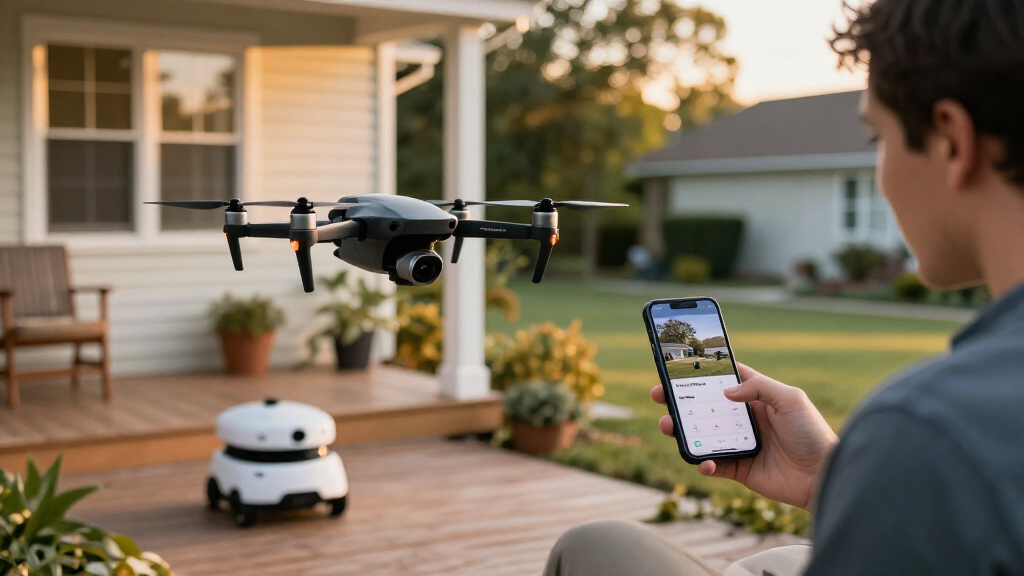
Ring says the Drone Cam can fly on a schedule or when requested, and can take off after a connected Ring device detects an event. Its listed specifications include 2K video, a 148-degree field of view, 360-degree rotation and two LED lights. Ring says the camera is off while the drone is docked. However, Ring also says the drone has not received authorization required under Federal Communications Commission rules and may not be sold until it does.
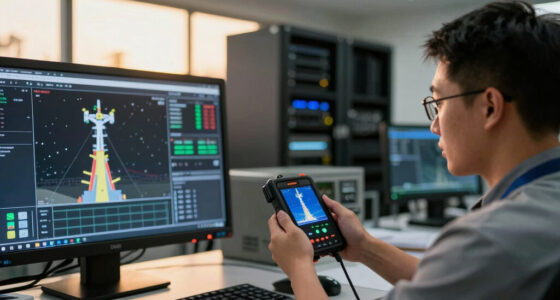
The Rover Cam is designed for shops and offices. Ring says it can patrol on a schedule, investigate alerts from other Ring devices and perform a 360-degree scan when it reaches a patrol point. It has a camera on an adjustable mast, two-way audio, a siren and a light tower. Ring says it can record in up to 4K while moving or patrolling, and can begin recording after detecting motion even when docked. The Verge reported launch-event details including an estimated 30-minute battery life and coverage of about 5,000 square feet on one floor; those figures were not included in the supplied Ring announcement details.
Mobile cameras extend patrols and raise privacy questions
Ring announced a home drone and a business patrol robot. Their planned launches depend on product approval and raise questions about recording, cloud processing and long-term support.
Two devices, different patrols
Both can move in response to schedules or alerts from connected Ring devices.
- Flies inside homes and can be scheduled or requested.
- Ring says its camera is off while docked.
- Sale depends on required FCC authorization.
- Wheeled robot designed to patrol shops and offices.
- Can record while moving and detect motion while docked.
- Scheduled patrols require a compatible Ring Protect plan.
What mobility changes
Moving cameras can cover places fixed cameras cannot, while making recording harder for people nearby to anticipate.
More rooms in view
A triggered flight can bring the camera toward an alert or another part of the home.
Patrols across a space
The Rover can investigate alerts and scan at patrol points, affecting workers and visitors as well as owners.
Privacy details to clarify
The supplied material leaves practical questions for households and businesses.
Ring says TAKE keys are temporarily accessible to its servers for cloud features; the details and audit process are not supplied.
Retention, access, deletion and subscription-end policies for patrol footage are not detailed.
The Verge reported that the drone can only land without internet; other offline and emergency behavior remains unclear.
Questions before deployment
| Consideration | What is stated | What remains unclear |
|---|---|---|
| Recording | Capabilities differ by device | Retention and review controls |
| Encryption | TAKE supports cloud features | Which features need server access |
| Support | Rover grew from Astro customer feedback | Long-term product support plans |
Mobile Cameras Expand Ring’s Reach
Unlike fixed cameras, these products are intended to move toward an alert or cover multiple locations. That could give a homeowner or business operator views that a wall-mounted camera cannot provide. It also means the camera may record in spaces and at times that are harder for people nearby to anticipate, particularly when a robot patrols automatically or responds to another device.
Ring’s stated recording policies differ by product. The drone is described as recording after a flight is triggered and having its camera off in its dock. Ring says the Rover records while it is moving or patrolling, and can detect motion and record while docked. These capabilities make clear recording indicators, access controls and reliable privacy settings consequential for workers, household members, customers and visitors, not only the device owner.
The products also depend on Ring’s connected services. The Verge reported that the drone’s processing is cloud-based and that without an internet connection it can only land. If that account is accurate, connectivity affects more than remote viewing: it could constrain how the drone responds during a network outage. Ring has not provided enough detail in the supplied material to establish how the devices behave in every offline or emergency scenario.
Popular right now

KitchenAid Artisan 5-Quart Tilt-Head Stand Mixer, Blue Velvet

De'Longhi Rivelia Automatic Espresso Machine with Grinder and Milk Frother, Beige

Ninja CREAMi 7-in-1 Ice Cream Maker, NC299AMZ
As an affiliate, we earn on qualifying purchases.
From Astro to Ring Robotics
The announcement builds on Ring’s earlier work on a mobile camera. CNBC reported that Ring previewed an indoor drone, then called the Always Home Cam, in 2020. The Verge reported that founder Jamie Siminoff said development had begun in 2016. Ring’s November announcement presents the drone as one part of a broader line alongside a patrol robot for businesses.
Ring says Rover grew from feedback from Amazon Astro customers who valued the robot’s security patrol features. But Amazon’s prior business offering is a relevant caution: The Verge reported that Astro for Business launched in 2023 and was discontinued about a year later. The source material does not say whether that product’s discontinuation was connected to the Rover launch or explain how Ring plans to support the new robot over time.
Ring says recordings will use Throw Away the Key encryption, or TAKE, which it announced on August 26, 2026. The company describes TAKE as inspired by end-to-end encryption. Under Ring’s description, its servers temporarily access encryption keys to support cloud features such as smart alerts, then delete them. Ring’s fully end-to-end encrypted option, in which only a customer’s devices hold the keys, remains an optional setting.
“For years, customers told us they wanted eyes in the places a fixed camera couldn’t reach, and peace of mind in the spots they’d never want one.”
— Jamie Siminoff, Ring founder and chief inventor, in Ring’s announcement
FCC Approval and Privacy Details
The Drone Cam’s FCC authorization status is unresolved in the announcement, which says the device has not been authorized as required and may not be sold before approval. Ring’s listed January 27, 2027 shipping date is therefore a planned date, not confirmation that sales will begin then.
Questions also remain about the products’ data handling and operation. The supplied materials do not detail how long footage is retained, who can access it, what happens to recordings if a subscription ends, or how customers can review and delete footage generated during automated patrols. Ring’s description of temporary server access to TAKE keys leaves open which cloud features require that access and how the process is audited.
Ring’s privacy assurances also come amid its earlier record. In May 2023, the Federal Trade Commission charged Ring with compromising customer privacy by allowing employees or contractors to access private videos and by failing to implement basic privacy and security protections. Those were allegations in an FTC complaint, not a finding established by the details supplied here. The source material does not state the outcome of that case, and it does not establish whether the new devices’ controls have been independently evaluated.
Launch Dates and Approval Ahead
The next immediate milestone is whether the Drone Cam receives the required FCC authorization before Ring’s planned US shipping date of January 27, 2027. Ring lists the Rover Cam for December 16, 2026. The company may provide additional product, subscription and privacy information as those dates approach; the supplied announcement does not set out further milestones.
Before buying or deploying either device, customers and businesses will need to weigh the listed prices and subscription requirement against how the products work in practice. Further information about offline operation, recording controls, data retention and support would help clarify how mobile patrols affect people who share or visit the spaces being monitored. Those details remain unconfirmed in the available source material.
Key Questions
What did Ring announce?
Ring announced Ring Robotics, a product line beginning with the Drone Cam, a flying indoor camera, and Rover Cam, a wheeled patrol robot aimed at businesses.
How much do the devices cost, and when are they expected to ship?
Ring lists Rover Cam at $999.99, with US shipping scheduled for December 16, 2026. Drone Cam is listed at $249.99, with US shipping scheduled for January 27, 2027. The drone may not be sold until it receives required FCC authorization.
Does Ring say the devices record all the time?
Ring says the Drone Cam records after a flight is triggered and its camera is off in its dock. Ring says Rover Cam records while moving or patrolling and may begin recording after motion detection even when docked. The supplied materials do not fully specify retention or every recording-control setting.
What is TAKE encryption?
Ring describes Throw Away the Key encryption as a system in which its servers temporarily access keys for cloud features such as smart alerts, then delete them. Ring says full end-to-end encryption, where only customer devices hold the keys, remains an optional setting. The Electronic Frontier Foundation has criticized TAKE as falling short of end-to-end encryption’s privacy protections.
Source: ThorstenMeyerAI.com