
Optical zoom uses lens movement to magnify your subject without losing image quality, keeping details sharp and clear. Digital zoom enlarges images digitally by cropping and stretching pixels, which can make your photos look blurry or pixelated. Knowing when to use each is key—optical is best for high-quality shots, while digital zoom may be handy in quick or casual shots. If you want to master how to get the best results, keep exploring these differences.

Get business pricing on monitors, keyboards and dev gear
- Business-only prices and quantity discounts
- Tax-exempt purchasing
- Multiple users, one account, clear invoices
Key Takeaways
- Optical zoom physically adjusts the lens to magnify images, maintaining image quality, unlike digital zoom which enlarges by cropping and stretching pixels.
- Digital zoom often causes pixelation and loss of detail, whereas optical zoom preserves resolution and sharpness.
- Optical zoom is preferred for professional photography, while digital zoom is convenient for quick, casual shots.
- Proper stabilization and high-resolution capture are essential when using digital zoom to minimize quality degradation.
- Choosing the right zoom type impacts final image clarity, detail, and overall photographic quality.
As an affiliate, we earn on qualifying purchases.
What Is Optical vs. Digital Zoom?

Have you ever wondered how cameras zoom in on distant objects? The answer lies in zoom mechanics and lens technology. Optical zoom changes the lens’s focal length, allowing you to get closer without sacrificing image quality. It uses physical lens adjustments, maintaining sharpness and detail. Digital zoom, on the other hand, enlarges the image digitally, cropping and stretching pixels to simulate zooming in. This process can make images look blurry or pixelated. Understanding these differences helps you decide which zoom type suits your needs. Optical zoom provides clear, detailed images, while digital zoom offers convenience but often at the cost of quality. Recognizing how zoom mechanics and lens technology work clarifies why optical zoom remains the preferred choice for sharp, high-quality photos. Additionally, digital zoom can be useful in situations where physical zoom is not feasible, though it’s generally less desirable for critical image quality.
As an affiliate, we earn on qualifying purchases.
How Does Optical Zoom Keep Your Images Clear?
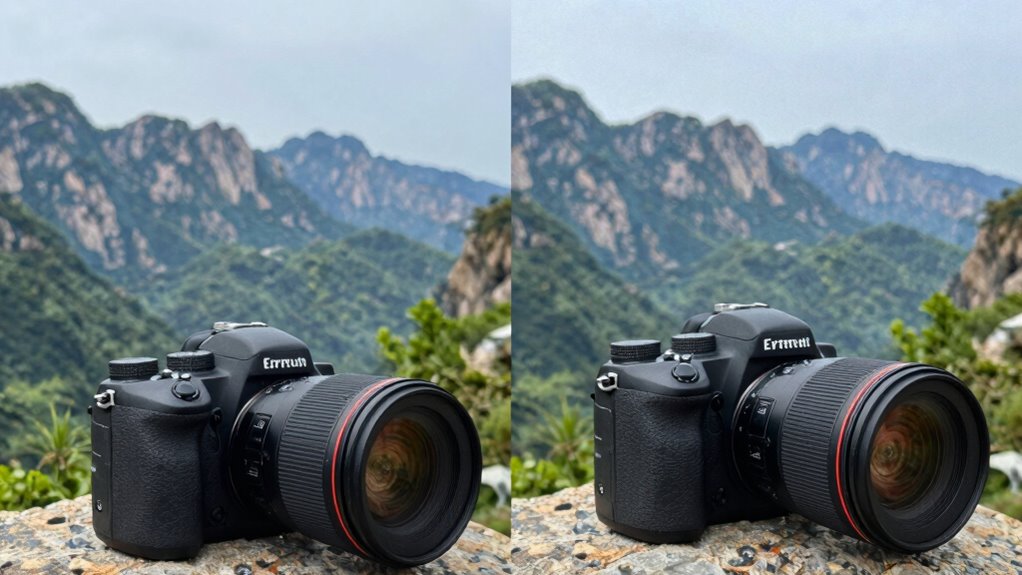
Optical zoom keeps your images clear by physically adjusting the camera’s lens elements to magnify the scene. This process relies on lens mechanics to maintain image quality. When you zoom in, the lens moves internally to enlarge the view without sacrificing resolution. Here’s how it works:
- The camera’s lens elements shift to focus on a specific part of the scene.
- This movement preserves the original image resolution.
- The optical system maintains sharpness by avoiding pixelation.
- The result is a clear, detailed image even at high zoom levels.
- Proper lens maintenance and correct calibration ensure consistent zoom performance and image clarity. Additionally, the precision of the lens adjustments is crucial for maintaining image quality during zooming.
- Understanding exponential growth in zoom capabilities highlights why optical zoom offers significantly better results compared to digital methods. Since optical zoom relies on physical adjustments, it reduces the chances of introducing digital artifacts that can degrade image quality.
Because it uses physical lens adjustments, optical zoom prevents image degradation common with digital methods. Your photos stay crisp, with accurate detail, ensuring your images remain sharp and true to life.
As an affiliate, we earn on qualifying purchases.
When Should You Use Digital Zoom?

Digital zoom is useful when you need to get closer to your subject quickly, especially if you don’t have access to a zoom lens with optical zoom. It’s handy in situations where changing lenses isn’t practical, like capturing candid moments or spontaneous scenes. When using digital zoom, make sure your camera has good image stabilization, as zooming in amplifies any handshake or movement. This is similar to how golf history highlights the importance of technique and precision in achieving success. This helps prevent blurry images and maintains some level of clarity. Keep in mind, digital zoom enlarges the image electronically, which can reduce quality, so it’s best suited for situations where high detail isn’t critical. Use digital zoom sparingly and only when you’re confident that slight quality loss won’t ruin your shot. Additionally, understanding the difference between optical and digital zoom can help you make smarter choices based on your needs. Knowing about color vibrancy and protection in camera settings can also improve your results when zooming in digitally. Furthermore, being aware of image quality considerations can help you decide when digital zoom is appropriate.
As an affiliate, we earn on qualifying purchases.
Tips for Getting the Best Quality When Using Digital Zoom

To get the best quality when using digital zoom, start by stabilizing your camera to minimize shake, since zooming magnifies any movement. This helps guarantee your image resolution remains sharp. Next, consider these tips:
- Use a steady hand or tripod to keep the camera stable.
- Avoid excessive zoom; stay within the camera’s maximum digital zoom range.
- Increase lighting to improve image clarity and reduce noise.
- Capture images at the highest possible resolution to maximize detail before zooming.
- Be aware of essential oils that can help improve focus and relaxation during photography sessions. Additionally, using camera stabilization techniques can further enhance your image quality. Incorporating a growth mindset toward learning new photography skills can also lead to better results over time.
Common Mistakes to Avoid With Zoom

While zooming can enhance your photos, many beginners make common mistakes that compromise image quality. One mistake is neglecting lens distortion, which can cause straight lines to appear curved, especially with digital zoom. To avoid this, use optical zoom whenever possible and be mindful of lens limitations. Another mistake is losing focus stability; when zoomed in, your camera’s autofocus might struggle, resulting in blurry images. Always verify your camera maintains focus before capturing the shot, especially at higher zoom levels. Moving the camera slightly or adjusting focus manually can help. Additionally, avoid over-zooming beyond the camera’s effective range, which can cause pixelation and loss of detail. Being aware of these pitfalls helps you capture sharper, clearer images with proper zoom techniques. Understanding digital image quality can help you recognize when your zooming techniques are affecting the final result, and paying attention to lens distortion can significantly improve your photo outcomes. Recognizing how different zoom techniques impact image clarity is essential for capturing high-quality photos. Incorporating knowledge about optical zoom capabilities can further enhance your understanding of when to rely on different zoom methods.
Choosing the Right Zoom for Your Camera
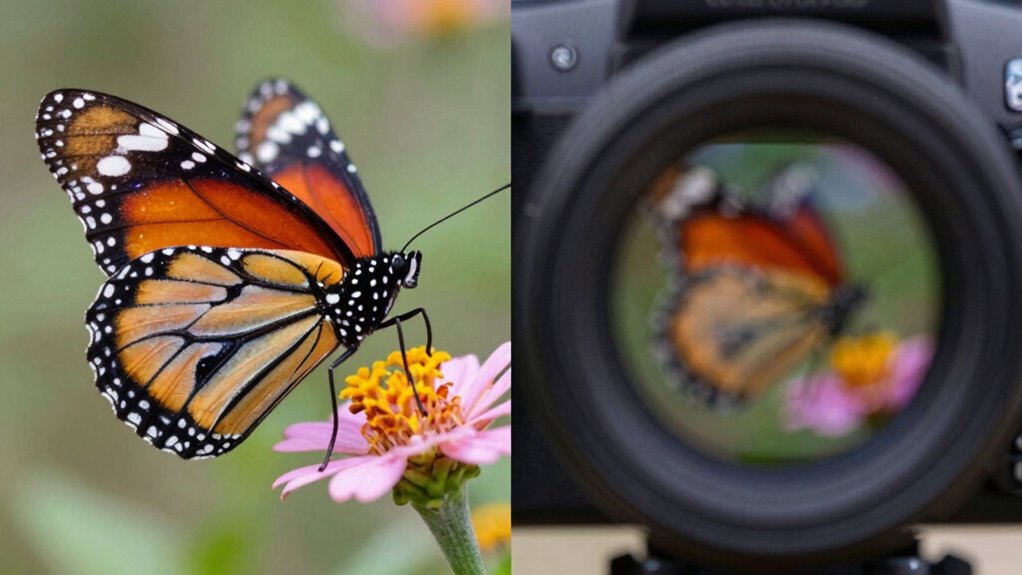
Have you ever wondered how to choose the right zoom for your camera? It starts with understanding your needs. First, check lens compatibility to guarantee the zoom fits your camera body. Second, consider your preferred zoom range—do you want wide-angle shots or close-ups? Third, evaluate whether optical zoom meets your requirements, as digital zoom can reduce quality. Fourth, think about your shooting environment; for versatile conditions, a lens with a broader zoom range offers more flexibility. Remember, a compatible lens with the right zoom range makes capturing sharp, high-quality images easier. Additionally, understanding water chemistry can help maintain your equipment in optimal condition, especially in challenging environments. Knowing how different environmental factors impact your gear can also assist in choosing the appropriate protective measures. Being aware of AI applications in photography can also enhance your shooting techniques and post-processing skills. Avoid sacrificing quality for higher zoom numbers—opt for the best optical zoom your camera can support, and match it with your photography style for ideal results.
Frequently Asked Questions
Can Digital Zoom Damage My Camera’s Sensor?
Digital zoom itself doesn’t directly damage your camera’s sensor, but it can harm sensor protection over time if you push your camera to its limits. Relying heavily on digital zoom can reduce image quality because it enlarges pixels, making images look pixelated or blurry. To preserve sensor protection and maintain image quality, use optical zoom when possible and avoid excessive digital zoom, which can degrade your photos.
Is Optical Zoom Always Better Than Digital Zoom?
Optical zoom is generally better than digital zoom because it maintains image quality, using physical lens adjustments to enlarge your subject. Digital zoom enlarges the image digitally, often sacrificing clarity and detail. While optical zoom might cost more upfront, it provides sharper images without degrading quality. So, if you want clearer photos and are willing to invest, optical zoom is the smarter choice, especially for important or detailed shots.
How Does Zoom Affect Battery Life?
Zoom can drain your battery faster, especially when you use higher levels or digital zoom, which requires extra processing power. To conserve battery life, you should focus on zoom stability by avoiding unnecessary zooming and enabling battery optimization features on your device. Keep your device’s software updated, and use optical zoom when possible, as it’s more efficient and less taxing on your battery compared to digital zoom.
Are There Smartphones With Superior Digital Zoom?
Yes, some smartphone cameras feature superior digital zoom, thanks to advanced zoom technology. Brands like Samsung, Huawei, and Sony incorporate AI-powered zoom features that enhance image quality at higher magnifications. These smartphones utilize sophisticated algorithms to minimize quality loss, allowing you to capture clearer, more detailed photos even when zoomed in digitally. Keep an eye on models with cutting-edge zoom technology if you want better digital zoom performance.
What Is Hybrid Zoom and How Does It Differ?
Hybrid zoom combines optical and digital zoom through hybrid technology, enhancing your zoom capabilities. It uses advanced zoom mechanics, blending optical clarity with digital extension, to provide a smoother, more detailed image at higher magnifications. Unlike purely digital zoom, hybrid zoom minimizes quality loss, giving you clearer shots from a distance. This approach is especially useful when you need to extend your zoom range without sacrificing too much image quality.
Conclusion
Understanding the difference between optical and digital zoom helps you capture sharper, clearer images. For instance, if you’re photographing wildlife from a distance, opt for optical zoom to preserve detail. Digital zoom, while handy in a pinch, can introduce graininess. By choosing the right zoom and following best practices, you’ll guarantee your photos look professional—whether you’re capturing a sunset or a sports event. Master these techniques to make every shot count.
Fall Picks
fall essentials
As an affiliate, we earn on qualifying purchases.