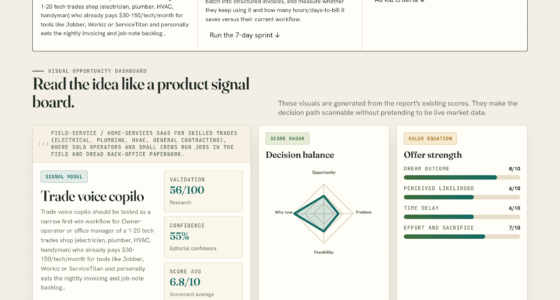

📊 Full opportunity report: Apple Is Reaching For Chinese Memory. Europe Doesn’t Even Have That Option. on ThorstenMeyerAI.com — validation score, market gap, and execution plan.
TL;DR
Apple is lobbying US authorities to purchase memory chips from Chinese firm CXMT, revealing its dependence on China. Europe lacks similar leverage or options, exposing vulnerabilities in its supply chain.
Apple is lobbying the US government for permission to purchase memory chips from CXMT, a Chinese manufacturer on the Pentagon’s blacklist. This move comes shortly after Apple raised prices on Macs and iPads, citing a global memory shortage. The development underscores Apple’s reliance on Chinese memory supply chains and highlights Europe’s absence of similar options, as Europe produces almost no memory chips itself.
According to reports from Thorsten Meyer AI, Apple’s effort to secure Chinese memory chips signals its willingness to bypass restrictions and diversify supply sources amid ongoing shortages. The company’s lobbying efforts follow recent price hikes on key products, emphasizing the critical role of memory chips in manufacturing.
Meanwhile, Europe remains heavily dependent on external suppliers for memory chips, with less than 10% of global semiconductor manufacturing by value occurring within the EU. The continent’s few remaining memory manufacturers, including companies like SK Hynix and Micron, are located outside Europe, primarily in East Asia and the US.
European policymakers face significant hurdles in developing domestic memory production. Existing tools—subsidies, regulation, and public procurement—are insufficient to establish leading-edge fabrication facilities, which require massive investment and specialized knowledge. Major projects like Intel’s Magdeburg plant and the STMicro/GlobalFoundries fab have stalled or collapsed, illustrating the scale of the challenge.
Apple is reaching for Chinese memory. Europe doesn’t even have that option.
The shortage exposes America’s dependence — and Europe’s far more brutally. Apple has a domestic supplier, political weight, and the China option. Europe has no memory of its own, no seat at the table, no leverage on what counts.
- EU makes < 10% of the world’s semiconductors
- Effectively no DRAM, no HBM from Europe
- 3–4 memory makers worldwide — none European
- Pure price-taker: memory ~4× in 3 quarters
- ASML: EUV monopoly — no leading-edge chip without it
- Zeiss: precision optics, unrivalled worldwide
- imec · CEA-Leti · Fraunhofer: world-class research
- Infineon, NXP, STMicro: automotive · power · SiC
The shortage is a sovereignty test — Europe fails on supply but still holds the leverage in its hand. If even Apple can’t buy its way out, Europe’s answer isn’t to buy its way in, but to run two tracks: press the unique chokepoints as real leverage — and cut dependence wherever it can without Brussels: local-first, open weights, quantization, right-sized hardware. Bury the 20% dream, defend what’s yours, need less.
Implications of Europe’s Memory Supply Limitations
This situation exposes Europe’s vulnerability in the global supply chain for critical components like memory chips. Unlike Apple, which can lobby in Washington or turn to Chinese suppliers, Europe has no comparable leverage or domestic capacity. The dependence on external sources makes Europe susceptible to price fluctuations, supply disruptions, and geopolitical tensions, especially as memory prices have surged multiple times over recent quarters.
Furthermore, Europe’s limited manufacturing capacity constrains its ability to participate fully in emerging AI and high-performance computing markets, which rely heavily on advanced memory technologies like HBM. The lack of a domestic supply chain could hinder Europe’s competitiveness and strategic autonomy in the tech sector.

Chiffonade SP200SE Enhanced Version EEPROM Memory Chip Programmer with USB Interface for Microchip SST ST WINBOND STC MSP430(SP200SE/SP200S)
- Universal Compatibility: Supports various ICs via USB-TTL interface
- Dual-Language Software: Chinese and English interface, low system requirements
- All-in-One Functionality: Programming, reading, erasing, verifying, encryption, ISP
As an affiliate, we earn on qualifying purchases.
As an affiliate, we earn on qualifying purchases.
Europe’s Semiconductor and Memory Manufacturing Landscape
Europe’s share of global semiconductor manufacturing is less than 12%, with memory chips like DRAM and HBM produced predominantly outside the continent. The number of European memory manufacturers has dwindled from over twenty in the 1990s to just a handful today, with none involved in high-end or high-volume memory production.
Major fabrication facilities and design centers are located in East Asia and the US, with European efforts hampered by high costs, regulatory hurdles, and the absence of a dense supplier ecosystem. The EU’s Chips Act aims to boost market share to 20% by 2030, but experts estimate that reaching this goal would require over €250 billion—funding that is not yet available.
However, Europe controls key chokepoints, such as ASML’s monopoly on EUV lithography machines, which are essential for manufacturing advanced chips. This positions Europe as a critical upstream player, but not as a self-sufficient producer.
“Europe remains heavily reliant on external sources for memory chips, and building domestic capacity remains a significant challenge.”
— European Commission official
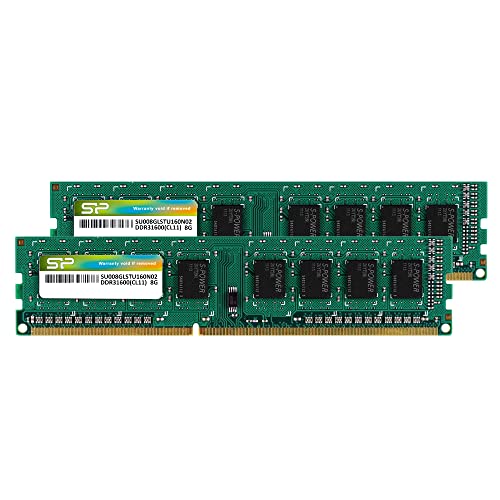
Silicon Power DDR3 16GB (2 x 8GB) 1600MHz (PC3 12800) 240-pin CL11 1.35V / 1.5V Unbuffered UDIMM PC Computer Desktop Memory Module Ram Upgrade
- Voltage and Power Efficiency: Reduces power consumption by 20% at 1.35V
- System Upgrade Compatibility: Ideal for virtualization, cloud computing, multitasking
- Factory-Tested Durability: Ensures stability, durability, and compatibility
As an affiliate, we earn on qualifying purchases.
As an affiliate, we earn on qualifying purchases.
Unclear Impact of US-China Tensions on Supply Chains
It is still uncertain how US-China tensions and export controls will evolve, and whether Europe can leverage its existing chokepoints to mitigate supply risks. The effectiveness of upcoming EU policies and investments in closing the fabrication gap remains to be seen.
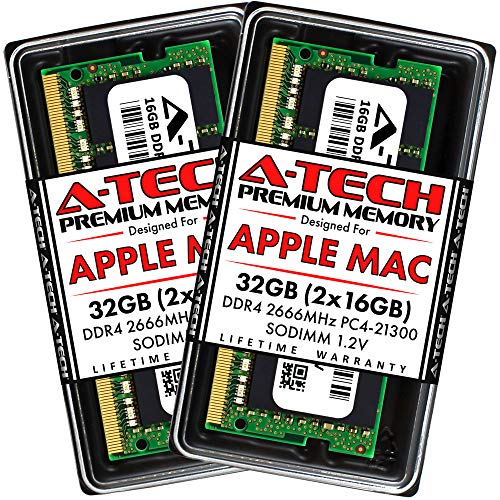
A-Tech 32GB Kit (2x16GB) RAM for Apple iMac & Mac mini (2018, 2019 & 2020) | DDR4 2666 MHz SODIMM PC4-21300 / PC4-21333 260-Pin SO-DIMM Memory Upgrade
- Total Capacity: 32GB (2x16GB) kit
- Memory Speed: DDR4 2666/2667 MHz
- Form Factor: 260-Pin SO-DIMM
As an affiliate, we earn on qualifying purchases.
As an affiliate, we earn on qualifying purchases.
Next Steps in European Semiconductor Strategy
European policymakers are expected to accelerate efforts under the Chips Act, focusing on advanced packaging, new memory architectures, and strengthening key supply chain chokepoints like ASML. Monitoring developments in US-China relations and global supply agreements will be crucial to understanding Europe’s future capabilities.
European semiconductor supply chain products
As an affiliate, we earn on qualifying purchases.
As an affiliate, we earn on qualifying purchases.
Key Questions
Why is Apple lobbying the US government for Chinese memory chips?
Apple seeks to diversify its supply sources amid a global memory shortage and to reduce dependency on East Asian manufacturers, especially in times of geopolitical tension.
Why does Europe struggle to develop its own memory chip industry?
Europe faces high costs, regulatory barriers, and a lack of dense supplier ecosystems, making it difficult to establish large-scale, advanced memory fabrication facilities.
What are Europe’s key advantages in the semiconductor supply chain?
Europe controls critical chokepoints like ASML’s EUV lithography machines and has strong research institutions, but it lacks domestic capacity for high-volume memory manufacturing.
Could Europe’s dependence on external memory suppliers threaten its tech competitiveness?
Yes, reliance on external sources exposes Europe to supply disruptions and price volatility, potentially limiting its participation in AI and high-performance computing markets.
What is the EU doing to improve its semiconductor independence?
The EU has launched the Chips Act and related initiatives to boost domestic capacity, but significant challenges remain in building fabrication facilities and supply chain resilience.
Source: ThorstenMeyerAI.com