

A great debrief right after a study session involves actively reflecting on what you learned, asking targeted questions about which topics were clear and which were tough, and comparing your expectations with actual outcomes. Seek feedback from peers or yourself to uncover blind spots and improve strategies. Use journaling or self-assessment to track progress and adjust accordingly. Focusing on your habits and environment helps solidify understanding—keep exploring to discover even more effective techniques.

Get business pricing on monitors, keyboards and dev gear
- Business-only prices and quantity discounts
- Tax-exempt purchasing
- Multiple users, one account, clear invoices
Key Takeaways
- Engage actively by asking reflective questions about understanding and challenges faced during the session.
- Compare actual outcomes with initial expectations to identify gaps and areas for improvement.
- Seek external feedback from peers or instructors to gain new perspectives on your progress.
- Use journaling or self-assessment to track what strategies worked and what needs adjustment.
- Focus on understanding how habits and environment influenced your learning to optimize future sessions.
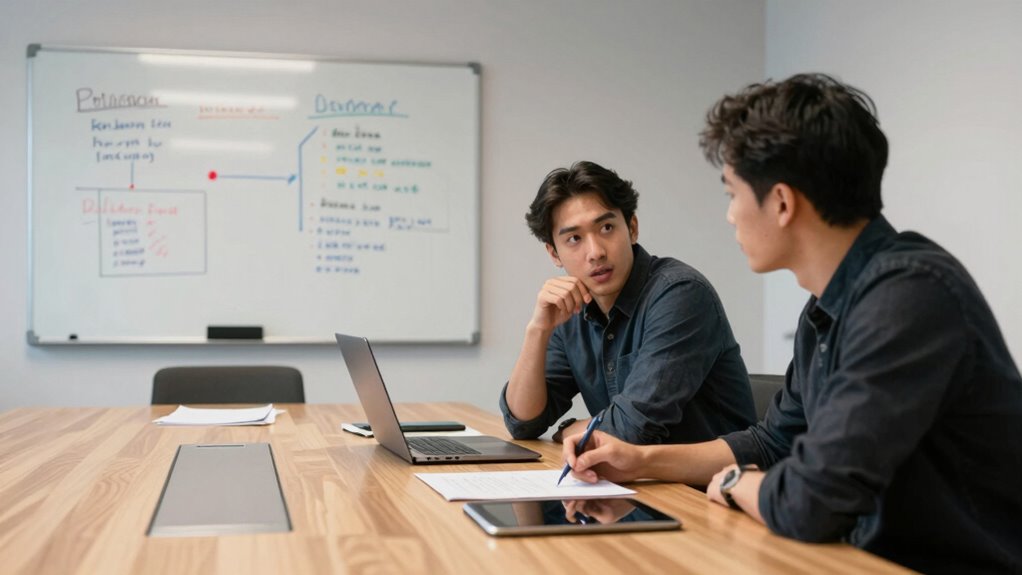
Have you ever wondered why some study sessions stick with you better than others? The key often lies in how you debrief afterward. A great debrief isn’t just about reviewing what you learned; it’s about actively engaging with your experience to solidify your understanding and identify areas for improvement. To make your debrief effective, you should ask yourself reflective questions that prompt you to analyze what went well and what didn’t. For example, consider asking, “Which topics did I grasp easily, and which ones felt challenging?” or “Did I find certain study methods more effective than others?” These questions help you focus your attention on your learning process, making your future sessions more targeted and efficient.
Feedback techniques play a crucial role in a successful debrief. Instead of passively reviewing material, you want to gather insights about your performance. One effective method is to compare your expectations with actual outcomes. Did you accomplish your goals? If not, what barriers got in the way? Reflective questions like these help you pinpoint specific obstacles and adapt your strategies accordingly. Additionally, seeking feedback from peers or instructors can provide a different perspective, highlighting blind spots you might miss on your own. This external input enriches your understanding, ensuring you don’t just reinforce what you already know but also uncover gaps in your knowledge.
Seek feedback from peers or instructors to uncover blind spots and deepen your understanding.
A great debrief isn’t a one-way process; it involves a cycle of reflection and adjustment. As you process your study session, consider what worked well and how you can replicate those conditions in the future. Conversely, identify what didn’t go as planned and brainstorm alternative approaches. Feedback techniques, such as journaling or self-assessment, help you track your progress over time. Regularly asking yourself reflective questions keeps your learning intentional and focused. It’s not enough to just review material—you need to understand how your habits and methods influence your retention and comprehension. Incorporating awareness of piercing care and hygiene can also remind you of the importance of consistent self-maintenance to prevent setbacks and infections, whether in personal health or learning routines. Recognizing the significance of natural pool filtration and its principles can inspire you to develop sustainable habits for maintaining your own learning ecosystem. Developing an understanding of effective learning environments can further enhance your ability to create optimal conditions for study and reflection.
Ultimately, a well-conducted debrief transforms every study session into a learning opportunity. By integrating reflective questions and feedback techniques, you actively participate in your development rather than passively absorbing information. This process makes your study time more purposeful, helping you build confidence and mastery. So, after your next session, take a few moments to ask yourself meaningful questions, seek feedback where possible, and plan your next steps. Developing effective debriefing strategies can significantly enhance your academic growth and retention. Engaging in regular self-reflection reinforces the importance of understanding how your learning environment and habits influence your progress and helps you adopt more effective strategies for success. Doing so turns a simple review into a powerful tool for continuous growth and academic success.
study session reflection journal
As an affiliate, we earn on qualifying purchases.
As an affiliate, we earn on qualifying purchases.
Frequently Asked Questions
How Long Should a Debrief Last?
A debrief should last around 10 to 15 minutes, giving you enough time to reflect on your study techniques and gather feedback methods. During this period, focus on identifying what worked well and what didn’t, while keeping the discussion concise and engaging. Shorter sessions maintain energy and encourage honest feedback, helping you improve your strategies for next time without feeling overwhelmed or rushed.
Who Should Participate in the Debrief?
You should include everyone involved in the study session in the debrief, such as classmates or study partners. Their feedback techniques are valuable for understanding different perspectives and improving study habits. By actively participating, they can share insights and suggestions, helping everyone identify what worked well and what needs adjustment. Engaging all participants ensures an exhaustive debrief, fostering continuous improvement and stronger study habits for future sessions.
What if There Are Disagreements During the Debrief?
When disagreements arise, handle them with gentle conflict resolution by encouraging respectful perspective sharing. You can diffuse tension by acknowledging differing viewpoints and emphasizing common goals. Foster an environment where everyone feels heard and valued. This openness not only clarifies misunderstandings but also strengthens team cohesion. Remember, disagreements can be opportunities for growth, so guide the discussion constructively to guarantee all voices contribute to a richer understanding.
How Can I Make Debriefs More Engaging?
To make debriefs more engaging, you should encourage mindful reflection and use creative questioning. Ask open-ended questions that prompt deeper thinking, like “What surprised you most?” or “How could you approach this differently?” Incorporate activities like quick polls or small group chats to keep energy high. By fostering curiosity and self-awareness, you create a space where everyone feels involved and motivated to share their insights actively.
When Is the Best Time to Schedule a Debrief?
You should schedule a debrief immediately after your study session, ideally within 15 to 30 minutes, while the experience is fresh. This timing helps you analyze your study environment and apply effective feedback techniques. Being prompt guarantees your insights are accurate, and you can quickly adjust your methods for future sessions. A timely debrief keeps your learning process dynamic, focused, and continuously improving.
As an affiliate, we earn on qualifying purchases.
Conclusion
A great debrief turns a simple study session into a powerful learning experience. It’s like sharpening a blade after honing it—refreshing your understanding while revealing new insights. Without it, your efforts might feel like a puzzle missing pieces. But with a thoughtful debrief, you connect the dots, solidify your knowledge, and prepare for what’s next. It’s the quiet moment that transforms effort into mastery—an essential bridge from studying to success.
peer feedback notebook for students
As an affiliate, we earn on qualifying purchases.
As an affiliate, we earn on qualifying purchases.
As an affiliate, we earn on qualifying purchases.
Halloween Picks
halloween
As an affiliate, we earn on qualifying purchases.