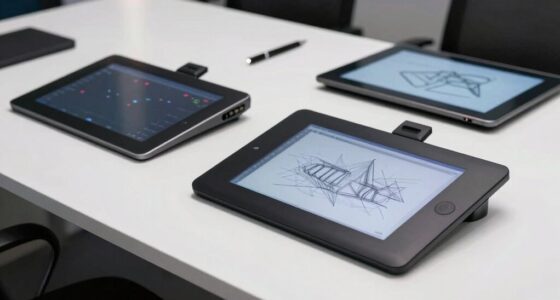
If you’re looking for the best drawing tablets for UX design in 2026, I recommend the Wacom Intuos Small for precise control, the XPPen Deco 01 V3 with its high-pressure stylus, the XOPPOX 10×6 Inch for a larger drawing area, and the compact XPPen 6×4 Inch for portability. Each offers great features like customizable shortcuts and versatile compatibility. Keep exploring to discover which one fits your workflow perfectly and enhances your creative process.
Key Takeaways
- Top models like Wacom Intuos Small and XPPen Deco 01 V3 offer high pressure sensitivity and customizable shortcut keys for efficient UX design workflows.
- Compatibility across OS platforms (Windows, macOS, Android, Chrome OS) and software support ensure seamless integration with popular design tools.
- Consider size and portability to balance workspace needs with on-the-go flexibility for effective UX sketching and prototyping.
- High-pressure sensitivity (≥8,192 levels) and tilt support enhance natural shading and detailed sketches crucial for UX mockups.
- Ergonomic stylus design, lag-free response, and workflow-enhancing features improve comfort, precision, and productivity during long design sessions.
| Wacom Intuos Small Graphics Drawing Tablet | 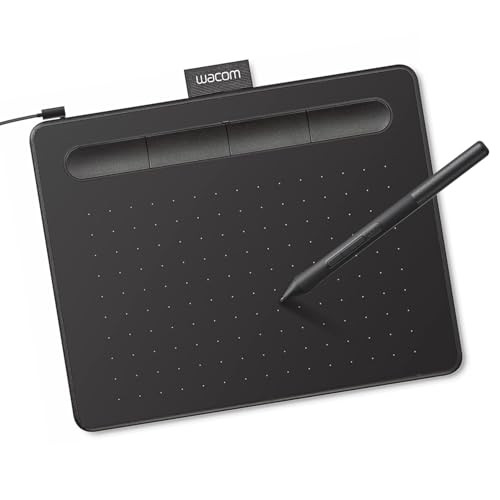 | Professional Precision | Compatibility: Chromebook, Mac, Android, Windows | Stylus Technology: EMR, battery-free | Size/Active Area: Small (7.9 x 6.3 inches) | VIEW LATEST PRICE | See Our Full Breakdown |
| XPPen Deco 01 V3 Drawing Tablet with Stylus |  | Versatile & Portable | Compatibility: Windows 7+/macOS 10.13+/Android 10.0+/Chrome OS 88+/Linux | Stylus Technology: 16,384 pressure levels, battery-free, tilt support | Size/Active Area: 10 x 6.25 inches | VIEW LATEST PRICE | See Our Full Breakdown |
| XOPPOX 10×6 Inch Drawing Tablet with Stylus |  | Creative Powerhouse | Compatibility: Windows XP/7/8/10/11, Android 4.4+, macOS 11+ | Stylus Technology: 8192 pressure levels, battery-free | Size/Active Area: 10 x 6 inches | VIEW LATEST PRICE | See Our Full Breakdown |
| XPPen 6×4 Inch Drawing Tablet with Stylus |  | Compact & Responsive | Compatibility: Windows 7+/macOS 10.12+/Android 10.0+/Chrome OS 88+/Harmony OS 2+ | Stylus Technology: 16,384 pressure levels, battery-free, tilt support | Size/Active Area: 6 x 4 inches | VIEW LATEST PRICE | See Our Full Breakdown |
More Details on Our Top Picks
-
XPPen Updated Deco 01 V3 Drawing Tablet-16384 Levels of Pressure Battery-Free Stylus, 10x6 Inch OSU Graphic Tablet, 8 Hotkeys for Digital Art, Teaching, Gaming Drawing Pad for Chrome, PC, Mac, Android
Word-first 16K Pressure Levels: The upgraded stylus features 16,384 levels of pressure sensitivity and supports up to 60...
As an affiliate, we earn on qualifying purchases.
Wacom Intuos Small Graphics Drawing Tablet
If you’re a UX designer looking for a compact yet powerful drawing tablet, the Wacom Intuos Small is an excellent choice. It offers industry-leading performance with precise control thanks to EMR technology that feels just like pen on paper. The tablet is battery-free, making it lightweight and easy to use for long sessions. It includes four customizable ExpressKeys and works seamlessly with Chromebook, Mac, Android, and Windows. Plus, it comes with software and training resources to boost your skills. Trusted by professionals for over 40 years, Wacom’s Intuos Small is a versatile tool for sketching, editing, and designing on the go.
- Compatibility:Chromebook, Mac, Android, Windows
- Stylus Technology:EMR, battery-free
- Size/Active Area:Small (7.9 x 6.3 inches)
- Customizable Keys:4 ExpressKeys
- Portability:Compact, portable
- Additional Controls:Software, training included
- Additional Feature:Industry-leading pen technology
- Additional Feature:Includes creative software and training
- Additional Feature:Mimics pen on paper feel
-
XOPPOX Graphics Drawing Tablet, 10×6 Inch Large Active Area with Battery-Free Stylus, 8192 Levels of Pen Pressure and 12 Hot Keys, Compatible with PC/Mac/Android for Painting, Design & Online Teaching
【Broad Compatibility】XOPPOX upgraded drawing tablet is compatible with Windows XP/7/8/10/11, Android 4.4 and above, and macOS 11 or...
As an affiliate, we earn on qualifying purchases.
XPPen Deco 01 V3 Drawing Tablet with Stylus
The XPPen Deco 01 V3 Drawing Tablet with Stylus stands out as an excellent choice for UX designers who need a versatile and portable device for sketching, wireframing, and concept development. Its stylus offers 16,384 pressure levels and supports tilt, enabling natural shading and smooth lines. The tablet’s large 10 x 6.25-inch drawing area, combined with 8 customizable shortcut keys, enhances workflow and comfort for both right- and left-handed users. Lightweight and compact, it connects via USB-C and works seamlessly with multiple operating systems and software. Its intuitive design, along with features like lighting for dark environments, makes it a reliable tool for creative professionals on the go.
- Compatibility:Windows 7+/macOS 10.13+/Android 10.0+/Chrome OS 88+/Linux
- Stylus Technology:16,384 pressure levels, battery-free, tilt support
- Size/Active Area:10 x 6.25 inches
- Customizable Keys:8 shortcut keys
- Portability:Compact, lightweight
- Additional Controls:Physical stylus stand, glove, Nibs
- Additional Feature:Large 10 x 6.25-inch area
- Additional Feature:Comes with glove and multiple nibs
- Additional Feature:Supports Android device mapping
-
XPPen 6 * 4 inch Drawing Tablet with 16384 Pressure Levels IT640 Digital Graphic Art Tablet Battery-Free Stylus 60° Tilt Support OSU Drawing Pad for Beginner Compatible with Android Windows macOS
Professional 16K Pressure Pen with 60° Tilt: Draw with confidence using the advanced, battery-free stylus. Featuring 16384 levels...
As an affiliate, we earn on qualifying purchases.
XOPPOX 10×6 Inch Drawing Tablet with Stylus
The XOPPOX 10×6 Inch Drawing Tablet with Stylus stands out as an excellent choice for UX designers who need a reliable, spacious tool for detailed sketches and interface mockups. Its large 10×6-inch active area provides ample space for precise work, while the battery-free stylus with 8192 pressure levels ensures smooth, natural lines without interruptions. Compatibility spans Windows, Android, and macOS, making setup straightforward after driver installation. The tablet also features 12 customizable shortcut keys and 10 multimedia keys on Windows, boosting workflow efficiency. Overall, it’s a versatile, user-friendly device perfect for professional UX design, digital art, and remote collaboration.
- Compatibility:Windows XP/7/8/10/11, Android 4.4+, macOS 11+
- Stylus Technology:8192 pressure levels, battery-free
- Size/Active Area:10 x 6 inches
- Customizable Keys:12 shortcut keys, 10 multimedia keys (Windows)
- Portability:Large, not specified as portable
- Additional Controls:Replacement nibs, driver setup
- Additional Feature:20 replacement nibs included
- Additional Feature:Compatible with multiple OS
- Additional Feature:Designed for detailed work
XPPen 6×4 Inch Drawing Tablet with Stylus
For UX designers seeking a portable, precise drawing tool, the XPPen 6×4 Inch Drawing Tablet with Stylus stands out thanks to its battery-free stylus with 16,384 pressure sensitivity levels. Its compact size makes it easy to carry anywhere, perfect for quick annotations or detailed sketches on the go. Compatible with Windows, macOS, Android, Chrome OS, and Harmony OS, it connects via USB or OTG adapter for versatile use. The stylus supports 60° tilt for natural shading, and the device features 8 customizable soft keys to streamline your workflow. While it requires a connection to a computer or device, it’s an excellent choice for flexible, precise digital work.
- Compatibility:Windows 7+/macOS 10.12+/Android 10.0+/Chrome OS 88+/Harmony OS 2+
- Stylus Technology:16,384 pressure levels, battery-free, tilt support
- Size/Active Area:6 x 4 inches
- Customizable Keys:8 soft keys
- Portability:Compact, lightweight
- Additional Controls:Shortcut keys, multimedia keys
- Additional Feature:Ultra-low latency performance
- Additional Feature:Supports OSU gaming mode
- Additional Feature:Compact, lightweight design
Factors to Consider When Choosing Drawing Tablets for UX Designers
When choosing a drawing tablet for UX design, I focus on how well it functions with my devices and the degree of pressure sensitivity it provides. Size and portability are also important, so I can work comfortably anywhere, while customizable shortcut keys help accelerate my workflow. Finally, I verify software compatibility to guarantee I can smoothly incorporate the tablet into my current design tools.
Compatibility With Devices
Ever wondered if your drawing tablet will work seamlessly with your device? Compatibility is essential. First, check if the tablet supports your operating system—Windows, macOS, Android, or Chrome OS—to avoid surprises. Next, consider connection types like USB-C, USB-A, OTG adapters, or wireless options, making sure they match your hardware setup. It’s also vital to verify if the tablet supports the design software you use, such as Adobe XD, Figma, or Sketch. Don’t forget to confirm whether it’s compatible with your device’s hardware specs, like screen size and processing power, for smooth performance. Finally, features like tilt sensitivity and pressure levels matter for detailed UX work, so make sure the tablet supports these if they’re important to your workflow.
Pressure Sensitivity Levels
Pressure sensitivity levels are a crucial factor in choosing a drawing tablet for UX design, as they directly impact your ability to create detailed and natural-looking sketches. Most professional tablets offer at least 8,192 pressure levels, giving you a broad dynamic range for nuanced work. Higher sensitivity allows for more subtle variations in stroke thickness and opacity, which enhances wireframes and mockups. Devices with adjustable pressure settings let you tailor the experience to your artistic style, offering greater control. Conversely, lower pressure sensitivity can limit your ability to produce fine details and delicate shading, reducing overall precision. For UX designers aiming for high-quality, realistic sketches, investing in a tablet with ample pressure levels is essential to bring your ideas to life effectively.
Size and Portability
Choosing the right size and portability for a drawing tablet depends on how I plan to use it and where I’ll work. Larger tablets offer more workspace for detailed UX design, but they’re often less portable and more cumbersome to carry around. Smaller tablets, typically between 6×4 inches and 10×6 inches, are lightweight and easy to transport, making them perfect for working on the go. The size should match my workspace and comfort preferences to avoid strain during long sessions. Portability isn’t just about size; weight and connectivity also matter. A compact, lightweight tablet that connects easily to various devices guarantees I can work efficiently anywhere. Balancing screen space with ease of transport is key to choosing the right device.
Customizable Shortcut Keys
Customizable shortcut keys are a essential feature for UX designers because they can considerably enhance workflow efficiency. By assigning frequently used functions, I can access tools like brush, eraser, or undo instantly, avoiding menu navigation. The number of shortcut keys varies across tablets, with some offering up to eight or more, providing versatile command access. Programmable keys allow quick switching between tools, which speeds up complex design tasks. Properly configured shortcuts help streamline workflows and boost productivity. Additionally, ergonomic placement and tactile feedback are important, especially during long sessions, to reduce strain and maintain comfort. When choosing a drawing tablet, I look for models that combine a good number of customizable keys with ergonomic design, ensuring I can work efficiently without sacrificing comfort.
Software Compatibility
When selecting a drawing tablet for UX design, guaranteeing software compatibility is essential. You want to confirm the tablet works seamlessly with your preferred programs like Adobe XD, Sketch, or Figma. Check if it supports industry-standard file formats and integrates smoothly with your design tools. It’s also important to verify compatibility with your operating system, whether Windows, macOS, or Linux, to prevent any driver or software issues. Consider tablets that offer customizable shortcut keys to speed up your workflow within your favorite UX software. Finally, make sure the tablet can handle pressure sensitivity and tilt features, which are critical for detailed wireframes and prototypes. Prioritizing these compatibility factors helps ensure a smooth, efficient design process without technical hiccups.
Stylus Comfort and Precision
A comfortable and precise stylus can make a significant difference in my workflow as a UX designer. The weight, grip, and ergonomic design help reduce fatigue during long sessions, keeping me focused and comfortable. Precision is vital, so I look for styluses with high pressure sensitivity levels, allowing for nuanced and accurate line work that captures every detail. Support for tilt functionality adds more control, enabling natural shading and brush effects essential for detailed UX work. A stylus that requires no charging and responds lag-free boosts efficiency, letting me work seamlessly. Customizable shortcut buttons are a game-changer—they streamline repetitive tasks and save valuable time. Overall, a well-designed stylus enhances comfort, accuracy, and productivity, making it an essential tool for UX designers.
Budget and Value
Choosing a drawing tablet that offers the right balance between cost and features can greatly impact my workflow without stretching my budget. It’s essential to evaluate whether the extra features of pricier tablets truly enhance productivity, like higher pressure sensitivity or customizable shortcut keys, which can streamline UX design tasks. While budget-friendly options might lack some professional-grade functionalities, they can still be effective for learning or basic design work. I look for tablets that include added value, such as software, training resources, or warranty coverage, to maximize my investment. Ultimately, I want a device that meets my needs without unnecessary expense, ensuring I get good value for my money while supporting my creative process.
Frequently Asked Questions
How Does Pressure Sensitivity Impact UX Design Workflows?
Pressure sensitivity greatly impacts my UX design workflow by allowing precise control over lines, shading, and detailing. It helps me create more natural sketches and prototypes, making my designs more accurate and expressive. With better sensitivity, I can easily adjust strokes’ thickness and opacity, saving time and enhancing creativity. Overall, it streamlines my process and results in a more polished, professional look for my user interfaces.
Are There Specific Tablets Optimized for Mobile UX Prototyping?
Imagine sketching directly onto your phone’s screen—some tablets like the iPad Pro paired with Apple Pencil or Samsung Galaxy Tab S8 Ultra are optimized for mobile UX prototyping. These devices offer portability, high responsiveness, and precision, making it easy to create, test, and iterate on designs anytime, anywhere. Their lightweight design and pin-sharp displays turn your ideas into tangible prototypes, streamlining your workflow on the go.
What Is the Best Tablet for Collaborative UX Design Sessions?
The iPad Pro paired with Apple Pencil is my top choice for collaborative UX design sessions. Its seamless integration with apps like Figma and Adobe XD allows real-time collaboration and easy sharing. Plus, its powerful performance and portability mean I can work from anywhere. The large, high-quality display makes it easy to sketch, review, and discuss designs with team members, making collaboration smooth and efficient.
How Do Screen Size and Resolution Affect Usability Testing?
Screen size and resolution are like the backbone of usability testing—they can make or break the experience. A larger screen with high resolution lets me see every detail clearly, making testing more precise. Smaller screens might miss user frustrations, while low resolution can obscure key interface elements. I’ve learned that choosing the right size and resolution enhances the accuracy of my testing, ensuring the design really works for users.
Can These Tablets Integrate Seamlessly With Popular UX Software?
Yes, many of these tablets integrate seamlessly with popular UX software like Adobe XD, Sketch, and Figma. I’ve found that compatibility varies, but most top models support direct import/export and offer dedicated apps or drivers. When choosing a tablet, I recommend checking the specific software’s compatibility list to guarantee smooth workflow. This integration helps me stay efficient, making my design process more intuitive and less frustrating.
Conclusion
Choosing the right drawing tablet can feel overwhelming, but it’s all about what fits your workflow and budget. Even if you’re worried about the learning curve, these options are beginner-friendly and offer excellent features for UX design. Remember, a great tablet isn’t about the most expensive or advanced model but one that boosts your creativity and efficiency. With the right tool in hand, you’ll craft better designs and grow your skills faster than you imagined.