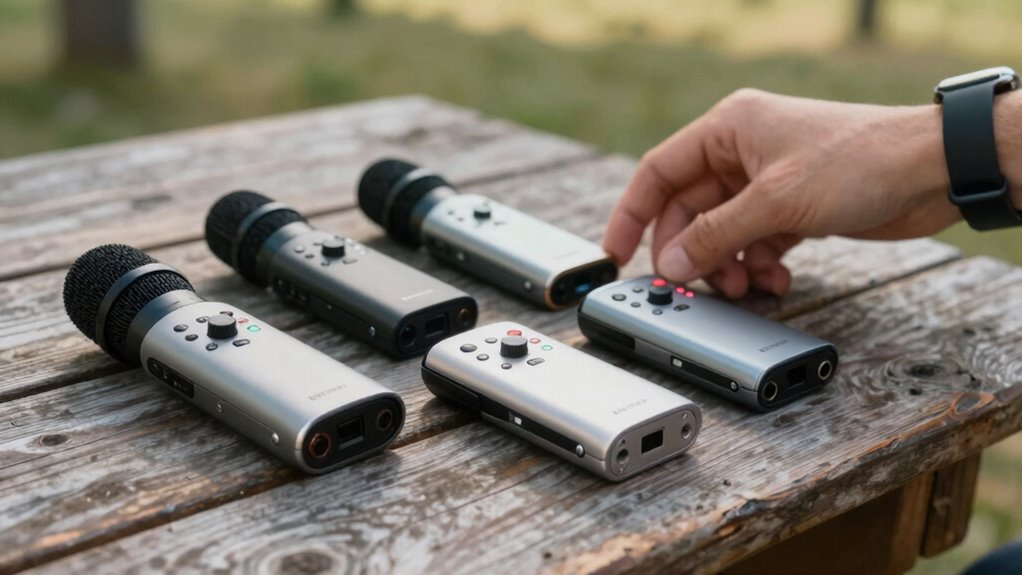

When choosing a field recorder for one on one interviews, clarity, ease of use, and reliability are key. The Zoom H1 XLR stands out as the best overall for its versatility and sound quality, while the Zoom PodTrak P4 offers excellent mic inputs for more complex setups. For those prioritizing portability and straightforward recording, the Tonfarb 64GB Digital Voice Recorder provides great value. However, tradeoffs like limited inputs or higher price points can influence your decision. Continue reading for a detailed breakdown of these options to find the best fit for your interview needs.
Key Takeaways
- The best recorders balance audio quality with user-friendly interfaces, especially for solo use.
- Multiple XLR inputs are a major advantage for complex interviews or multi-mic setups.
- Battery life and storage capacity are often overlooked but critical for long interview sessions.
- Portability and size vary significantly; smaller models excel for on-the-go recording, but may sacrifice features.
- Price ranges reflect different feature sets, with high-end options offering more durability and advanced controls.


More Details on Our Top Picks
Zoom H1 XLR 2-Channel Recorder for Musicians, Filmmakers & Podcasters with 2 XLR/TRS Inputs, 3.5mm Stereo Mic/Line In, and 32-Bit Float
The Zoom H1 XLR stands out for its professional-quality 32-bit/96kHz recording and flexible input options, making it ideal for solo interviewers who need clear, high-fidelity sound. Unlike the Zoom H4, which offers four tracks and stereo microphones but is bulkier, the H1 provides a compact solution with excellent input versatility, though it sacrifices multi-track recording. Its OLED waveform display helps monitor levels easily, but the absence of built-in microphones and limited to two channels means you’ll need external mics, which could complicate setup for some users. The device’s support for large SDXC cards ensures lengthy sessions without interruption. This pick makes the most sense for interviewers prioritizing sound quality and portability over multi-mic configurations, but those needing multi-channel setups or an all-in-one solution may find it limiting.
Pros:- High-quality 32-bit/96kHz recording for professional clarity
- Versatile XLR/TRS inputs for microphones and instruments
- OLED waveform display simplifies level monitoring
- Supports SDXC cards up to 1TB for extended recording
Cons:- Limited to 2 channels, unsuitable for multi-mic interviews
- No built-in microphone, requiring external mics
- Battery life not specified, may need frequent replacements
Best for: Solo interviewers or content creators needing portable, high-quality stereo recordings
Not ideal for: Interviewers requiring multi-mic setups or integrated microphones for quick, all-in-one recording
- Recording Quality:32-bit / 96kHz
- Inputs:2 XLR/TRS combo inputs
- Display:OLED waveform display
- Input/Output:3.5mm stereo input and headphone output
- Storage Support:SDXC cards up to 1TB
Our verdict“This device is best suited for solo interviewers who prioritize sound quality and portability over multi-mic capabilities.”
Zoom PodTrak P4 Podcast Recorder with 4 XLR Mic Inputs, 4 Headphone Outputs, Phone & USB Input
The Zoom PodTrak P4 excels in scenarios where multiple microphones and remote connectivity are needed, making it ideal for interviewers handling panel discussions or remote guests. Compared to the Zoom H1, which is simpler and more portable but limited to two channels, the P4 offers four XLR inputs with phantom power and four individual headphone outputs, supporting multi-mic setups without external mixers. Its dedicated sound pads and remote phone/USB connectivity streamline interview workflows, but its battery life of 3.5 hours can be restrictive for longer sessions, especially since it requires AA batteries that may need frequent replacements. The P4’s portability and multi-input capacity make it a practical choice for interviewers managing multiple participants, but those seeking a lightweight, single-mic device should consider alternatives.
Pros:- Four XLR inputs with phantom power support multiple microphones
- Four headphone outputs with individual volume controls
- Supports remote interviews via phone and USB
- Portable with battery-powered operation
Cons:- Limited battery life for long recordings
- Requires AA batteries, which may need frequent replacement
- No built-in Wi-Fi or Bluetooth connectivity
Best for: Interviewers conducting multi-mic, multi-participant, or remote interviews frequently
Not ideal for: Solo interviewers who only need a simple, portable recorder without multiple inputs or remote features
- Microphone Inputs:4 XLR with phantom power
- Headphone Outputs:4 with individual volume control
- Sound Pads:4 programmable
- Recording Features:Multi-track recording
- Connectivity:Phone & USB input, USB Audio Interface mode
- Battery Life:Up to 3.5 hours
Our verdict“This recorder is best for interviewers who need flexible multi-mic and remote interview capabilities in a portable package.”
Tonfarb 64GB Digital Voice Recorder with Playback and Noise Reduction
The Tonfarb 64GB Voice Recorder offers straightforward operation with one-click recording and voice activation, making it suitable for interviewers who prefer minimal setup. Its noise reduction feature helps improve clarity in less controlled environments compared to multi-mic setups, but it lacks the multi-channel capabilities of more advanced devices like the Zoom H4. The large 64GB storage and up to 48 hours of battery life support long, uninterrupted sessions, while additional functions such as scheduled recording and bookmarking enhance usability. However, the interface might seem complex for first-time users, and its design isn’t rugged, so it’s less suited for rough environments. This model works well for interviewers seeking a simple, reliable recorder with good noise reduction but not for those needing multi-mic configurations or rugged durability.
Pros:- Large 64GB storage for extended recordings
- High-quality noise reduction improves audio clarity
- One-click recording and voice activation for ease of use
- Multiple functions including scheduled recording and MP3 playback
Cons:- Interface might be complex for some users
- Battery life varies with usage, not guaranteed
- Not rugged or waterproof, less suited for outdoor environments
Best for: Interviewers who want quick, reliable recording with minimal fuss and noise reduction
Not ideal for: Those requiring multi-mic setups or rugged, waterproof designs for outdoor use
- Storage Capacity:64GB
- Battery Life:up to 48 hours
- Recording Format:WAV, MP3
- Noise Reduction:Yes
- Voice Activation:Yes
- Screen Size:1.44 inches
Our verdict“This recorder suits interviewers seeking a simple, noise-reducing device for straightforward sessions without multi-mic or rugged features.”
136GB Digital Voice Recorder with Playback, 9000 Hours Recording, Noise Reduction, A-B Repeat, MP3 Player, Password Protection
The 136GB Recorder is tailored for interviewers who prioritize massive storage and long recording hours, supporting up to 9000 hours of audio. Its noise reduction and voice activation features help maintain clarity over extended sessions, making it ideal for lectures or lengthy interviews. Compared to the Tonfarb 64GB, it offers more storage and longer battery life—up to 68 hours—though it can be more complex to operate due to its numerous features, which may intimidate first-time users. The device’s password protection enhances security for sensitive recordings, but its interface isn’t as streamlined as simpler models. It’s best for professionals with extensive recording needs who can handle a slightly more complex device, rather than casual or occasional users.
Pros:- Massive 136GB storage capacity for extensive recordings
- Long battery life of up to 68 hours
- Advanced noise reduction and voice activation
- Secure with password protection
Cons:- Interface may be complex for new users
- Limited to MP3/WAV formats, reducing flexibility
- Slightly larger and less portable than smaller models
Best for: Professionals needing large storage and long-duration recordings with security features
Not ideal for: Casual interviewers or beginners who prefer simple, plug-and-play devices
- Storage Capacity:136GB
- Built-in Storage:8GB
- Included Storage Card:128GB TF card
- Battery Life:up to 68 hours
- Audio Formats:MP3, WAV
- Additional Features:Password protection
Our verdict“This device suits professionals who need large storage, long recording times, and security features for serious interview or lecture recording.”
Zoom H4 Essential Handheld Recorder for Musicians, Podcasters & Filmmakers with Stereo Microphones, 2 XLR/TRS Inputs, 4 Tracks of 32-Bit Float Recording, & USB Audio Interface
The Zoom H4 offers a robust solution for detailed, multi-channel audio recording in a handheld form, making it suitable for interviewers who need flexible options in the field. Its stereo microphones and two XLR/TRS inputs with phantom power support high-fidelity sound capture, comparable to the Zoom H1 but with added versatility. The 4 tracks of 32-bit float recording provide extensive post-production flexibility, especially compared to single or dual-channel devices. However, its larger size and limited SD card capacity of 1TB might be drawbacks for those seeking a more portable or less complex device. The H4 balances high-quality audio with portability, making it ideal for detailed interviews in varied environments but less so for quick, solo recordings requiring minimal setup.
Pros:- High-quality stereo microphones for clear audio
- Multiple input options, including XLR/TRS with phantom power
- Supports 4 tracks of 32-bit float recording for flexible editing
- Dual recording to SD card and device for backup
Cons:- Bulkier than pocket-sized recorders
- Limited SD card capacity at 1TB may be restrictive for some users
- Requires some technical knowledge for optimal use
Best for: Interviewers needing high-fidelity, multi-channel recordings with portable convenience
Not ideal for: Casual or solo interviewers seeking ultra-lightweight, simple devices with minimal features
- Inputs:2 XLR/TRS with phantom power
- Microphones:Stereo built-in microphones
- Recording Tracks:4 tracks of 32-bit float recording
- Connectivity:USB-C, SDXC up to 1TB
- Supported Devices:Phones, tablets, computers
Our verdict“This recorder is best for professionals who need detailed, multi-channel recordings with high fidelity in a portable form factor.”
64GB Digital Voice Recorder with Playback and Voice Activation
The EVISTR L357 stands out for its large 64GB storage capacity and noise reduction microphones, making it well-suited for extended interviews or lectures. Compared to the Zoom H1 Essential, it offers higher storage and a simpler two-button interface, but it lacks advanced editing or multi-mic options. Its voice activation feature helps focus on relevant speech, reducing unnecessary background noise, which is a significant advantage over basic recorders. However, it doesn’t include editing tools or extensive customization, and battery life can fluctuate with heavy use. This model suits those who need straightforward, long-duration recordings without fuss but aren’t seeking advanced audio editing or multiple-input flexibility. Trade-offs include limited features beyond recording and playback, but it excels in ease of use and capacity for solo interviewers or lecture recording.
Pros:- High-quality stereo sound with noise reduction
- Large 64GB capacity for extensive recordings
- Simple, two-button operation for ease of use
- Voice activation captures only relevant audio
Cons:- Lacks advanced editing or multi-track features
- Battery life may vary with heavy use
- Requires manual file management for large files
Best for: Students, journalists, or professionals needing large storage and simple operation for long recordings
Not ideal for: Content creators requiring multi-mic setups or detailed editing features
- Storage Capacity:64GB
- Battery:500mAh
- Charging:Type-C USB, 3 hours full charge
- Recording Time:up to 32 hours
- Playback Time:up to 35 hours
- Dimensions:3.86 x 1.2 x 0.47 inches
Our verdict“This recorder is ideal for users who prioritize long recording times and straightforward operation over advanced editing or multiple input options.”
TASCAM DR-05XP 32-Bit Float Portable Handheld Field Recorder and USB-C Audio Interface
The TASCAM DR-05XP offers outstanding 32-bit float recording, positioning itself as a strong choice for capturing clear, professional audio in unpredictable environments. Unlike the Zoom H1 Essential, it provides more flexible recording modes and handles loud sources up to 125dB SPL, making it suitable for capturing dynamic interviews or noisy settings. Its long 17.5-hour battery life and USB-C connectivity facilitate extended, high-quality recordings and seamless transfers to computers. However, the need for two AA batteries and the absence of included SD cards or batteries can be inconvenient. This device appeals to users who need reliable, high-fidelity recordings in diverse environments but are willing to manage additional accessories. The main tradeoff is that it’s slightly more complex and requires extra batteries, but it provides superior sound clarity and handling of loud sources for serious interviewers or field recordists.
Pros:- High-quality 32-bit float recording for professional clarity
- Handles loud sounds up to 125dB SPL
- Long battery life of up to 17.5 hours
- USB-C interface for quick computer connection
Cons:- SD card and batteries are not included, adding extra cost
- Requires managing 2 AA batteries, which may need frequent replacement
- Limited details on durability or ruggedness
Best for: Professional journalists, field recordists, or content creators demanding high sound fidelity in variable environments
Not ideal for: Beginners or casual users who prefer plug-and-play simplicity without managing batteries or accessories
- Compatible Devices:パソコン
- Hardware Interface:USB Type C
- Microphone Form Factor:Built-In
- Format:MP3, WAV
- Headphones Jack:3.5 mm
- Digital Recording Time:17 hours
Our verdict“This recorder is best suited for users who prioritize high-fidelity audio and flexible environment handling over simplicity and minimal accessory management.”
Zoom H1 Essential Handheld Recorder for Musicians, Podcasters & Filmmakers with Stereo Microphones, 32-Bit Float, USB Microphone Mode
The Zoom H1 Essential provides a compact, user-friendly option for capturing high-quality stereo audio, making it suitable for interview scenarios where portability and quick setup matter. Compared to the TASCAM DR-05XP, it offers an easier, more lightweight solution with straightforward USB-C connectivity for streaming or calls. Its 32-bit float recording ensures clear audio even in unpredictable environments, but its handheld design limits mounting options and may require additional accessories for stability during longer sessions. The absence of specified storage capacity or included accessories can be a drawback for those needing to rely solely on on-device storage. This model targets content creators who need quick, versatile recordings for interviews, podcasts, or environmental sounds, but not those requiring extensive customization or multi-mic inputs. The tradeoff is that it’s primarily designed for handheld use, which might not suit users who prefer fixed setups or extensive editing capabilities.
Pros:- High-quality stereo sound with 32-bit float recording
- Versatile for multiple content types, including interviews and environmental sounds
- Easy USB-C connection for streaming and calls
- Lightweight and portable design
Cons:- Limited to handheld use, lacking mounting options
- Battery life not specified, potentially limiting longer sessions
- No included storage or accessories listed
Best for: Mobile journalists, podcasters, or filmmakers needing a portable, easy-to-use recorder with USB streaming
Not ideal for: Studio-based professionals or those needing multi-mic setups and mounting options
- Microphone Type:Stereo Microphones
- Bit Depth:32-Bit Float
- Connectivity:USB-C
- Use Cases:Music, podcasts, interviews, environmental sounds, streaming
Our verdict“This recorder is ideal for users seeking a portable, quick-to-deploy device for high-quality stereo recordings and streaming on the go, though it’s less suited for fixed studio setups.”
How We Picked
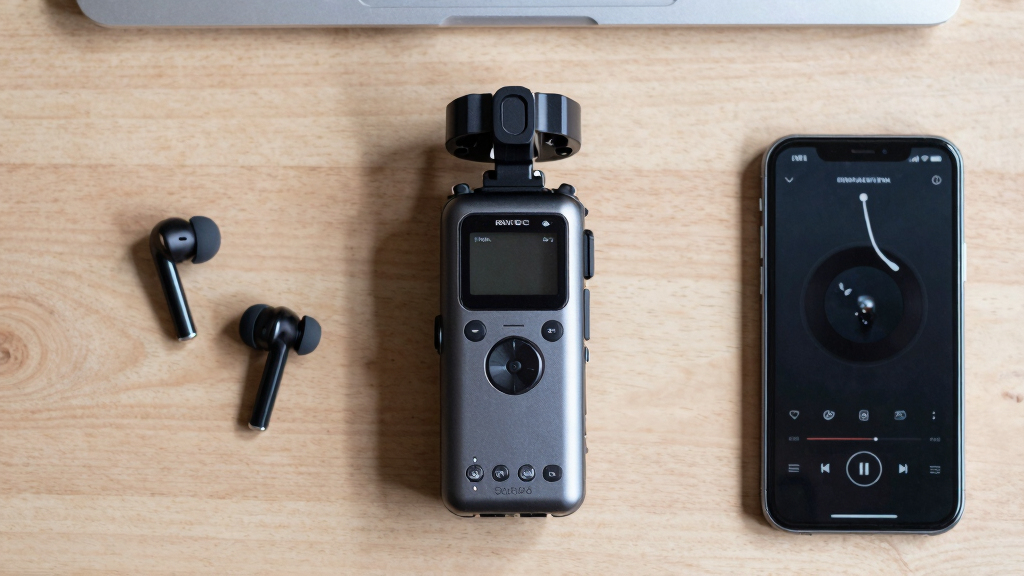
These products were evaluated based on their audio performance, ease of operation, build quality, portability, and value for money. Since interview recording often requires quick setup and reliable performance, models with straightforward interfaces and solid battery life ranked higher. We also prioritized versatility, such as multiple input options and noise reduction features, which matter for capturing clear voice recordings in various environments. The ranking reflects a balance between professional features and practical usability for solo interviewers, ensuring each pick fulfills specific needs without unnecessary complexity.Factors to Consider When Choosing Field Recorder For One On One Interviews
Choosing the right field recorder for one on one interviews involves understanding several key factors. Beyond mere audio quality, considerations like input options, size, battery life, and ease of use influence how well a recorder will serve you in real-world scenarios. A well-chosen device can make the difference between a clear, professional recording and frustrating technical issues. Keep these factors in mind to avoid common pitfalls and to select a recorder aligned with your specific interview style and environment.Audio Quality and Microphone Options
For one on one interviews, clear voice reproduction is essential. Look for recorders with high-quality microphones, preferably stereo, to capture natural sound. Multiple input options, such as XLR or TRS, can be beneficial if you plan to use external microphones or lavaliers. Consider models with noise reduction features, which help eliminate background noise, especially if you record in uncontrolled environments. Remember, a higher audio quality often comes with a higher price, but it pays off through clearer, more professional recordings.
Portability and Size
Interview settings often require mobility, so a compact, lightweight recorder is usually preferable. Smaller devices are easier to carry and less conspicuous, making them ideal for on-the-go recording or discreet interviews. However, extremely small units may compromise on features like battery capacity or input options. Balance size with your needs—if you often record long sessions or in challenging environments, a slightly larger model with better battery life might serve you better.
Battery Life and Storage Capacity
Nothing disrupts an interview faster than a dead battery or insufficient storage. Prioritize recorders with long battery life, especially if you conduct extended recordings. Storage capacity is equally critical; look for models with expandable memory or large internal storage to avoid interruptions. Consider how you will power the device—some models support rechargeable batteries, while others use disposable ones. Planning for backup power sources can help prevent data loss during critical interviews.
Ease of Use and Interface
A straightforward interface can save valuable time during setup and recording. Features like one-touch recording, simple navigation menus, and clear indicators for recording status are beneficial. If you’re new to audio recording, models with minimal controls and automatic gain adjustment can reduce the learning curve. Conversely, more advanced users might appreciate customizable settings and manual controls to fine-tune audio levels and inputs.
Connectivity and Compatibility
Consider how the recorder connects to your other gear, such as computers or microphones. USB or USB-C connectivity allows quick file transfers and acts as an audio interface if needed. Compatibility with common audio formats (like WAV or MP3) ensures your recordings are usable across different platforms. Wireless options, such as Bluetooth or Wi-Fi, are less common in dedicated field recorders but can add convenience for remote control or quick sharing. Think about your workflow and select a device that integrates smoothly into it.
Frequently Asked Questions
Can I use a portable field recorder indoors for interviews?
Absolutely. Portable field recorders are versatile enough for indoor use, especially in controlled environments. They typically provide better sound quality than built-in smartphone microphones and allow for external microphone connections, which can improve clarity. Keep in mind, indoors, background noise is less of an issue, but you should still consider models with noise reduction features to ensure your audio remains clear and professional.
Is it necessary to buy a recorder with XLR inputs for interviews?
Not necessarily, but XLR inputs are highly advantageous if you want to connect professional-grade microphones or multiple mics simultaneously. They provide better audio quality and more reliable connections than standard TRS or 3.5mm inputs. For solo interviews using a good-quality lapel or handheld mic, a recorder with a high-quality built-in microphone or a simple TRS input may suffice, especially if portability is a priority.
How important is battery life for interview recordings?
Battery life is critical because interruptions during an interview can ruin valuable content. Longer battery life allows for extended recording sessions without frequent recharging or battery swaps. If you conduct lengthy interviews or travel to remote locations, investing in a recorder with robust power options or spare batteries is advisable to maintain reliability without stress.
Should I prioritize size or features when choosing a recorder?
This depends on your typical interview environment. If portability is essential, a smaller device might be better, even if it offers fewer features. However, sacrificing too many features for size can limit your recording quality or flexibility. Aim for a balanced device that meets your core needs—such as good microphone quality and sufficient storage—while remaining manageable for your typical interview setting.
Are digital voice recorders good enough for professional interviews?
Many digital voice recorders now deliver surprisingly high audio quality, making them suitable for professional interviews, especially when paired with good external microphones. However, for broadcast-quality recordings or highly controlled environments, professional-grade portable recorders with XLR inputs and advanced noise reduction may be more appropriate. Always match the recorder’s capabilities with your specific professional standards and the environment you’ll be working in.