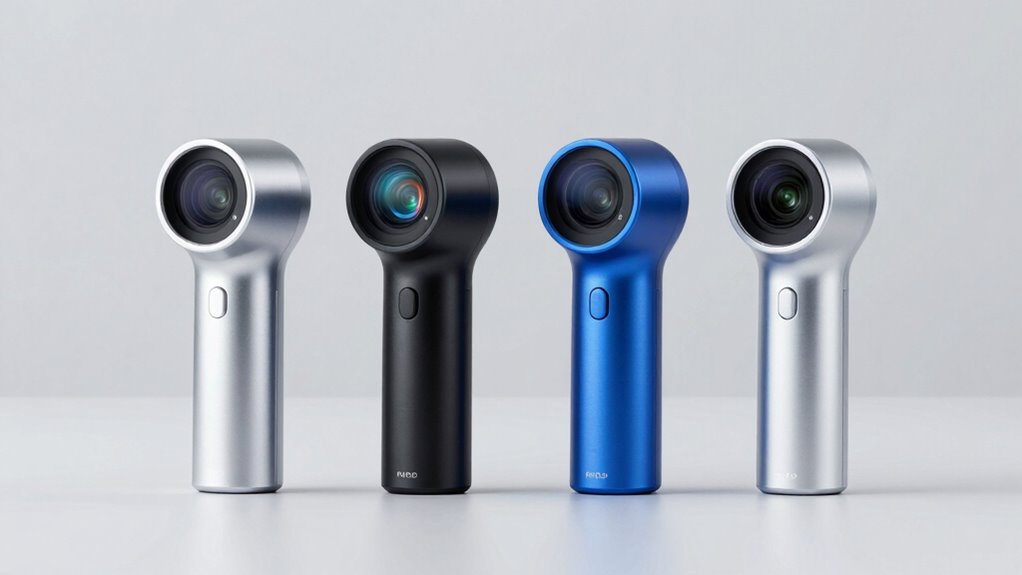
Choosing the right handheld 3D scanner for prototyping depends heavily on your specific needs—whether you prioritize precision, ease of use, or versatility. The 3DMakerpro Moose Lite stands out for high accuracy and portability, making it ideal for detailed small object work. The 3DMakerpro Moose Lite Premium offers similar precision but across multiple platforms, suited for those who need a flexible device. Meanwhile, the 3DMakerpro Fox Entry-Level caters to beginners with straightforward operation, though it sacrifices some advanced features. These options reflect the core tradeoffs in this segment: balancing precision, ease of use, and compatibility for diverse prototyping needs.

Get business pricing on monitors, keyboards and dev gear
- Business-only prices and quantity discounts
- Tax-exempt purchasing
- Multiple users, one account, clear invoices
Key Takeaways
- High-precision models like Moose Lite provide detailed scans but may require more setup and compatible software.
- Entry-level scanners such as Fox offer ease of use for hobbyists but lack advanced features needed for complex prototypes.
- Versatile options like MIRACO Plus combine color, speed, and multi-object capabilities at a higher price point.
- Platform compatibility varies, with some scanners supporting Windows, MacOS, and mobile devices, influencing workflow flexibility.
- Scan size and depth are critical; choose a device that matches your typical object dimensions for optimal results.


| handheld 3d scanners for prototyping | Accuracy |
|---|---|
| 3DMakerpro Moose Lite Handheld | 0.05mm |
| 3DMakerpro Handheld 3D Scanner | — |
| 3DMakerpro Fox Entry-Level Med | 0.07mm |
| 3DMakerpro Fox 3D Scanner | 0.07mm |
| Revopoint MIRACO Plus 3D Scann | — |
More Details on Our Top Picks
3DMakerpro Moose Lite Handheld 3D Scanner for 3D Printing, High Precision, Compatible with Windows and MacOS
The 3DMakerpro Moose Lite stands out for its impressive 0.05mm accuracy and lightweight design, making it suitable for detailed small object prototyping. Its AI tracking and adjustable lighting help maintain high-quality scans in different environments. Compared to other options, it offers excellent precision without adding bulk, but it does require compatible software for full functionality and is limited to 100mm scan depth, which could restrict larger prototypes.
Pros:- High-precision scanning with 0.05mm accuracy
- Lightweight and portable at just 250g
- Supports dark environment scanning with adjustable light levels
- Compatible with multiple software formats
Cons:- Requires compatible software for full operation
- Limited to 100mm scan depth
- Additional accessories sold separately
Best for: Prototypers needing high precision on small to medium objects, especially those who value portability
Not ideal for: Scanning large objects or those requiring deep scan volumes
- Accuracy:0.05mm
- Resolution:0.1mm
- Scanning Speed:10FPS
- Scan Depth:100mm
- Weight:250g
- Compatibility:Windows 10/11, MacOS 12/13
Our verdict“A top pick for detailed small object prototyping where accuracy and portability are priorities.”
3DMakerpro Handheld 3D Scanner for 3D Printing, 0.05mm Precision, 10FPS, Compatible with Android/iOS/Win/MacOS, Moose Lite Premium
This scanner offers the same high 0.05mm accuracy and rapid 10FPS scanning speed as the Moose Lite, but its real strength lies in cross-platform support, making it flexible for various workflows. Its ergonomic design and marker-free AI tracking simplify scanning of medium-sized objects, suitable for professionals who need speed and versatility. However, its focus on medium objects means it may not perform as well with very large or very small items, and the exact price is not specified, which could be a consideration for budget-conscious buyers.
Pros:- High-precision 0.05mm accuracy
- Fast 10FPS scanning speed
- Works with Android, iOS, Windows, MacOS
- Marker-free technology simplifies setup
Cons:- Designed mainly for medium-sized objects
- Requires familiarity with scanning software
- Price not specified
Best for: Users who need a versatile, fast scanner compatible with multiple devices and platforms
Not ideal for: Scanning very large or tiny objects, or for those on strict budgets
- Precision:0.05mm
- Scanning Speed:10FPS
- Compatibility:Android, iOS, Windows, MacOS
- Package Dimensions:10.47 x 10.31 x 3.94 inches
- Weight:3.65 pounds
Our verdict“A highly adaptable scanner suited for professionals needing flexibility across devices, with a focus on efficiency.”
3DMakerpro Fox Entry-Level Medium-Format 3D Scanner for 3D Printing
The Fox Entry-Level offers a straightforward, markerless scanning experience with 0.07mm accuracy, perfect for newcomers and hobbyists. Its integrated software simplifies the process of editing and preparing models, making it accessible for those just starting in 3D prototyping. While it lacks the advanced features of higher-end models, its ease of use makes it a reliable choice for small to medium object projects. Performance heavily depends on user handling and environment, so some learning curve is involved.
Pros:- High accuracy for entry-level
- Markerless AI tracking for easy scanning
- All-in-one software for editing
- Suitable for beginners and hobbyists
Cons:- Lacks advanced features for complex prototypes
- Performance depends on user handling
- Limited to small and medium objects
Best for: Beginners or hobbyists venturing into prototyping with limited experience
Not ideal for: High-precision professional work or large-scale projects
- Accuracy:0.07mm
- Resolution:0.10mm
- Software:JMStudio
- Tracking:Markerless AI
Our verdict“An excellent starting point for newcomers seeking reliable, easy-to-use 3D scanning for basic prototyping.”
3DMakerpro Fox 3D Scanner, 0.07mm Accuracy, Entry-Level for Small to Large Objects
This model provides accurate scans of small to medium objects with 0.07mm precision and NIR light technology, making it suitable for STEM education and DIY prototyping. Its anti-shake stabilization and support for multiple formats add to its versatility. However, achieving optimal results demands experience, and resource-intensive software requires a capable PC. It’s best suited for users who understand the nuances of scanning environments and object sizes.
Pros:- High accuracy of 0.07mm
- Supports multiple export formats
- Markerless tracking simplifies setup
- NIR technology is safe for face and body scans
Cons:- Learning curve for best results
- Resource-heavy software demands a capable PC
- Limited to small and medium objects
Best for: Educational settings and DIYers working with varied object sizes
Not ideal for: Large-scale industrial prototypes or users unfamiliar with scanning techniques
- Accuracy:0.07mm
- Object Size Range:40mm to 1200mm
- Optimal Distance:150–400mm
- Supported Formats:OBJ, STL, PLY, ASC
Our verdict“A flexible scanner for small to medium objects that balances accuracy with ease of use in educational or DIY contexts.”
Revopoint MIRACO Plus 3D Scanner, All-in-One Scan for 3D Printing
The MIRACO Plus combines photogrammetric and laser scanning, offering detailed, high-resolution models with color. Its dual modes accommodate small intricate objects and larger surfaces, making it suitable for professional reverse engineering or detailed prototyping. The device is portable, with long battery life and extensive software support, but it comes at a higher price point and requires compatible Revo Design software, which is sold separately. It’s best for users who need high fidelity and color in their prototypes.
Pros:- High-precision photogrammetric and laser scanning
- Portability and long battery life
- High-res color capture for realistic models
- Flexible dual scanning modes
Cons:- Revo Design software sold separately
- Software limited to x86_64 systems
- Higher cost for casual users
Best for: Professionals demanding detailed, high-resolution 3D models with color fidelity
Not ideal for: Casual hobbyists or those with limited budgets
- Photogrammetric Accuracy:0.02 mm + 0.05 mm x L(m)
- Color Camera:48MP RGB
- Battery Life:Up to 2 hours
- Supported Formats:PLY, OBJ, STL, ASC, 3MF, GLTF, FBX
Our verdict“A premium choice for detailed, color-rich prototypes where accuracy and visual quality are paramount.”

How We Picked
Our selection process focused on handheld 3D scanners that excel in prototyping applications. We evaluated accuracy, scanning speed, compatibility, ease of use, and versatility, prioritizing devices suitable for creating detailed prototypes across various object sizes. We considered the target user—from hobbyists to professionals—and balanced tradeoffs such as cost, software requirements, and performance. Devices with proven reliability in capturing medium to small objects with high fidelity earned higher rankings, while also factoring in user-friendly features for those new to 3D scanning.
Factors to Consider When Choosing Handheld 3d Scanners For Prototyping
When selecting a handheld 3D scanner for prototyping, it’s vital to consider the specific requirements of your projects. Think about the size and complexity of objects you’ll scan, the level of detail needed, and whether you need compatibility with certain devices or software ecosystems. Balancing these factors helps ensure your investment enhances your workflow rather than complicates it.
Accuracy and Resolution
High accuracy and resolution are essential for prototypes that require detailed features and precise measurements. Devices like the Moose Lite excel here, offering 0.05mm accuracy suitable for small, intricate parts. Entry-level scanners with 0.07mm accuracy are still capable but better suited for less demanding projects or initial concept phases.
Object Size and Scan Volume
Matching the scanner’s supported object size range to your typical workpieces is crucial. For small to medium objects, most models perform well, but larger objects may necessitate specialized equipment like the MIRACO Plus or larger industrial scanners. Be mindful of scan depth limits—some devices cap at 100mm, which may restrict larger prototypes.
Platform Compatibility and Software
Ensure the scanner integrates smoothly with your existing hardware and software setup. Cross-platform support, as seen with the Moose Lite Premium and MIRACO Plus, offers flexibility. Consider whether you prefer standalone software or integration with CAD and editing tools, and check software requirements before purchasing.
Ease of Use and Learning Curve
Beginners benefit from models with markerless AI tracking and integrated software like the Fox Entry-Level. More advanced models provide better results but may require familiarity with scanning procedures and software. Weigh your comfort level against the need for precision and features.
Price and Total Cost of Ownership
While high-end scanners deliver superior features, they come at a higher price. Consider whether the added features justify the investment for your prototyping needs. Also factor in potential costs for accessories, software licenses, and hardware upgrades, especially for resource-intensive models like the MIRACO Plus.
Frequently Asked Questions
What is the typical accuracy I should look for in a handheld scanner for prototyping?
Accuracy depends on your project requirements. For detailed small parts and precise prototypes, 0.05mm accuracy is ideal, as seen in the Moose Lite models. For less detailed or conceptual prototypes, 0.07mm accuracy can suffice, especially if ease of use or speed is more important.
Can handheld 3D scanners handle large objects?
Some scanners, like the MIRACO Plus, support larger objects up to several meters, while others are limited to smaller items within a 100mm to 1200mm range. Always check the object size specifications to ensure the device matches your typical prototyping scale.
How important is software compatibility when choosing a scanner?
Software compatibility plays a critical role in workflow integration. Devices supporting multiple platforms or offering seamless export formats reduce post-processing time. Ensure the scanner’s software ecosystem aligns with your existing CAD or editing tools to maximize efficiency.
Are handheld scanners suitable for beginners?
Yes, especially entry-level models like the Fox, which feature markerless AI tracking and all-in-one software designed for ease of use. These devices simplify the scanning process, making them ideal for newcomers, though some learning is still involved to achieve the best results.
What should I consider regarding scan speed and workflow efficiency?
Faster scanners like the Moose Lite Premium and Moose Lite offer 10FPS, reducing scan times and improving workflow efficiency. However, higher speed may sometimes compromise detail slightly. Balance your need for speed with the level of detail required for your prototypes.
Conclusion
If you are a professional or serious hobbyist focused on high-precision small prototypes, the 3DMakerpro Moose Lite or MIRACO Plus makes the most sense. For beginners or those working with medium objects on a budget, the Fox Entry-Level offers simplicity and reliability. Those needing versatility across device platforms should consider the Moose Lite Premium. Ultimately, your choice hinges on your object sizes, desired detail, and familiarity with 3D software workflows.