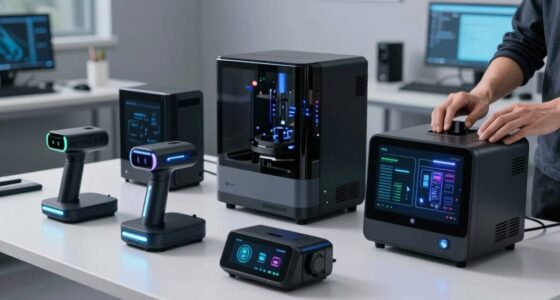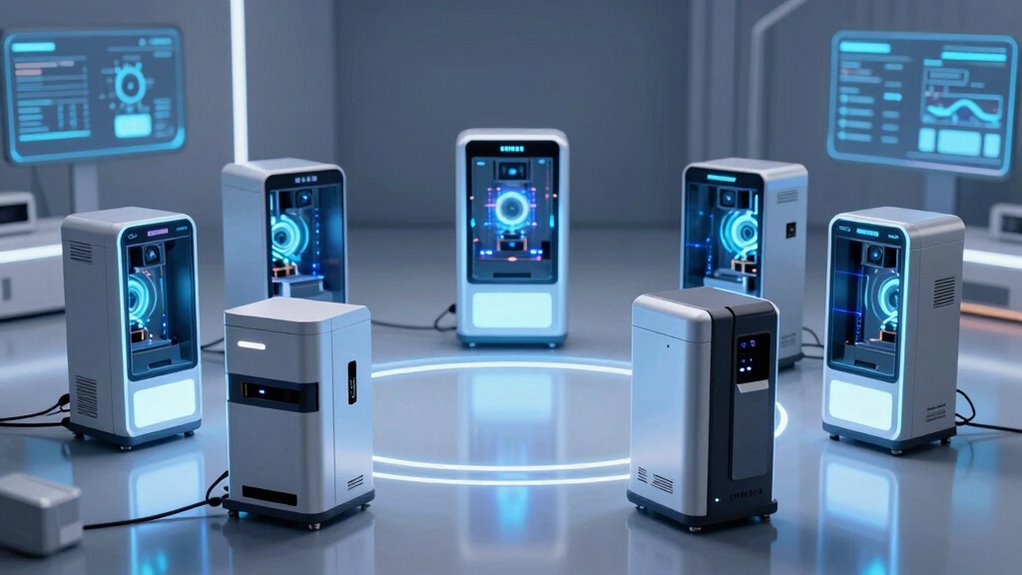

When selecting a 3D scanner for object digitization, the key factors are accuracy, ease of use, and versatility. The 3DMakerpro Seal Lite stands out as the best overall thanks to its high precision of 0.02mm, ideal for detailed small objects. For more flexible scanning, the Creality CR-Scan Ferret Pro offers wireless portability with decent accuracy, making it suitable for on-the-go tasks. The Revopoint INSPIRE 2 balances outdoor usability and affordability, but comes with tradeoffs in resolution compared to premium models. Keep in mind that higher accuracy often means higher price and complexity, while cheaper options may sacrifice detail. Continue reading for a full breakdown of each model and how to choose the best fit for your object digitization needs.
Open a free Amazon Business account
Business pricing, bulk buying and tax-exempt orders.
Create a free accountAs an affiliate, we earn on qualifying purchases.
Key Takeaways
- High accuracy models like the 3DMakerpro Seal Lite excel for detailed small objects but come at a higher cost.
- Wireless and portable scanners such as the Creality CR-Scan Ferret Pro provide convenience for field use but may have lower resolution.
- Entry-level scanners like the 3DMakerpro Fox are affordable but often lack the precision needed for fine detail work.
- Outdoor scanning capabilities, featured in models like the Revopoint INSPIRE 2, expand use cases but may compromise on resolution.
- Price and complexity are often directly linked; premium scanners offer better detail but require more technical skill.
| 3DMakerpro Seal Lite 3D Scanner – Small-Format, Blue LED Light, Up to 0.02mm Accuracy |  | Best Overall for Small, High-Detail Object Scanning | Light Source: Blue LED | Accuracy: 0.02mm | Object Size Range: 10-300mm | VIEW ON AMAZON | See Our Full Breakdown |
| Creality 3D Scanner CR-Scan Ferret Pro for 3D Printing, Handheld Wireless Scanner with 0.1mm Accuracy |  | Best for Beginners and On-the-Go Creators | Accuracy: 0.1mm | Weight: 105g | Supported Platforms: Windows 10/11, macOS, Android 10+, iOS 15+ | VIEW ON AMAZON | See Our Full Breakdown |
| Creality CR-Scan Raptor 3D Scanner for 3D Printing |  | Best for High-Precision, Large-Scale, and Outdoor Scanning | Maximum accuracy: 0.02mm | Object size range: 5mm-2000mm | Frame rate: 60fps | VIEW ON AMAZON | See Our Full Breakdown |
| Revopoint INSPIRE 2 3D Scanner, Outdoor Scan, for 3D Printing, Standard |  | Best for Outdoor Use and Versatile Scanning | Scanning Accuracy: 0.05mm | Weight: 190g | Infrared Laser Lines: 11 | VIEW ON AMAZON | See Our Full Breakdown |
| 3DMakerpro Fox Entry-Level Medium-Format 3D Scanner for 3D Printing |  | Best for Beginners and Hobbyists with Moderate Detail Needs | Accuracy: 0.07mm | Resolution: 0.10mm | Scan Speed: 10 FPS | VIEW ON AMAZON | See Our Full Breakdown |
| 3DMakerpro Handheld 3D Scanner for 3D Printing – Moose Lite Premium Kit |  | Best for Detailed Medium-Sized Object Scanning | Accuracy: 0.05mm | Resolution: 0.1mm | Scan Range: 15mm to 1500mm | VIEW ON AMAZON | See Our Full Breakdown |
| Creality Otter Lite Wireless 3D Scanner | 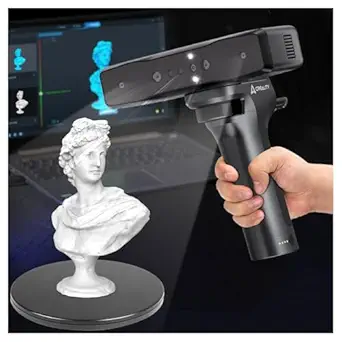 | Best for Versatile, Outdoor and Full-Color Scanning | Accuracy: 0.05mm | Scan Volume: 20mm³ to 2000mm³ | Frame Rate: 30fps | VIEW ON AMAZON | See Our Full Breakdown |
| 3d scanners for object digitization | Accuracy |
|---|---|
| 3DMakerpro Seal Lite 3D Scanne | 0.02mm |
| Creality 3D Scanner CR-Scan Fe | 0.1mm |
| Creality CR-Scan Raptor 3D Sca | — |
| Revopoint INSPIRE 2 3D Scanner | — |
| 3DMakerpro Fox Entry-Level Med | 0.07mm |
| 3DMakerpro Handheld 3D Scanner | 0.05mm |
| Creality Otter Lite Wireless 3 | 0.05mm |
More Details on Our Top Picks
3DMakerpro Seal Lite 3D Scanner – Small-Format, Blue LED Light, Up to 0.02mm Accuracy
The 3DMakerpro Seal Lite stands out for its exceptional 0.02mm accuracy, making it ideal for capturing intricate details on small objects. Unlike the Creality CR-Scan Raptor, which excels in larger models and outdoor scenarios, the Seal Lite is optimized for tight, detailed work within a 10-300mm range. Its mono texture scanning supports high precision but limits color capture, which could be a drawback for those needing full-color models. The included accessories like the tripod and turntable add versatility, though a powerful PC is necessary for smooth operation. This scanner is best suited for professionals or enthusiasts focused on detailed small-object digitization, willing to handle a learning curve.Pros:- High accuracy of 0.02mm suitable for detailed small object scanning
- Supports multiple export formats for 3D printing
- Includes accessories like tripod and turntable for flexible setups
- Lifetime free software updates
Cons:- Requires a relatively powerful PC for optimal performance
- Limited to mono texture (black-and-white) scanning, no color
Best for: Small-scale modelers, jewelry designers, or detailed miniature creators needing high resolution.
Not ideal for: People who want color models or scan larger objects beyond 300mm, as the device is optimized for small, detailed work.
- Light Source:Blue LED
- Accuracy:0.02mm
- Object Size Range:10-300mm
- Scanning Frame Rate:10fps
- Supported Formats:OBJ, STL, PLY, ASC
- Compatibility:Windows, macOS
Our verdict“This scanner makes the most sense for professionals and hobbyists who prioritize precision detail on small objects over color capture.”
Creality 3D Scanner CR-Scan Ferret Pro for 3D Printing, Handheld Wireless Scanner with 0.1mm Accuracy
The Creality CR-Scan Ferret Pro is tailored for newcomers and casual users, offering an intuitive, wireless experience with full-color, high-precision scans. Compared with the 3DMakerpro Seal Lite, which focuses on small, detailed objects, the Ferret Pro supports larger objects up to 2000mm and emphasizes portability. Its 0.1mm accuracy is sufficient for most hobbyist projects but less suitable for fine-detail work like jewelry. The wireless connectivity and cross-platform support make it highly accessible, although reflective or dark surfaces may require additional preparation. This model is best for users new to 3D scanning who want quick, colorful results without deep technical setup.Pros:- Lightweight and portable design for easy outdoor use
- Wireless connectivity compatible with multiple platforms
- High-precision full-color 3D models with anti-shake technology
- Supports objects from 50mm to 2000mm
Cons:- Limited detail resolution for tiny or intricate objects
- Requires avoiding dark or reflective surfaces for best results
- Software may be less robust for advanced editing
Best for: Beginners, DIY hobbyists, or educators seeking an easy-to-use, portable 3D scanner for general object digitization.
Not ideal for: Professional artists or detailed modelers needing sub-0.05mm precision or color accuracy for small parts or jewelry.
- Accuracy:0.1mm
- Weight:105g
- Supported Platforms:Windows 10/11, macOS, Android 10+, iOS 15+
- Connectivity:Wi-Fi 6
- Object Size Range:50mm to 2000mm
Our verdict“This scanner is ideal for beginners and casual users who prioritize ease of use and color in moderate-sized object scans.”
Creality CR-Scan Raptor 3D Scanner for 3D Printing
The Creality CR-Scan Raptor excels at capturing detailed models across a broad size spectrum, matching the 3DMakerpro Seal Lite in accuracy but surpassing it in speed and versatility. Its 60 FPS scan rate and multi-mode laser plus infrared technology make it suitable for outdoor use and complex surfaces, a notable advantage over the more indoor-focused Seal Lite. The device’s high-end hardware requirements and price tag, however, restrict it to users with powerful PCs and professional needs. While it offers full-color imaging, it’s less portable and more costly, making it less appealing for casual hobbyists. Ideal for professionals needing fast, detailed, and large-scale scans in varied environments.Pros:- High precision with 0.02mm accuracy
- Fast scanning at 60 FPS for efficient workflows
- Supports outdoor and complex surface scanning
- User-friendly software with tutorials
Cons:- Requires a high-performance CPU (≥8 cores, ≥16 threads)
- Expensive and limited to Windows and macOS
- Less suitable for small, detailed objects
Best for: Professional product developers, reverse engineers, or large-scale modelers requiring high accuracy and outdoor capability.
Not ideal for: Hobbyists or casual users seeking a budget-friendly, portable scanner with simple operation.
- Maximum accuracy:0.02mm
- Object size range:5mm-2000mm
- Frame rate:60fps
- Scanning technology:Blue laser and infrared structured light
- Color depth:24-bit RGB
- Lighting:12 white LED fill lights
Our verdict“This scanner fits professionals demanding speed, accuracy, and outdoor functionality over affordability or portability.”
Revopoint INSPIRE 2 3D Scanner, Outdoor Scan, for 3D Printing, Standard
The Revopoint INSPIRE 2 offers a compelling balance of portability and detailed outdoor scanning, with an accuracy of 0.05mm that suits a range of applications from reverse engineering to digital archiving. Compared to the Creality CR-Scan Ferret Pro, which emphasizes full-color scans of objects up to 2000mm, the INSPIRE 2 leans toward outdoor durability and real-time wireless streaming, making it more versatile for on-site capture. Its ability to handle reflective and dark surfaces without spray is a significant advantage, but it requires paid software for a complete workflow and runs only on Windows, limiting flexibility. This device is best for professionals needing portable outdoor scanning with high detail.Pros:- Highly accurate with 0.05mm precision
- Wireless WiFi 6.0 streaming for flexible remote use
- Handles reflective and dark surfaces without spray
- Lightweight and durable for outdoor environments
Cons:- Requires paid software (Revo Design) for full workflow
- Limited to Windows OS
- Advanced features may need technical expertise
Best for: Surveyors, field engineers, or researchers needing robust outdoor scanning with minimal surface prep.
Not ideal for: Casual hobbyists or those on a tight budget who don’t need outdoor capabilities or wireless streaming.
- Scanning Accuracy:0.05mm
- Weight:190g
- Infrared Laser Lines:11
- Lighting Conditions:up to 20,000 lux
- Optical Zoom:1.5x, 2x
Our verdict“This scanner suits professionals requiring portable, accurate outdoor scanning with minimal surface prep, at a higher price point.”
3DMakerpro Fox Entry-Level Medium-Format 3D Scanner for 3D Printing
The 3DMakerpro Fox offers a straightforward, markerless scanning experience enhanced by AI visual tracking, making it accessible for newcomers. Compared to the Creality Otter Lite, which is more compact and less feature-rich, the Fox emphasizes ease of use and decent accuracy—0.07mm—suitable for hobbyist projects and basic 3D printing needs. Its software, JMStudio, simplifies editing and optimization, though performance can vary with complex or large objects. The listed availability date seems inconsistent, which might be a concern for immediate buyers. This scanner is best for beginners or hobbyists who want reliable results without professional-grade complexity.Pros:- Decent accuracy and resolution for hobbyist use
- Markerless AI visual tracking simplifies scanning process
- User-friendly JMStudio software for editing
- Lightweight and portable design
Cons:- Limited features for professional or industrial use
- Performance may decline with complex shapes or large objects
- Future availability date appears inconsistent
Best for: Amateur 3D printing enthusiasts, students, or small-scale project creators starting their digital workflow.
Not ideal for: Advanced professionals needing ultra-high accuracy or handling very large or detailed objects regularly.
- Accuracy:0.07mm
- Resolution:0.10mm
- Scan Speed:10 FPS
- Item Weight:2.39 pounds
- Dimensions:9.06 x 8.98 x 3.46 inches
- Manufacturer:3dmakerpro
Our verdict“This entry-level scanner makes a good starting point for hobbyists and beginners aiming for decent detail without complex equipment.”
3DMakerpro Handheld 3D Scanner for 3D Printing – Moose Lite Premium Kit
The 3DMakerpro Moose Lite stands out for its exceptional accuracy of 0.05mm, making it ideal for capturing fine details on medium-sized objects. Compared to the Revopoint INSPIRE 2, which offers outdoor capabilities, Moose Lite is more suited for controlled environments where precision is paramount. Its lightweight design and AI visual tracking make handheld operation more intuitive, but it’s limited to medium objects and depends heavily on compatible software for optimal results. This makes it a solid choice for professionals who prioritize detail and portability in a medium-range scanner, though it may fall short for very large or outdoor projects.
Pros:- High-precision scanning with 0.05mm accuracy
- Lightweight and portable at only 250g
- Supports multiple operating systems for versatile use
- Advanced AI tracking simplifies the scanning process
Cons:- Limited to medium-sized objects, not suitable for very large scans
- Dependent on compatible software for best results
Best for: Detail-oriented 3D printing professionals working with medium-sized objects in controlled environments
Not ideal for: Outdoor or large-scale scanning projects where robustness and range are more critical than fine detail
- Accuracy:0.05mm
- Resolution:0.1mm
- Scan Range:15mm to 1500mm
- Scanning Speed:10FPS
- Compatibility:Android, iOS, Windows, MacOS
- Weight:250g
- Material:Plastic (Lite), Aluminum alloy (Standard)
Our verdict“This scanner is perfect for professionals needing detailed, medium-range scans with portability and ease of use.”
Creality Otter Lite Wireless 3D Scanner
The Creality Otter Lite offers a compelling combination of high accuracy (0.05mm) with wireless convenience, making it a versatile choice for detailed scans across varied environments. Unlike the Moose Lite, which excels indoors, Otter Lite’s Wi-Fi control and mobile app operation enable outdoor and on-the-go scanning, even in low-light conditions thanks to dual LED fill lights and structured light. It supports full-color texture capture, adding realism to models, but setup can be more complex for beginners, and object sizes are constrained within specific limits. Overall, Otter Lite is best suited for users needing flexible, real-time scans of objects from tiny components to larger parts, including outdoor applications.
Pros:- Wireless control via Wi-Fi and mobile devices
- High-precision with 0.05mm accuracy
- Supports full-color texture capture
- Suitable for outdoor and low-light environments
Cons:- Requires compatible smartphone and app setup, which can be complex
- Limited object size range (20mm³ to 2000mm³)
- Setup and operation may be challenging for newcomers
Best for: Advanced hobbyists or professionals requiring portable, full-color, outdoor-capable scanning
Not ideal for: Beginners or those primarily working with very large objects outside the supported size range
- Accuracy:0.05mm
- Scan Volume:20mm³ to 2000mm³
- Frame Rate:30fps
- Connectivity:Wi-Fi, Mobile Control
- Lighting:Dual LED fill lights, DOE structured light
- Compatibility:Windows, macOS
- Supported Formats:OBJ, STL, PLY
Our verdict“This scanner is ideal for experienced users needing portable, color-rich, outdoor 3D scans with high detail.”
How We Picked
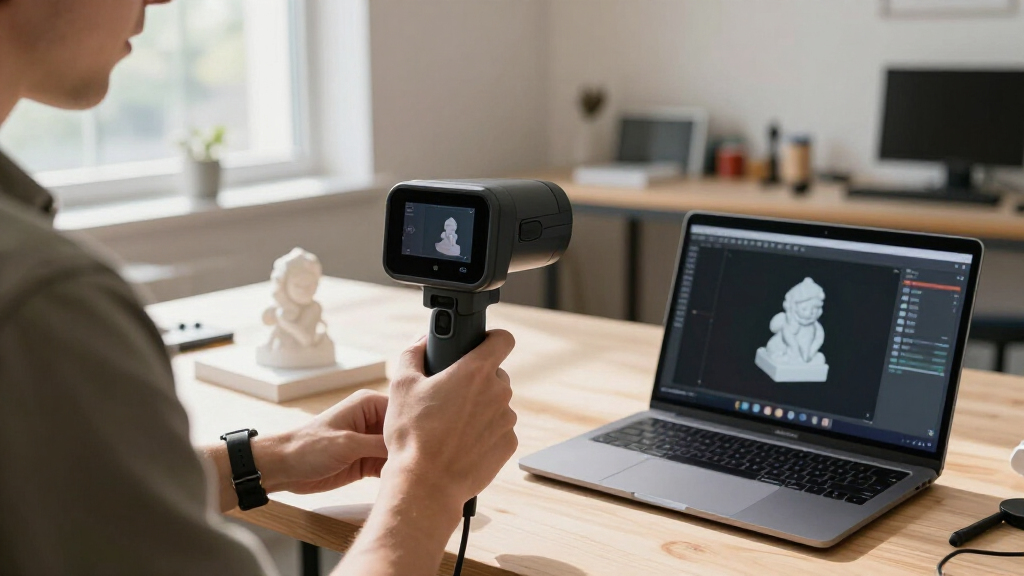
The scanners included in this roundup were chosen based on a combination of performance, usability, build quality, and value for object digitization. Priority was given to accuracy levels, ease of setup, and the ability to handle different object sizes and surface types. We also considered portability, wireless functionality, and how each device balances price against feature set. The ranking reflects a mix of professional-grade precision and accessible options for hobbyists and small businesses, ensuring that each product fills a distinct role in the digitization spectrum.Factors to Consider When Choosing 3d Scanners For Object Digitization
Choosing the right 3D scanner for object digitization involves evaluating several key factors. Not all scanners are suitable for every task, so understanding these considerations can help prevent costly mistakes and ensure you get the best value for your investment.Accuracy and Resolution
Accuracy determines how precisely the scanner captures fine details of an object. For small or intricate items, a scanner with at least 0.02mm accuracy is recommended. However, higher accuracy often comes with increased cost and complexity. Consider your primary use case: if you need detailed reproductions for professional work, prioritize precision; for simpler tasks or rough models, lower accuracy may suffice.
Portability and Ease of Use
Portability can be a significant factor if you plan to scan objects outside a fixed environment or in the field. Wireless and handheld models provide greater flexibility but might trade off some resolution or require more calibration. Ease of use includes setup time, interface clarity, and whether the device supports automatic processing—crucial for beginners or quick workflows.
Object Size and Surface Compatibility
Not all scanners handle large or complex objects equally well. Medium-format scanners are better suited for larger items, while small-format models excel with tiny, detailed objects. Surface reflectivity or transparency can also impact scan quality. Some scanners include features like multi-spectral lasers or specialized lighting to cope with challenging surfaces, which can be worth the extra investment if your objects are complex.
Software and Post-Processing
Effective software is as important as hardware. Look for scanners that come with user-friendly, robust software capable of cleaning, aligning, and exporting scans in your preferred formats. Some models include automatic post-processing, saving time and reducing the need for advanced editing skills. Compatibility with third-party CAD or editing tools can also influence your workflow efficiency.
Budget and Future Expansion
While it’s tempting to buy the cheapest option, consider long-term value. Cheaper scanners may require frequent upgrades or replacements as your needs grow. Conversely, investing in a slightly higher-priced device with upgrade paths or better support can save money and frustration over time. Think about whether you want a dedicated device or one that can serve multiple roles as your skills or project scope expand.
Frequently Asked Questions
Can I use a consumer-grade 3D scanner for professional object digitization?
Consumer-grade scanners can handle basic digitization tasks but often fall short when it comes to high-detail, high-accuracy requirements typical in professional settings. They are suitable for hobby projects or initial prototypes, but for precise reproduction or detailed modeling, investing in a higher-end or specialized scanner is advisable. The choice depends on your specific accuracy needs and intended use case.
How important is software when choosing a 3D scanner?
Software plays a vital role in the overall effectiveness of a 3D scanner. Good software ensures accurate alignment, clean-up, and export of your scans, saving time and reducing errors. Some scanners include proprietary software optimized for their hardware, which can improve results. Compatibility with other CAD or editing programs is also essential if you plan to refine or 3D print your models afterward.
Is wireless connectivity necessary for object digitization?
Wireless connectivity offers convenience, especially for portable or on-the-go scanning. It allows you to operate the scanner remotely and transfer files easily. However, it may come with some compromises in speed or resolution. If your work involves detailed scans in a controlled environment, a wired connection might provide more stable performance and higher quality results.
What object size should I consider for my scanner?
The size of objects you intend to digitize influences your choice significantly. Small, detailed objects require high-resolution, medium-format, or even miniaturized scanners. Larger objects need scanners capable of handling bigger surfaces without losing detail or requiring extensive repositioning. Understanding your typical object size helps in selecting a scanner that balances coverage and resolution effectively.
Do I need a scanner with outdoor capabilities?
Outdoor scanning features are advantageous if you plan to digitize items in natural light or in field conditions. These scanners typically have better lighting and surface handling, but they might sacrifice some resolution or require more calibration. For indoor or studio work, a standard scanner with good lighting control suffices, and outdoor features become less critical unless your work specifically involves outdoor objects or environments.
Conclusion
For most users seeking a reliable balance of detail and ease of use, the 3DMakerpro Seal Lite offers excellent performance as the best overall choice. Hobbyists or those on a budget will find the 3DMakerpro Fox most appealing for its affordability, while professionals needing top precision should consider the Creality CR-Scan Ferret Pro. Beginners or casual users benefit from models with straightforward interfaces, like the Creality Otter Lite. For outdoor and versatile scanning, the Revopoint INSPIRE 2 provides a compelling middle ground. Matching your specific project needs and budget will help determine the best fit from this curated list.
As an affiliate, we earn on qualifying purchases.Flea & tick season Picks
flea and tick prevention