
📊 Full opportunity report: Purchase order exception tracker for small manufacturers on IdeaNavigator AI — validation score, market gap, and execution plan.

Get business pricing on monitors, keyboards and dev gear
- Business-only prices and quantity discounts
- Tax-exempt purchasing
- Multiple users, one account, clear invoices
TL;DR
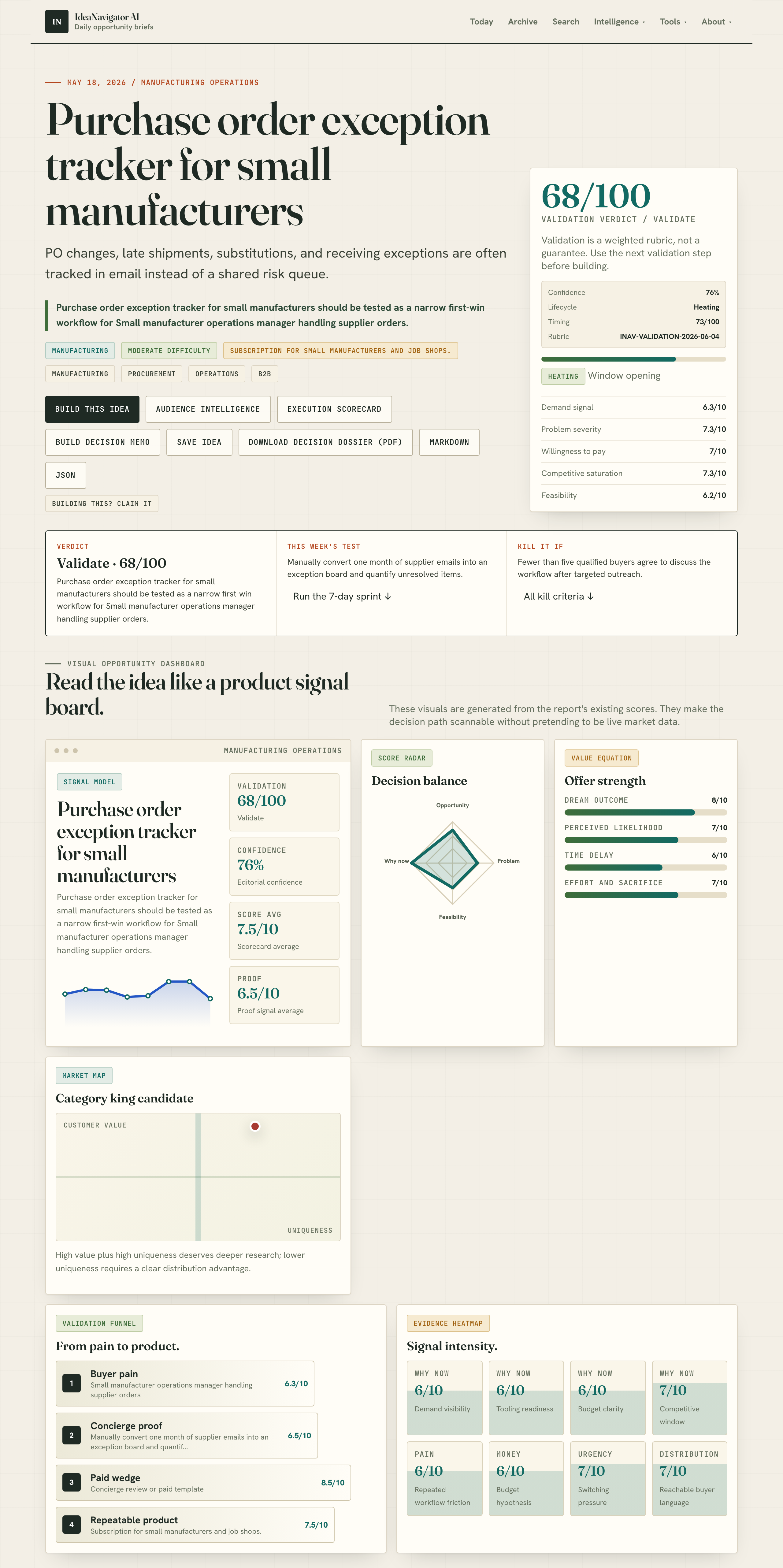
A prototype purchase order exception tracker is being tested for small manufacturers to improve exception management. The tool aims to streamline handling of PO issues, responding to supply chain challenges.
IdeaNavigator AI reports that a purchase order exception tracker for small manufacturers is entering a testing phase, aiming to address common supply chain issues such as PO changes, late shipments, substitutions, and receiving exceptions. This development targets small manufacturing operations facing rising costs due to supply volatility.
The proposed exception board is designed to be a simple, shared workflow tool that records key information such as supplier, PO number, issue type, owner, next steps, and customer impact notes. The goal is to replace email-based tracking, which often leads to unresolved issues and delays.
Manufacturers with thin operations teams are particularly affected by supply chain disruptions, making efficient exception management critical. The tracker will be tested by manually converting a month of supplier emails into the exception board to evaluate its effectiveness and quantify unresolved issues, according to IdeaNavigator AI.
Implications for Small Manufacturing Supply Chains
This development could significantly improve how small manufacturers handle supply chain disruptions by providing a centralized, transparent system for managing order exceptions. Streamlining this process may reduce delays, lower operational costs, and improve customer satisfaction. As supply volatility persists, tools like this could become essential for small operations seeking resilience and efficiency.Popular right now

Samsung 55-Inch Neo QLED 4K TV with WireLogic 8-Foot Ultra High Speed HDMI Cable

Dyson V8 Cyclone Cordless Vacuum

Bose QuietComfort Headphones (2nd Gen), Wireless Over-Ear Noise-Cancelling Headphones, Eucalyptus Green
As an affiliate, we earn on qualifying purchases.
Supply Chain Challenges Driving Innovation in Small Manufacturing
Small manufacturers often rely on email communication to track supplier issues, leading to fragmented and inefficient resolution processes. Recent supply chain disruptions have increased the frequency and severity of PO changes, late deliveries, and substitutions, putting additional strain on small operations teams. The idea of a dedicated exception tracker emerges amid this context as a targeted solution to improve operational workflows.
The concept is based on a minimal viable product (MVP) that records critical exception data, aiming to validate whether a simple shared board can improve issue resolution. The testing phase is a first step toward broader adoption if proven effective.
“The exception tracker aims to replace email chaos with a clear, shared workflow that small manufacturers can easily adopt.”
— an anonymous researcher
Uncertainties About Tracker Effectiveness and Adoption
It is not yet confirmed how well the exception tracker will perform in real-world settings or whether small manufacturers will adopt it widely. The effectiveness depends on how accurately users can convert email data into the exception board and whether it leads to fewer unresolved issues. Further testing results are pending, and broader market acceptance remains uncertain.
Next Steps in Validation and Potential Rollout
The initial testing involves manually converting one month of supplier emails into the exception board and measuring unresolved issues. If successful, the developers plan to refine the tool and consider a broader rollout. Additional user feedback and performance data will determine whether the tracker becomes a standard part of small manufacturing operations.
Key Questions
How will the exception tracker improve small manufacturer operations?
The tracker aims to centralize and streamline the management of supplier order issues, reducing reliance on email and decreasing unresolved problems, which can lead to faster resolutions and lower costs.
Is this tool intended for all small manufacturers?
The initial focus is on small manufacturers handling supplier orders, especially those with limited operational resources, as a targeted solution to specific supply chain challenges.
When will the tracker be available for wider use?
The tracker is currently in testing; a broader rollout depends on the success of initial validation and user feedback, with no specific launch date announced yet.
What are the main benefits of using a dedicated exception board?
It provides a shared, transparent workflow that helps teams track, prioritize, and resolve supply chain issues more efficiently than email-based methods.
Will this tool require significant training to implement?
No, the MVP is designed to be simple and easy to adopt, focusing on minimal setup and straightforward data entry.
Source: IdeaNavigator AI