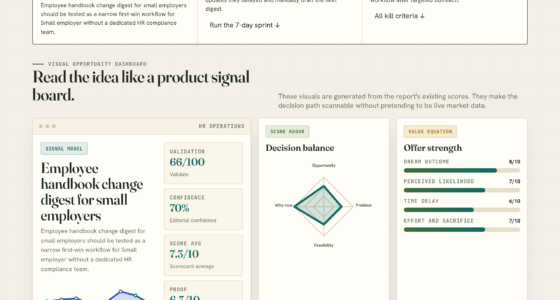
📊 Full opportunity report: Remote Work And MSK Health: Top Strength Assessment Strategies on IdeaNavigator AI — validation score, market gap, and execution plan.
Get ready for Prime Big Deal Days — try Prime free
Exclusive member deals on October 6–7, plus fast free delivery. Cancel anytime.
Start your free trialAs an affiliate, we earn on qualifying purchases.
TL;DR
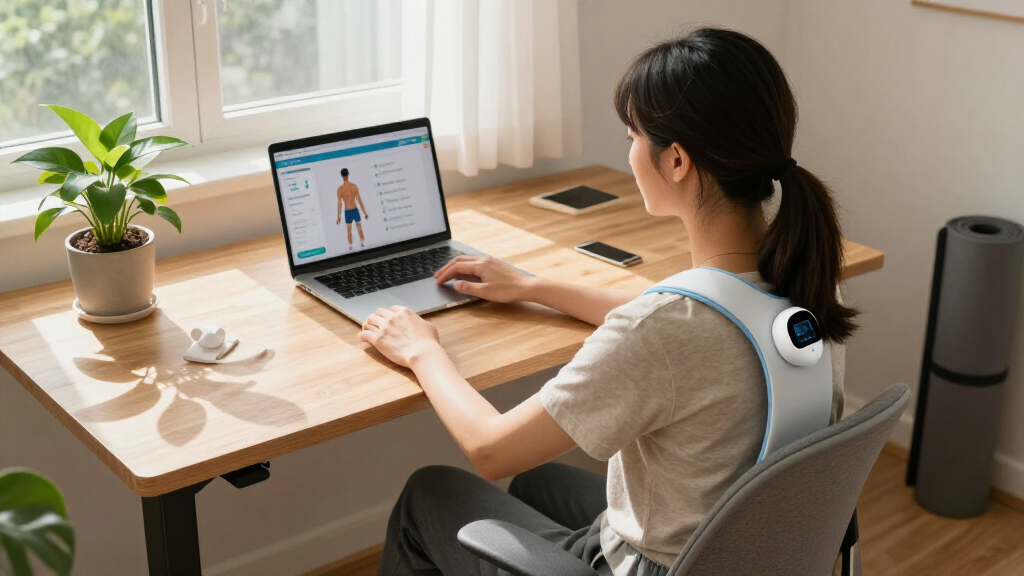
Employers and benefits providers are piloting remote strength and mobility assessments using smartphone cameras to identify early signs of musculoskeletal issues among remote workers. This approach aims to shift from reactive treatment to preventative care, addressing a top employer medical cost driver.
Employers and benefits providers are actively testing remote strength and mobility assessment tools designed to identify early signs of musculoskeletal (MSK) decline among remote workers. This initiative responds to the rising MSK-related health claims and lost workdays in distributed workforces, aiming to shift from reactive treatment to preventative screening. The new approach leverages smartphone camera technology for guided self-assessments, offering a scalable solution for mid-to-large employers.
Remote work has significantly increased sedentary behavior, leading to a surge in neck, back, and posture-related MSK problems. Traditional programs react only after employees experience pain, missing opportunities for early intervention. The new strategy involves deploying a web or mobile app that guides employees through a 10-minute series of strength, mobility, and posture tests, such as sit-to-stand repetitions, shoulder and hip range-of-motion assessments, and seated posture photos. Using the phone’s camera and pose estimation algorithms, the tool scores movement quality and produces a personalized MSK risk score.
This assessment aims to serve as a front door for clinical MSK care, with an optional referral system to physical therapists or MSK specialists for employees flagged at risk. Employers can view aggregate risk trends at the team level through a privacy-safe dashboard, enabling targeted interventions. Pilot programs are underway with one or two employers, focusing on measuring completion rates, assessment retention, and the correlation of camera-derived scores with validated self-report questionnaires scored by clinicians. Success hinges on high engagement, meaningful risk detection, and positive employer feedback.
Funding models include B2B SaaS subscriptions per employee per month, with optional outcome-based pricing and revenue sharing from clinical partners. The market targets corporate wellness programs focused on remote and hybrid workforces, with the potential to reduce costly MSK claims and improve employee health outcomes over time.
Impact of Remote MSK Assessments on Employer Costs
This new approach could transform how employers manage MSK health by enabling early detection and prevention of injuries among remote workers. Given that MSK issues are a leading driver of medical claims and absenteeism, proactive screening could significantly reduce healthcare costs and improve workforce productivity. For benefits providers, offering such tools enhances service portfolios and aligns with the shift toward personalized, preventive health strategies. However, the effectiveness of these assessments in real-world settings remains to be validated through ongoing pilot programs.
smartphone camera posture assessment app
As an affiliate, we earn on qualifying purchases.
As an affiliate, we earn on qualifying purchases.
Growing Need for Remote MSK Prevention Strategies
The shift to permanent hybrid and remote work arrangements has eliminated incidental movement and ergonomic office environments, exacerbating sedentary-related MSK problems. Historically, workplace wellness programs focused on reactive treatment, but the current landscape demands early intervention tools. Smartphone-based pose estimation and motion capture technology have matured enough to enable self-guided assessments without sensors or clinical oversight. Early pilots and research suggest that remote, app-based MSK screening could become a vital part of employer health strategies, especially as costs associated with MSK conditions continue to rise.
remote musculoskeletal health assessment tools
As an affiliate, we earn on qualifying purchases.
As an affiliate, we earn on qualifying purchases.
Uncertainties in Validation and Adoption Rates
It remains unclear how accurately the camera-based assessments will correlate with clinical evaluations across diverse employee populations. The pilot programs are still in early stages, and results on engagement levels, assessment validity, and long-term health outcomes are pending. Additionally, questions about employee privacy, data security, and willingness to participate in self-assessments at home could influence adoption rates and program success.
As an affiliate, we earn on qualifying purchases.
Next Steps for Pilot Deployment and Validation
The ongoing pilot programs aim to gather data on assessment completion rates, score validity, and employee engagement over 60-90 days. Results will inform potential scaling, with plans to refine the assessment protocols and integrate clinical referral pathways. Success in these pilots could lead to broader adoption among mid-to-large employers and further development of outcome-based pricing models. Industry stakeholders also anticipate regulatory and privacy considerations to shape future deployment strategies.
As an affiliate, we earn on qualifying purchases.
Key Questions
How do remote strength assessments work without sensors?
They use smartphone cameras and pose estimation algorithms to analyze employee movements during guided tests, providing scores on strength, mobility, and posture quality.
What are the main benefits of early MSK risk detection?
Early detection allows for targeted interventions before pain or injury occur, potentially reducing healthcare costs, improving employee well-being, and decreasing absenteeism.
Are these assessments secure and privacy-compliant?
Yes, the pilot programs are designed with privacy in mind, employing secure data handling and anonymized aggregate dashboards to protect individual employee information.
When might employers start widely adopting these tools?
If pilot results demonstrate validity and engagement, broader deployment could occur within the next 12-18 months, contingent on regulatory approval and stakeholder buy-in.
Can remote assessments replace in-person MSK evaluations?
While they may not fully replace clinical evaluations, these tools aim to serve as a first-line screening method, identifying employees who need further clinical assessment.
Source: IdeaNavigator AI
NFL season / tailgating Picks
team gear
As an affiliate, we earn on qualifying purchases.