
📊 Full opportunity report: A Practical Guide To Glow-Up Measurement Apps For Men on IdeaNavigator AI — validation score, market gap, and execution plan.

Get business pricing on monitors, keyboards and dev gear
- Business-only prices and quantity discounts
- Tax-exempt purchasing
- Multiple users, one account, clear invoices
TL;DR
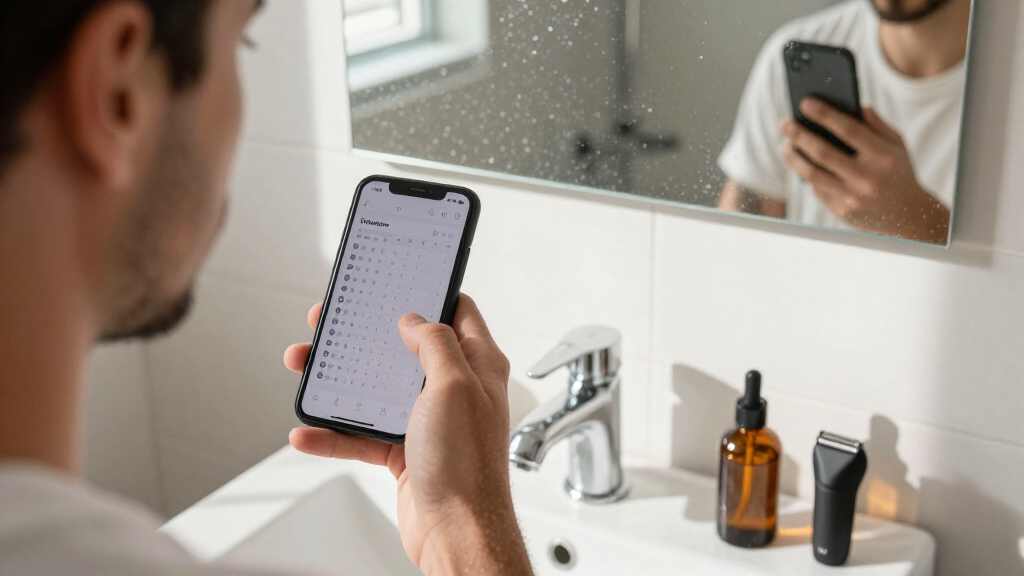
IdeaNavigator AI has proposed a focused app concept for men who want to track changes in their skin while following a skincare routine. The suggested features and subscription model are proposals, not evidence of product performance or confirmed customer demand; the concept still needs testing.
IdeaNavigator AI has proposed a skincare progress-tracking app for men, centered on weekly selfies, routine logs and visual progress cards. The concept is framed as a way for men new to skincare to judge whether a routine is helping, but no product launch, customer research results or evidence of demand were provided.
The proposed first audience is men newly investing in skincare who want a way to monitor progress. The idea is built around a perceived gap: existing beauty apps may feel poorly suited to some men in tone or presentation. That is a market hypothesis, not a finding supported here by survey data or user testing.
The suggested minimum viable product would prompt users to take guided weekly selfies and assess skin clarity, texture and dark circles. It would also include routine logging, streaks and progress cards described using training-oriented language. The proposal does not specify how scores would be generated, whether they would be automated or reviewed by people, or how the app would account for lighting, camera differences and normal changes in skin.
For revenue, IdeaNavigator AI suggests a subscription and affiliate product recommendations linked to areas the app identifies as needing attention. It also proposes testing the same capture technology with men’s-training branding against neutral branding, then comparing conversion and retention across user groups. No results from that test, pricing, product partners or timeline are included.
Testing a Distinct Men’s Skincare Pitch
The concept focuses on how a skincare app is presented as much as what it does. If some potential users avoid products branded around beauty, training language and measurable habits could make routine tracking feel more familiar. But the proposal does not establish that branding is the main barrier or that a different tone would lead to sustained use.
The suggested test offers a practical way to separate a product feature from a marketing assumption: compare two brand positions while keeping the capture technology consistent. Conversion and retention could indicate whether the framing attracts sign-ups and whether users continue using the app. Those measures would still need careful interpretation; initial interest alone would not show that skin assessments are reliable or that users benefit from the recommendations.
The affiliate model also raises a consumer question. If recommendations are tied to measured skin concerns, users would need clear information about commercial relationships and how suggestions are selected. The proposal does not describe safeguards against promoting products because of affiliate revenue rather than a user’s needs.
men's skincare progress tracking app
As an affiliate, we earn on qualifying purchases.
As an affiliate, we earn on qualifying purchases.
From Routine Tracking to Product Test
The proposal sits within the broader category of men’s grooming technology, but it gives no market-size estimate or independent evidence for its claim that men’s skincare is the fastest-growing grooming segment. It also points to looksmaxxing culture as a reason that some users may respond to metrics and gamification. That rationale is presented as part of the opportunity assessment, not as a measured description of all men interested in skincare.
Rather than recommend a broad beauty platform, IdeaNavigator AI narrows the initial use case to one question: “Is this routine working?” Weekly photos and habit logs are intended to make progress visible over time. The central distinction is between tracking a routine and making a dependable assessment of skin. The concept describes the former features but does not explain or validate the latter.
As an affiliate, we earn on qualifying purchases.
Demand, Scoring and Trust Questions
Whether users want the app is untested in the information provided. No interviews, survey results, conversion data or retention figures are reported, and no evidence is offered for the claim that current beauty apps deter men through their tone or design.
The scoring approach is also unspecified. A selfie-based assessment could be affected by lighting, camera position, facial expression and other image conditions. The proposal does not say how the app would distinguish those effects from changes in skin, set expectations about score limits, protect sensitive facial images or handle deletion and storage. It is also unclear whether recommendations would be reviewed by skincare professionals or whether the app would make claims about diagnosing skin conditions.
Finally, the proposed business model has not been tested. There is no confirmed subscription price, affiliate arrangement, launch schedule or estimate of how many users might pay. The suggested branding experiment is a validation plan, not evidence that either positioning performs better.
As an affiliate, we earn on qualifying purchases.
A Branding Test Before Building Out
The next step described in the proposal is to test men’s-training branding against neutral branding using the same photo-capture technology, then compare conversion and retention by segment. A useful report of that test would identify who took part, how the measures were defined, how long retention was tracked and whether differences were large enough to matter.
Before a broader launch, the team behind any implementation would also need to explain how photo-based assessments work, set limits on what scores mean, and disclose how affiliate recommendations are chosen. No test date or launch milestone has been announced, so the current development remains a business concept rather than a confirmed app release.
Source: IdeaNavigator AI
selfie skin assessment app for men
As an affiliate, we earn on qualifying purchases.
As an affiliate, we earn on qualifying purchases.
Key Questions
Has the men’s skincare tracking app launched?
No launch is reported. The proposal describes a product concept and a suggested validation test, without an app release date.
What features does the proposed app include?
The suggested MVP includes weekly guided selfies, routine logging, streaks and progress cards tracking skin clarity, texture and dark circles. The method for producing scores is not specified.
How would the idea be tested?
IdeaNavigator AI proposes comparing men’s-training branding with neutral branding while using the same capture technology, then measuring conversion and retention by segment. No results are available.
Would the app’s scores show that a skincare routine works?
That has not been established. The proposal does not explain how scores would be calculated or validated, and photos can vary with lighting and camera conditions.
How might the app make money?
The proposal suggests a subscription and affiliate product recommendations tied to identified skin concerns. Pricing and commercial partners have not been provided.
Source: IdeaNavigator AI
Halloween Picks
halloween
As an affiliate, we earn on qualifying purchases.