🔍 Read the full analysis: Which Of The 10 Best Desktop Processors For Gaming And Productivity Fits Your Needs? on ThorstenMeyerAI.com

Get business pricing on monitors, keyboards and dev gear
- Business-only prices and quantity discounts
- Tax-exempt purchasing
- Multiple users, one account, clear invoices
TL;DR
A buyer’s guide from ThorstenMeyerAI.com names AMD’s Ryzen 7 9800X3D as its overall pick, the Ryzen 9 9950X3D for demanding multi-core work and Ryzen 5 5500 for tight budgets. Its rankings and claims are not accompanied by benchmark data, prices or test methods in the supplied material, so buyers should verify current results and total system cost before choosing.
ThorstenMeyerAI.com’s desktop CPU guide recommends AMD’s Ryzen 7 9800X3D as its overall choice for gaming, while pointing users with demanding rendering and other multi-core workloads toward the Ryzen 9 9950X3D. The recommendations matter because a processor choice affects gaming performance, creative-work speed, cooling requirements and the cost of the rest of a PC build.
The guide compares ten processors across gaming frame rates, multi-core rendering, efficiency, thermals and total platform cost. It identifies the Ryzen 5 5500 as an option for strict budgets, but cautions that its lack of PCIe 4.0 support can limit upgrade flexibility. The source does not provide prices, benchmark tables, test systems or links to underlying results, so its rankings should be treated as editorial recommendations rather than independently verifiable measurements.
Its core buying advice is to match a chip to the workload. The guide says six-core processors can suit gaming and routine multitasking, while eight cores may better fit streaming and casual editing. It reserves 12- and 16-core models for sustained work such as rendering, large software builds or virtual machines. These are general recommendations; actual performance depends on the software, system configuration and workload.
The source also emphasizes platform and cooling costs. It describes AM4 as a lower-cost route when a buyer already owns a compatible board and DDR4 memory, and AM5 as the newer platform with DDR5 and PCIe 5.0 support. It warns that high-end Ryzen 9 chips can need substantial cooling, but provides no measured temperatures or specific cooler tests to establish a universal requirement.
The 10 picks
- 1
 AMD Ryzen 9 9950X3D 16-Core ProcessorView on Amazon →
- 2
 AMD Ryzen 7 9800X3D 8-Core, 16-Thread Desktop ProcessorView on Amazon →
- 3
 AMD Ryzen 7 7800X3D 8-Core, 16-Thread Desktop ProcessorView on Amazon →
- 4
 AMD Ryzen 7 5800X3D 8-core, 16-Thread Desktop Processor with AMD 3D V-Cache T…View on Amazon →
- 5
 AMD Ryzen 9 9900X 12-Core, 24-Thread Unlocked Desktop ProcessorView on Amazon →
- 6
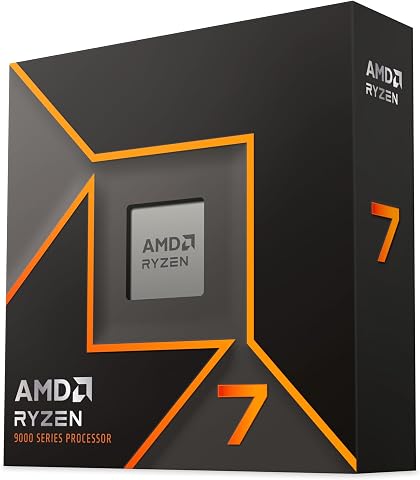 AMD Ryzen 7 9700X 8-Core, 16-Thread Unlocked Desktop ProcessorView on Amazon →
- 7
 AMD Ryzen 7 5700X 8-Core, 16-Thread Unlocked Desktop ProcessorView on Amazon →
- 8
 AMD Ryzen 5 9600X 6-Core, 12-Thread Unlocked Desktop ProcessorView on Amazon →
- 9
 AMD Ryzen 5 5600X 6-Core, 12-Thread Desktop Processor with Wraith Stealth CoolerView on Amazon →
- 10
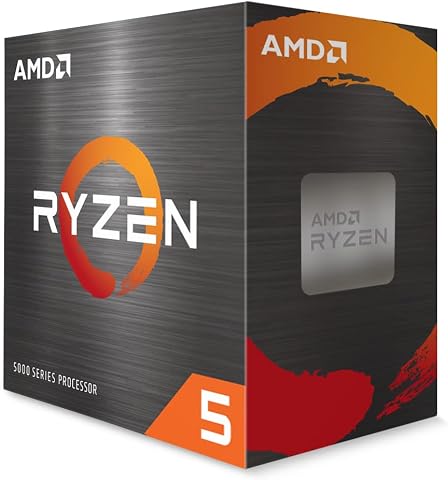 AMD Ryzen 5 5500 6-Core, 12-Thread Unlocked Desktop Processor with Wraith Ste…View on Amazon →
How the Choice Shapes a PC Build
The recommendations highlight a decision that goes beyond choosing the fastest-sounding processor: buyers must balance gaming responsiveness against multi-core throughput, then account for the motherboard, memory and cooler needed to use the chip. A processor that looks affordable in isolation may cost more as part of a platform change, while a high-core-count part may add expense without helping a gaming-focused system.
For owners of an existing AM4 system, the guide presents a relatively inexpensive CPU refresh as a different proposition from a new build. Moving to AM5 means buying into a newer memory and motherboard platform, but the guide does not quantify the performance gain or total price difference. Those costs are especially relevant to buyers planning a graphics-card upgrade: compatibility and future bandwidth claims are not a substitute for checking the actual board and components they expect to use.
Popular right now

Shark Pet Cordless Stick Vacuum, Up to 40-Minute Runtime, Lightweight, IX141

Vitamix VX1 Professional-Grade Blender, 64 oz, Black

Philips 2200 Series Fully Automatic Espresso Machine with Classic Milk Frother
As an affiliate, we earn on qualifying purchases.
AM4, AM5 and the X3D Picks
The list spans AMD’s AM4 and AM5 platforms. AM4 processors use DDR4 memory; the source describes AM5 as supporting DDR5 and PCIe 5.0. It says older AM4 chips such as the Ryzen 5 5600X and Ryzen 7 5700X can make sense as low-cost updates for people who already have compatible hardware, while recommending AM5 for many new builds. That is the source’s assessment, not a guarantee that every AM5 setup will be cheaper or faster for a particular buyer.
The guide gives particular weight to 3D V-Cache, which it says can benefit games by keeping more data close to the processor. Its leading gaming recommendation is the Ryzen 7 9800X3D, with the 7800X3D described as a possible value choice if substantially discounted. It also calls the Ryzen 9 9950X3D the lineup’s combination of gaming and professional multi-core performance. No direct comparative benchmark figures are supplied to quantify those claims.
“The AMD Ryzen 7 9800X3D stands out as the best overall pick due to its unmatched gaming performance and efficient architecture.”
— ThorstenMeyerAI.com buying guide
Benchmark and Price Gaps
The source does not identify the exact ten models in a complete ranked table, provide prices or benchmark results, or specify test conditions such as graphics card, games, software versions and power settings. Its stated evaluation criteria include gaming, rendering, efficiency and total ownership cost, but readers cannot reproduce or assess the rankings from the supplied information alone. The source’s 2027 framing also does not establish when the guide was published or whether its prices and platform advice reflect current retail conditions.
Cooling claims need similar caution. The guide says the Ryzen 9 9900X requires a high-end liquid cooler to avoid throttling in sustained all-core workloads, and that some Ryzen 9 models may call for a 360mm liquid cooler. It gives no test data, ambient conditions or cooler comparisons. Actual thermal behavior varies with the case, motherboard settings, workload and cooling setup; buyers should consult processor specifications and independent tests for their intended configuration.
What Buyers Should Verify
Before purchasing, compare current prices for the processor and the full platform, including a compatible motherboard, memory and cooling. Check independent gaming and productivity benchmarks that match the programs and games you use, and confirm the motherboard’s socket, BIOS support and expansion features. For an existing AM4 system, compare the cost of a supported drop-in upgrade with a full AM5 rebuild rather than assuming one route is always better.
For a new system, the next useful step is to set a workload and budget: gaming-only, gaming plus streaming, or sustained rendering and other heavily threaded tasks. Then verify power and cooling guidance for the specific processor and board. Until the guide’s missing test details and current prices are available, its ten-chip selection is best used as a shortlist, not as a substitute for model-by-model comparisons.
Key Questions
Which processor does the guide recommend for gaming?
It names the AMD Ryzen 7 9800X3D as its overall gaming-oriented pick. The source does not provide benchmark figures or test conditions, so readers should compare independent results for the games they play.
Which chip is aimed at rendering and other demanding work?
The guide points to the Ryzen 9 9950X3D for heavy rendering and multi-core workloads. Whether its extra cores are worth the cost depends on the software and how often it can use them.
Is the Ryzen 7 7800X3D still worth considering?
The source says it may remain a strong option if it is available at a substantial discount to the 9800X3D. It does not give a price threshold, so buyers should compare current local pricing and relevant gaming benchmarks.
Should a buyer choose AM4 or AM5?
The guide presents AM4 as a possible low-cost refresh for owners of compatible systems and AM5 as the newer platform with DDR5 and PCIe 5.0 support. The better choice depends on the cost of the complete build and whether existing parts can be reused.
Are the guide’s cooler recommendations confirmed requirements?
Not by the supplied material: it gives no thermal test data or cooler comparisons. Check the specific processor’s specifications and independent testing for the intended case, motherboard settings and workload before buying a cooler.
Source: ThorstenMeyerAI.com