
Design thinking in game development puts players at the heart of your process, helping you better understand their motivations, preferences, and challenges. By empathizing with your target audience and iteratively prototyping, you can test and refine gameplay features that truly engage. This approach guarantees the game aligns with what excites players, creating a seamless and motivating experience. Keep exploring to discover how this mindset can transform your game design and boost player satisfaction.

Get business pricing on monitors, keyboards and dev gear
- Business-only prices and quantity discounts
- Tax-exempt purchasing
- Multiple users, one account, clear invoices
Key Takeaways
- Emphasize understanding players’ motivations to tailor game design that fosters engagement and personal connection.
- Use empathy to gain insights into player preferences, behaviors, and challenges, guiding more relevant game features.
- Implement iterative prototyping to test mechanics rapidly, gather feedback, and refine features for better player motivation.
- Continuously test and adjust gameplay elements based on user responses to enhance overall engagement and experience.
- Integrate insights to optimize onboarding, tutorials, and game flow, ensuring a cohesive and motivating player journey.

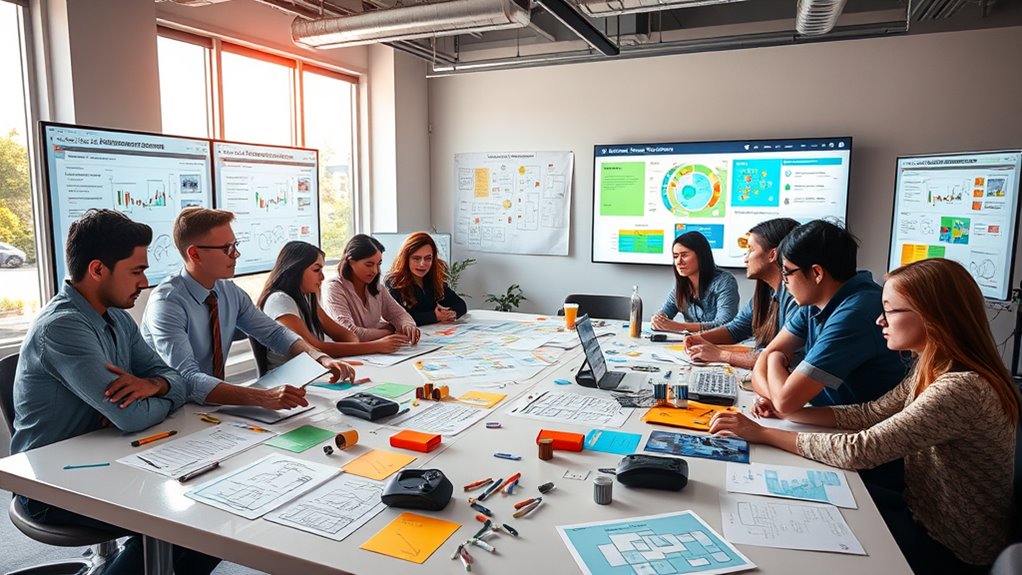
In the fast-paced world of game development, applying design thinking can transform ideas into engaging, player-centered experiences. Central to this approach is understanding what motivates players and how to keep them invested in your game. Player motivation drives engagement, so your first step is to empathize with your target audience. By stepping into their shoes, you uncover what excites them, what challenges they face, and what keeps them coming back. This insight guides your design choices and ensures your game resonates on a personal level.
Once you’ve identified your players’ motivations, the next step is to employ iterative prototyping. Instead of aiming for perfection from the outset, you develop small, manageable prototypes that test key gameplay elements. These prototypes serve as quick experiments, allowing you to gather feedback early and often. For example, if you’re designing a new mechanic, you can create a simple version, observe how players interact with it, and then refine based on their behavior and comments. This cycle of creating, testing, and refining guarantees you stay aligned with player expectations and motivations. It also minimizes wasted effort, as you can pivot quickly when something doesn’t work as intended.
Throughout this process, your focus should be on observing how players respond to different features and adjusting accordingly. If a mechanic doesn’t motivate players or feels unengaging, you modify it and test again. This iterative process helps you uncover what truly resonates, rather than relying solely on assumptions. It also encourages innovation, as you’re constantly exploring new ideas and learning from real user interactions. Additionally, understanding skincare patches and their application timing can inform how you design in-game tutorials or onboarding processes to improve user experience. As you refine your prototypes, you develop a clearer picture of the game’s core experience, ensuring each element supports player motivation and keeps the gameplay compelling.
As an affiliate, we earn on qualifying purchases.
Frequently Asked Questions
How Can Design Thinking Be Integrated Into Existing Game Development Workflows?
You can integrate design thinking into your game development workflow by embracing iterative prototyping, which allows you to test and refine ideas quickly. Encourage cross-disciplinary collaboration by involving designers, developers, and players early in the process. This approach helps you identify player needs, generate innovative solutions, and adapt your game based on feedback, ensuring a player-centric experience throughout development.
What Are Common Challenges When Applying Design Thinking to Game Design?
When applying design thinking to game design, you often face challenges like balancing player engagement with creative constraints. You might struggle to prioritize player needs while maintaining your artistic vision or technical limits. Additionally, it’s tough to gather meaningful feedback without disrupting development. These obstacles can hinder innovation, but by staying flexible and focusing on player insights, you can navigate constraints and create more engaging, player-centric experiences.
How Do Player Personas Influence Game Development Decisions?
Player personas, created through user profiling, shape your game development decisions by providing clear insights into player archetypes. These personas act like detailed maps, guiding you to tailor gameplay, narratives, and features that resonate with your target audience. By understanding your players’ motivations and preferences, you make informed choices, ensuring your game offers a compelling, player-centric experience that keeps your audience engaged and coming back for more.
What Tools Facilitate Collaborative Design Thinking in Game Projects?
You can facilitate collaborative design thinking in game projects by using brainstorming tools like Miro or MURAL, which allow real-time idea sharing and visual mapping. These platforms enable your team to co-create concepts, iterate quickly, and stay aligned. Additionally, collaborative platforms such as Google Workspace or Notion help streamline communication and document sharing, ensuring everyone stays engaged and contributes to the creative process effectively.
How Is Success Measured When Implementing Design Thinking in Games?
You measure success in game design by tracking player engagement, such as session length and repeat visits, indicating how well your ideas resonate. Innovation metrics also matter, showing how your creative solutions improve gameplay and stand out. When these indicators improve, it means your design thinking approach effectively enhances the player experience, fostering deeper connection and satisfaction. Keep analyzing these metrics to refine your strategies continuously.
player motivation testing devices
As an affiliate, we earn on qualifying purchases.
As an affiliate, we earn on qualifying purchases.
Conclusion
By embracing design thinking, you put players at the heart of your game, fostering innovation and empathy. You observe their needs, you empathize with their experiences, you iterate based on their feedback. You craft not just games, but memorable journeys. You create not just challenges, but connections. With design thinking, you transform ideas into immersive realities, making every player feel valued, understood, and inspired. Ultimately, you turn your vision into a player-centric masterpiece.
game development feedback software
As an affiliate, we earn on qualifying purchases.
As an affiliate, we earn on qualifying purchases.
As an affiliate, we earn on qualifying purchases.
Fall Picks
fall essentials
As an affiliate, we earn on qualifying purchases.