
Design thinking in energy and utilities puts you at the center of innovative solutions by actively involving you in shaping power use. It helps providers understand your needs, preferences, and pain points, fostering collaboration and trust. This approach encourages co-creation, leading to smarter, more sustainable energy systems that are tailored to real-world use. Keep exploring how this method can empower you further and transform your energy experience.

Get business pricing on monitors, keyboards and dev gear
- Business-only prices and quantity discounts
- Tax-exempt purchasing
- Multiple users, one account, clear invoices
Key Takeaways
- Incorporates customer insights early in development to create energy solutions that meet actual user needs.
- Fosters collaboration between consumers and providers, building trust and encouraging active participation.
- Utilizes rapid prototyping and testing based on user feedback to develop sustainable, environmentally responsible energy innovations.
- Enhances adoption of smart technologies like demand-response programs through co-creation and user engagement.
- Leads to smarter, adaptable energy systems that improve accessibility, affordability, and long-term sustainability.
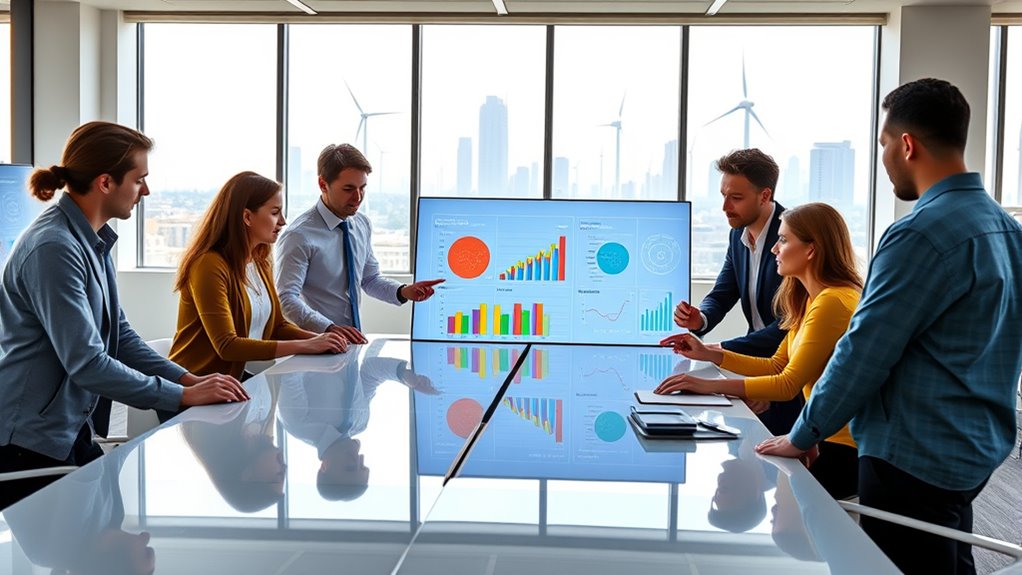
Design thinking is transforming how energy and utility companies develop solutions to complex challenges. It emphasizes understanding customer needs and fostering innovative ideas to create more effective, user-centered services. As you navigate this evolving landscape, you’ll find that engaging customers directly in the process is essential. Customer engagement becomes not just a way to gather feedback but a fundamental element that shapes the entire development cycle. By involving consumers early, companies gain insights into actual usage patterns, preferences, and pain points, which helps design solutions that truly resonate. This collaborative approach leads to more sustainable innovation, as solutions are tailored to real-world needs rather than assumptions. When consumers feel heard and actively participate, they’re more likely to adopt new technologies and practices, accelerating the shift to sustainable energy use.
Engaging customers early drives sustainable innovation and creates user-centered energy solutions.
In the domain of energy and utilities, sustainable innovation is more than a buzzword; it’s a necessity. Using design thinking, companies focus on creating solutions that balance environmental responsibility with economic viability. You’ll notice that this process involves rapid prototyping, testing, and iterating based on user feedback, which guarantees that innovations are practical and scalable. For example, smart meters and demand-response programs have benefited from this approach by integrating customer input to optimize energy consumption without sacrificing convenience. When customers are engaged in co-creating these solutions, they develop a sense of ownership and commitment, leading to higher adoption rates and more meaningful environmental impacts.
Moreover, design thinking helps break down traditional barriers between providers and consumers. Instead of imposing solutions from the top down, you’re encouraged to see customers as partners in shaping the future of energy use. This mindset shift makes it easier to identify innovative opportunities that might otherwise go unnoticed. It also fosters trust, which is indispensable in an industry often viewed with skepticism. As you participate in this process, you’ll find that your feedback directly influences product features, service models, and even policy recommendations. This participatory approach ensures that sustainable innovations are grounded in real needs and are more likely to succeed long-term. Additionally, understanding the role of contrast ratio in projectors can enhance the presentation of energy data and visualizations, making complex information clearer and more engaging for consumers.
Ultimately, by prioritizing customer engagement and sustainable innovation, energy and utility companies can develop smarter, more adaptable solutions. This not only benefits consumers but also contributes to a more resilient and environmentally friendly energy system. As you become part of this collaborative process, you help drive meaningful change—making energy more accessible, affordable, and sustainable for everyone.
As an affiliate, we earn on qualifying purchases.
Frequently Asked Questions
How Does Design Thinking Reduce Energy Consumption Costs for Consumers?
Design thinking helps you reduce energy costs by encouraging behavior change and improving energy efficiency. You get tailored solutions that make managing your power use easier and more effective. By understanding your habits, designers create user-friendly tools and systems that motivate you to save energy. This proactive approach leads to smarter consumption, lower bills, and a more sustainable lifestyle, empowering you to take control of your energy use with confidence.
What Are the Challenges of Implementing Design Thinking in Traditional Utility Companies?
Ever wonder why some utility companies struggle with innovation? You’ll find that organizational resistance and technical complexity are major hurdles. Resistance to change stalls new ideas, while technical challenges can delay implementation. You need to navigate these obstacles carefully, fostering a culture open to change and investing in staff training. Overcoming these issues is essential for successfully applying design thinking and delivering better, more consumer-centric energy solutions.
How Can Consumers Participate More Actively in Energy Innovation Processes?
You can participate more actively in energy innovation by engaging in community initiatives and sharing your ideas. Join local programs that promote community engagement and collaborate with utility companies to provide feedback. By actively contributing your insights and experiences, you foster innovative collaboration that shapes future energy solutions. Your involvement helps create customer-centric innovations, making the energy system more efficient, sustainable, and tailored to your needs.
What Technologies Support Design Thinking Practices in Energy Management?
Smart grids and IoT sensors are key technologies supporting design thinking in energy management. They enable you to collect real-time data on power use, identify patterns, and develop innovative solutions. With smart grids, you can manage energy flow efficiently, while IoT sensors help you monitor appliances and optimize consumption. These tools empower you to participate actively in creating smarter, more sustainable energy systems tailored to your needs.
How Does Design Thinking Improve Customer Satisfaction in Utility Services?
Design thinking boosts your customer satisfaction by actively involving you through customer feedback, ensuring your needs shape services. It emphasizes service personalization, making utility services more relevant and user-friendly. By understanding your pain points and preferences, utility providers can tailor solutions that enhance your experience. This user-centric approach fosters trust and loyalty, ultimately leading to a more satisfied customer who feels heard and valued in their energy management journey.
As an affiliate, we earn on qualifying purchases.
Conclusion
By embracing design thinking, you can transform the energy landscape into a vibrant, user-centered ecosystem. It’s like turning a tangled ball of yarn into a smooth, manageable thread, empowering consumers to take control of their power use. When you put yourself in their shoes, you open the door to innovative solutions that make energy more accessible, efficient, and personalized. So, step up and lead the charge—your ideas can light the way to a smarter, more sustainable future.
As an affiliate, we earn on qualifying purchases.
As an affiliate, we earn on qualifying purchases.
Halloween Picks
halloween
As an affiliate, we earn on qualifying purchases.