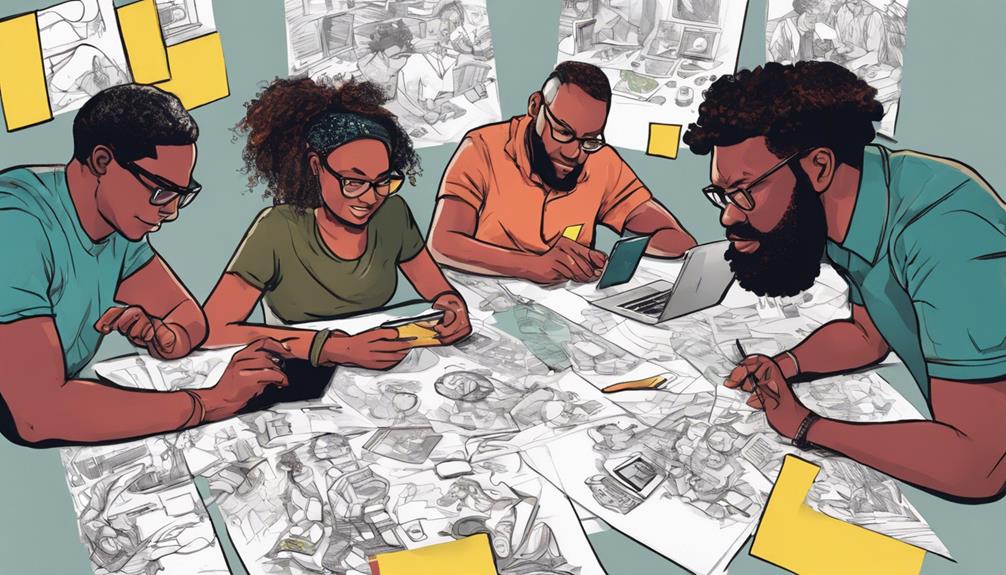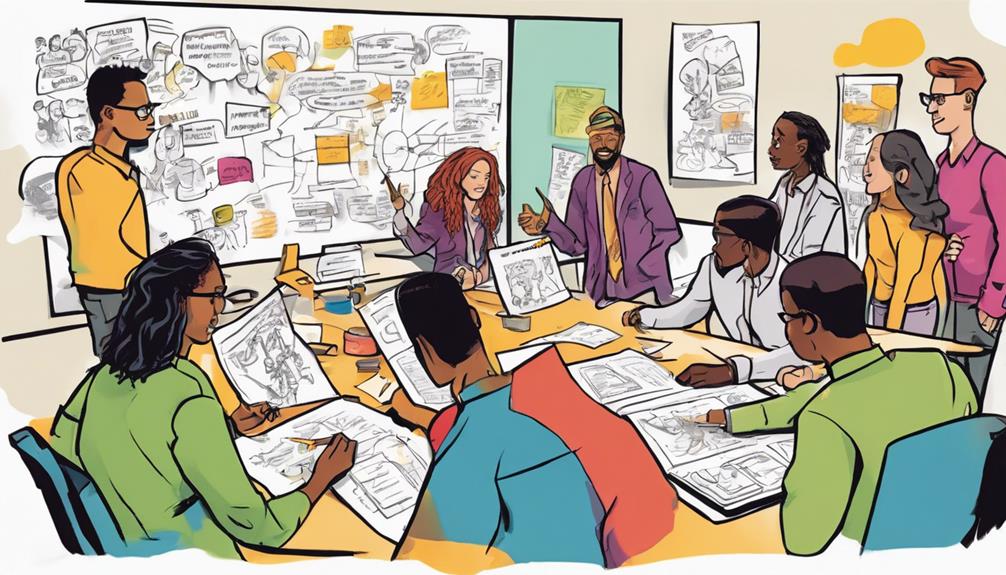

To follow a design thinking project from start to finish, begin by empathizing with users to understand their needs and challenges. Clearly define the core problem based on your observations. Generate diverse ideas through brainstorming, then build quick prototypes to test in real-world scenarios. Gather feedback and iterate constantly, involving team members and users. This structured approach helps create innovative solutions. If you keep exploring, you’ll discover how each step connects to deliver impactful results.

Get business pricing on monitors, keyboards and dev gear
- Business-only prices and quantity discounts
- Tax-exempt purchasing
- Multiple users, one account, clear invoices
Key Takeaways
- Begin by empathizing with users and immersing in their daily experiences to identify core challenges.
- Clearly define the problem statement based on insights to align the team on user-centered issues.
- Generate diverse ideas through brainstorming, encouraging creativity and unconventional solutions.
- Develop low-fidelity prototypes, test with users, and gather feedback for iterative improvements.
- Collaborate across stakeholders, incorporate feedback, and refine solutions through repeated cycles.

Have you ever wondered how innovative solutions are crafted from complex problems? It all begins with a clear understanding of the user experience. When you start a design thinking project, your priority is to empathize with those who will use your product or service. This means immersing yourself in their daily lives, observing their challenges, and listening to their needs. By doing so, you gather valuable insights that shape your entire innovation strategy. Rather than jumping straight into solutions, you focus on understanding the problem from the user’s perspective, which helps guarantee your ideas are relevant and impactful.
Once you’ve immersed yourself in the user experience, the next step is to define the core problem. You synthesize your observations into a clear problem statement that guides your team’s efforts. This stage ensures everyone is aligned and working toward a common goal rooted in real user needs. With a well-defined problem, you can move into ideation—brainstorming a wide range of potential solutions without self-censorship. Creativity flourishes here, and you encourage your team to think outside the box. The goal is to generate as many ideas as possible, knowing that some may seem unconventional but could lead to breakthrough innovations.
Define the core problem clearly to align efforts and spark innovative, user-centered solutions.
After generating ideas, you evaluate and refine them through prototyping. Instead of waiting until you have a perfect solution, you build quick, low-cost prototypes to test your concepts in real-world scenarios. This hands-on approach allows you to gather immediate feedback from users, which is essential for honing your solution. As you observe how users interact with your prototypes, you learn what works and what doesn’t. This cycle of testing and iterating helps you develop a refined, user-centered product that aligns with your overarching innovation strategy. Additionally, considering emotional support is crucial to ensure your solution addresses the holistic needs of users, especially in sensitive contexts.
Throughout this process, collaboration plays a crucial role. You involve diverse team members, stakeholders, and users to ensure multiple perspectives shape the final solution. This collective effort fosters creative problem-solving and helps uncover insights that might otherwise be overlooked. By continuously iterating based on user feedback, you guarantee your solution evolves to truly meet user needs. Ultimately, this disciplined yet flexible approach leads to innovative outcomes that are not only feasible but also highly relevant and valuable to your target audience.
In the end, following a structured design thinking process enables you to turn complex problems into meaningful solutions. It keeps the user experience front and center while guiding your innovation strategy. Rather than relying solely on intuition, you build a repeatable framework for creative problem-solving that can be applied across projects, empowering you to deliver impactful innovations every time.
As an affiliate, we earn on qualifying purchases.
Frequently Asked Questions
How Do I Select the Right Team for a Design Thinking Project?
You should assess your team’s skill levels and consider team dynamics to select the right members for your design thinking project. Look for diverse expertise and collaborative attitudes, ensuring everyone contributes unique perspectives. Conduct skill assessments to identify strengths and gaps, then balance skills across the team. Prioritize members who communicate well and adapt easily, creating a dynamic environment where innovation can thrive and challenges are effectively addressed.
What Tools Are Most Effective During the Ideation Phase?
During the ideation phase, you should prioritize tools that foster creativity and collaboration. Brainstorming techniques encourage open, spontaneous idea generation, while mind mapping helps organize thoughts visually and identify connections. By combining these tools, you stimulate innovative thinking, clarify complex problems, and expand your options. Using brainstorming sessions and mind maps together guarantees you explore diverse solutions efficiently, making your ideation process more dynamic and productive.
How Can I Measure the Success of a Design Thinking Solution?
You can measure the success of your design thinking solution through metrics evaluation and success indicators. Track user engagement, satisfaction scores, and how well the solution addresses the original problem. Look for improvements in efficiency, usability, or customer feedback. By analyzing these success indicators regularly, you’ll get a clear picture of whether your solution meets goals, allowing you to refine and optimize your design effectively.
What Are Common Pitfalls to Avoid in Each Project Phase?
Don’t let small issues snowball; avoiding common pitfalls is key. During brainstorming mistakes, stay open-minded and avoid shutting down ideas prematurely. In the prototype pitfalls phase, test thoroughly to prevent overlooking flaws that could derail your project. Keep communication clear and document everything to stay aligned. Remember, Rome wasn’t built in a day, so be patient and adaptable throughout each phase to guarantee your project’s success.
How Do I Handle Stakeholder Resistance During Implementation?
To handle stakeholder resistance during implementation, prioritize stakeholder engagement early on. Communicate clearly about the benefits and involve them in decision-making to foster ownership. Use change management strategies to address concerns and demonstrate quick wins to build trust. Keep an open dialogue, listen actively, and adapt your approach as needed. This proactive engagement helps mitigate resistance and ensures smoother adoption of your solutions.
As an affiliate, we earn on qualifying purchases.
Conclusion
Just as Da Vinci sketched the blueprint for his masterpieces, your journey through this design thinking case study has shown that innovation thrives on curiosity and iteration. By embracing empathy, ideation, and testing, you discover the creative potential hidden within every challenge. Remember, the process isn’t linear—like a great artist’s brushstrokes, it’s a dance of trial and error. Keep pushing boundaries, and you’ll craft solutions as timeless as the works of the masters.
design thinking brainstorming cards
As an affiliate, we earn on qualifying purchases.
As an affiliate, we earn on qualifying purchases.
collaborative whiteboard for teams
As an affiliate, we earn on qualifying purchases.
As an affiliate, we earn on qualifying purchases.
Evergreen bestsellers Picks
bestsellers
As an affiliate, we earn on qualifying purchases.