

TL;DR
Recent analysis reveals that Antoni Gaudí’s crypt at Colònia Güell significantly influenced the emergence of parametricism. This connection reshapes understanding of modern architectural evolution.
Recent research confirms that Antoni Gaudí’s crypt at Colònia Güell played a crucial role in shaping the principles of parametric architecture, a dominant design approach today.
Scholars have identified that Gaudí’s innovative use of organic forms and structural experimentation in his crypt prefigured key concepts of parametricism. While Gaudí’s work predates the formal naming of parametric design by nearly a century, recent analysis suggests his methods and aesthetic principles laid a foundational groundwork. This connection was highlighted in a recent symposium where architectural historians discussed Gaudí’s influence on contemporary digital design methods.
Experts emphasize that Gaudí’s approach to complex geometries, achieved through meticulous craftsmanship and early computational techniques, mirrors the parametric emphasis on algorithm-driven form generation. The crypt’s organic shapes and structural innovations are now viewed as early experiments with parametric thinking, which later became central to digital architecture.
Why Gaudí’s Crypt Matters for Modern Architecture
This discovery reshapes the historical narrative of architectural innovation by positioning Gaudí as a precursor to digital design paradigms. Recognizing his crypt as a proto-parametric work underscores the continuity between traditional craftsmanship and modern computational methods. For architects and scholars, this connection highlights the importance of early experimentation in inspiring contemporary parametric architecture, influencing everything from structural engineering to aesthetic expression. It also elevates Gaudí’s legacy within the history of innovative design, bridging the gap between manual craftsmanship and algorithmic form generation.
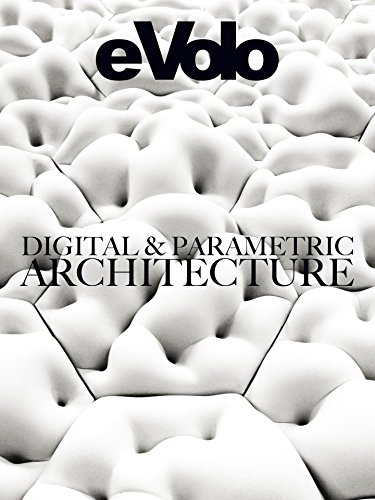
Digital and Parametric Architecture (eVolo Book 6)
As an affiliate, we earn on qualifying purchases.
As an affiliate, we earn on qualifying purchases.
Historical Roots of Parametricism in Early 20th Century Design
Parametricism, a term coined in the early 21st century, refers to a design approach that uses algorithms to generate complex forms. While it gained prominence with digital tools, its conceptual roots trace back to earlier explorations of organic and complex geometries. Gaudí’s work, particularly in the crypt of Colònia Güell completed in 1914, exemplifies early experimentation with structural complexity and organic shapes. Historically, Gaudí’s methods involved meticulous manual calculations and innovative use of materials, which now are seen as early forms of parametric thinking. This connection has been largely overlooked until recent scholarly reassessment.
“Gaudí’s crypt demonstrates a proto-parametric approach, where organic geometries and structural innovation prefigure modern digital methods.”
— an anonymous researcher
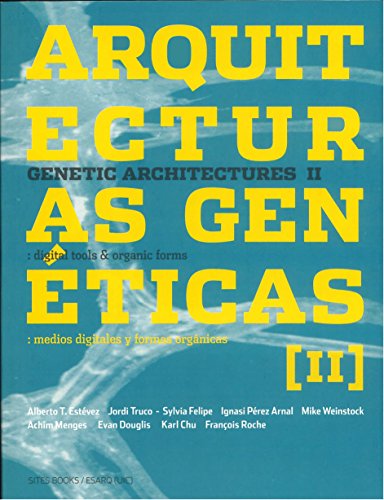
Arquitecturas Geneticas / Genetic Architectures: Medios Gigitales & Formas Organicas / Digital Tools & Organic Forms (Spanish and English Edition)
- Condition: Used Book in Good Condition
As an affiliate, we earn on qualifying purchases.
As an affiliate, we earn on qualifying purchases.
Unresolved Questions About Gaudí’s Influence
While the connection between Gaudí’s crypt and parametricism is gaining support, some experts caution that direct influence remains difficult to establish definitively. It is not yet clear whether Gaudí’s methods consciously inspired later digital approaches or if this is a case of convergent development. Further research is needed to trace specific links between Gaudí’s techniques and the evolution of parametric design in the late 20th and early 21st centuries.

Computational Design for Landscape Architects
As an affiliate, we earn on qualifying purchases.
As an affiliate, we earn on qualifying purchases.
Future Research to Clarify Gaudí’s Role in Parametric Design
Scholars plan to conduct comparative analyses of Gaudí’s architectural sketches and early computational models to better understand the extent of influence. Additionally, exhibitions and academic conferences are expected to explore this connection further, potentially redefining the narrative of architectural innovation. Ongoing research aims to establish clearer chronological and conceptual links, possibly elevating Gaudí’s crypt as a pivotal moment in design history.

Procedural 3D Modeling Using Geometry Nodes in Blender: Discover the node-based workflow for physics-based and procedural modeling using Blender 4.5 LTS
As an affiliate, we earn on qualifying purchases.
As an affiliate, we earn on qualifying purchases.
Key Questions
How does Gaudí’s crypt relate to modern parametric architecture?
Recent research suggests that Gaudí’s use of organic geometries and structural experimentation in his crypt prefigured key principles of parametricism, making it a conceptual ancestor of digital design methods.
Is there direct evidence that Gaudí influenced digital parametricists?
Currently, there is no direct documentary evidence, but scholarly analysis indicates conceptual and methodological parallels that suggest an indirect influence.
Because parametricism is a recent term associated with digital design, and Gaudí’s work was historically seen as purely organic and artisanal, without explicit connection to computational methods.
What implications does this have for architectural history?
This reinterpretation positions Gaudí as a visionary precursor, bridging manual craftsmanship and digital design, and may influence how architectural innovation is understood historically.
Will this change architectural education?
Potentially, as educators might incorporate Gaudí’s crypt into curricula as an early example of parametric thinking, emphasizing the continuity of architectural innovation.
Source: Dezeen