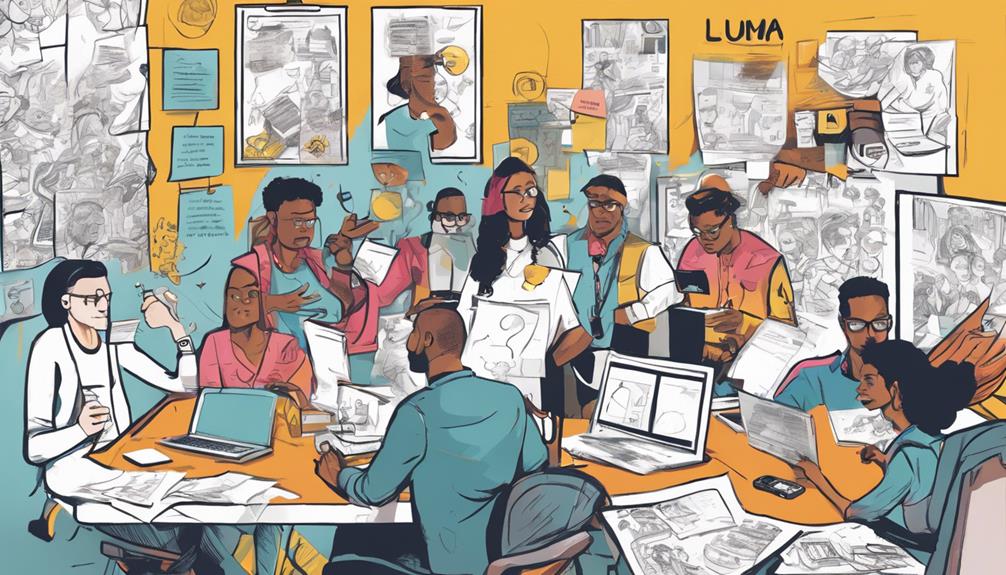

Design thinking drives inspiring innovations across industries by putting users first and encouraging creative problem-solving. For instance, companies redesign medical devices for better usability, and transportation services develop safer, more efficient mobility options by understanding commuters’ frustrations. By empathizing with people and iterating solutions, you’ll see how breakthrough ideas become reality. Keep exploring how these inspiring stories showcase the power of creatively solving real-world challenges and transforming lives.

Get business pricing on monitors, keyboards and dev gear
- Business-only prices and quantity discounts
- Tax-exempt purchasing
- Multiple users, one account, clear invoices
Key Takeaways
- Healthcare redesigns, like user-friendly medical devices, improve patient experiences through empathy and iterative testing.
- Transportation innovations, such as ride-sharing apps, are created by observing user routines and frustrations.
- Companies reimagine interfaces by deeply understanding user needs, leading to intuitive and engaging products.
- Design thinking fosters collaboration across industries, resulting in solutions that address real-world challenges effectively.
- Environmental sustainability is integrated into solutions by applying empathy and experimentation to develop eco-friendly innovations.

Have you ever wondered how innovative solutions are created across various industries? It all begins with a mindset that prioritizes understanding people’s needs and thinking outside the box. Design thinking is a powerful approach that fosters this mindset by emphasizing creative problem solving and a deep focus on the user experience. When you embrace design thinking, you learn to see challenges from multiple perspectives, which helps you develop solutions that truly resonate with those you’re designing for.
Embrace a mindset that values understanding needs, thinking creatively, and designing solutions that truly connect with users.
In the world of product development, companies have used design thinking to transform ordinary ideas into extraordinary innovations. For example, a tech giant might gather a team to reimagine a smartphone interface. Instead of just improving features, they start by empathizing with users—understanding how people interact with their devices, what frustrates them, and what delights them. Through iterative prototyping and testing, they refine the interface, ensuring it’s intuitive and engaging. This process highlights creative problem solving at its core—finding simple, elegant solutions that enhance the overall user experience.
Similarly, in healthcare, design thinking has led to breakthroughs that improve patient care. Healthcare providers and designers collaborate to identify pain points in patient journeys. They might observe how patients navigate hospital visits or manage chronic conditions at home. By immersing themselves in the patient’s perspective, they uncover overlooked needs and craft solutions that are more accessible and less stressful. For instance, redesigning medical devices to be more user-friendly can markedly improve the user experience for both patients and practitioners. This approach not only solves problems but also creates more compassionate and effective care environments.
In the transportation sector, companies leverage design thinking to create smarter, safer, and more sustainable mobility options. They often start by observing commuters’ daily routines and frustrations. Using creative problem solving, teams develop concepts like on-demand transit or seamless ride-sharing apps. These solutions prioritize user convenience, safety, and efficiency, which are key aspects of an outstanding user experience. By prototyping and gathering feedback, they continuously improve their offerings, ensuring that transportation adapts to real-world needs.
Across industries, these examples demonstrate that successful innovation hinges on understanding users deeply and applying creative problem solving. Design thinking turns abstract ideas into tangible solutions by emphasizing empathy, experimentation, and iteration. When you adopt this approach, you tap into a mindset that pushes beyond traditional boundaries, creating meaningful, user-centered innovations. Whether you’re designing a new product, improving services, or solving complex problems, putting the user experience first through creative problem solving leads to solutions that are not only functional but genuinely impactful.
Additionally, understanding the importance of environmental considerations in design thinking ensures that solutions are sustainable and respectful of natural resources, promoting long-term positive impacts.
As an affiliate, we earn on qualifying purchases.
Frequently Asked Questions
How Can Small Startups Implement Design Thinking Effectively?
You can implement design thinking effectively in your startup by embracing a startup mindset focused on innovation and flexibility. Start with empathy to understand your users’ needs, then use iterative processes to test and refine your ideas quickly. Encourage collaboration among your team, stay open to feedback, and remain adaptable. This approach helps you innovate faster, minimize risks, and create solutions that truly resonate with your target audience.
What Challenges Are Common When Applying Design Thinking in Large Organizations?
You’ll often face organizational resistance and resource constraints when applying design thinking in large organizations. Resistance can slow down innovation, as employees may be hesitant to embrace new methods. Limited resources can hinder experimentation and implementation. To overcome these challenges, you should foster open communication, demonstrate quick wins, and secure leadership support. By actively addressing resistance and optimizing resources, you can successfully embed design thinking into your organization’s culture.
How Do Cultural Differences Impact Design Thinking Processes Globally?
Cultural influences considerably shape your approach to design thinking, affecting how you gather insights, brainstorm ideas, and implement solutions. When engaging in global collaboration, you might encounter differing communication styles, decision-making processes, and values that can challenge your assumptions. To succeed, you need to be adaptable, respectful, and open-minded, ensuring that diverse perspectives enhance creativity and innovation rather than hinder progress. Embracing cultural differences leads to more inclusive, effective solutions worldwide.
What Tools Support Remote or Virtual Design Thinking Workshops?
Think of digital collaboration tools as your bridge across the digital river. They support remote workshops by enabling virtual brainstorming, idea sharing, and real-time feedback. Platforms like Miro, MURAL, and Microsoft Whiteboard act as your canvas, fostering creative flow and connection. These tools empower you to seamlessly work together, regardless of location, turning shared virtual spaces into innovative hubs where ideas flourish and solutions emerge from collective effort.
How Can Organizations Measure the Success of Design Thinking Initiatives?
You can measure the success of your design thinking initiatives through metrics evaluation and success indicators. Track tangible outcomes like prototypes developed, user feedback, and problem resolution rates. Additionally, assess team engagement, collaboration improvements, and innovative ideas generated. Regularly reviewing these metrics helps you determine progress, identify areas for refinement, and guarantee your initiatives align with your organization’s strategic goals, ultimately fostering continuous innovation and growth.
As an affiliate, we earn on qualifying purchases.
Conclusion
By exploring these real-world design thinking examples, you see how innovation transforms ideas into impactful solutions. Did you know that 85% of companies adopting design thinking report increased customer satisfaction? Embracing this approach can open creativity and drive meaningful change in your projects. So, keep experimenting, stay curious, and let these inspiring stories motivate you to apply design thinking in your own work for extraordinary results.
intuitive smartphone interface tools
As an affiliate, we earn on qualifying purchases.
As an affiliate, we earn on qualifying purchases.
eco-friendly transportation solutions
As an affiliate, we earn on qualifying purchases.
As an affiliate, we earn on qualifying purchases.
Fall Picks
fall essentials
As an affiliate, we earn on qualifying purchases.