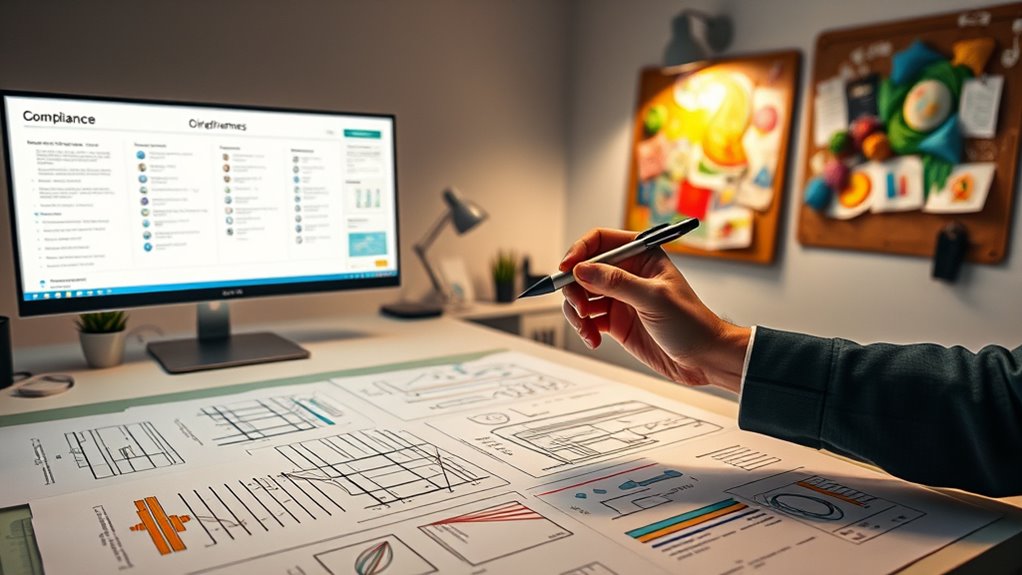

When designing under constraints, you can turn limitations into opportunities by viewing them as catalysts for innovation. Embrace resourcefulness and focus on core functionalities, which helps you balance creativity with compliance. Rethink your use of materials and space to develop streamlined, practical solutions that meet regulations without sacrificing originality. By working within boundaries, you open new ways to be inventive. Keep exploring, and you’ll discover how constraints can ultimately elevate your design process beyond expectations.
Key Takeaways
- View constraints as opportunities to foster innovative, streamlined design solutions that meet both creative goals and compliance standards.
- Prioritize core functionalities and eliminate unnecessary features to maintain focus within regulatory and resource limitations.
- Utilize sustainable and alternative materials to achieve compliance while enhancing creativity and environmental responsibility.
- Develop flexible strategies that adapt to changing regulations and resource constraints without sacrificing originality.
- Leverage constraints to challenge conventional thinking, leading to unique designs that balance innovation with compliance requirements.

Have you ever wondered how great designs emerge despite strict limitations? It’s a fascinating process that often hinges on embracing innovative limitations rather than seeing them as obstacles. When you’re faced with resource constraints—be it budget, materials, or time—you’re compelled to think differently. These resourcefulness challenges push you to find creative solutions that might never have surfaced otherwise. Instead of viewing constraints as setbacks, you learn to see them as opportunities to innovate within boundaries. This mindset shift is essential, because it unlocks the potential to craft something unique and effective, even when resources are scarce.
In designing under constraints, your ability to adapt becomes paramount. You start to see limitations not as barriers but as catalysts for ingenuity. For example, if you can’t access premium materials, you might explore alternative options that are more sustainable or cost-effective. This sparks inventive thinking, forcing you to reimagine how elements can be combined or repurposed. The challenge of working within tight parameters encourages resourcefulness, which often results in streamlined, elegant solutions that are both functional and aesthetically pleasing. You learn to optimize every inch of space, every dollar, and every minute, making each decision more deliberate and meaningful. Additionally, understanding how to leverage sustainable materials can help you stay compliant with environmental standards while also fostering innovation.
Every constraint you encounter demands a strategic approach. You have to prioritize what truly matters in your design—focusing on core functionalities and essential features. This process sharpens your problem-solving skills, pushing you to eliminate unnecessary complexities. As a result, your design becomes more focused, more intentional, and more impactful. It’s about balancing the creative urge to innovate with the practical necessity of compliance. You find ways to meet regulations and standards without sacrificing originality, often by thinking outside the box. This balancing act is challenging but incredibly rewarding, as it enhances your ability to produce innovative solutions that are both compliant and compelling.
Ultimately, designing under constraints trains you to be more resilient and resourceful. It teaches you that limitations don’t have to stifle creativity—they can fuel it. When you navigate these challenges successfully, you develop a mindset that thrives on innovation within boundaries. This experience broadens your perspective, making you more adaptable and inventive in future projects. Constraints become less of a burden and more of a blueprint for smarter, more thoughtful design. In the end, it’s about turning resourcefulness challenges into triumphs, proving that great design isn’t just about unlimited resources but about how you leverage what you have to create something extraordinary.

12Inch x 1200Inch Honeycomb Moving Packing Paper Sheets Sustainable Alternative to Bubble Cushioning Wrap for Shipping Box Protective Roll
- Durable Honeycomb Design: Small honeycomb withstands greater pressure
- Easy to Use: Stretch, wrap, and pull to secure
- Generous Size: 12 inch wide, 160 ft when stretched
As an affiliate, we earn on qualifying purchases.
As an affiliate, we earn on qualifying purchases.
Frequently Asked Questions
How Do Constraints Influence the Creative Process?
Constraints shape your creative process by challenging you to find innovative solutions within limits. They can act as innovation barriers, making it harder to think freely, but also offer constraint benefits by focusing your ideas and encouraging resourcefulness. You’ll discover new perspectives and develop unique solutions when you embrace these boundaries, turning potential obstacles into opportunities for growth. Ultimately, constraints push you to be more creative and efficient.
What Are Common Legal Challenges in Constrained Design?
Think of legal challenges as fences guiding your creative garden. You must guard intellectual property like precious flowers, ensuring originality isn’t stolen. During contract negotiations, you navigate the maze of legal terms, avoiding pitfalls that could trap your ideas. These constraints help shape your design, demanding respect for boundaries while still inspiring growth. Staying mindful of these legal fences lets your creativity flourish without risking legal storms.
How Can Teams Foster Innovation Within Strict Guidelines?
To foster innovation within strict guidelines, you should encourage your team to engage in innovative brainstorming sessions that challenge conventional ideas while respecting compliance. Promote open communication, allowing everyone to share creative solutions without fear of penalties. Simultaneously, prioritize risk management to identify potential legal issues early. This approach helps balance creativity with regulation, ensuring your team stays compliant while generating innovative ideas that push boundaries safely.
What Tools Help Balance Compliance and Creativity?
Did you know that 78% of successful design innovations stem from effective constraint management? You can use digital collaboration tools like Miro or Notion to foster creativity while ensuring compliance. These tools help you visualize constraints, brainstorm solutions, and maintain documentation. By leveraging them, you actively balance design innovation with necessary guidelines, making sure your team stays creative without compromising on standards.
How Do Cultural Differences Affect Constrained Design Approaches?
Cultural differences considerably influence constrained design approaches by shaping your understanding of cultural symbolism and aesthetic diversity. You must consider local customs, values, and symbols to create designs that resonate positively. By embracing aesthetic diversity, you guarantee your work respects cultural nuances, avoiding misinterpretations. Adapting your design to these cultural cues helps balance creativity with compliance, fostering more meaningful and accepted outcomes across diverse audiences.

MINI Multitool Pliers, Christmas Birthday Gifts for Men Boyfriend Dad Husband Women, Pocket Knife 14-In-1, Rugged and Practical Portable Computer and Bike Gadgets, Black Camping and Survival Tools
- Lightweight Hollow Design: Beautiful and space-efficient design
- Adjustable Tightness Knobs: Customize tool tension for comfort
- 14 Essential Tools: Includes pliers, screwdrivers, saw, and more
As an affiliate, we earn on qualifying purchases.
As an affiliate, we earn on qualifying purchases.
Conclusion
So, next time you’re secretly craving creative freedom, remember: constraints are just life’s way of saying, “Stay in line, but make it fabulous.” Who needs uninspired, free-for-all design when you can dance gracefully on the tightrope of rules? Embrace those boundaries—they’re your secret sauce for brilliance. After all, why settle for boring when you can make compliance look like a rebellious masterpiece? Cheers to designing under constraints—because rules never looked this good.

DIY Modular Furniture: Space-Saving Solutions for Small Homes
As an affiliate, we earn on qualifying purchases.
As an affiliate, we earn on qualifying purchases.

Treslam 3D Faux Wood Wall Panels for Exterior – Waterproof WPC Decorative Siding Slat Covering, Outdoor UV 7.55 FT (L) x 0.53 FT(H) Resistant Wall Decor, Easy Install Design (Brown, Pack of 5 Piece)
- All-Weather Durability: UV-resistant and waterproof for any climate
- Low-Maintenance: No painting or staining needed
- Easy Installation: DIY friendly for homeowners
As an affiliate, we earn on qualifying purchases.
As an affiliate, we earn on qualifying purchases.