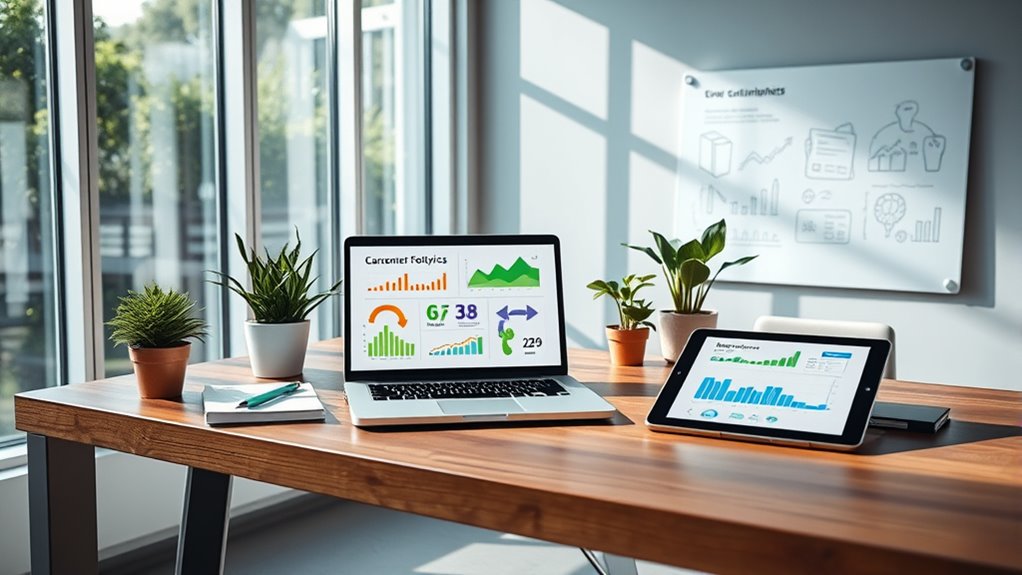

To measure your design’s carbon footprint, focus on tracking energy consumption from data transfer, server loads, and resource usage. Use metrics like bounce rates, session durations, and page load times to gauge efficiency. Optimize images, scripts, and media to reduce unnecessary energy use, creating faster, more sustainable experiences. Balancing visual comfort with energy savings helps you build eco-friendly UX. Keep exploring ways to improve, and you’ll discover more effective methods to minimize your design’s environmental impact.
Listen free for 30 days with Audible
Thousands of audiobooks and originals — cancel anytime.
As an affiliate, we earn on qualifying purchases.
Key Takeaways
- Track data transfer volumes, server loads, and page optimization metrics to assess the energy consumption of your digital infrastructure.
- Use visual design principles like contrast ratio and lightweight media to reduce energy use and improve user comfort.
- Implement lazy loading and media optimization to decrease unnecessary resource use and lower carbon footprint.
- Regularly review performance metrics such as bounce rates and session duration to identify opportunities for energy-efficient improvements.
- Set specific sustainability goals and continuously monitor metrics to ensure ongoing reduction of the design’s environmental impact.
In today’s fast-paced digital world, measuring the long-term impact of user experience (UX) is more important than ever. As designers and developers, you need to understand not just how users interact with your product but also how your design decisions influence its environmental footprint. Sustainable UX metrics focus on this balance, helping you gauge and improve your site’s energy efficiency while fostering meaningful user engagement. When you prioritize energy efficiency, your platform consumes fewer resources, resulting in a reduced carbon footprint. This isn’t just about being eco-friendly; it directly impacts user experience by ensuring your website loads faster, responds smoothly, and remains accessible across devices. Users are more likely to stay engaged when they encounter a seamless, quick experience, which in turn encourages longer visits and repeated interactions.
To effectively measure these aspects, you should start by analyzing the energy consumption of your digital infrastructure. This involves tracking data transfer volumes, server loads, and page optimization techniques. For example, minimizing image sizes, leveraging caching, and reducing unnecessary scripts directly improve energy efficiency. When your site is optimized, it not only reduces server strain but also provides a more satisfying experience for users. This creates a positive feedback loop: energy-efficient design enhances user engagement because visitors experience faster load times and smoother navigation. These improvements can be quantified through metrics like bounce rates, session duration, and click-through rates, which give you insight into how users interact with your platform over time. Additionally, understanding the contrast ratio of your projectors can help create a more visually comfortable and engaging environment, aligning with sustainable and user-focused design principles.
Furthermore, incorporating sustainability into your UX metrics means setting clear goals for reducing energy consumption while maintaining high engagement levels. Regularly reviewing your performance against these objectives allows you to identify areas for improvement. For instance, if your data shows high bounce rates on pages with heavy media content, you might consider lightweight alternatives or lazy loading techniques. This not only conserves energy but also keeps users engaged by providing quicker, more responsive experiences. Remember, sustainable UX isn’t just a one-time effort; it’s an ongoing process that demands continuous assessment and refinement.
energy-efficient web hosting service
As an affiliate, we earn on qualifying purchases.
As an affiliate, we earn on qualifying purchases.
Frequently Asked Questions
How Can Small Design Changes Significantly Reduce Carbon Footprint?
Small design changes can substantially reduce your carbon footprint by improving energy efficiency and focusing on material sourcing. You can optimize loading times, reduce unnecessary features, and choose eco-friendly materials, which lower energy consumption and minimize environmental impact. These tweaks encourage users to adopt sustainable behaviors, making your design more eco-conscious and impactful without major overhauls. Every small step helps create a more sustainable digital experience and reduces overall carbon emissions.
What Tools Are Available to Measure Digital Sustainability?
Think of tools as your compass guiding you through eco-friendly waters. You can use platforms like Website Carbon Calculator and EcoIndex to measure energy efficiency and carbon footprint. These tools analyze website performance, highlighting areas where sustainable choices matter. Incorporate metrics on eco-friendly materials and energy use to refine your design, ensuring your digital presence minimizes environmental impact and aligns with your sustainability goals.
How Do User Behaviors Influence Sustainable UX Metrics?
Your user behaviors directly influence sustainable UX metrics by affecting energy consumption and behavioral impact. When users optimize their interactions, like reducing unnecessary clicks or revitalizing less, they lower energy use and carbon footprint. Encouraging mindful behaviors, such as choosing dark mode or limiting data-heavy activities, helps you design more sustainable experiences. You can track these behavioral impacts to measure and improve your digital sustainability efforts effectively.
Can Sustainable Design Improve User Engagement?
Yes, sustainable design can boost user engagement. Imagine users feeling connected to eco-friendly materials and energy-efficient features—this builds trust and loyalty. When your design emphasizes eco-conscious choices, you help reduce the site’s carbon footprint and make users feel part of a positive impact. This emotional connection encourages repeat visits and advocacy, ultimately strengthening engagement while promoting sustainability through thoughtful, energy-efficient solutions.
What Are the Long-Term Benefits of Sustainable UX Practices?
By adopting eco-friendly interfaces and green design principles, you’ll enjoy long-term benefits like reduced environmental impact and increased user loyalty. Sustainable UX practices help lower energy consumption and carbon footprints, making your designs more resilient and cost-effective over time. Plus, users appreciate brands committed to sustainability, boosting your reputation. Ultimately, integrating these principles creates a positive cycle of eco-conscious innovation that benefits both your business and the planet.
As an affiliate, we earn on qualifying purchases.
Conclusion
Now that you know how to measure your design’s carbon footprint, imagine the impact you could have. Are you ready to take your UX to the next level—one that’s truly sustainable? The tools and metrics are at your fingertips, but the real question is, will you act now? Your next move could shape a greener future for users everywhere. Stay tuned—because the journey towards truly sustainable UX is just beginning.
website performance monitoring tool
As an affiliate, we earn on qualifying purchases.
As an affiliate, we earn on qualifying purchases.
lightweight image optimization software
As an affiliate, we earn on qualifying purchases.
As an affiliate, we earn on qualifying purchases.
Fall Picks
fall essentials
As an affiliate, we earn on qualifying purchases.