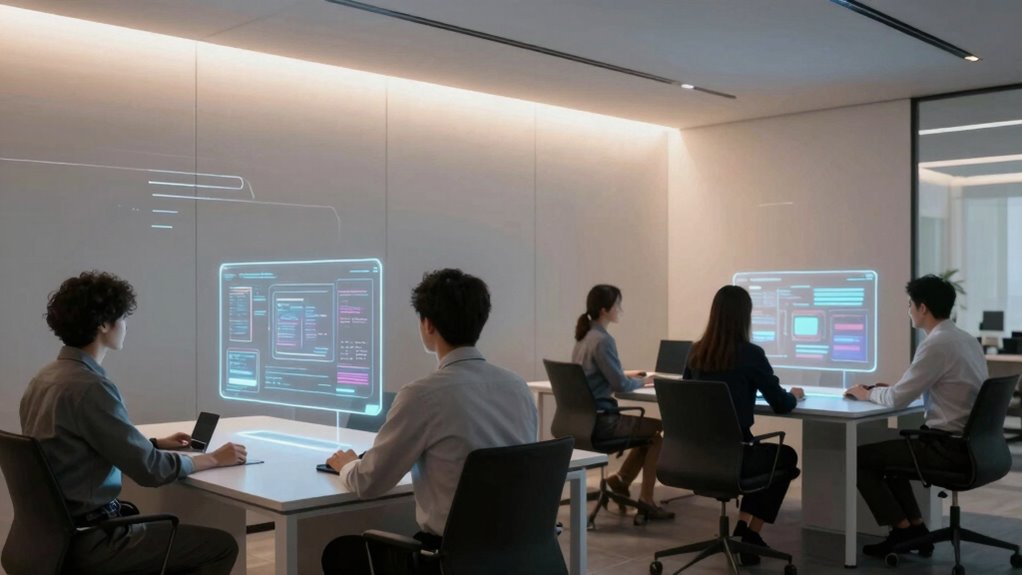

Ambient interfaces are quickly becoming part of everyday life, but many teams aren’t prepared to handle the privacy and design challenges they bring. You’ll need to address concerns around data collection, user trust, and compliance with privacy laws. Failing to implement safeguards risks losing user confidence and damaging system effectiveness. Investing in privacy-aware design and long-term care strategies is essential. If you want to understand how to stay ahead, keep exploring these critical issues.
Key Takeaways
- Many teams lack preparedness to address privacy concerns inherent in ambient interface data collection.
- Privacy safeguards, such as anonymization and user controls, are often overlooked in early design stages.
- Inadequate handling of data can undermine user trust and hinder technology adoption.
- Long-term system sustainability requires proactive strategies for privacy, security, and societal impact.
- As ambient interfaces become ubiquitous, societal norms around privacy will significantly influence acceptance.
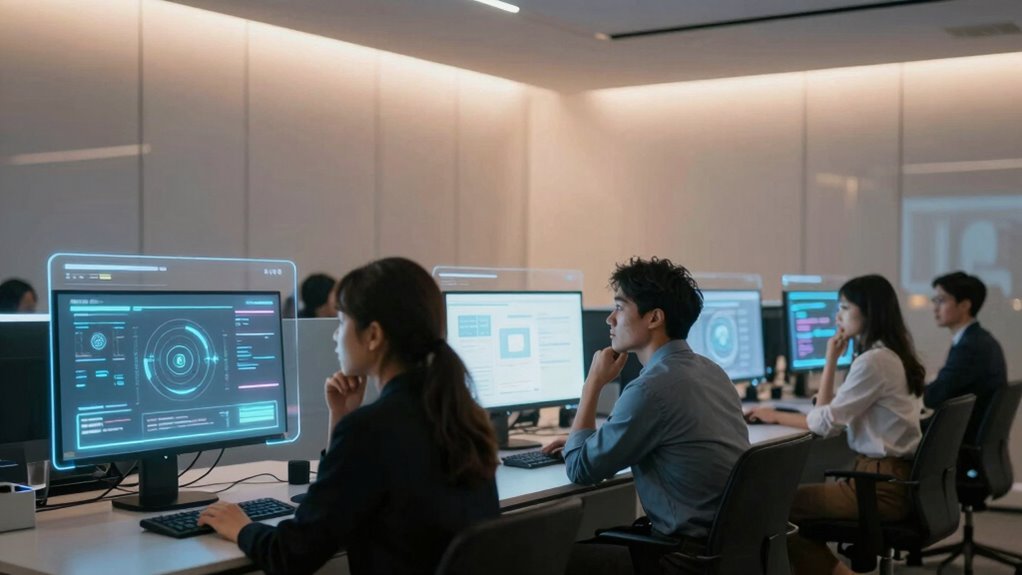
As technology advances, ambient interfaces are becoming an inevitable part of our daily environment, seamlessly integrating digital interactions into the physical world. These interfaces, which blend sensors, displays, and AI to create a constant, unobtrusive connection between humans and technology, promise to make our lives more efficient and intuitive. But as you prepare for this shift, you should be aware of the significant hurdles ahead—particularly around privacy concerns and design challenges. Many teams aren’t ready to face these issues head-on, risking user trust and system effectiveness. Recognizing the importance of privacy safeguards is essential to ensure user confidence in these emerging systems. It’s also vital to consider long-term care strategies that support the durability and proper functioning of these systems over time, especially in complex environments. Privacy concerns top the list of challenges because ambient interfaces collect vast amounts of data about your surroundings, behaviors, and routines. This data, if mishandled, can lead to serious breaches of personal privacy. You might not even realize how much information is being gathered and stored, let alone how it’s used or shared. This raises questions about consent, transparency, and control. If the design doesn’t prioritize privacy, users will become hesitant to adopt these systems, fearing surveillance or misuse. As a developer or designer, you need to embed privacy measures from the start—like anonymizing data, providing clear user controls, and ensuring compliance with privacy regulations. Failing to do so could erode trust and undermine the technology’s potential. It’s also crucial to understand the long-term implications of pervasive data collection and how it might impact societal norms around privacy. Understanding projector technology and its capabilities can help inform how to better protect user data by limiting unnecessary collection. Additionally, being aware of sensor integration techniques can help in designing more secure and privacy-conscious systems.
privacy-aware ambient interface devices
As an affiliate, we earn on qualifying purchases.
As an affiliate, we earn on qualifying purchases.
Frequently Asked Questions
How Do Ambient Interfaces Enhance User Privacy and Data Security?
Ambient interfaces enhance your privacy and data security by incorporating robust privacy safeguards and data encryption. They operate seamlessly in the background, minimizing exposure of sensitive information, while encryption guarantees your data remains unreadable to unauthorized users. By design, these interfaces prioritize secure data handling and user privacy, helping you feel confident that your personal information is protected. This proactive approach makes ambient interfaces a trustworthy choice for secure, private interactions.
What Industries Will Benefit Most From Ambient Interface Adoption?
You’ll find healthcare, retail, and manufacturing benefit most from ambient interface adoption. These industries leverage contextual awareness and sensory integration to create seamless, intuitive experiences. With ambient tech, hospitals can monitor patients discreetly, stores can personalize shopping, and factories can optimize processes. By embracing these interfaces, you enhance efficiency and safety, making environments smarter and more responsive without overwhelming users. It’s a subtle shift toward more intelligent, user-centric operations.
How Can Organizations Prepare Their Teams for Ambient Interface Integration?
To prepare your team for ambient interface integration, invest in thorough team training that emphasizes hands-on experience and adaptability. Implement effective change management strategies to ease shifts, address resistance, and foster a culture open to innovation. Encourage ongoing learning and feedback to refine processes. By proactively managing change and equipping your team with the right skills, you guarantee smoother adoption and maximize the benefits of ambient interfaces.
What Are the Common Technical Challenges in Implementing Ambient Interfaces?
You’ll face the hilarious chaos of sensor integration, trying to get all those devices to talk seamlessly. Then, you wrestle with context awareness, making sure your system understands whether you want a coffee or just a nap. The technical challenges involve syncing diverse hardware, managing vast data streams, and ensuring real-time responsiveness. It’s a digital circus, but with patience, you can tame these ambient beasts and turn chaos into clarity.
How Do Ambient Interfaces Impact User Experience and Engagement?
Ambient interfaces enhance your user experience and engagement by offering seamless, unobtrusive interactions. With effective sensor integration and contextual awareness, these interfaces adapt to your environment and needs, making interactions feel intuitive. You’re more likely to stay engaged when the system responds naturally and anticipates your actions. This personalized, fluid experience reduces frustration, increases satisfaction, and encourages ongoing use, ultimately making technology feel like a helpful extension of yourself.
data encryption sensors for ambient tech
As an affiliate, we earn on qualifying purchases.
As an affiliate, we earn on qualifying purchases.
Conclusion
Don’t wait until ambient interfaces are everywhere to adapt. Yes, change can be intimidating, but embracing these subtle, always-on interactions will keep you ahead of the curve. Imagine your team seamlessly responding to your environment’s cues, boosting efficiency without adding clutter. The future isn’t some distant concept — it’s approaching quickly. Start exploring how ambient tech can enhance your work today, so you’re not left behind when it becomes the norm.

MOES Smart Home Touchscreen Control(1-Switch Panel), In-wall Smart Panel with Alexa Built-in, Compatible with Smart Life devices, Manage and Control Home Devices and Scenes with Touch and Voice
- Wide Compatibility: Works with various Smart Life devices
- Voice Control: Built-in Alexa for hands-free operation
- All-in-One Functionality: Includes Zigbee gateway for local control
As an affiliate, we earn on qualifying purchases.
As an affiliate, we earn on qualifying purchases.
privacy safeguards for ambient interfaces
As an affiliate, we earn on qualifying purchases.
As an affiliate, we earn on qualifying purchases.