To run a signal scan without chasing trends, focus on analyzing each frequency carefully rather than just following loud signals. Use your scanner’s features to identify stable, interference-free signals that suit your interests. Adjust your position and settings to improve clarity, and resist the urge to jump from one fleeting signal to another. Patience and a systematic approach help you avoid noise and find reliable signals. Keep practicing, and you’ll learn how to distinguish genuine signals from temporary noise.

Get business pricing on monitors, keyboards and dev gear
- Business-only prices and quantity discounts
- Tax-exempt purchasing
- Multiple users, one account, clear invoices
Key Takeaways
- Focus on analyzing signal stability and quality rather than chasing the strongest or most noticeable signals.
- Use interference detection features to distinguish genuine signals from static and environmental noise.
- Adjust your scanner’s settings and change locations to reduce interference and improve signal clarity.
- Take notes on consistent, clear signals and develop a mental map of reliable frequencies over time.
- Practice patience and methodical scanning, resisting impulsive switching and trend-driven signal chasing.
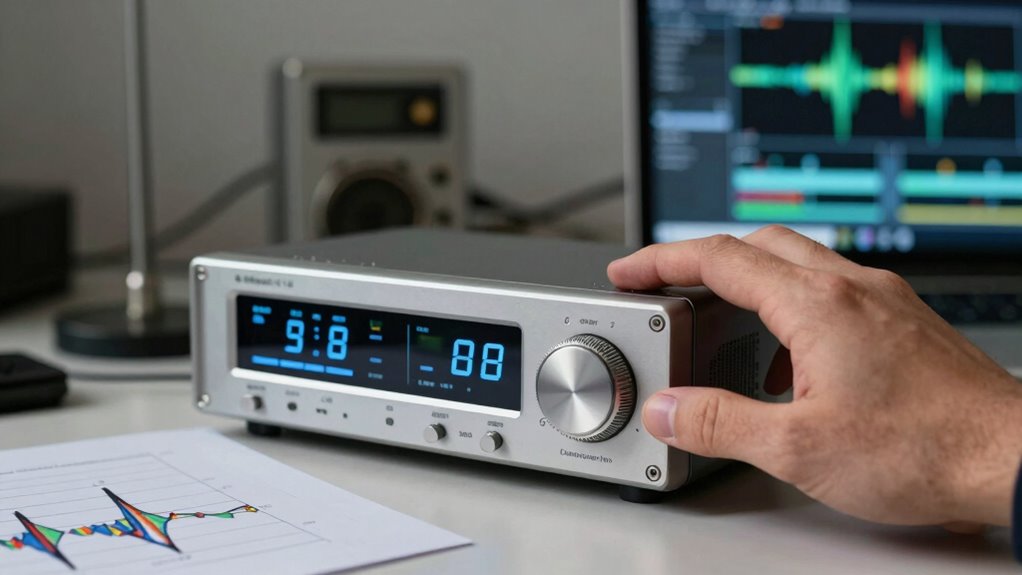
When you’re trying to improve your signal strength, knowing how to effectively scan for signals can make all the difference. Running a signal scan isn’t just about catching the latest trends or tuning into the loudest frequency; it’s about understanding the radio frequency environment around you. To do this effectively, you need a clear plan that emphasizes precision over popularity. Start by familiarizing yourself with your equipment’s capabilities. Use a quality scanner or radio that allows you to toggle between different frequency ranges and provides detailed information about each signal. This way, you can avoid being distracted by signals that are just noise or interference.
Understanding your equipment and environment is key to effective, precise signal scanning.
When scanning, pay attention to radio frequency patterns rather than just the strongest signals. The goal isn’t to chase after the loudest or most popular channels but to identify stable and reliable signals that align with your interests. To do this, focus on interference detection. Many modern scanners include features that highlight interference or signal distortion, which can help you distinguish between genuine signals and static or noise caused by interference. If you notice a lot of interference, it might be worth adjusting your scanner’s frequency step or moving to a different location. Sometimes, simply changing your position can drastically reduce interference and give you clearer signals. Incorporating sound wave science into your understanding can also help you anticipate how signals might be affected by environmental factors. Additionally, understanding radio wave propagation can improve your ability to predict signal behavior in different conditions. Developing an understanding of signal stability can also guide you in identifying signals that are consistently reliable over time.
Avoid the trap of becoming a trend chaser by resisting the urge to jump from one frequency to another based solely on transient signals. Instead, take your time to analyze each frequency thoroughly. Use signal strength indicators and audio quality to determine if a particular signal is worth following. Remember, a signal that appears strong but is riddled with interference may not be reliable. Conversely, a slightly weaker signal with minimal interference could be more valuable for consistent listening. Understanding the importance of signal quality can help you focus on the signals that truly matter rather than just the loudest or most popular. Additionally, developing a methodical approach will help you stay focused and avoid impulsively chasing fleeting signals. Patience is key in this process. Running a good signal scan involves patience and a bit of detective work. Keep notes of the frequencies that consistently produce clear signals. Over time, you’ll develop a mental map of the radio frequency landscape around you, which helps you avoid chasing after fleeting or trendy signals. With practice, you’ll learn to differentiate between signals worth pursuing and those that are just noise. Ultimately, a focused and methodical approach will give you better results, helping you stay grounded and avoid falling into the trap of trend chasing in your signal scans.
high-quality radio scanner for frequency analysis
As an affiliate, we earn on qualifying purchases.
As an affiliate, we earn on qualifying purchases.
Frequently Asked Questions
How Often Should I Perform a Signal Scan?
You should perform a signal scan weekly or whenever you notice network congestion or signal interference. Regular scans help you identify fluctuations and potential issues early, ensuring stable connections. If you’re in an area prone to interference or experiencing frequent disruptions, consider scanning more often. This proactive approach keeps you ahead of problems, allowing you to optimize your device’s performance and maintain a smooth, reliable connection.
What Tools Are Best for Accurate Signal Scanning?
You need the best tools to guarantee your signal scan is spot-on, avoiding interference and device compatibility issues. A high-quality SDR (Software-Defined Radio) like the Airspy or HackRF is your superhero, offering precise detection and minimal signal interference. Pair it with a reliable antenna, and you’ll have a powerful setup that quickly identifies weak signals and guarantees compatibility. This combo turns your signal scanning into an effortless, super-accurate mission.
Can Signal Scans Improve My Overall Network Security?
Yes, signal scans can improve your overall network security by identifying interference sources that may weaken your signals or create vulnerabilities. By analyzing signal strength and detecting unusual fluctuations, you can pinpoint potential issues or unauthorized devices trying to access your network. Regular scans help you stay ahead of interference sources, ensuring your network remains stable and secure, reducing the risk of breaches or disruptions.
How Do I Interpret Signal Scan Results?
To interpret your signal scan results, first look at the signal strength; stronger signals usually indicate closer or more powerful sources. Check for interference sources like other networks or electronic devices that could disrupt your connection. If you see multiple signals with similar strength, it might suggest overlapping coverage or congestion. Use this information to optimize your setup by adjusting your device’s position or changing channels to reduce interference sources.
Are There Risks Associated With Frequent Signal Scanning?
Yes, there are risks with frequent signal scanning. You might encounter signal interference, which can disrupt device performance or cause data loss. Also, repeated scans could strain your device’s hardware, especially if it’s not fully compatible with certain signals. To minimize these risks, space out scans and guarantee your device is compatible with the signals you’re scanning for, reducing potential interference and hardware issues.
As an affiliate, we earn on qualifying purchases.
Conclusion
Remember, chasing every new trend can lead you astray, so trust your own analysis and stay patient. By sticking to solid signal scan tips and maintaining discipline, you’ll develop a clearer market perspective. Keep in mind the saying, “Don’t count your chickens before they hatch,” and avoid jumping into every fleeting trend. Focus on consistent strategies, and you’ll find that success comes from steady, thoughtful actions rather than impulsive reactions.
portable radio scanner with signal stability features
As an affiliate, we earn on qualifying purchases.
As an affiliate, we earn on qualifying purchases.
advanced frequency scanner for reliable signals
As an affiliate, we earn on qualifying purchases.
As an affiliate, we earn on qualifying purchases.
Fall Picks
fall essentials
As an affiliate, we earn on qualifying purchases.