📊 Full opportunity report: Discover The Top AI Developments We Unveiled In July 2026 on ThorstenMeyerAI.com — validation score, market gap, and execution plan.
TL;DR
In July 2026, Google introduced three new Gemini AI models and the Gemini Robotics ER 2 system, advancing AI’s role in software, robotics, and safety. Details on performance and deployment are still emerging.
Google recapped its July 2026 AI product launches, highlighting the introduction of three new Gemini models for building AI agents and the Gemini Robotics ER 2 system designed for physical tasks. These developments extend Google’s AI capabilities across software, robotics, and safety applications, impacting both enterprise and consumer markets. For a detailed overview, see the original analysis.
Google’s July 2026 AI announcements included the release of three Gemini models: Gemini 3.6 Flash, Gemini 3.5 Flash-Lite, and Gemini 3.5 Flash Cyber. These models aim to optimize token efficiency, reduce latency, and support scalable agent workflows, though specific benchmark data remains undisclosed. For more details, see the original analysis. Additionally, Google introduced Gemini Robotics ER 2, described as its most capable embodied-reasoning robot, capable of interpreting physical environments and executing complex, multistep tasks, targeting developers building autonomous machines.
Beyond core models, Google expanded AI features in consumer devices, integrating Gemini Intelligence with Samsung’s Galaxy Z Fold8 and Flip8, and enabling wireless data transfer from iPhones using Android 17. The company also made AlphaEvolve, a code optimization agent, generally available via Google Cloud, and incorporated connected services like YouTube Music into Search’s AI Mode. For more insights, see the original analysis.
Impact of Google’s July 2026 AI Model and Robotics Launches
The release of the Gemini models and ER 2 system signifies Google’s push to embed AI more deeply into both digital and physical environments, impacting software development, robotics, and consumer technology. These advancements could enable more efficient AI agents at scale, improve automation in physical tasks, and expand AI’s role in everyday activities, although performance claims remain unverified by independent benchmarks.
For developers and businesses, these updates promise new tools for building scalable, efficient AI systems. For consumers, increased integration of AI in devices and services could streamline daily tasks but also raises questions about data security, permissions, and control. The full impact depends on deployment, regional rollout, and how these models perform in real-world settings.
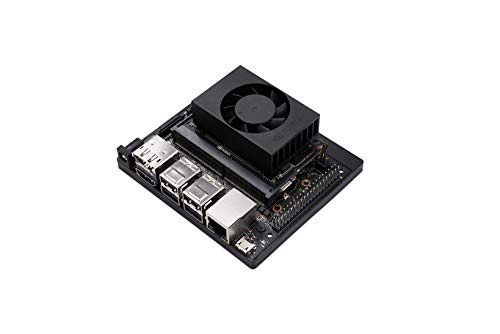
NVIDIA Jetson Xavier NX Developer Kit (812674024318)
- Compact Power-Efficient Module: Includes a low-power, small form-factor module
- High Performance at 10W: Delivers over 10X the performance of Jetson TX2
- Cloud-Native Support: Enables easy development and deployment of AI software
As an affiliate, we earn on qualifying purchases.
As an affiliate, we earn on qualifying purchases.
Background of Google’s AI Innovation in 2026
Throughout 2026, Google has steadily advanced its AI offerings, focusing on scalable models and practical applications. The company’s previous releases included foundational AI models and integrations into consumer devices. The July 2026 announcements build on this momentum, emphasizing production-ready AI agents and robotics systems designed for real-world tasks. Prior to these releases, Google had showcased prototypes and research projects, but the July updates mark a significant step toward commercial deployment and routine use of AI agents in various sectors.
“The Gemini models are designed to combine token efficiency, low latency, and reliable performance for scalable agent workflows.”
— Google spokesperson
As an affiliate, we earn on qualifying purchases.
Unverified Performance and Deployment Details
Performance metrics such as speed, efficiency, and reliability of the Gemini models remain unverified due to the absence of independent benchmark data. Details about deployment scale, regional availability, and safety evaluations for ER 2 are also not yet disclosed. The exact differences between Gemini 3.5 Flash Cyber and other variants are unclear, as is the pricing structure for these models and related services.
As an affiliate, we earn on qualifying purchases.
Next Steps for Google’s AI Model and Robotics Rollouts
Developers and customers will await detailed technical documentation, independent performance benchmarks, and pricing information for the Gemini models. Broader deployment of ER 2 will provide insights into its real-world capabilities. Google is expected to gradually expand regional availability of AI-powered consumer features like Gemini Spark and Search AI Mode, while also monitoring safety and security controls. Further updates are anticipated as the company progresses toward wider commercial adoption.
As an affiliate, we earn on qualifying purchases.
Key Questions
When will the Gemini models be available for general use?
Google has not yet announced specific release dates or regional availability for the Gemini models. Details are expected in the coming months as the models undergo further testing and evaluation.
What are the main differences between the Gemini 3.5 Flash-Lite and Cyber variants?
Google has not provided detailed technical specifications or performance comparisons between these variants, leaving their differences and use cases unclear.
How will the Gemini Robotics ER 2 be deployed outside controlled environments?
Deployment numbers and safety evaluations are not yet available. The company has indicated ongoing testing, with broader commercial use dependent on safety and performance assessments.
Will these AI updates improve everyday consumer experiences?
Potentially, as features like Gemini Spark and Search AI Mode aim to reduce repetitive tasks and enhance automation, but the extent of practical benefit depends on regional rollout and user permissions.
What safety measures are in place for these new AI systems?
Details on safety protocols, safeguards, and error handling are not fully disclosed. Google has emphasized ongoing safety evaluations, especially for robotics applications.
Source: ThorstenMeyerAI.com