

📊 Full opportunity report: The Bubble Question, Disentangled: 1999 vs 2026 Category by Category on ThorstenMeyerAI.com — validation score, market gap, and execution plan.
TL;DR
This article analyzes the differences between the 1999 dotcom bubble and the 2026 AI cycle across various categories. While some AI investments show bubble characteristics, others demonstrate genuine, durable value, making the overall picture complex.
Recent analyses reveal that the current AI investment cycle exhibits both bubble-like signals and signs of genuine value, complicating the narrative of whether AI is in a bubble similar to 1999. Experts emphasize that the distinction depends heavily on specific categories and metrics.
In 2026, the AI sector shows a mix of bubble signals—such as extreme private valuations, high concentration of VC funding, and large-scale infrastructure commitments—paralleling some aspects of the 1999 dotcom bubble. However, unlike 1999, current AI investments are supported by real revenue, visible productivity gains, and earnings growth, suggesting a more grounded cycle.
Key indicators include a $725 billion hyperscaler capital expenditure in 2026, comparable to telecom infrastructure buildouts, but driven by different factors like AI-specific hardware and software deployment. VC concentration remains high, with 73% of AI VC funding in a few companies, similar to the peak in 1999, yet valuations such as OpenAI at $730 billion significantly exceed previous peaks.
Analysts note that multiple expansion plays a smaller role today, with earnings growth and revenue at scale being more prominent. Nonetheless, risks such as impairment from infrastructure overbuild, power bottlenecks, and geopolitical factors like China’s capability gap persist, fueling debate over bubble status.
Not binary.
Category by category.
Some bets show clear bubble dynamics. Some show durable value. The disentanglement matters more than the aggregate framing.
OpenAI $730B private valuation. Anthropic $380B. Mag 7 forward P/E 38× vs Dot-com peak 30×. BUT: earnings-driven returns (78%) vs Dot-com multiple-driven (314%). Real productivity gains. Mag 7 outsized free cash flow. Carlota Perez framing applies.
Two cycles. Twelve dimensions.
On price-and-fundamentals dimensions, 2024-2026 is more grounded than 1999. On capital-allocation dimensions, 2024-2026 has bubble-comparable or worse characteristics. The dual signal explains the analyst disagreement.
Five frothy. Five durable. Three contested.
The honest read: the cycle is structurally bifurcated. Some categories are not in bubble territory; others are. The contested middle is where the bubble question actually resolves through 2027-2028.
- Mega-deal concentrationOpenAI $730B, Anthropic $380B, Databricks $134B.
- Circular financingMSFT→OpenAI→CoreWeave→NVDA→MSFT loop.
- Capex velocity$725B exceeds revenue translation. $1.5T debt by 2028.
- Cahn / Sequoia argument$5T buildout requires AGI by 2030.
- Capital-flow speed$700B retail equity since Jan · 5× faster than 2000.
- Hyperscaler capex justificationCahn (only AGI) vs Goldman (justified by trajectory).
- NVIDIA addressable shareCUDA moat vs in-house silicon migration to 30-45% by 2028.
- Frontier-lab valuationsPlatform companies vs commodity API providers.
- Earnings-driven returns78% earnings · 9% multiples vs Dot-com 314% multiples.
- Mag 7 FCF + buybacksMicrosoft $90B FCF · Alphabet $70B · structural cushion.
- Profit weight matchesTech ~30% market cap, ~20% profits vs 1999 35%/10% gap.
- Forward margins recordS&P Tech margin estimates at all-time highs.
- Real productivity30-50% call center · 20-40% software eng · measurable today.
Three paths. One question.
35/50/15 probability. Base scenario most likely because durable-value supports prevent worst-case but bubble signals are too strong to resolve without correction.
- Frothy correct 30-50%Frontier labs, circular financing.
- Mag 7 sustainsReal productivity continues.
- Hyperscaler capex defensibleMixed but justified.
- NVIDIA gradual decelNot sharp.
- Outcome: Uneven returns. Big winners + losers. No broad crash.
- Frontier labs -40-60%From 2026 peaks.
- Hyperscaler impair$50-150B capex aggregate.
- NVIDIA sharp decelFY28 30-50% growth vs FY26 75%.
- NASDAQ -30-50%12-24 month period.
- Outcome: Mag 7 cushion holds. Deployment continues delayed.
- NASDAQ -60-78%Matching 2001-2003 magnitude.
- Frontier labs collapseBelow VC entry pricing.
- Hyperscaler impair $300-500BMajor capex writedowns.
- NVIDIA negative quartersRevenue compression.
- Outcome: Multi-year recovery. Deployment 2032-2033.
The 2024-2026 cycle is structurally more grounded than 1999 on price-and-fundamentals dimensions and structurally similar or worse on capital-allocation dimensions. The bifurcation explains the analyst disagreement and predicts the correction pattern: specific categories correct sharply while others persist.
Four assignments. By role.
Stop pricing AI as single asset class.
Differentiate Mag 7 (durable-value-leaning) from pure-play AI infrastructure (bubble-leaning) from contested middle (NVIDIA, frontier labs). Position long durable-value categories; short or underweight bubble-categories with circular-financing exposure. Use Perez framing to size correction expectations.
Pace through 2026-2027.
Preserve dry powder for 2028-2029. Mega-rounds at $300B+ valuations carry asymmetric correction risk. Mid-stage product-market-fit names with real revenue carry durable value through any plausible correction. The 1999 lesson: winners eventually recover; losers don’t.
Build for survivable correction.
18-24 month cash runway assumptions that survive 30-50% valuation correction. Prioritize real revenue over narrative-driven funding. Structure cap tables to absorb down-round scenarios. Peak-fundraising window of 2025-2026 may not persist; raise opportunistically while it does.
Multi-vendor sourcing for price volatility.
Plan for AI service price volatility through 2027-2028. Prices may rise (power constraint) or fall (frontier-lab competitive pressure). Multi-vendor sourcing reduces single-vendor exposure. Contractual flexibility (escalators, exit provisions, renegotiation triggers) preserves optionality.
Why Distinguishing Bubble from Value Matters Now
Understanding which AI investments are in bubble territory versus those with durable, real-world value influences investment decisions, policy approaches, and innovation strategies. Misjudging the cycle could lead to sharp corrections or missed opportunities, especially as some infrastructure investments may persist regardless of near-term market fluctuations.
For investors, this differentiation guides risk management and capital allocation. For policymakers, it informs regulation and support measures. For founders, it clarifies which segments may sustain long-term growth versus those susceptible to correction.

AI Hardware Engineering: Designing GPUs, TPUs, and Neural Processing Units for High-Throughput Machine Learning Workloads (AI Infrastructure, Hardware & Compiler Engineering Series)
As an affiliate, we earn on qualifying purchases.
As an affiliate, we earn on qualifying purchases.
Historical and Current Factors Shaping the AI Investment Cycle
The 1999 dotcom bubble was characterized by massive capital deployment to unprofitable firms, inflated valuations based on network effects, and a subsequent crash that eliminated many companies. The cycle was driven by speculative fervor and a lack of revenue support, leading to sharp corrections but ultimately paving the way for lasting internet infrastructure and companies like Amazon and Cisco.
In contrast, the 2026 AI cycle benefits from tangible revenue, productivity gains, and structural advances, although it exhibits bubble-like features such as high valuations, concentrated VC funding, and infrastructure overcommitment. The comparison underscores that not all AI investments are speculative; some are rooted in real economic value, while others are driven by hype and inflated expectations.
“The current AI cycle is structurally bifurcated; some categories resemble the dotcom bubble, while others show genuine, durable value.”
— Thorsten Meyer

AI Engineering: Building Applications with Foundation Models
As an affiliate, we earn on qualifying purchases.
As an affiliate, we earn on qualifying purchases.
Key Uncertainties in Bubble Assessment for 2026
It remains unclear how many of the high valuations, especially in private markets, will sustain long-term, and whether infrastructure overbuilds will lead to significant impairment. The timing and impact of potential corrections in specific categories, such as infrastructure and private valuations, are still developing. Additionally, the influence of geopolitical factors and technological breakthroughs on valuation stability is uncertain.

AI Data Center Infrastructure Engineering: Power Distribution, Liquid Cooling, High-Density Networking, and Energy Efficiency for GPU Training … Hardware & Compiler Engineering Series)
As an affiliate, we earn on qualifying purchases.
As an affiliate, we earn on qualifying purchases.
Expected Developments and Monitoring Indicators
Over the coming months, market watchers will scrutinize earnings reports, infrastructure spending efficiency, and geopolitical developments to gauge the cycle’s trajectory. Key indicators include the performance of major AI companies, updates on infrastructure utilization, and changes in private valuations. Policymakers and investors will need to adjust strategies as new data emerges, especially through 2027 and 2028, to differentiate lasting value from speculative excess.
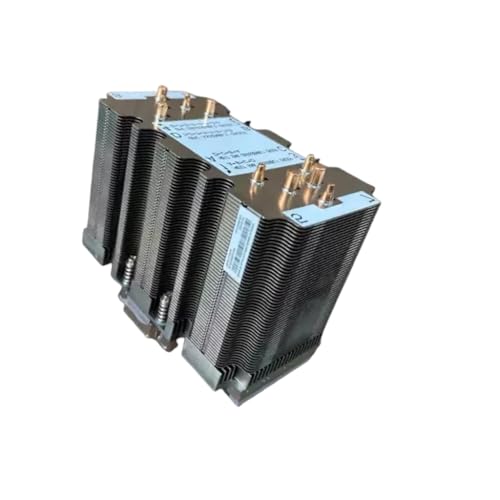
GPU Heatsink with 10 High Efficiency Coppered Tubes for SXM2 V100/P100 Server
- High-efficiency GPU cooling: Engineered for V100/P100 SXM2 GPUs
- Large copper baseplate: Ensures close contact with GPU cores
- Ten high-performance heat pipes: Provides robust and uniform heat transfer
As an affiliate, we earn on qualifying purchases.
As an affiliate, we earn on qualifying purchases.
Key Questions
How can we tell which AI investments are in a bubble?
Investments with extremely high private valuations, concentrated funding, and infrastructure commitments without clear revenue or profitability signals are more likely in bubble territory. Conversely, those showing real revenue, productivity gains, and earnings growth are more likely to be durable.
What are the biggest risks for the AI sector in 2026?
Risks include infrastructure overbuild leading to impairments, geopolitical disruptions affecting supply chains and capabilities, and valuation corrections in private markets. These could cause sharp adjustments in certain categories.
Will the AI bubble burst like the dotcom crash?
While some categories exhibit bubble signals, others are grounded in real economic value. The overall cycle’s outcome depends on how these categories evolve through 2027-2030, with some investments likely to persist and others to correct sharply.
How does current AI valuation compare to 1999?
Private valuations and VC concentration are significantly higher now, with OpenAI valued at hundreds of billions, far exceeding dotcom peaks. However, current AI investments are supported by revenue and productivity gains, unlike the purely speculative dotcom era.
Source: ThorstenMeyerAI.com