
📊 Full opportunity report: Week Three — Foundation model vs Brownian motion. Kronos on five-minute BTC. on ThorstenMeyerAI.com — validation score, market gap, and execution plan.

Get business pricing on monitors, keyboards and dev gear
- Business-only prices and quantity discounts
- Tax-exempt purchasing
- Multiple users, one account, clear invoices
TL;DR
A recent test comparing Kronos, a foundation model, against a Brownian motion baseline shows no significant advantage in predicting 5-minute Bitcoin price movements. The results question the immediate benefit of advanced models over traditional assumptions for short-term trading.
Recent testing shows that Kronos, a large open-source foundation model trained on global financial data, does not outperform a traditional Brownian motion model in predicting 5-minute Bitcoin price movements in a simulated trading environment.
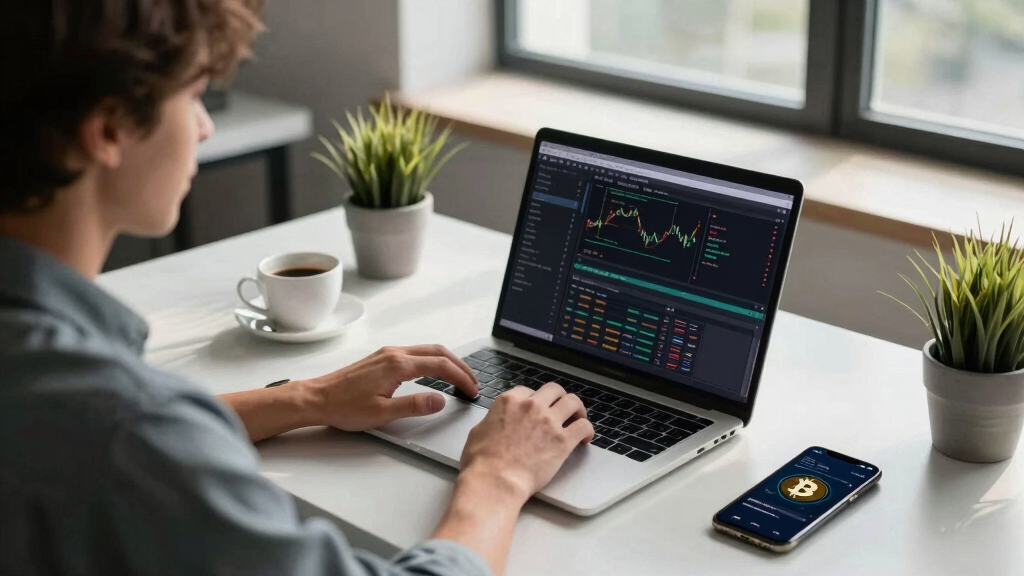
Over a two-week open-source research effort, a custom Python tool evaluated Kronos-small against a Brownian motion baseline across 497 historical BTC trades recorded by a paper-trading bot. The test measured probabilistic forecasts of whether BTC would close above its open price within five minutes, using metrics like Brier score and log-loss. Results indicated that Kronos’s predictive accuracy was statistically indistinguishable from Brownian motion, with no clear advantage in out-of-sample testing.
The experiment involved reconstructing market context from historical OHLCV data, running the model to generate forecast paths, and comparing predicted probabilities to actual outcomes. Despite expectations that a learned model might outperform a classical stochastic process, the data showed that Kronos did not deliver a significant edge. The in-sample performance was similar to Brownian motion, and out-of-sample results confirmed this parity.
Implications for Short-Term Crypto Prediction Strategies
This finding challenges the assumption that advanced machine learning models inherently provide better short-term market predictions than traditional stochastic models like Brownian motion. For traders and algorithm developers, it suggests that complex models may not always translate into actionable edge in high-frequency or short-horizon trading, at least with current technology and training data. The results also emphasize the importance of rigorous out-of-sample testing to avoid overfitting and false confidence in predictive models.
As an affiliate, we earn on qualifying purchases.
Background on Model Testing and Market Assumptions
Historically, financial markets have often been modeled using mathematical assumptions like Brownian motion, which treats returns as independent and normally distributed. Recent advances in AI and machine learning have raised expectations that learned models trained on large datasets could outperform these classical assumptions, especially in short-term prediction. However, previous experiments with trading bots based on Brownian models showed limited success, prompting further investigation into whether modern foundation models can do better. Kronos, an open-source model trained on millions of candles from global exchanges, represents a credible candidate for testing this hypothesis. The current study is part of ongoing efforts to evaluate the practical benefits of such models in real trading scenarios.
“Our tests show that Kronos does not outperform the classical Brownian baseline in short-term BTC prediction, at least in the current form and data scope.”
— Thorsten Meyer, researcher
short-term crypto prediction software
As an affiliate, we earn on qualifying purchases.
As an affiliate, we earn on qualifying purchases.
Unanswered Questions About Model Performance and Future Potential
It remains unclear whether different training regimes, larger models, or alternative market contexts could enable Kronos or similar models to outperform classical baselines in short-term prediction. Additionally, the study focused on a specific trading horizon and market conditions; results may vary under different circumstances. The potential for model improvements or adaptive strategies to change this outcome is still an open question.
financial time series analysis tools
As an affiliate, we earn on qualifying purchases.
As an affiliate, we earn on qualifying purchases.
Next Steps in Testing and Model Development
Further research will explore larger and more specialized models, different market conditions, and longer testing periods to assess whether AI can deliver consistent predictive edge. Developers may also experiment with integrating models like Kronos into live trading systems cautiously, while emphasizing rigorous out-of-sample validation. The ongoing debate about the practical benefits of machine learning in finance continues, with this study providing a benchmark for future efforts.
As an affiliate, we earn on qualifying purchases.
Key Questions
Does Kronos outperform traditional models in short-term BTC prediction?
No, current testing shows Kronos performs roughly on par with a Brownian motion baseline, with no statistically significant advantage.
Can advanced AI models like Kronos be used reliably for trading now?
Based on current results, Kronos is not demonstrated to provide a trading edge. It is primarily a research tool, and practical deployment would require further validation.
What does this mean for traders using AI models?
This suggests caution; complex models may not automatically translate into better short-term predictions, emphasizing the importance of rigorous testing.
Will model performance improve with more data or larger models?
This remains an open question; future research will explore whether scaling models or training on different data can yield better results.
How does this impact the belief that machine learning can beat traditional assumptions?
The findings challenge that assumption in the specific context of 5-minute BTC prediction, indicating that classical models remain competitive in this domain.
Source: ThorstenMeyerAI.com
Fall Picks
fall essentials
As an affiliate, we earn on qualifying purchases.