

🔍 Read the full analysis: Your Guide To The 13 Best AI Automation Tools In 2026 on ThorstenMeyerAI.com

Get business pricing on monitors, keyboards and dev gear
- Business-only prices and quantity discounts
- Tax-exempt purchasing
- Multiple users, one account, clear invoices
TL;DR
In 2026, the AI automation landscape features 13 leading tools that excel in integration, scalability, and usability. This guide highlights their strengths, differences, and suitability for various needs.
In 2026, the AI automation tools landscape is dominated by 13 top solutions that combine advanced AI capabilities with user-friendly interfaces and scalable architectures. These tools are designed to streamline workflows across development, testing, network management, and enterprise operations, making automation more accessible and powerful for a broad range of users.
The selected tools were evaluated based on their ability to automate complex workflows, ease of integration with existing systems, scalability, user experience, and overall value. Among them, platforms like Google AI Studio stand out for building scalable workflows, while Spec-Driven AI Testing specializes in testing automation. The top-ranking solutions support API and CI/CD integration, making them suitable for both small teams and large enterprises.
Ease of use varies significantly, with some tools offering drag-and-drop interfaces tailored for beginners, and others providing extensive scripting capabilities for seasoned developers. Pricing models range from affordable tiered subscriptions to premium enterprise licenses, reflecting differences in features and support levels. The focus remains on enabling rapid automation development with minimal coding, often through AI agents that integrate seamlessly across platforms.
The 13 picks
- 1
 Software Testing with Generative AIView on Amazon →
- 2
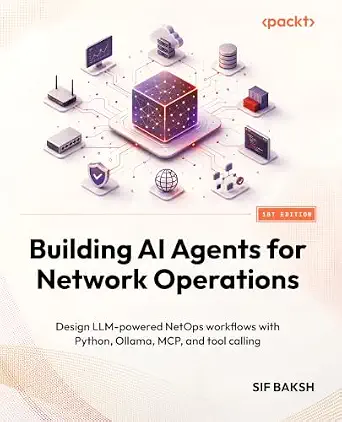 Building AI Agents for Network Operations: Design LLM-powered NetOps workflow…View on Amazon →
- 3
 40 Python Programming Projects for AI Agents and AutomationsView on Amazon →
- 4
 The Claude Code Operating Model: Build Scalable AI Coding Systems with Skills…View on Amazon →
- 5
 Spec-Driven AI Engineering: Build Reliable Software from Requirements to Code…View on Amazon →
- 6
 Building Agentic AI Systems: A Step-by-Step Guide to Creating LLM-Powered AI…View on Amazon →
- 7
 AI for Quality Assurance and Software Testing: The Practitioner’s Complete Gu…View on Amazon →
- 8
 Building Intelligent Applications with Claude AI: A Practical Guide to Creati…View on Amazon →
- 9
 Spec-Driven Software Testing with AI: Build Reliable Test Suites from Specifi…View on Amazon →
- 10
 Mastering Claude AI: The Complete Practical Guide to Prompt Engineering, Proj…View on Amazon →
- 11
 Claude AI Automation & Monetization: Build AI-Powered Systems, Automate Workf…View on Amazon →
- 12
 Google AI Studio Guide 2026: Master Google AI Studio to Build Intelligent AI…View on Amazon →
- 13
 Agentic Coding with Claude Code (5-in-1): A Practical Developer’s Handbook fo…View on Amazon →
Why These Tools Shape 2026’s Automation Landscape
The prominence of these 13 AI automation tools in 2026 underscores a shift towards more accessible, scalable, and integrated automation solutions. Their adoption influences how organizations develop, test, and deploy AI-driven workflows, reducing manual effort, increasing efficiency, and enabling rapid innovation. For businesses, choosing the right tool can mean significant cost savings, faster time-to-market, and improved operational resilience.
Moreover, their support for API and CI/CD pipelines indicates a trend toward embedding AI automation deeply into software development and network management processes, making automation more integral and less siloed. As AI capabilities continue to evolve, these tools will likely expand their features, further transforming enterprise workflows and developer productivity.
Evolution of AI Automation Tools in 2026
Over the past few years, AI automation tools have rapidly advanced, driven by improvements in AI models, cloud computing, and integration frameworks. In 2024 and 2025, early leaders like Google AI Studio and specialized testing platforms gained prominence for their ease of use and robust features. By 2026, the market has matured, with a diverse array of solutions tailored for different industries and technical needs.
Recent developments include increased focus on low-code and no-code interfaces, enhanced API support, and better scalability for enterprise deployments. The evaluation criteria for top tools now emphasize not only technical capabilities but also community support, documentation, and long-term reliability. The selection of these 13 tools reflects a broad consensus on their ability to meet evolving automation demands across sectors.
Remaining Questions About AI Automation in 2026
While the top 13 tools are well-established, it remains unclear how rapidly their features will evolve in response to emerging AI models and industry needs. Specific details about long-term support, pricing adjustments, and integration capabilities for future AI standards are still developing. Additionally, the full impact of these tools on organizational workflows and productivity metrics has yet to be comprehensively measured.
Future Developments in AI Automation Tools
Expect ongoing updates from these leading platforms, including enhanced AI capabilities, broader integration options, and user experience improvements. Industry analysts anticipate that new entrants will emerge, pushing innovation further. Organizations should monitor vendor roadmaps and participate in early testing phases of upcoming features to stay ahead in automation strategies.
Key Questions
How do I choose the best AI automation tool for my organization?
Assess your specific needs, including required features, ease of use, scalability, and budget. Prioritize tools with strong API support, good community and vendor support, and compatibility with your existing systems. Consider starting with trial versions or demos to evaluate usability and fit.
Are these tools suitable for small teams or individual developers?
Many of the top tools offer tiered pricing and user-friendly interfaces designed for smaller teams and individual users. Look for solutions emphasizing minimal setup, drag-and-drop features, and affordable plans to maximize value.
Will these tools support future AI models and standards?
Leading platforms are actively updating their features to support emerging AI standards and models. However, the pace of adaptation varies, so organizations should choose tools with a clear roadmap and strong developer communities for ongoing support.
Can these tools integrate with existing DevOps pipelines?
Yes, most top-tier AI automation solutions support integration with popular DevOps tools like Jenkins, GitHub Actions, Docker, and cloud services. Verify compatibility during evaluation to ensure seamless workflow automation.
Source: ThorstenMeyerAI.com
Fall Picks
fall essentials
As an affiliate, we earn on qualifying purchases.