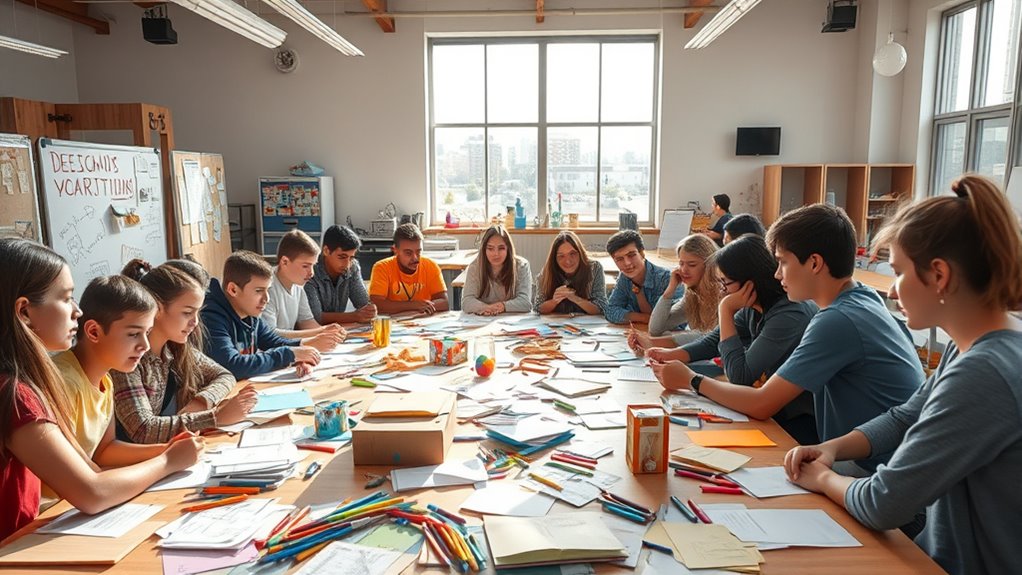

To inspire curiosity with design thinking in your classroom, engage students in empathy-driven projects that connect to real-world issues, encouraging open-ended brainstorming and hands-on prototyping. Foster collaboration and reflection to build resilience and confidence. Use creative problem-solving to turn ideas into tangible solutions, celebrate student innovations, and assess progress continuously. By applying these principles, you create a lively environment that sparks curiosity and fuels ongoing learning—keep exploring to learn more about making design thinking work for you.
Key Takeaways
- Incorporate empathy exercises to understand students’ perspectives and connect classroom topics to their personal experiences.
- Use brainstorming sessions to encourage open-ended ideas and foster creative problem-solving.
- Develop prototypes and conduct testing to refine ideas through iterative feedback and hands-on experimentation.
- Promote collaborative projects that build teamwork, communication, and collective responsibility.
- Integrate reflection practices to help students assess their growth, learn from mistakes, and develop resilience.
Understanding the Principles of Design Thinking in the Classroom
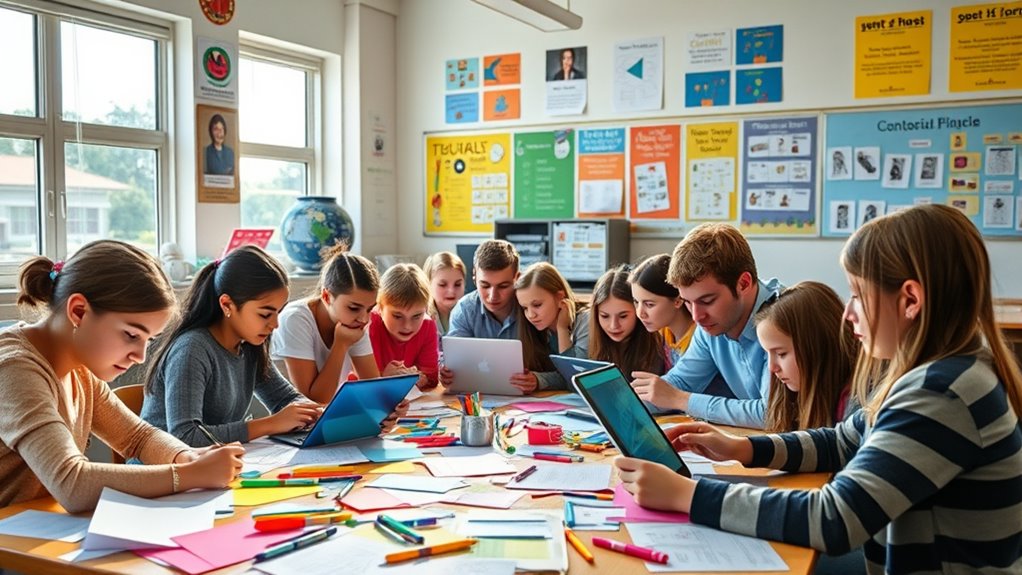
Understanding the principles of design thinking in the classroom begins with recognizing its focus on empathy, collaboration, and iterative problem-solving. This approach encourages you to see challenges from your students’ perspectives, fostering classroom innovation through creative solutions. By emphasizing empathy, you connect with real-world issues, making learning more relevant and engaging. Collaboration becomes essential as students work together to brainstorm ideas, test prototypes, and refine their approaches. Design thinking isn’t a one-and-done process; it’s about continuous improvement. When you incorporate these principles, you create a dynamic learning environment that promotes curiosity, resilience, and critical thinking. Incorporating a growth mindset helps students understand that challenges are opportunities for learning rather than setbacks. Embracing design thinking transforms your classroom into a space where innovation thrives and students develop skills applicable beyond the school walls.
Creating Empathy Maps to Connect With Real-World Issues
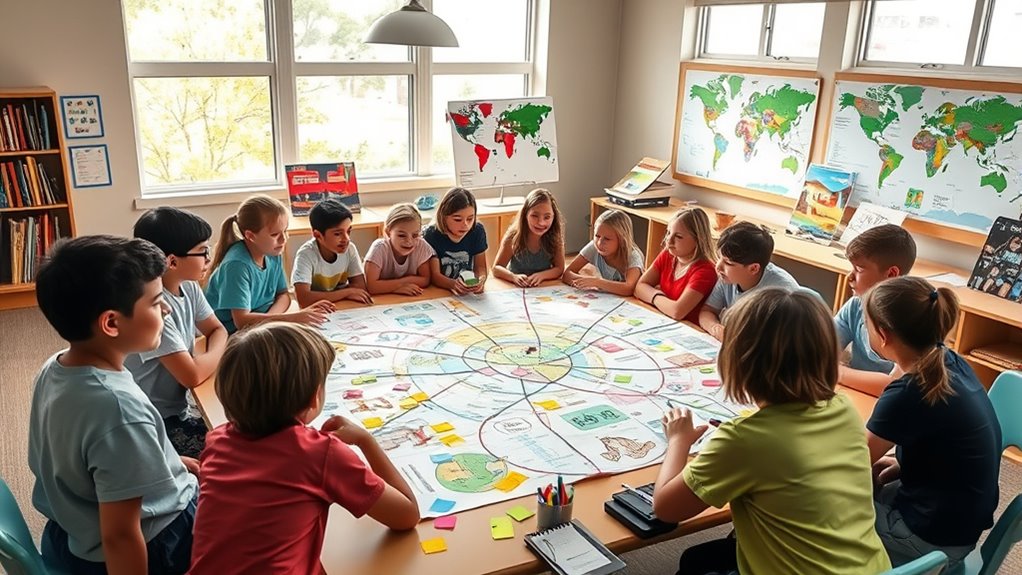
Creating empathy maps helps you build emotional connections with students and understand their perspectives on real-world issues. By visualizing their thoughts and feelings, you can better address their needs and foster meaningful learning experiences. This approach makes it easier to connect classroom topics to students’ lives and experiences. For instance, understanding how celebrities navigate public image challenges can serve as a relatable example to engage students in discussions about reputation and authenticity.
Building Emotional Connections
Have you ever wondered how to foster genuine emotional connections with students while tackling real-world issues? Building emotional awareness is key to this process. When students understand their own emotions and recognize others’ feelings, it strengthens relationship building. Creating empathy maps helps students explore different perspectives and connect emotionally with those impacted by real-world challenges. This activity encourages them to listen deeply and consider feelings beyond facts, fostering compassion. As students develop emotional awareness, they become more engaged and motivated to address issues meaningfully. Building these emotional connections creates a supportive classroom environment where students feel understood and valued. Understanding emotional awareness is essential because it forms the foundation for empathy and compassionate engagement. Ultimately, empathy maps serve as powerful tools to deepen relationships and inspire a shared commitment to positive change.
Visualizing Student Perspectives
Building emotional awareness sets the foundation for meaningful connections, and one effective way to deepen this understanding is through empathy maps. By creating these visual tools, you help students explore and share their viewpoints, fostering perspective visualization. When students map out their thoughts, feelings, and needs, they gain insight into their own experiences and those of others. This process encourages active listening and empathy, making real-world issues more relatable. As students articulate their perspectives, they develop a deeper understanding of diverse viewpoints, which enhances collaboration and problem-solving. Using empathy maps in your classroom helps students connect emotionally with the subject matter, promoting curiosity and critical thinking. Additionally, understanding different types of bicycle races can inspire students to explore diverse competitive environments and develop new interests. Ultimately, visualizing student viewpoints becomes a powerful step toward meaningful, empathetic engagement with complex issues.
Brainstorming Solutions: Encouraging Student Creativity
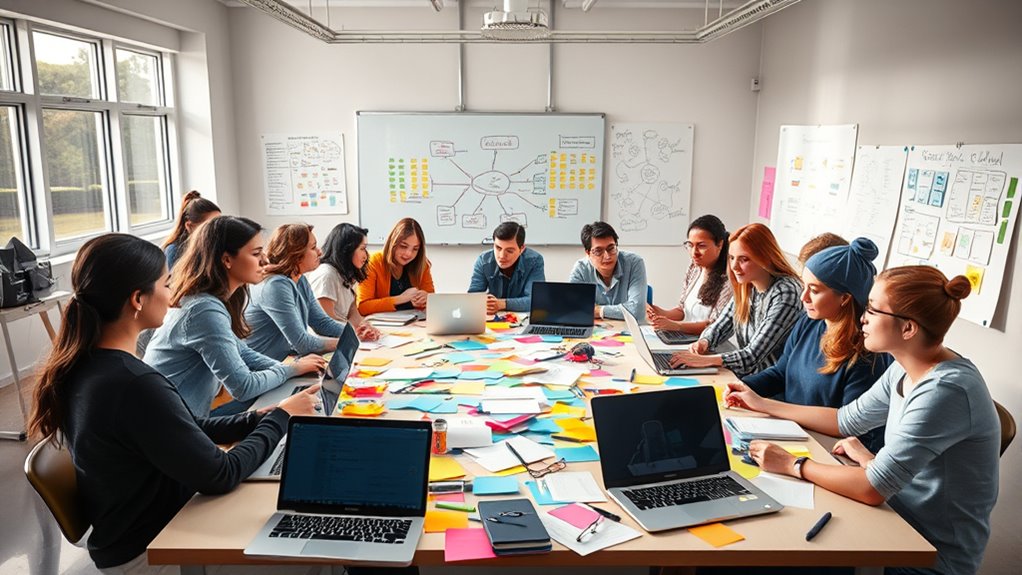
You can inspire student creativity by encouraging open-ended ideas that invite multiple solutions. Facilitate collaborative brainstorming sessions where students build on each other’s thoughts. Incorporate diverse thinking strategies to help students approach problems from different angles and expand their creative potential. Utilizing brainstorming solutions techniques can further foster innovative thinking and engagement.
Promoting Open-ended Ideas
How can educators foster an environment where students feel confident to share open-ended ideas? Start by encouraging open-ended exploration, where students understand there’s no single right answer. Emphasize creative freedom, allowing students to pursue ideas that interest them without fear of judgment. Create a safe space where curiosity is valued, and questions are welcomed. Use prompts that challenge students to think broadly and consider multiple perspectives. Highlight that setbacks are part of the learning process, reinforcing a growth mindset. When students see their ideas as valid and valuable, they become more willing to take risks. Incorporate air purifier maintenance principles into classroom management by regularly checking and maintaining a clean environment to support student well-being. This approach nurtures confidence, sparks innovation, and helps students develop a genuine passion for discovery and problem-solving.
Collaborative Brainstorm Sessions
Collaborative brainstorm sessions are a powerful way to harness student creativity by encouraging diverse perspectives and collective problem-solving. During these sessions, you help students understand the importance of team dynamics, where each member’s input influences the group’s success. By fostering an environment that values all ideas, you enable students to generate a wide range of solutions, fueling idea generation. Effective brainstorming encourages active listening, respectful communication, and open-mindedness, which build trust within the team. As students share their thoughts, they learn to build on each other’s ideas, sparking innovative approaches. Your role is to facilitate this process, guiding students to stay focused and inclusive. Ultimately, these sessions develop critical thinking and collaboration skills that are essential for real-world problem-solving. Recognizing the importance of emotional support during collaborative activities can also help students feel more comfortable sharing ideas and taking risks.
Diverse Thinking Strategies
Employing diverse thinking strategies during brainstorming sessions opens a broader range of creative solutions. When you encourage mindful awareness, students become more present and open to new ideas, enhancing their capacity to think outside the box. Incorporating sensory engagement helps students connect emotionally and physically to the problem, sparking fresh perspectives. For example, using tactile materials or visual stimuli can stimulate different parts of the brain, fostering innovative thinking. Additionally, integrating sound healing science concepts, such as listening to calming sounds, can help students achieve a relaxed mental state conducive to creativity. By blending these approaches, you create an inclusive environment where all students feel empowered to contribute unique ideas. This variety in thinking strategies not only broadens the scope of solutions but also nurtures curiosity and confidence. Ultimately, it transforms brainstorming from a simple activity into a dynamic process of discovery.
Prototyping: Building and Testing Ideas Hands-On

Prototyping transforms ideas into tangible forms that you can test and refine quickly. By engaging in rapid prototyping, you create simple models or sketches that bring your concepts to life, making them easier to evaluate. This hands-on approach allows you to identify strengths and weaknesses early, saving time and resources. User testing is essential during prototyping; it provides valuable feedback from real users, helping you understand how your solution works in practice. As you gather insights, you can make targeted improvements, ensuring your final design better meets user needs. The iterative nature of prototyping encourages experimentation and flexibility, fostering innovative thinking. Additionally, understanding the retail hours today list can help you plan when to conduct testing or gather feedback in real-world settings. By embracing this process, you develop a deeper understanding of your ideas and move closer to effective, real-world solutions.
Collaborative Projects That Foster Teamwork and Innovation
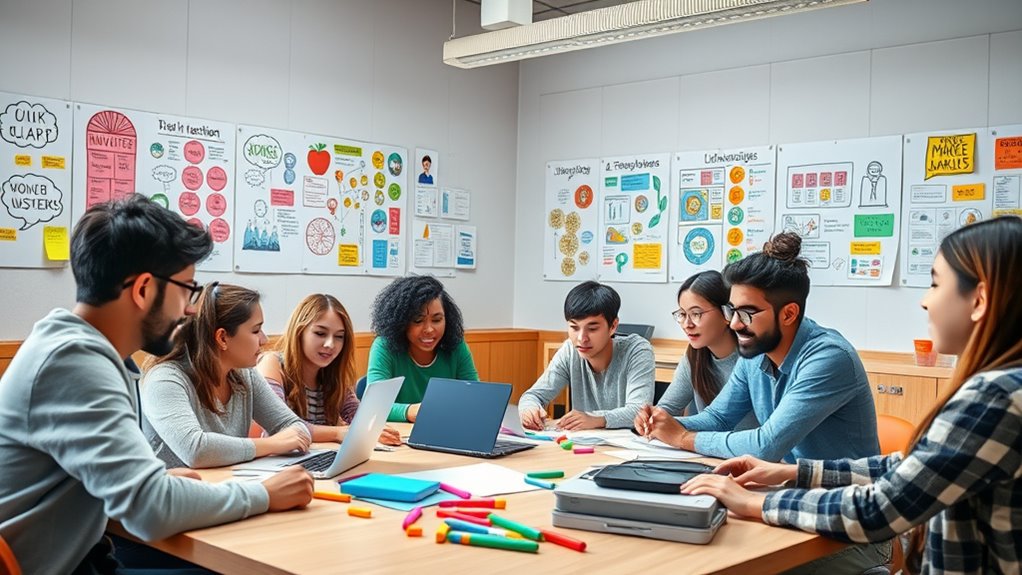
How can working on projects together spark both teamwork and innovation? Peer collaboration encourages you to share diverse perspectives, which fuels idea generation and creative problem-solving. When students collaborate, they learn to listen, communicate, and build on each other’s ideas, turning individual insights into innovative solutions. These projects create a dynamic environment where teamwork becomes essential for success, fostering trust and mutual respect. By working together, you develop skills like compromise, adaptability, and collective responsibility. The process of brainstorming and refining ideas through collaboration not only sparks innovation but also helps students understand different viewpoints. Incorporating diverse flavors and creative techniques, much like choosing unique gelato flavors, can enhance the richness of collaborative experiences. This active engagement prepares them for real-world challenges, where teamwork and fresh ideas are key to overcoming obstacles and creating meaningful, innovative outcomes.
Integrating Design Thinking Into STEM and STEAM Activities
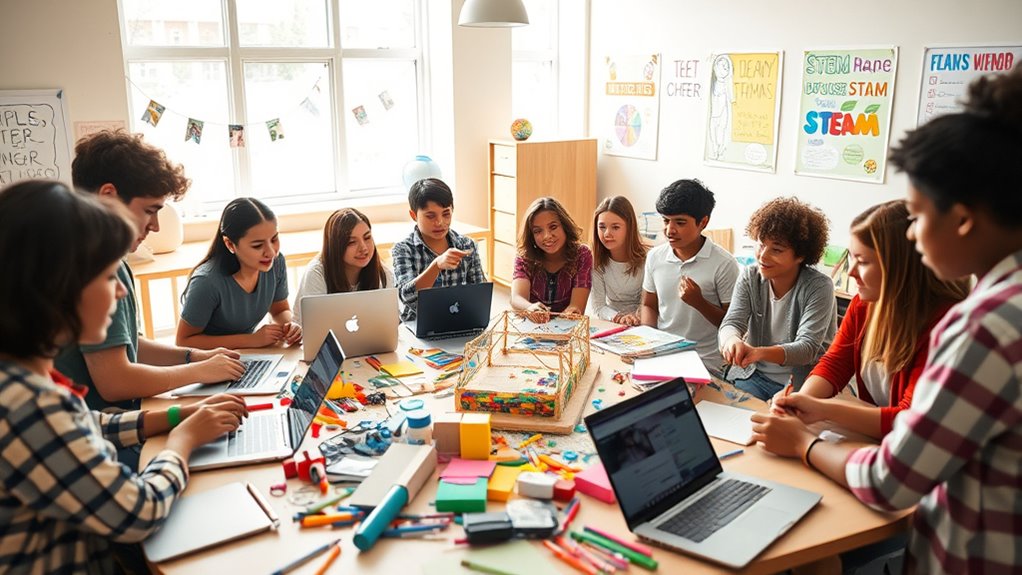
You can enhance STEM and STEAM activities by focusing on empathy-driven problem solving, which helps students understand user needs deeply. Encouraging cross-disciplinary collaboration allows students to combine ideas from different fields for more innovative solutions. Incorporating iterative design processes teaches students to refine their ideas through repeated testing and feedback.
Empathy-Driven Problem Solving
Empathy-driven problem solving is a vital component of integrating design thinking into STEM and STEAM activities, as it encourages students to understand and prioritize the needs of real users. You can guide students through empathy mapping, helping them visualize users’ feelings, thoughts, and pain points. This process fosters emotional engagement, making problems more relatable and motivating students to develop meaningful solutions. By focusing on empathy, students learn to see challenges from diverse perspectives, which enhances their creativity and problem-solving skills. When students deeply connect with users’ experiences, they become more invested in their projects. This approach not only cultivates compassion but also guarantees that solutions are user-centered, making the entire design process more impactful and relevant to real-world needs.
Cross-Disciplinary Collaboration
Why is cross-disciplinary collaboration essential in integrating design thinking into STEM and STEAM activities? It fosters interdisciplinary collaboration, allowing you to combine diverse perspectives and expertise. When you build creative partnerships across fields, you encourage innovative problem-solving and richer project outcomes. This approach helps break down silos, enabling students to see connections between science, technology, engineering, arts, and mathematics. By working together, you create an environment where ideas flow freely, and solutions become more integrative. Cross-disciplinary collaboration also models real-world teamwork, preparing students for future careers. Incorporating design thinking into these activities benefits from diverse viewpoints, leading to more inventive and effective solutions. Ultimately, it empowers students to approach challenges with a holistic mindset, essential for today’s complex problems.
Iterative Design Processes
Integrating an iterative design process into STEM and STEAM activities encourages continuous refinement and innovation. You start by brainstorming techniques to generate diverse ideas quickly, fostering creative solutions. Then, you move into iteration cycles, where you test prototypes, gather feedback, and make improvements. This cycle repeats, allowing your project to evolve based on real-world insights. Emphasizing iteration helps you identify flaws early and refine your approach efficiently. It also teaches resilience, showing that failure is part of progress. By embracing these cycles, you foster a mindset of ongoing improvement and adaptability. This process not only enhances problem-solving skills but also inspires curiosity and persistence in your students, making learning engaging and dynamic.
Reflective Practices to Enhance Student Learning and Growth
Reflective practices serve as essential tools for enhancing student learning and growth by encouraging active self-assessment and critical thinking. When you incorporate student self-assessment, you empower students to evaluate their progress and identify areas for improvement. Reflective journaling helps students articulate their thoughts, challenges, and successes, fostering deeper understanding and self-awareness. By regularly engaging in these practices, students develop a habit of thoughtful reflection that promotes continuous growth. You can guide them to ask questions like, “What did I learn today?” or “What could I do differently next time?” These reflections not only solidify learning but also build confidence and independence. Implementing reflective practices creates a classroom environment where curiosity thrives and students take ownership of their educational journey.
Showcasing Student Innovations: Celebrating Creative Solutions
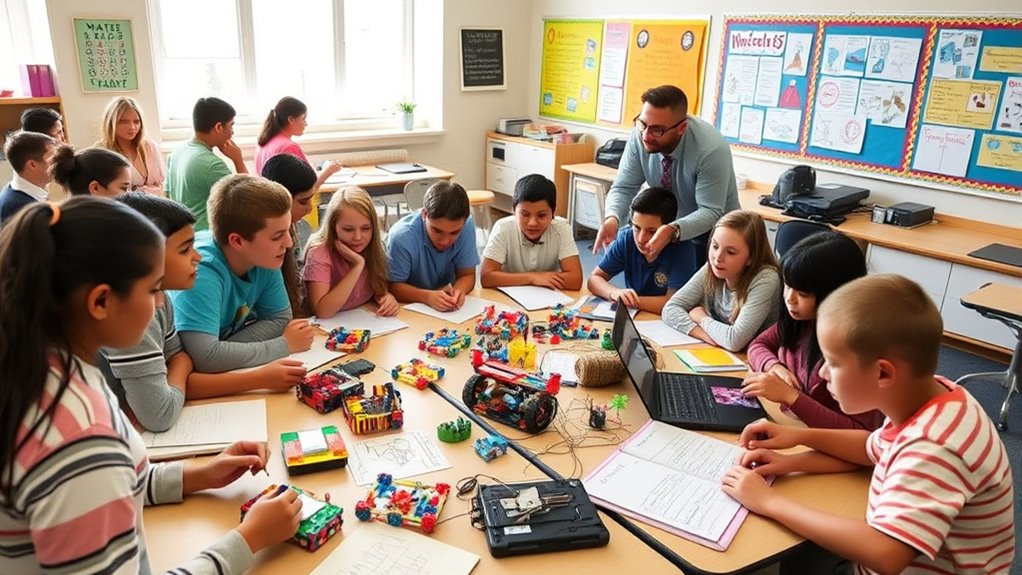
Showcasing student innovations highlights their creative solutions and encourages a culture of experimentation and problem-solving. When students lead initiatives, they take ownership of their ideas, fostering confidence and independence. Celebrating these efforts motivates others to embrace creative problem solving and view challenges as opportunities for innovation. Organize exhibitions, presentations, or digital portfolios where students can display their projects, explaining their design process and solutions. Highlighting student-led initiatives not only recognizes their hard work but also inspires peers to think outside the box. By publicly celebrating these innovations, you create an environment that values originality and resilience. This approach nurtures curiosity, builds skills, and reinforces the importance of creative problem solving in the learning journey.
Overcoming Challenges: Encouraging Resilience and Adaptability
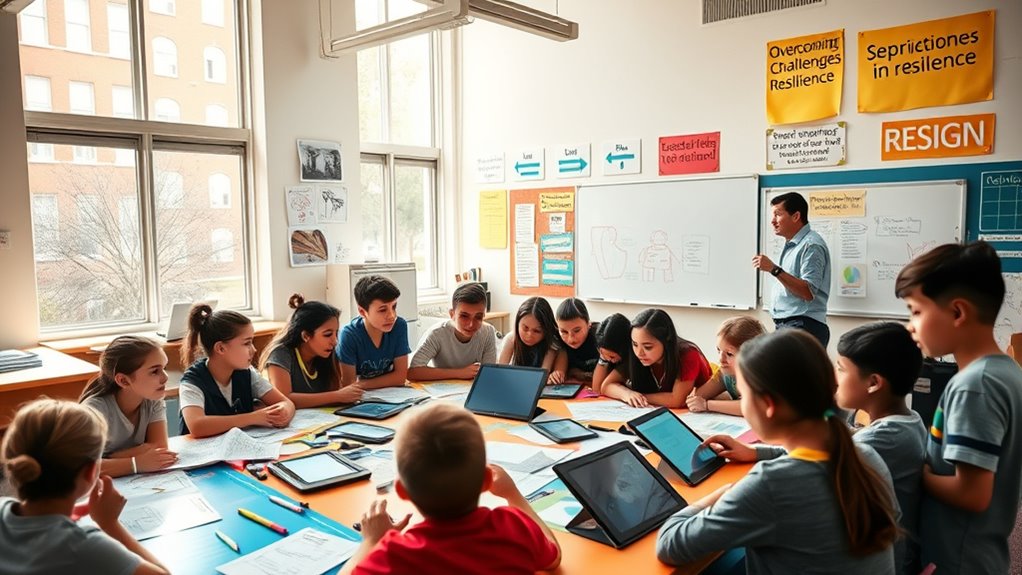
When students face setbacks or unexpected obstacles, encouraging resilience and adaptability becomes essential for their growth. You can foster mindset shifts by emphasizing that mistakes are opportunities to learn, not failures. Encourage students to view challenges as part of the creative process, helping them develop resilience strategies like reflection and perseverance. Support them in adapting their approaches when plans don’t work out, reinforcing that flexibility is key to problem-solving. Celebrate effort and progress, not just success, to build confidence. By modeling resilience yourself and providing a safe space for experimentation, you empower students to embrace setbacks as crucial steps toward innovation. Over time, these resilience strategies help students develop a growth mindset, making them more capable of overcoming future challenges with confidence.
Assessing Impact: Measuring Learning Through Design Thinking Projects
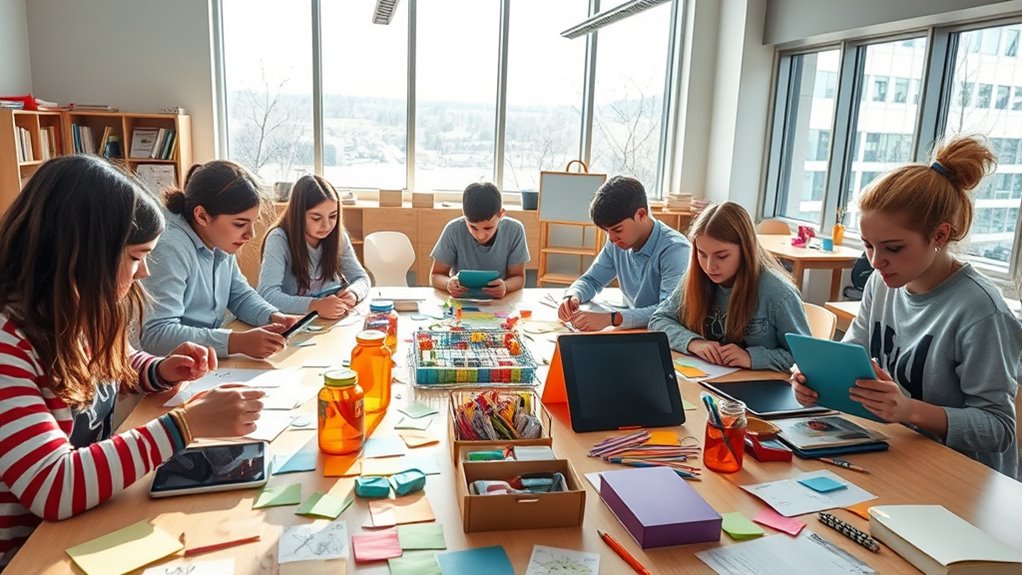
Evaluating the impact of design thinking projects is essential to understanding how effectively students are applying their problem-solving skills and deepening their learning. You can gather valuable insights through student feedback, which reveals their perceptions, challenges, and growth areas. Using assessment rubrics tailored to design thinking helps objectively measure creativity, collaboration, and problem-solving progress. These rubrics provide clear criteria, making it easier to track development over time. Combining student feedback with rubric scores gives you a holistic view of learning outcomes. This approach not only highlights successes but also identifies areas needing improvement. By systematically appraising impact, you can refine your teaching methods and ensure that design thinking projects truly foster meaningful, lasting learning experiences.
Frequently Asked Questions
How Can Teachers Effectively Assess Student Creativity in Design Thinking Projects?
You can effectively assess student creativity by developing clear rubrics that emphasize originality, problem-solving, and innovation. Incorporate peer evaluation to encourage collaborative feedback and diverse perspectives. By combining rubric development with peer assessments, you help students understand creative expectations and gain insights from classmates. This approach not only measures creativity objectively but also fosters a supportive environment where students feel motivated to explore unique ideas and push boundaries.
What Strategies Support Diverse Learners in Engaging With Design Thinking Activities?
Start with strategies that support diverse learners by fostering fun, flexible, and inclusive environments. Incorporate inclusive strategies and cultural responsiveness to guarantee every student feels seen and suited. Use varied methods like visual aids, hands-on activities, and collaborative tasks to meet different needs. By tailoring approaches and tapping into students’ unique backgrounds, you encourage engagement, empower participation, and promote persistent problem-solving throughout design thinking activities.
How Can Design Thinking Be Integrated Into Existing Curriculum Standards?
You can integrate design thinking into your existing curriculum by aligning activities with your standards and goals. Start by identifying key concepts and skills, then develop projects that incorporate the design process while meeting curriculum requirements. Use standards as a guide to guarantee relevance, and adapt your lessons to fit within your schedule. This approach promotes creativity, problem-solving, and deeper understanding, all while maintaining standards alignment and curriculum integration.
What Resources or Tools Best Facilitate Hands-On Prototyping in Classrooms?
Think of hands-on prototyping as planting seeds for creativity. You’ll find digital tools like interactive simulation software and digital design platforms invaluable, allowing students to visualize ideas quickly. Material kits, including craft supplies and recycled objects, provide tangible resources for building prototypes. These tools turn abstract concepts into real-world models, fueling curiosity and problem-solving skills in your classroom. Combining digital and physical resources creates a dynamic space for experimentation and innovation.
How Do Teachers Balance Guidance and Student Independence During the Design Process?
You should aim to balance guidance and student independence by providing clear teacher scaffolding that supports learning without limiting creativity. Encourage student autonomy by offering open-ended prompts and flexible timelines, allowing students to explore and take ownership of their projects. Check in regularly to offer feedback and guidance, but resist the urge to micromanage. This approach fosters confidence and problem-solving skills while ensuring students stay on track.
Conclusion
Think of your classroom as a garden where curiosity blooms. By nurturing empathy, encouraging creativity, and embracing challenges, you cultivate resilient thinkers ready to grow. Just like tending to plants, your guidance helps ideas sprout, test, and flourish. When you celebrate their innovations, you’re watering confidence and resilience. Keep fostering this vibrant ecosystem of learning, and watch your students blossom into inventive, curious explorers who thrive beyond the classroom.