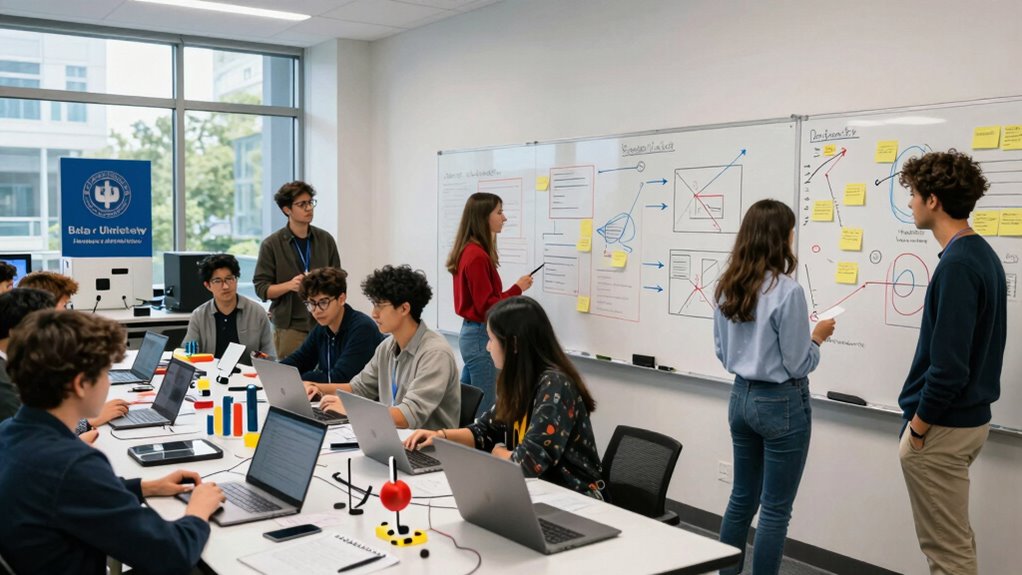

Universities involve students early and often in redesigning their services, making their input central to decision-making. You’ll see active participation through workshops, pilot programs, and ongoing feedback channels that help shape accessible, relevant solutions. This collaboration sparks innovation, boosts student ownership, and builds trust, creating a more responsive campus environment. If you keep exploring, you’ll discover how this co-creation approach fosters a culture of continuous improvement and shared responsibility.
Key Takeaways
- Universities involve students early and continuously in service development through workshops, feedback, and pilot programs.
- Student insights directly inform the redesign of accessible, efficient, and relevant student services.
- Collaborative efforts identify pain points and generate innovative solutions tailored to student needs.
- Ongoing engagement fosters community, trust, and shared responsibility, shaping institutional policies.
- This approach promotes a cultural shift toward responsive, innovative, and student-centered service models.
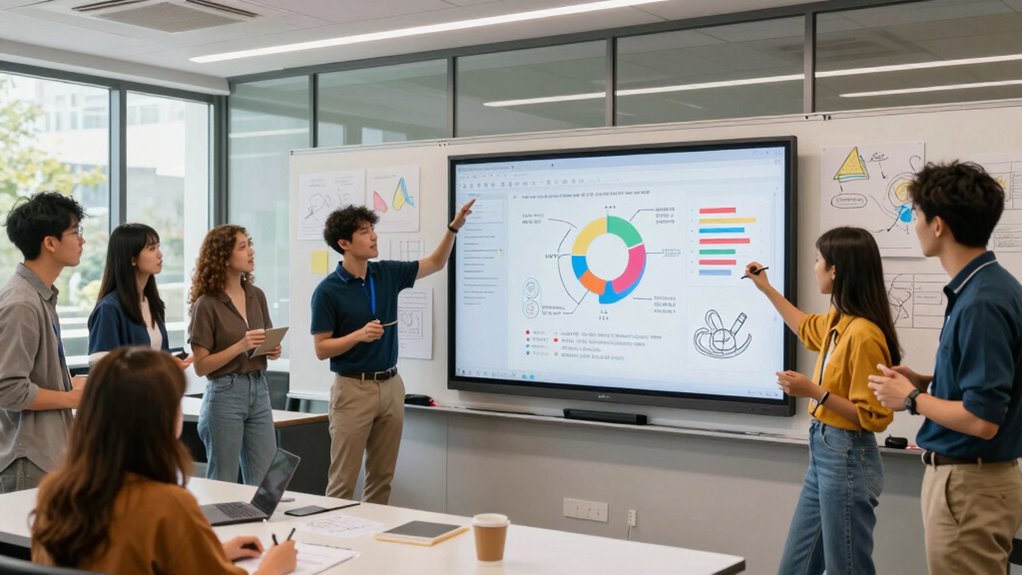
Universities are increasingly turning to co-creation as a way to transform student services, recognizing that students themselves are the best source of insights into their needs. When you involve students directly in shaping the services designed for them, you create a more responsive, relevant experience. This approach boosts student engagement because learners feel valued and heard, transforming passive recipients into active participants in the process. Instead of top-down decisions, co-creation fosters a collaborative environment where your feedback and ideas influence change, making services more aligned with real student priorities.
Co-creation empowers students to shape services, making them more responsive, relevant, and aligned with real needs.
By engaging students early and often, universities unlock fresh perspectives that drive service innovation. They no longer rely solely on traditional surveys or focus groups; instead, they embed students into the development process, encouraging ongoing dialogue. You might participate in workshops, brainstorm sessions, or pilot programs, all of which give you a sense of ownership and influence. This collaborative process not only helps identify pain points but also sparks creative solutions that might not emerge otherwise. As a result, your insights directly contribute to designing services that are more accessible, efficient, and tailored to your needs.
Co-creation also encourages a sense of community and shared responsibility. When students see their ideas come to life, they become more invested in the outcomes. Universities foster this by creating platforms for ongoing dialogue, where your input can shape policies, resources, and support systems. This continuous engagement helps institutions stay agile, adapting services swiftly to changing student expectations. It’s a cycle of feedback and refinement that keeps the student experience at the forefront.
Furthermore, co-creation enhances transparency and trust. When your voice influences decisions, you’re more likely to trust the university’s intentions and feel satisfied with the results. This trust, in turn, boosts overall student engagement, encouraging more people to contribute and participate. As universities prioritize service innovation through co-creation, they’re not only improving individual experiences but also building a culture of collaboration that benefits the entire campus community.
In essence, by involving students as active partners in redesigning services, universities create a more dynamic, responsive environment. Your engagement fuels continuous innovation, ensuring that student services evolve in ways that genuinely meet your needs. This approach transforms the traditional service model into a collaborative journey where every voice matters, leading to better outcomes for students and institutions alike. One key factor supporting this process is understanding the importance of projector technology, which exemplifies how collaborative innovation can improve user experience and satisfaction.
All Behavior is Communication: How to Give Feedback, Criticism, and Corrections that Improve Behavior
Used Book in Good Condition
As an affiliate, we earn on qualifying purchases.
As an affiliate, we earn on qualifying purchases.
Frequently Asked Questions
How Do Universities Select Students for Co-Creation Projects?
You’re often invited through targeted engagement strategies that focus on diverse student voices. Universities select students for co-creation projects based on their interest, willingness to participate, and potential to contribute valuable insights. They might use surveys, nominations, or open calls to identify motivated participants. This approach guarantees a broad range of perspectives, fostering meaningful collaboration and innovative solutions that truly reflect the student body’s needs.
What Challenges Do Universities Face During Co-Creation Implementation?
Like steering a stormy sea, implementing co-creation faces rough waters. You might struggle with stakeholder engagement, as convincing diverse voices to collaborate isn’t easy. Resource allocation can also be a challenge, requiring time, money, and effort that might divert from other priorities. Balancing these demands demands patience and strategic planning, but overcoming these hurdles can lead to more innovative, inclusive student services that truly meet students’ needs.
How Is Student Feedback Integrated Into Service Redesigns?
You actively gather student input through surveys, focus groups, and digital platforms, ensuring their voices shape service improvements. Feedback integration involves analyzing this input to identify common themes and specific needs. Universities then incorporate this feedback into redesigns, making changes that reflect students’ priorities. This process fosters a sense of ownership among students, improves service relevance, and creates a collaborative environment where student insights directly influence the development of student support systems.
What Roles Do Faculty and Staff Play in Co-Creation Initiatives?
You play a crucial role in co-creation initiatives through faculty collaboration and staff engagement. You actively contribute ideas, provide feedback, and help implement new services, ensuring they meet student needs. Your collaboration fosters innovative solutions and creates a sense of shared ownership. By participating, you help shape student experiences, making services more effective and inclusive. Your involvement is essential for successful co-creation and continuous improvement of university offerings.
How Do Universities Measure Success in Co-Created Student Services?
Ever wonder if your efforts truly improve student experiences? Universities measure success in co-created services through student engagement levels and innovation metrics. If students actively participate and report increased satisfaction, it indicates positive change. Tracking how new ideas are adopted and evaluating feedback helps determine impact. When students feel more connected and supported, you know your co-creation efforts are making a real difference.

Grehge cabulary Workshop Tools For Comprehension – Level Purple
As an affiliate, we earn on qualifying purchases.
As an affiliate, we earn on qualifying purchases.
Conclusion
By actively involving students in co-creating services, you guarantee offerings truly meet their needs. For example, a university might host workshops where students help redesign the campus Wi-Fi system, resulting in faster, more reliable connectivity. This collaborative approach not only improves services but also fosters a sense of ownership and community. Embracing co-creation transforms student services into dynamic, responsive experiences that evolve with your student body’s changing needs.

2D & 3D CAD Software Suite USB – 8 Program Bundle for Windows & macOS – Complete Design & Drafting Tools
Ready-to-use software preloaded on a high-speed USB flash drive for easy installation on any Windows PC, no internet…
As an affiliate, we earn on qualifying purchases.
As an affiliate, we earn on qualifying purchases.

ZPOYOT 18Pcs Dry Erase Answer Paddles with Markers Thickened Handheld Double Sided Paddles Mini White Boards Small Dry Erase Signs Auction Paddles for Students Classroom Bidding Voting Games
Sufficient Quantity: The package comes with 10 pieces of handheld whiteboards with a double-sided whiteboard design for all…
As an affiliate, we earn on qualifying purchases.
As an affiliate, we earn on qualifying purchases.