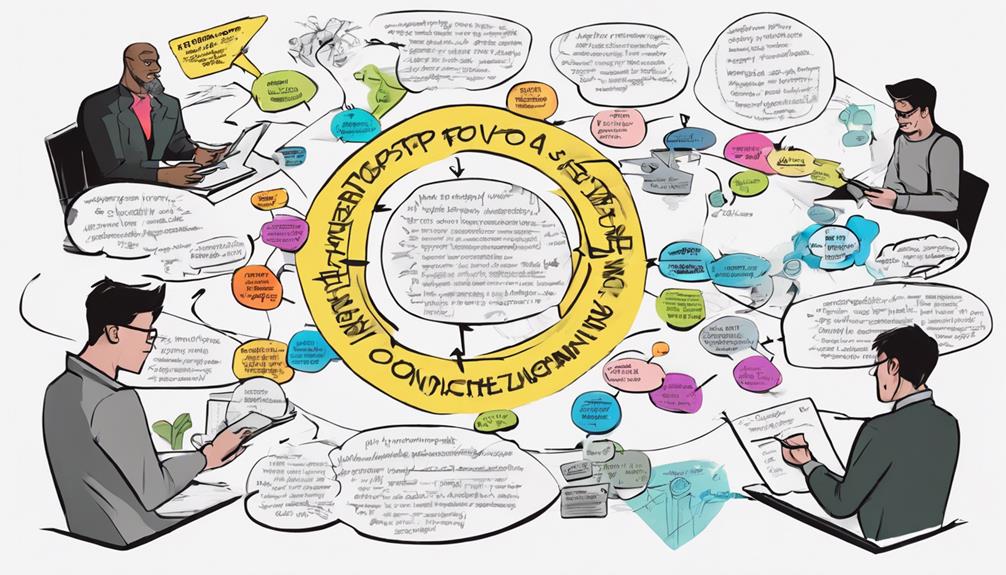

When teams confuse empathy with agreement, they risk settling too quickly on solutions that don’t truly address user needs. This mistake discourages honest debate and suppresses creative conflict, which are essential for innovation. Instead of exploring diverse ideas, the team may accept superficial solutions that fall short. To keep your project on track, it’s important to understand that empathy involves understanding, not necessarily agreement. Keep exploring to learn how to harness real empathy and healthy disagreement effectively.

Get business pricing on monitors, keyboards and dev gear
- Business-only prices and quantity discounts
- Tax-exempt purchasing
- Multiple users, one account, clear invoices
Key Takeaways
- Confusing empathy with agreement leads to premature consensus, stalling critical discussion and iterative problem-solving.
- Overemphasizing agreement suppresses creative conflict essential for innovative solutions.
- Mistaking understanding for approval discourages honest feedback and diverse viewpoints.
- Avoiding disagreement limits exploration of alternative ideas, resulting in superficial solutions.
- Balancing empathy with constructive conflict fosters deeper insights and more effective design outcomes.

Have you ever felt lost in the buzz surrounding design thinking? It’s easy to get caught up in the excitement of user empathy and innovative problem-solving, but sometimes, teams confuse empathy with consensus. You might assume that simply understanding your users’ feelings means everyone agrees on the solution, but that’s a dangerous misconception. Empathy isn’t about making everyone happy; it’s about genuinely understanding different perspectives. When teams mistake empathy for consensus, they often settle prematurely, avoiding honest discussion or critical feedback. This tendency can undermine the iterative nature of design thinking, which depends on continuous learning and adaptation. Instead of fostering genuine understanding, this mindset suppresses creative conflict, which is essential for uncovering innovative ideas.
Creative conflict might sound uncomfortable, but it’s actually vital to the design thinking process. When team members challenge each other’s assumptions, they push ideas further and refine solutions more effectively. If you’re under the impression that everyone needs to agree before moving forward, you might inadvertently stifle this creative tension. Teams that avoid conflict tend to settle on the easiest or most agreeable options, missing out on the depth and nuance that come from divergent thinking. True empathy involves listening deeply and asking tough questions, not just nodding along to maintain harmony. It requires courage to voice disagreements and push back when something doesn’t sit right. Without this, the process becomes superficial, and the final product risks being shallow or misaligned with actual user needs. Recognizing the importance of empathy in design thinking can help ensure teams maintain a balanced approach.
Developing a mindset that appreciates creative conflict as a driving force for innovation encourages teams to explore more robust solutions. When teams misunderstand empathy as consensus, the entire process becomes less dynamic. Instead of embracing different viewpoints and encouraging lively debate, everyone plays it safe, and innovative breakthroughs stay out of reach. Design thinking thrives on a balance: you need empathy to understand users, but also the willingness to challenge assumptions through creative conflict. If you shy away from disagreement, you lose the opportunity to explore alternative solutions and refine ideas through critical questioning. Recognizing this distinction helps keep the process honest and productive. Remember, the goal isn’t to reach agreement at all costs but to foster an environment where diverse perspectives are valued, and conflicts are seen as a pathway to better solutions. When you embrace this mindset, design thinking can truly unlock its creative potential.
Popular right now

Ninja DualZone Smart Air Fryer, 10 Qt, 6-in-1, DZ950

Dyson V8 Cordless Vacuum

Bose QuietComfort Headphones (2nd Gen), Wireless Noise-Cancelling Over-Ear Headphones, Eucalyptus Green
As an affiliate, we earn on qualifying purchases.
Frequently Asked Questions
How Can Teams Ensure Genuine Empathy Without Seeking Consensus?
To guarantee genuine empathy without seeking consensus, you should actively listen to diverse perspectives, recognizing cultural nuances and individual biases. Encourage open, non-judgmental conversations where team members feel safe sharing differing opinions. Focus on understanding the underlying needs behind opinions rather than trying to reach agreement. By valuing each person’s unique experience, you foster authentic empathy that drives innovative solutions without the pressure to conform.
What Are Common Signs That Empathy Is Turning Into Agreement?
Like a ship sailing off-course, you notice empathy turning into agreement when team members start prioritizing validation over genuine understanding. Signs include avoiding tough conversations, echoing opinions without truly listening, or everyone nodding in agreement without exploring differing perspectives. You might see consensus replacing authentic empathy, where the goal shifts from understanding to simply avoiding conflict. Recognizing these signs helps you steer back toward true empathy, fostering real connection rather than superficial validation.
How Does Emotional Bias Affect Empathy in Design Thinking?
Emotional bias can cloud your empathy in design thinking by making you interpret others’ feelings through personal lens, leading to cognitive distortion. You might assume you understand their needs perfectly, ignoring alternative perspectives. This bias distorts genuine empathy, causing you to favor your own assumptions over actual user insights. Recognizing emotional bias helps you stay open-minded, ensuring empathy remains authentic and doesn’t morph into unwarranted agreement.
Can Empathy Be Measured Objectively in Team Settings?
They say, “You can’t judge a book by its cover,” but empathy evaluation in team settings aims to do just that. While it’s tough to measure empathy objectively, using tools like surveys, behavioral observations, and feedback can help enhance team objectivity. Keep in mind, empathy is nuanced, so combining quantitative data with qualitative insights provides a clearer picture, preventing misinterpretation and fostering genuine understanding.
What Training Helps Differentiate Empathy From Agreement?
To differentiate empathy from agreement, you should undergo training in active listening and perspective taking. This training helps you focus on truly understanding others’ feelings without feeling pressured to concur. By practicing active listening, you learn to validate emotions without necessarily endorsing opinions. Perspective taking encourages you to see situations from others’ viewpoints, reinforcing genuine empathy. This approach guarantees your team builds authentic connections without confusing empathy with mere agreement.
Conclusion
You’d think empathy would be the secret sauce, right? But here’s the irony: when teams mistake empathy for agreement, they actually stall innovation. Instead of truly understanding users, they end up just nodding along, avoiding conflict. So, next time you’re tempted to prioritize harmony over honesty, remember—real empathy challenges assumptions and sparks progress. Because in design thinking, the biggest breakthrough happens when you dare to disagree, not just agree.