
The user journey focuses on individual interactions and touchpoints that influence immediate engagement and satisfaction, guiding quick wins. In contrast, the customer lifecycle emphasizes long-term relationship building, focusing on stages like acquisition, retention, and advocacy. Both frameworks help shape your strategies—one for optimizing experiences now, the other for nurturing loyalty over time. Understanding their differences can boost your marketing efforts. Keep exploring to discover how to integrate these approaches effectively for lasting growth.
Key Takeaways
- The user journey maps individual interactions, while the customer lifecycle focuses on long-term relationship stages.
- User journey emphasizes optimizing specific touchpoints for immediate engagement and satisfaction.
- Customer lifecycle guides ongoing relationship management from awareness to advocacy.
- The user journey is more granular, highlighting short-term goals; the lifecycle provides a broader strategic view.
- Both frameworks complement each other to improve customer experience and retention strategies.
Defining the Core Concepts: User Journey and Customer Lifecycle

Understanding the core concepts of the user journey and customer lifecycle is essential for optimizing your engagement strategies. The user journey maps every step a user takes from first discovering your product to becoming a loyal customer, emphasizing touchpoints that influence brand loyalty. Customer segmentation plays a crucial role here, helping you tailor experiences based on different groups’ needs and behaviors throughout their lifecycle. While the user journey focuses on individual interactions, the customer lifecycle portrays the broader relationship, from acquisition to retention and advocacy. Recognizing these differences allows you to refine your marketing efforts, improve personalization, and foster long-term loyalty. Mastering these concepts ensures your strategies effectively guide users through meaningful experiences, ultimately strengthening your brand and customer relationships. Additionally, understanding vibrational alignment can enhance how you attract and retain customers by fostering positive emotional connections.
The Focus of Each Framework: From Experience to Relationship

The user journey centers on creating a seamless experience for your users, focusing on their interactions at each touchpoint. In contrast, the customer lifecycle emphasizes engaging and nurturing relationships through various stages of your customer’s journey. Both frameworks aim to build lasting connections, but they prioritize different aspects of the customer experience. Understanding how to balance emotional availability and open communication, especially in sensitive situations like relationship boundaries, can enhance the effectiveness of both approaches.
Journey Emphasizes User Experience
While both frameworks aim to improve how you engage with users and customers, a journey emphasizes the user experience by focusing on each interaction’s quality. You prioritize understanding their feelings and needs through tools like empathy mapping, which helps you see their perspective clearly. Emotional analytics further allow you to gauge how users genuinely feel at different touchpoints, enabling you to tailor experiences that resonate emotionally. This user-centric approach ensures every interaction feels meaningful and personalized, fostering loyalty. By honing in on the quality of each touchpoint, you create a seamless, satisfying experience that encourages users to continue engaging. Additionally, understanding anime culture and storytelling can deepen your ability to craft engaging narratives that resonate with diverse audiences. Ultimately, this focus on user experience helps you build stronger, more empathetic relationships that go beyond mere transactions.
Lifecycle Focuses on Engagement Stages
Focusing on the customer lifecycle shifts attention from individual interactions to the broader stages that define ongoing engagement. Instead of isolated moments, this approach emphasizes how customers move through phases like awareness, consideration, purchase, and post-purchase. By concentrating on these stages, you can better foster customer retention and build brand loyalty over time. Each phase offers opportunities to deepen relationships, encourage repeat business, and create positive experiences that reinforce loyalty. Regularly assessing and organizing the customer journey helps you see the bigger picture—how customers evolve and how sustained engagement leads to stronger loyalty. This perspective enables you to design strategies that support customers throughout their journey, ensuring they remain connected and committed to your brand long-term.
Frameworks Prioritize Relationship Building
Frameworks that prioritize relationship building shift your focus from merely delivering a good experience to nurturing ongoing connections with customers. Instead of just aiming for satisfaction, you aim to foster an emotional connection that deepens over time. This approach helps cultivate brand loyalty, as customers feel valued and understood beyond their initial interactions. By emphasizing relationship building, you create touchpoints that reinforce trust and engagement. These frameworks recognize that long-term success depends on more than a single transaction; it relies on sustained emotional bonds. When you focus on nurturing these connections, customers are more likely to stay loyal, recommend your brand, and become advocates. Additionally, understanding the input lag and refresh rates of your products can significantly enhance customer satisfaction and loyalty. Ultimately, prioritizing relationship building transforms your interactions into meaningful relationships that support growth and retention.
Visualizing the Process: Tools and Diagrams
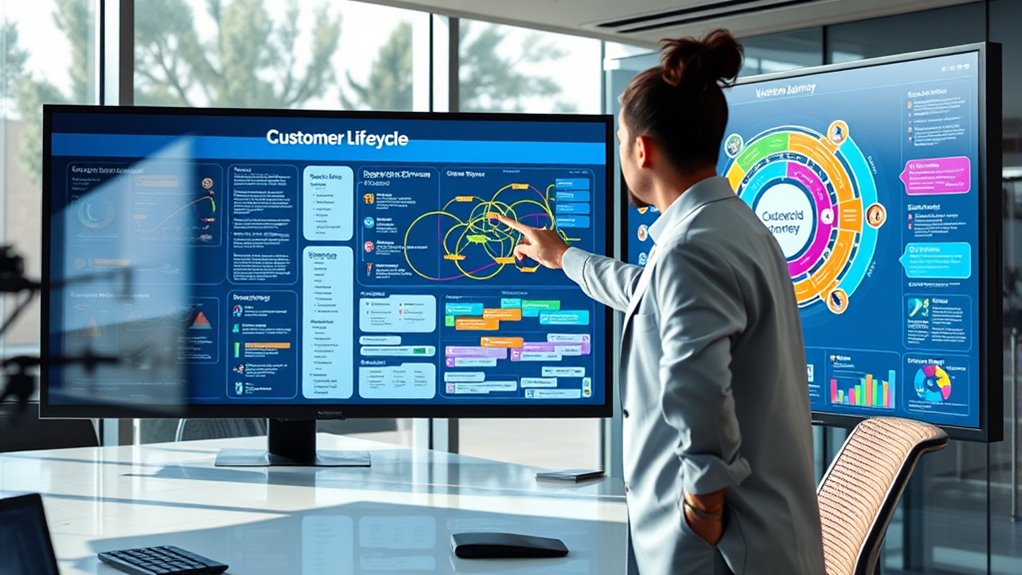
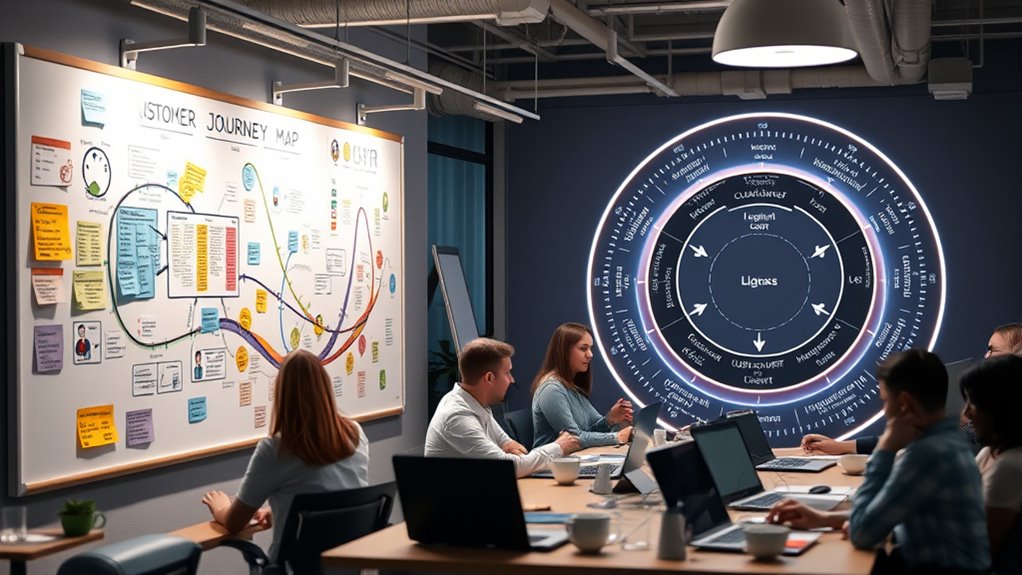
Visualizing the user journey and customer lifecycle helps you understand how customers interact with your brand at each stage. To do this effectively, use visualization techniques that make complex processes clear and easy to interpret. Diagramming tools like flowcharts, customer journey maps, and swimlane diagrams allow you to visualize touchpoints, emotions, and actions throughout the process. These tools help identify gaps, pain points, and opportunities for engagement. By mapping out each step visually, you gain a better grasp of customer behavior and how your marketing efforts influence their experience. Clear diagrams provide a shared understanding across teams, ensuring everyone stays aligned on customer interactions. Incorporating expert voice actors and immersive soundscapes into marketing content can elevate brand credibility and engagement. Using the right visualization techniques and diagramming tools makes managing and optimizing the user journey and customer lifecycle more straightforward.
Key Stages and Milestones in User Engagement
Understanding the key stages and milestones in user engagement is essential for guiding customers effectively through their journey. Early on, users experience curiosity and excitement, which can influence their willingness to explore your product. As they interact, their user emotions fluctuate—trust builds during positive experiences, while frustration can cause drop-off. Recognizing these emotional shifts helps you tailor your messaging and support. Moving into the loyalty phase, consistent value delivery reinforces user satisfaction and encourages repeat engagement. Milestones like completing onboarding, reaching usage goals, or providing feedback mark significant progress. Achieving these moments fosters customer loyalty, turning users into advocates. Additionally, understanding the user journey stages allows for better targeting of communication and resources to meet evolving needs. By mapping these stages, you can better anticipate needs, enhance user emotions, and ultimately strengthen long-term engagement.
How Each Framework Guides Strategy and Decision-Making
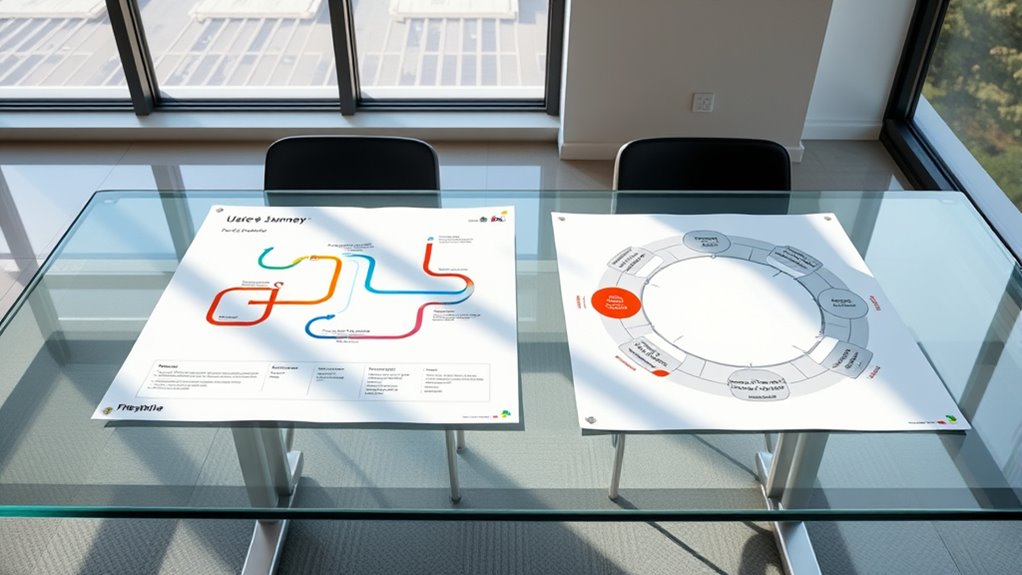
Your strategy shifts depending on whether you focus on the user journey or customer lifecycle. Each framework emphasizes different priorities, influencing your decision-making processes. Understanding these differences helps you allocate resources and design initiatives more effectively. Additionally, recognizing relationship dynamics can improve your ability to foster stronger connections and adapt your strategies accordingly.
Strategic Focus Differences
The strategic focus of the User Journey emphasizes optimizing each individual interaction to enhance user experience and drive immediate engagement. By refining touchpoints, you aim to create memorable experiences that foster brand loyalty and encourage users to return. This approach helps you identify friction points and tailor interactions to meet user needs, boosting customer retention in the short term. Conversely, the Customer Lifecycle guides you to develop a long-term strategy, nurturing relationships over time and aligning touchpoints with customer stages. It emphasizes retention and lifetime value, helping you build deeper loyalty and consistent engagement. While the User Journey concentrates on quick wins and satisfaction, the Customer Lifecycle takes a broader view, ensuring sustained growth and stronger brand affinity over the customer’s entire relationship with your brand. Additionally, understanding digital literacy and critical thinking skills can enhance your ability to adapt strategies to evolving technologies and foster responsible digital engagement.
Decision-Making Impacts
How do these frameworks shape your strategic decisions? The user journey emphasizes decision influence at specific touchpoints, helping you tailor experiences to boost purchase motivation. It guides you to focus on guiding users seamlessly through each step, increasing the likelihood of conversion. Conversely, the customer lifecycle offers a broader view, informing long-term strategies that nurture ongoing relationships and repeat purchases. This framework influences your decisions by highlighting key moments for retention and upselling. By understanding these different decision-making impacts, you can craft targeted strategies that either optimize immediate purchase motivation or foster sustained engagement. For example, incorporating eye patch benefits can enhance product appeal and customer satisfaction. Ultimately, both frameworks help you align your tactics with your customers’ evolving needs, ensuring your decisions effectively drive growth and loyalty.
Overlapping Areas and Shared Goals

Although user journeys and customer lifecycles focus on different aspects of the customer experience, they often overlap in key areas aimed at fostering engagement and satisfaction. Both frameworks prioritize building customer loyalty by understanding touchpoints and interactions that influence perceptions. They share goals of improving engagement strategies, ensuring that customers feel valued throughout their relationship with your brand. For example, optimizing onboarding or post-purchase support benefits both approaches by creating seamless experiences that encourage repeat business. By aligning these overlapping areas, you can deliver consistent messaging and personalized experiences that strengthen loyalty. This synergy helps you better anticipate customer needs, reduce churn, and cultivate long-term relationships, ultimately maximizing value for both your customers and your business.
When to Prioritize One Framework Over the Other
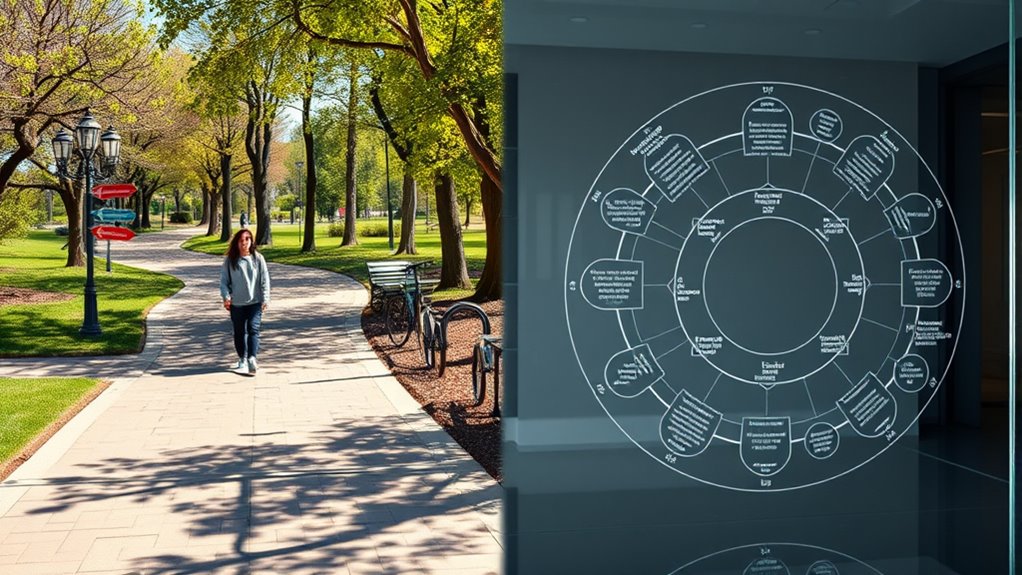
You should prioritize one framework over the other based on your specific context and strategic goals. If your focus is on understanding ongoing relationships, the customer lifecycle might be more relevant. Conversely, when mapping detailed user interactions, the user journey can provide clearer insights.
Contextual Suitability Considerations
Choosing between the User Journey and Customer Lifecycle frameworks depends on your specific business context and objectives. If your focus is on understanding individual interactions and optimizing touchpoints, the User Journey works best, especially when considering cultural nuances that influence user behavior. Conversely, if you’re aiming to manage long-term relationships and retention, the Customer Lifecycle provides a broader perspective suited to industry-specific contexts like subscription services or B2B markets. Consider your industry’s nature and how customers engage with your brand over time. For brands operating across diverse regions, cultural nuances may dictate which framework offers deeper insights. Ultimately, aligning the framework with your strategic goals and contextual needs ensures you prioritize the right approach for meaningful results.
Strategic Focus Alignment
Aligning your strategic focus with either the User Journey or Customer Lifecycle framework hinges on your business goals and the nature of your customer relationships. If your priority is optimizing individual experiences and addressing immediate pain points, the User Journey offers clearer alignment. Conversely, if your focus is on long-term engagement and retention, the Customer Lifecycle provides better guidance. Be aware of potential alignment challenges, such as strategic divergence between short-term initiatives and overarching customer management. Recognizing these differences helps you avoid misaligned efforts that can hinder overall growth. The key is to assess which framework naturally supports your strategic objectives, ensuring that your approach enhances customer satisfaction and loyalty without creating conflicting priorities.
Practical Applications in Marketing and Design
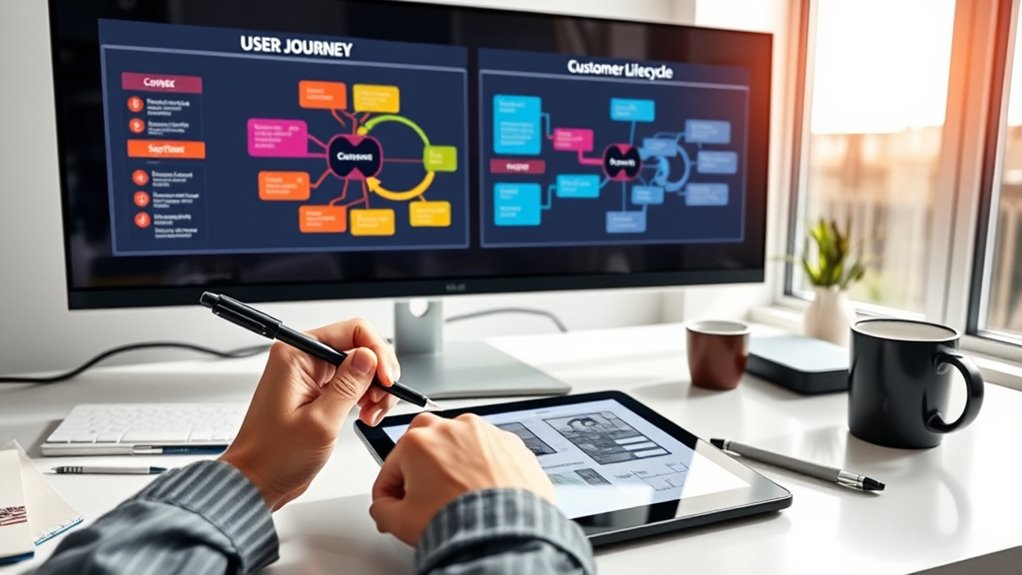
Understanding the distinctions between the user journey and the customer lifecycle can considerably enhance your marketing and design strategies. By mapping the user journey, you can tailor personalization strategies that resonate at each touchpoint, creating smoother experiences that foster engagement. Meanwhile, analyzing the customer lifecycle helps you identify key moments for nurturing loyalty and encouraging repeat business. Incorporating effective brand storytelling throughout both frameworks strengthens emotional connections, making your messaging more memorable. You can craft targeted campaigns that align with user behaviors and lifecycle stages, ensuring your content feels relevant and timely. This approach enables you to optimize resources, improve conversion rates, and build lasting relationships with your audience, all while maintaining a consistent brand voice across channels.
Measuring Success: Metrics and KPIs
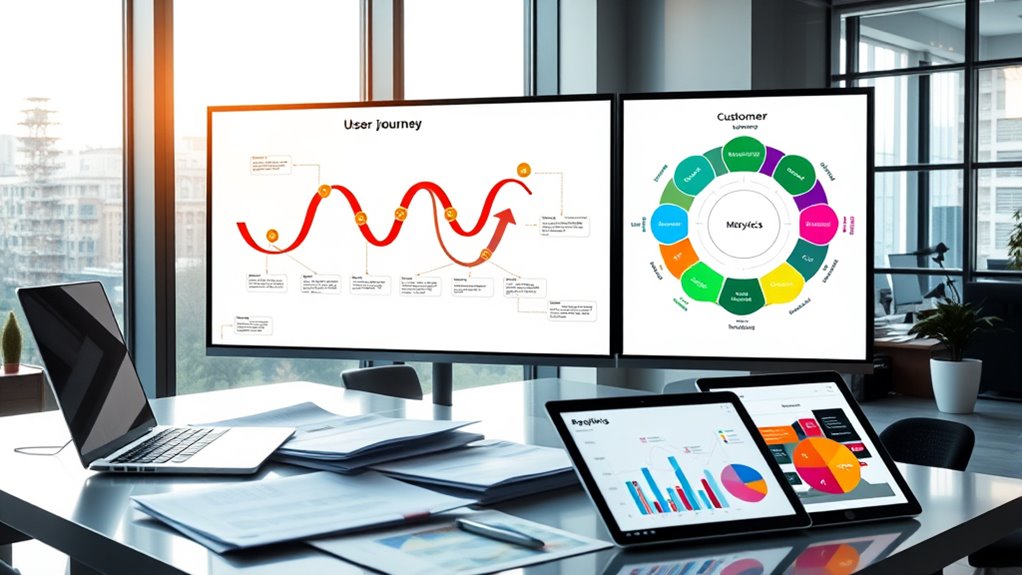
To effectively evaluate your marketing and design efforts across the user journey and customer lifecycle, you need clear metrics and KPIs. Tracking conversion rates helps you understand how well your touchpoints turn interest into action, whether that’s signing up, purchasing, or subscribing. These rates reveal bottlenecks and opportunities for optimization. Customer loyalty metrics, like repeat purchase rate or Net Promoter Score (NPS), indicate long-term engagement and satisfaction. Monitoring these KPIs lets you assess if your strategies foster ongoing relationships or need adjustments. By focusing on conversion rates and customer loyalty, you gain actionable insights into the effectiveness of your efforts, guiding you to refine experiences that drive growth and retention throughout both frameworks.
Integrating Both Frameworks for a Holistic Approach
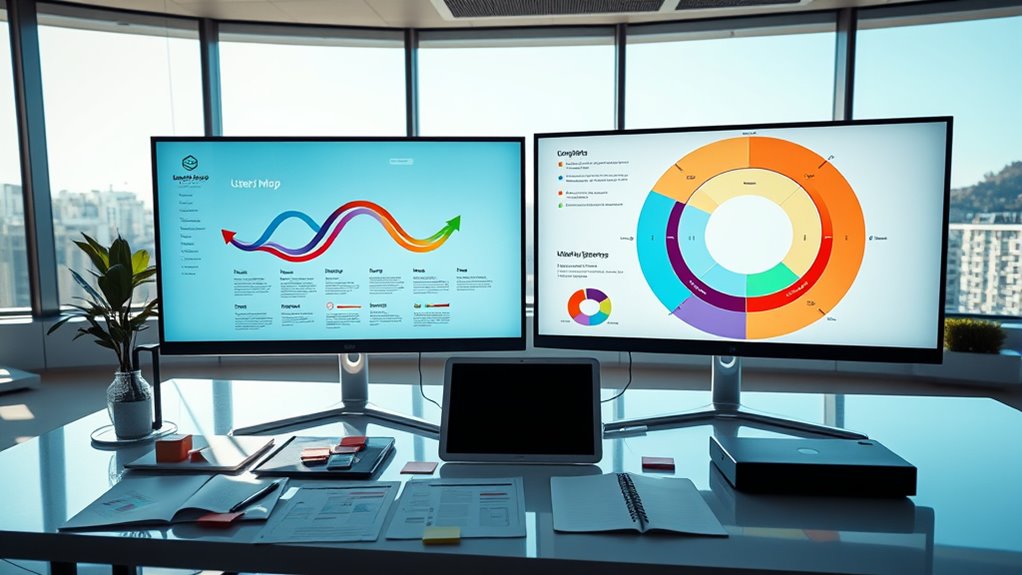
Integrating the user journey and customer lifecycle frameworks creates an all-encompassing approach that enhances your ability to deliver seamless experiences. By combining these models, you can develop more effective personalization strategies that address each touchpoint throughout the customer’s path. Data integration plays a pivotal role, enabling you to gather insights from multiple sources and create a unified view of customer behavior. This holistic perspective allows you to anticipate needs, tailor interactions, and optimize engagement strategies. As a result, you can align marketing, sales, and support efforts, ensuring consistency and relevance at every stage. Ultimately, this integration boosts customer satisfaction, loyalty, and lifetime value, helping you build stronger relationships in an increasingly competitive environment.
Frequently Asked Questions
How Do User Personas Influence the User Journey?
Your user personas shape the user journey by guiding your persona mapping, ensuring you understand your audience’s needs and behaviors. When you tailor content and touchpoints around these personas, you foster emotional engagement, making interactions more meaningful. This personalization helps you anticipate user actions, create smoother experiences, and build stronger connections, ultimately leading to higher satisfaction and loyalty. So, personas directly influence how effectively you guide users through their journey.
Can the Customer Lifecycle Model Adapt to Evolving Customer Behaviors?
You can certainly adapt the customer lifecycle model to evolving customer behaviors by emphasizing behavioral adaptability. As customer needs and preferences change, you should update the stages and touchpoints accordingly. This guarantees the model remains relevant and effective. Embracing model evolution allows you to better anticipate customer actions, personalize experiences, and foster loyalty, ultimately keeping your strategy aligned with shifting market dynamics.
What Are Common Pitfalls When Integrating Both Frameworks?
Like steering through a maze, integrating both frameworks can be tricky. You might fall into common pitfalls like creating data silos, where information isn’t shared effectively, or using inconsistent metrics, which muddles insights. These issues can cause gaps in understanding customer behaviors and hinder strategic decisions. To avoid this, guarantee data flows seamlessly across teams and establish standardized metrics, so your integration remains clear, cohesive, and actionable.
How Do Digital and Offline Touchpoints Differ in These Frameworks?
You’ll find digital channels and offline interactions differ mainly in their nature and immediacy. Digital touchpoints, like websites and social media, offer instant engagement and data tracking, while offline interactions—such as in-store visits or calls—are more personal but less measurable. Understanding these differences helps you craft seamless experiences across both, ensuring your customer journey feels cohesive whether they connect online or offline.
Which Framework Is More Effective for New Product Launches?
They say “you never get a second chance to make a first impression,” so choosing the right framework matters. For new product launches, the customer lifecycle often proves more effective, as it emphasizes market segmentation and building customer retention from the start. It helps you understand where to focus efforts in attracting and nurturing new customers, ensuring your launch creates lasting impact and fosters loyalty long-term.
Conclusion
So, while it’s tempting to pick one framework and stick with it, remember that understanding both the user journey and customer lifecycle isn’t just good practice — it’s essential. Ironically, in trying to simplify things, you might overlook the full picture. Embrace both, and you’ll craft experiences that truly stick — because sometimes, the best strategy is realizing you need both to succeed. After all, complexity isn’t the enemy; ignorance is.