

Storytelling boards are powerful tools that use visual narratives to influence stakeholders by creating emotional connections and building trust. You can craft compelling stories with clear structures, meaningful visuals, and culturally resonant symbols that simplify complex ideas and foster engagement. By incorporating color psychology, diverse imagery, and strategic design, you make messages memorable and impactful. To learn how to develop effective storytelling boards and access their full potential, there’s more to explore ahead.
Key Takeaways
- Visual storytelling boards enhance stakeholder engagement by conveying complex ideas through compelling images and narratives.
- Well-structured visual boards utilize design principles like color symbolism and clear hierarchy to influence stakeholder perceptions.
- Incorporating cultural symbols and emotional elements fosters trust and strengthens relationships with stakeholders.
- Interactive and immersive visual tools increase stakeholder understanding and support for initiatives.
- Regular evaluation and alignment ensure storytelling boards effectively communicate goals and drive stakeholder action.
The Power of Visual Storytelling in Stakeholder Engagement
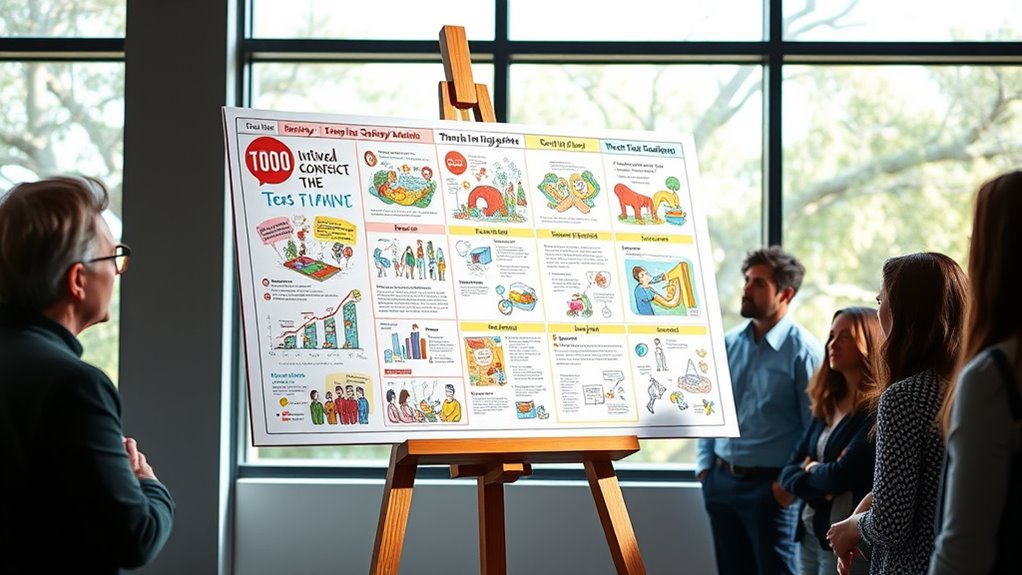
Visual storytelling has become a powerful tool for engaging stakeholders effectively. When you use images and narratives, you create emotional resonance that makes your message memorable. People connect deeply with stories that evoke feelings, making your initiative more compelling. Incorporating cultural symbolism allows your visuals to resonate on a personal level, reflecting shared values and traditions. This emotional and cultural connection helps build trust and fosters a sense of community around your project. By leveraging visual storytelling, you make complex ideas accessible and relatable, encouraging stakeholders to invest emotionally and intellectually. Ultimately, this approach transforms abstract concepts into vivid, impactful stories that drive engagement and support. Your visual narratives become memorable bridges that forge stronger stakeholder relationships. Choosing the right projector technology ensures your visuals are clear and impactful, enhancing the overall storytelling experience.
Key Elements of Effective Storytelling Boards
What makes a storytelling board truly effective? It’s about clear structure and meaningful visuals. Use color symbolism to evoke emotions and reinforce your message—reds for urgency, greens for growth, blues for trust. Incorporate storytelling archetypes, like the hero or the mentor, to create familiar narratives that resonate deeply with your audience. These elements help guide viewers through the story naturally, making complex ideas more accessible. Consistent visuals and a logical flow ensure your message isn’t lost. Keep your key points concise, supported by imagery that aligns with your story’s core themes. When you combine strategic color symbolism with universal storytelling archetypes, your board becomes a powerful tool that influences stakeholders by engaging their emotions and intuition. Additionally, understanding nutrition in baked kale can help you craft stories that promote healthy, sustainable choices.
Designing Visual Narratives That Capture Attention

Building on the foundation of effective storytelling boards, the way you craft your visual narrative can make or break your audience’s engagement. To capture attention, leverage color psychology by choosing hues that evoke specific emotions and align with your message. Bright, warm colors like reds and oranges energize viewers, while cool blues foster trust and calmness. Use storytelling frameworks to structure your visuals logically, guiding viewers seamlessly through your story. Incorporate bold visuals and contrasting elements to highlight key points and create visual interest. Keep your design simple yet impactful, ensuring your audience quickly grasps your message without distractions. Understanding visual storytelling techniques can enhance your ability to communicate complex ideas effectively. By thoughtfully combining color psychology with proven storytelling frameworks, you make your visual narrative compelling, memorable, and irresistible to your stakeholders.
Integrating Text and Imagery for Maximum Impact
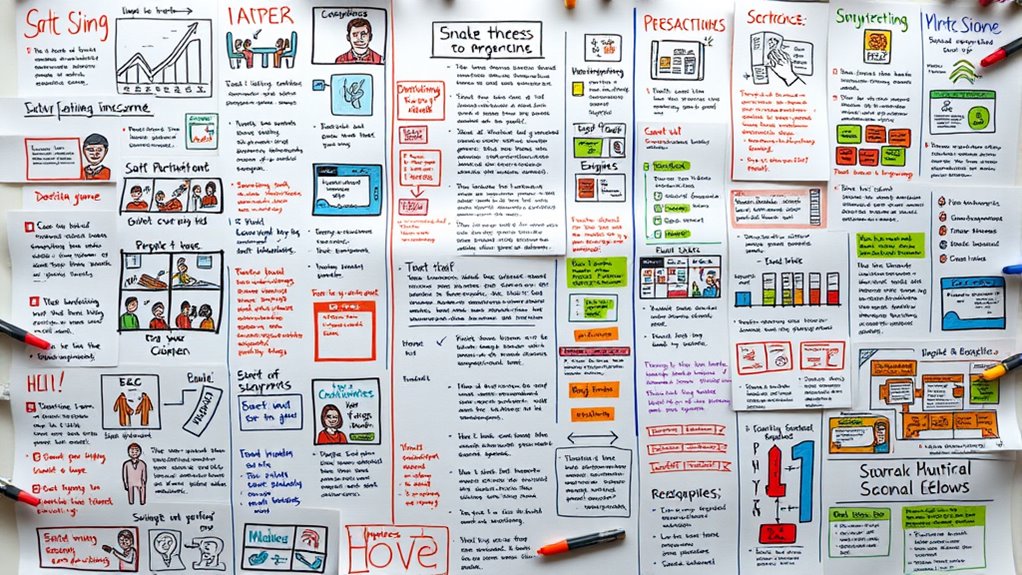
Integrating text and imagery effectively can considerably boost the impact of your storytelling boards. Focus on clear infographic design by using concise, compelling text that complements your visuals. Use imagery to illustrate key points, making complex ideas easier to understand. Apply color psychology strategically to evoke emotions and guide viewer attention. Bright, warm colors can energize your message, while cooler tones foster trust and calmness. Guarantee your text doesn’t overpower images; instead, let visuals provide context and clarity. Use bold fonts for headlines and simpler fonts for supporting details to create a visual hierarchy. Consistent style and balanced layout help your message resonate. Incorporating visual storytelling techniques rooted in yoga’s emphasis on mindfulness can enhance emotional connection and message retention. When text and imagery work harmoniously, your storytelling boards become powerful tools that influence stakeholders effectively.
Case Studies of Successful Storytelling Boards
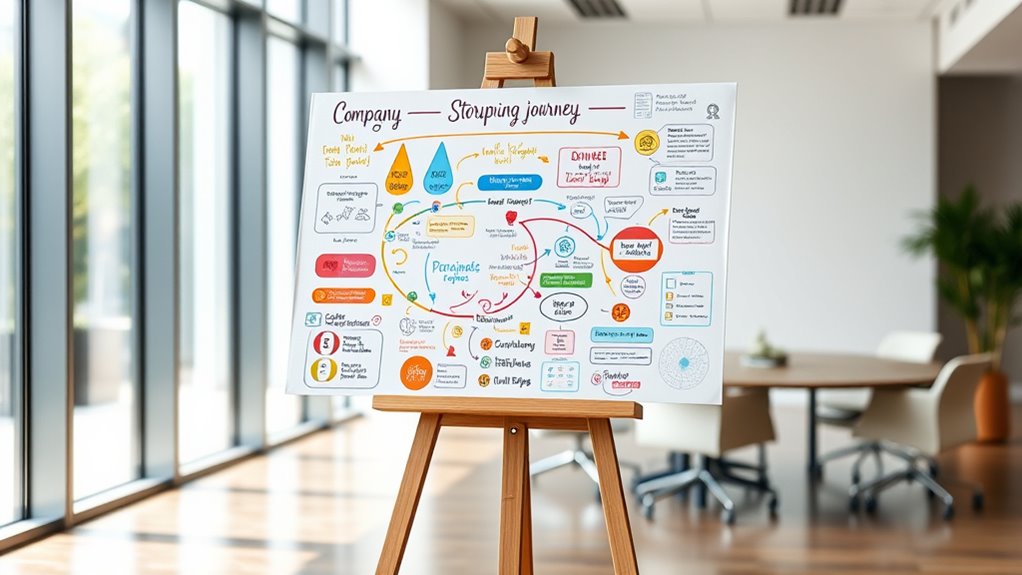
Examining real-world examples reveals how effective storytelling boards boost brand engagement and clarify messages. These case studies showcase strategies that create compelling visuals and resonate with audiences. You’ll see how stakeholders are impacted when storytelling boards are thoughtfully designed and executed. Understanding the importance of visual narratives can significantly enhance communication strategies and influence public perception.
Brand Engagement Strategies
Case studies of successful storytelling boards reveal how brands can forge deeper connections with their audiences. By emphasizing emotional resonance, these boards evoke genuine feelings that foster trust and loyalty. Incorporating cultural symbolism allows brands to tap into shared values and identities, making the narrative more relatable and impactful. For example, a company might highlight stories rooted in local traditions or heritage, creating a sense of community. You’ll find that visual elements aligned with these themes amplify engagement, encouraging viewers to see themselves in the story. These strategies transform passive viewers into active participants, deepening brand loyalty. Ultimately, effective storytelling boards don’t just tell a story—they create an emotional and cultural experience that resonates long after the visuals are gone. Additionally, utilizing visual storytelling techniques enhances the overall coherence and emotional impact of the narrative.
Clear Visual Storytelling
Successful storytelling boards rely on more than just emotional and cultural resonance; they hinge on the power of clear visual communication. When your visuals maintain strong color harmony, they guide viewers smoothly through the narrative, making complex ideas easier to grasp. Consistent use of color and visual cues establishes a storytelling cadence that keeps the audience engaged and prevents confusion. Case studies show that boards with well-defined visual hierarchies and balanced compositions help emphasize key messages, ensuring your story flows logically. By focusing on clarity, you enable stakeholders to follow your narrative effortlessly, increasing the impact. Ultimately, the success of a storytelling board depends on how effectively it uses visual clarity to connect with viewers and communicate your story seamlessly. Incorporating visual hierarchy principles enhances understanding and retention, making your narrative more compelling and memorable.
Stakeholder Impact Examples
Have you ever wondered how powerful storytelling boards can influence stakeholder decisions? One example shows how integrating cultural symbolism can resonate deeply with diverse audiences, strengthening emotional connections. By aligning visuals with cultural values, you create a shared understanding that fosters trust. Additionally, leveraging color psychology plays an essential role; for instance, using blue to evoke trust or green to symbolize growth can subtly guide stakeholder perceptions. In a successful case, a nonprofit used vibrant visuals and culturally meaningful symbols to engage donors, increasing contributions markedly. These storytelling boards didn’t just present facts—they created a compelling narrative that appealed emotionally and culturally. This strategic combination of cultural symbolism and color psychology demonstrates how visual storytelling can effectively influence stakeholder attitudes and drive action. Understanding emotional connection is also crucial, as it helps craft stories that resonate deeply and foster lasting relationships.
Tools and Platforms for Creating Storytelling Boards

When choosing tools for creating storytelling boards, you’ll find a range of digital design options that make the process straightforward and engaging. Collaborative platforms allow you to work with others seamlessly, sharing ideas and making real-time adjustments. Exploring these tools helps you select the best fit for your storytelling needs and team dynamics. Incorporating market research into your storytelling board creation process can help you better understand your audience’s preferences and craft more compelling narratives.
Digital Design Tools
Are you ready to bring your storytelling ideas to life with digital design tools? These platforms enable you to craft compelling visual narratives using features like interactive infographics, which engage your audience and make complex data more accessible. You can experiment with color psychology to evoke specific emotions and guide viewers through your story seamlessly. Popular tools like Canva, Adobe Spark, and Visme offer user-friendly interfaces and customizable templates, making it easy to design professional-quality boards. They also provide options for embedding multimedia elements, enhancing interactivity. With these digital design tools, you can create dynamic, visually appealing storytelling boards that capture attention and influence stakeholders effectively. Mastering these platforms empowers you to communicate your message clearly and persuasively. Additionally, understanding the importance of legal representation can help you craft narratives that resonate with stakeholders during complex processes.
Collaborative Platforms
Collaborative platforms have revolutionized the way teams create and refine storytelling boards by enabling real-time teamwork and seamless sharing. These tools allow you to incorporate augmented reality, making your narratives more immersive and engaging. With features like version control, multiple users can simultaneously edit, comment, and brainstorm ideas, streamlining the creative process. Interactive infographics become more dynamic within these platforms, allowing stakeholders to explore data visually and intuitively. Cloud-based options ensure your team stays connected, regardless of location, fostering instant feedback and continuous improvement. As a result, your storytelling boards become more compelling and tailored to your audience. Overall, collaborative platforms empower you to craft powerful visual narratives efficiently while leveraging innovative technologies like augmented reality and interactive infographics.
Strategies for Aligning Stakeholder Goals Through Visuals

Using visuals effectively can bridge gaps between stakeholder goals and project objectives, ensuring everyone stays on the same page. To do this, leverage cultural symbolism to communicate shared values and priorities clearly. Incorporate color psychology to evoke specific emotions and reinforce messages—blue can signify trust, while green suggests growth. Aligning visuals with stakeholder backgrounds helps foster understanding and buy-in. Keep your visuals simple and focused, emphasizing key concepts that resonate universally. Use consistent symbols and color schemes throughout the narrative to create a cohesive story. By thoughtfully applying these strategies, you make complex ideas accessible, facilitate consensus, and drive project alignment. Remember, visuals are powerful tools for unifying diverse perspectives into a common vision.
Overcoming Challenges in Developing Visual Narratives
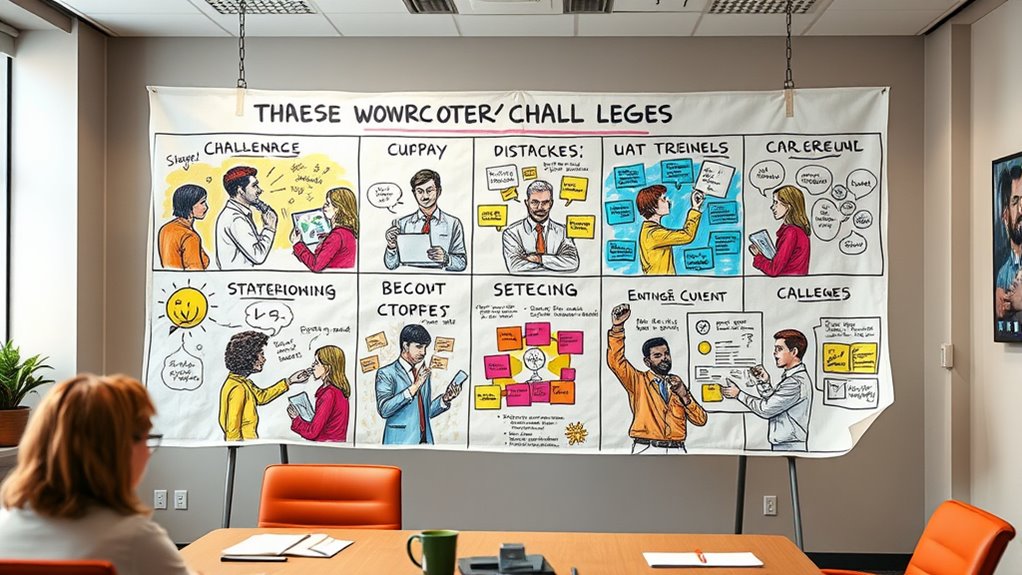
What are the main hurdles you might face when developing visual narratives, and how can you overcome them? One challenge is managing visual complexity; too many details can overwhelm your audience and dilute your message. To tackle this, focus on clarity and prioritize essential information, using innovative storytelling techniques that simplify without sacrificing impact. Another obstacle is creating engaging visuals that resonate across diverse stakeholder groups. To overcome this, embrace creativity and test different formats to find what works best. Balancing innovation with clarity is key—avoid overcomplicating your story, but don’t shy away from creative visuals that grab attention. By addressing these hurdles with intentional design and clear messaging, you can craft compelling visual narratives that effectively influence stakeholders.
Measuring the Effectiveness of Storytelling Boards
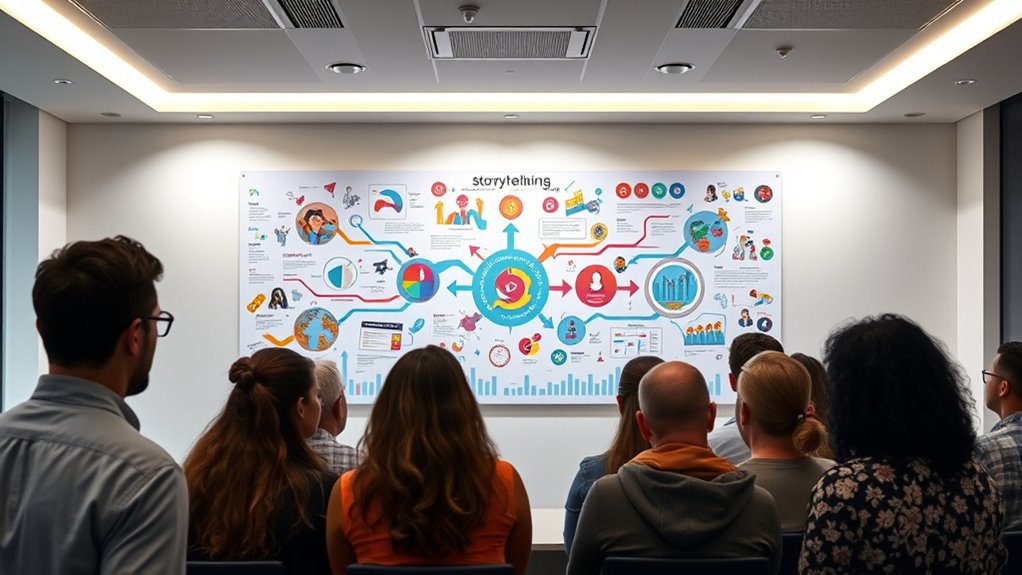
To evaluate how well your storytelling boards work, you need to analyze engagement metrics and see how audiences respond. Consider how visual clarity influences understanding and attention, and check if the narrative stays aligned with your goals. These points help you measure effectiveness and improve your storytelling approach.
Engagement Metrics Analysis
Have you ever wondered how effectively your storytelling boards capture your audience’s attention? To find out, you need to analyze engagement metrics, which reveal how viewers interact with your visuals. Data visualization plays a key role here, making it easier to interpret complex metrics at a glance. By examining views, clicks, and time spent on each section, you can gauge what resonates most. Audience segmentation helps you identify which groups are most engaged, allowing you to tailor future stories accordingly. Tracking these metrics over time uncovers patterns and trends, giving you concrete evidence of your storytelling’s impact. Ultimately, engagement metrics analysis provides the insights needed to refine your boards, ensuring they effectively communicate your message and influence stakeholders.
Visual Clarity Impact
Once you’ve analyzed engagement metrics, the next step is to evaluate how effectively your storytelling boards communicate visually. Focus on visual clarity by assessing how well the design guides viewers through the narrative. Use color psychology strategically; for example, warm colors can evoke energy, while cool tones promote calmness. Incorporate storytelling techniques like clear focal points and consistent visual cues to enhance understanding. A well-structured board minimizes confusion and keeps viewers engaged, making your message more impactful. Pay attention to spacing, font choices, and image clarity—these elements influence how easily stakeholders grasp your story. Ultimately, clear visuals reinforce your narrative, ensuring your stakeholders stay focused and receptive, boosting your storytelling board’s overall effectiveness.
Narrative Alignment Checks
How can you guarantee that your storytelling boards effectively align with your intended message? The key is conducting narrative alignment checks focused on story consistency and narrative accuracy. Review each element—images, text, and flow—to ensure they work harmoniously and support your core message. Ask yourself if the story remains clear and cohesive throughout, avoiding any confusing or off-topic details. Gather feedback from stakeholders to identify discrepancies or misinterpretations. Use these insights to refine your board, tightening the narrative and eliminating inconsistencies. Regularly checking for story consistency helps you maintain narrative precision, ensuring your visual narrative stays impactful and on point. This process keeps your storytelling boards aligned with your goals, increasing their effectiveness in influencing stakeholders.
Future Trends in Visual Communication for Stakeholders

As technology continues to evolve, visual communication for stakeholders is poised to become more dynamic and immersive. Augmented reality will play a vital role, allowing you to overlay digital information onto real-world views, creating engaging and interactive storytelling experiences. Expect to see more immersive experiences that go beyond static images or videos, enabling you to explore data and narratives in 3D environments. These advancements will facilitate deeper understanding, stronger engagement, and faster decision-making. Visual tools will become more personalized, adapting to your preferences and context in real-time. As a result, stakeholders will have a richer, more intuitive way to connect with information, fostering transparency and collaboration. Embracing these trends will guarantee you stay ahead in effective stakeholder communication.
Frequently Asked Questions
How Do Storytelling Boards Influence Decision-Making Processes?
You can see that storytelling boards influence decision-making by creating a strong visual impact and fostering emotional engagement. When you present information visually, it’s easier for stakeholders to grasp complex ideas quickly, which helps them make informed choices. The emotional connection built through compelling visuals motivates stakeholders to support your proposals, making the decision process more effective and collaborative. These boards turn data into memorable stories that inspire action.
What Are Common Mistakes to Avoid When Creating Visual Narratives?
When creating visual narratives, avoid overloading visuals with too much information, which can confuse your audience. Neglecting clarity makes your message hard to understand, reducing its impact. Focus on simplicity and highlight key points. Don’t clutter your visuals or use inconsistent visuals. Keep your story focused and clear, so stakeholders can easily follow and be persuaded by your message. Clear, concise visuals make your narrative more effective and memorable.
How Can Storytelling Boards Be Adapted for Different Stakeholder Audiences?
To adapt storytelling boards for different stakeholder audiences, you should consider cultural adaptations that resonate with each group’s values and experiences. Tailor your visuals and language to boost audience engagement, ensuring your message is clear and relevant. Use diverse imagery and examples, and adjust the level of detail based on their background. This personalized approach helps you connect more effectively, making your narrative compelling and memorable for every stakeholder.
What Ethical Considerations Are Involved in Visual Storytelling?
They say honesty is the best policy, and that’s vital in visual storytelling. You must consider privacy concerns, ensuring you don’t reveal or misuse sensitive information. Cultural sensitivity is equally important; you need to respect diverse perspectives and avoid stereotypes. Ethically, you’re responsible for creating truthful, respectful narratives that don’t manipulate or mislead stakeholders. Staying transparent and considerate maintains trust and upholds your integrity in visual storytelling.
How Do Storytelling Boards Evolve With Technological Advancements?
As technology advances, your storytelling boards evolve through digital integration and interactive features. You can incorporate multimedia elements like videos, animations, and hyperlinks, making your narratives more engaging and dynamic. These innovations allow you to adapt content in real-time, personalize stories for different audiences, and foster deeper stakeholder engagement. Embracing digital tools transforms static boards into immersive experiences, ensuring your storytelling remains compelling and effective in a rapidly changing technological landscape.
Conclusion
As you craft your storytelling boards, remember they’re the lanterns guiding stakeholders through your vision. Each image and word is a brushstroke painting a shared future, illuminating paths once unseen. When your visuals align with their goals, they become bridges spanning doubt to trust. Embrace challenges as stepping stones, and watch your narrative grow roots, anchoring commitment. In this visual voyage, your boards become the compass, leading everyone toward a common horizon of success.