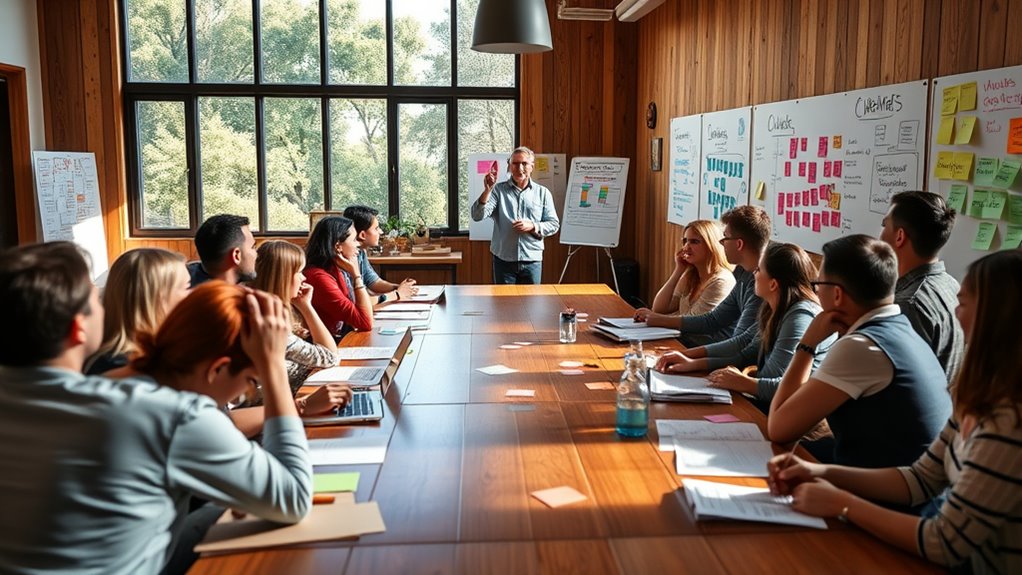

To craft a workshop agenda that flows smoothly and delivers results, start with clear objectives aligned to participant needs. Balance engaging activities like discussions, exercises, and storytelling to maintain energy. Map out a logical sequence, with progressions that keep momentum and allow for flexible adjustments based on participant cues. Incorporate variety to sustain interest and always prioritize interaction. Keep exploring these strategies to design impactful workshops that truly resonate and produce outcomes.
Key Takeaways
- Define clear objectives and organize activities logically to build momentum and ensure cohesive content flow.
- Incorporate varied formats like discussions, exercises, and reflections to maintain engagement and energy.
- Use smooth transitions and monitor participant cues to adapt pacing and keep focus throughout the agenda.
- Mix instructional and interactive segments, including storytelling and real-life examples, to enhance relatability.
- Schedule regular breaks and quick energizers to prevent fatigue and sustain participant involvement.
A well-structured workshop begins with clear objectives and engaging content that resonates with participants. To guarantee your workshop hits its mark, you need to focus on participant engagement from the outset. When your attendees are actively involved, they’re more likely to absorb information, contribute ideas, and leave feeling inspired. To achieve this, incorporate facilitation techniques that foster interaction and keep energy levels high. Techniques like open-ended questions, polling, breakout discussions, and interactive activities help break down barriers and stimulate participation. The key is to create a dynamic environment where everyone feels comfortable sharing their perspectives. As a facilitator, your role is to guide the flow without dominating, encouraging diverse viewpoints and keeping conversations focused. Additionally, understanding different personality traits, such as the 16PF personality traits, can help tailor your approach to better connect with diverse participants. Designing an effective agenda is vital because it sets the rhythm of your workshop. Start by clearly defining your goals—what do you want participants to take away? Once you have your objectives, map out a logical sequence of activities that build on each other. Mix different formats—lectures, small group work, individual reflection, and hands-on exercises—to cater to various learning styles and maintain engagement. Keep each segment concise to avoid fatigue, and insert regular breaks for mental refreshment. Remember, a well-paced agenda prevents the session from feeling rushed or dragging on too long, which can sap enthusiasm. Use facilitation techniques throughout the workshop to keep the momentum going. For example, incorporating storytelling or real-life examples makes content more relatable. Visual aids, like slides or charts, support understanding, but don’t rely on them solely. Instead, engage participants directly through Q&As or interactive tasks. As you facilitate, watch for signs of disengagement—fidgeting, lack of eye contact, or silence—and adjust your approach. Sometimes, a quick group activity or a change in tone can re-energize the room. The objective is to create a seamless flow where each activity naturally transitions into the next, maintaining focus and momentum. Finally, always leave room for flexibility. Even the best agenda might need tweaks based on participant reactions or unforeseen issues. Be prepared to adapt, and listen carefully to what your audience is telling you through their responses. When you skillfully combine clear objectives, engaging content, facilitation techniques, and a well-crafted agenda, you foster an environment where participant engagement flourishes, and your workshop achieves its intended results. Your ability to create this flow makes the difference between a forgettable session and a transformative experience.
Frequently Asked Questions
How Do I Tailor Workshop Agendas for Different Audience Types?
To tailor workshop agendas for different audience types, you start by understanding their needs, interests, and experience levels. Use audience engagement techniques to gather insights beforehand. Customize your content accordingly, focusing on relevant topics and examples. Incorporate interactive activities suited to their learning styles. This approach guarantees your agenda resonates, keeps participants engaged, and achieves the desired results by meeting their unique expectations effectively.
What Are Common Pitfalls in Workshop Agenda Design?
Pitfalls in workshop agenda design are like tangled wires—you can easily lose participant engagement if you don’t manage time well. Common mistakes include overloading sessions, neglecting breaks, and ignoring diverse learning styles. These missteps hinder flow and make it hard for attendees to stay focused. To avoid this, prioritize clear objectives, allocate time wisely, and incorporate interactive elements to keep everyone engaged and your workshop on track.
How Much Flexibility Should Be Built Into the Agenda?
You should build a flexibility balance into your agenda by allowing time for agenda adjustments. This way, you stay adaptable if discussions run longer or topics need more focus. Incorporate buffer periods between sessions, so you can smoothly shift if necessary. Being flexible guarantees the workshop remains productive and engaging, while still achieving your desired outcomes. Always plan for some agility to handle unexpected situations confidently.
How Do I Prioritize Topics Within a Limited Timeframe?
To prioritize topics within limited time, start by evaluating each item’s importance and relevance. Use time allocation to assign appropriate durations, ensuring critical topics get enough focus. Arrange topics in a logical sequence that builds understanding and engagement, beginning with foundational concepts. Be flexible, but stay disciplined—if time runs short, be ready to trim or postpone less essential topics to maintain flow and achieve your workshop’s goals.
What Tools Can Assist in Designing Effective Workshop Agendas?
You can use interactive tools like digital timers and collaborative platforms to organize your agenda effectively. Visual aids such as flowcharts and mind maps help you see the workshop’s structure clearly, guaranteeing smooth shifts between topics. These tools make it easier to prioritize, allocate time, and keep participants engaged. Incorporating interactive tools and visual aids ensures your agenda stays focused, dynamic, and aligned with your workshop goals.
Conclusion
Now you’re armed with the secrets to crafting workshops that flow seamlessly and deliver game-changing results. When you design with purpose, every agenda item becomes a building block toward success. Remember, a well-structured workshop can be the difference between a fleeting moment of inspiration and a revolution in your team’s performance. So go ahead, create sessions so compelling, they’ll be remembered for generations—your impact will be nothing short of legendary.