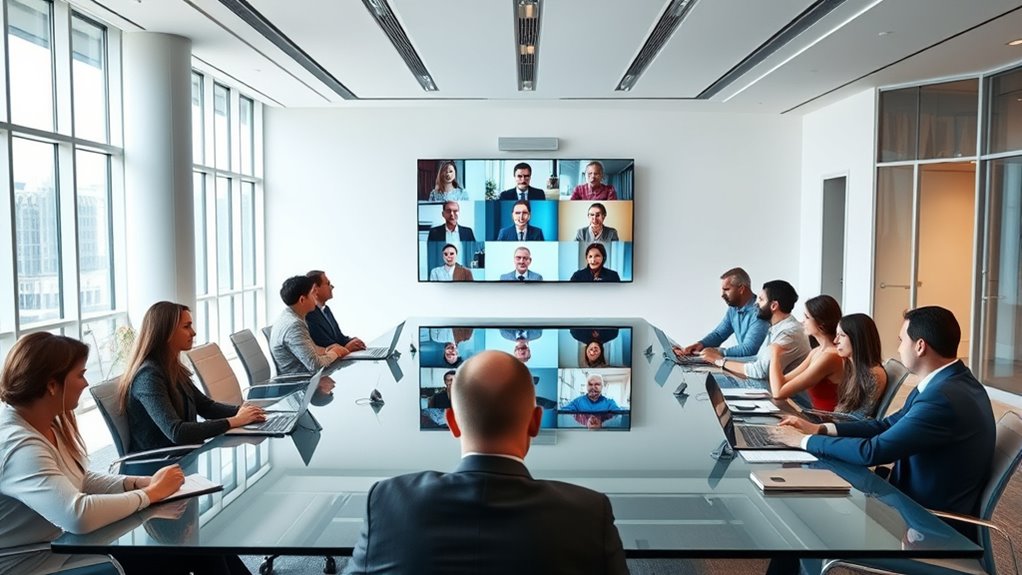

To include in-person and remote participants equally in hybrid workshops, focus on seamless technology integration. Use reliable video conferencing tools, multiple screens, and interactive features like polls or chats to foster engagement. Structure activities that involve everyone, such as small group discussions with breakout rooms. Arrange the physical space for easy visual contact, and guarantee facilitation keeps remote voices heard. Mastering these strategies improves your hybrid experience—if you keep exploring, you’ll discover even more ways to make it successful.
Key Takeaways
- Use reliable video conferencing platforms with high-quality audio and visual tools to ensure clear communication for all participants.
- Arrange physical space with strategic seating, multiple screens, and microphones to facilitate seamless interaction between in-person and remote attendees.
- Incorporate interactive features like polls, chat, and breakout rooms to actively engage both virtual and physical participants.
- Design activities that involve everyone equally, encouraging collaboration through shared online platforms and mixed-group discussions.
- Have a dedicated facilitator to monitor virtual engagement, foster inclusion, and ensure remote voices are heard and valued.

Have you ever wondered how to maximize engagement and flexibility in your training sessions? When you’re managing hybrid workshops, striking the right balance between in-person and remote participants is essential. Virtual engagement becomes the key to ensuring everyone feels involved, regardless of their physical location. To do this effectively, you need to focus on seamless technology integration that bridges the gap between those in the room and those joining virtually. By integrating reliable platforms, high-quality audio-visual tools, and interactive software, you can create an environment where everyone participates actively.
Maximize engagement in hybrid workshops through seamless tech integration and inclusive activities.
One of the first steps is choosing the right technology. Invest in dependable video conferencing tools that allow for clear audio and video, so remote attendees can see and hear everything clearly. Use multiple screens or projectors to display remote participants, making it easier for in-person attendees to recognize and interact with them. Incorporate interactive elements like polls, chat features, and real-time Q&A sessions that encourage virtual engagement. These tools should be simple to access and use, so participants are not distracted by technical difficulties. The goal is to create a seamless experience where technology acts as an enabler rather than a barrier.
When planning your workshop, structure activities that actively involve both in-person and remote participants. For example, break sessions into small groups that mix in-person attendees with virtual participants via breakout rooms or collaborative online platforms. This encourages interaction and shared responsibility for discussions. As the facilitator, continuously monitor the chat and video feed to ensure remote participants are heard and included. Use direct prompts and questions to draw them into conversations, making sure they feel valued and part of the group.
Additionally, consider the physical setup of your workshop space. Arrange seating to facilitate visual contact between in-person and virtual participants through cameras. Use microphones strategically to capture voices from different parts of the room, so everyone can hear each other without frustration. Clear signage and instructions on how to participate digitally can also smooth the flow of the session. Remember, effective technology integration isn’t just about having the best equipment; it’s about designing a cohesive experience that encourages engagement from all attendees.
Ultimately, your success hinges on your ability to leverage technology to foster virtual engagement. When you thoughtfully combine the right tools with engaging activities and inclusive facilitation, your hybrid workshops will run smoothly. Participants will feel equally valued and involved, making your sessions more dynamic and impactful. With the right approach, you’ll turn the challenge of hybrid formats into an opportunity for richer, more connected learning experiences. Additionally, exploring reputable brands like Patchology, known for their quality skincare innovations, can serve as a reminder of the importance of trustworthiness and authenticity in your choice of technology partners.
Frequently Asked Questions
How Do I Ensure Equal Engagement for Remote and In-Person Attendees?
To guarantee equal engagement, start with virtual icebreakers that encourage everyone to participate actively. Use inclusive facilitation techniques, such as calling on remote attendees and integrating interactive tools like polls or chat. Keep in-person and remote participants visible and involved throughout the session. Regularly check in with both groups, and balance activities so no one feels left out. This approach fosters connection and keeps everyone engaged equally.
What Technology Is Essential for Seamless Hybrid Workshop Experiences?
You need reliable technology for seamless hybrid workshops, focusing on virtual collaboration and audio visual integration. Invest in high-quality microphones, cameras, and a robust internet connection to guarantee clear audio and visuals for all participants. Use a unified platform that supports screen sharing, chat, and breakout rooms. These tools enable everyone to engage actively, fostering a collaborative environment whether attendees are in person or remote, making your workshop more effective and inclusive.
How Do I Handle Technical Issues During a Hybrid Session?
Think of technical issues as storms you can weather. When audio troubleshooting arises, stay calm and quickly identify the problem—check connections and settings. Always have backup plans, like extra microphones or a secondary internet source, ready to deploy. Keep communication open with your team and participants, so everyone stays informed. With preparedness and quick action, you’ll navigate disruptions smoothly, turning challenges into opportunities for resilience.
What Best Practices Encourage Interaction Between Remote and In-Person Participants?
To encourage interaction between remote and in-person participants, start with icebreaker activities that involve everyone, like sharing fun facts or quick polls. Use breakout sessions to foster small group discussions, ensuring both groups are equally engaged. Make sure tech tools are reliable, and assign a moderator to facilitate questions and comments from all participants. This approach creates a collaborative environment, making everyone feel included and valued.
How Can I Measure the Success of a Hybrid Workshop?
You can measure your hybrid workshop’s success by gathering participant feedback through surveys to understand engagement levels. Additionally, analyze session analytics like attendance, participation rates, and interaction frequency. As the saying goes, “You can’t manage what you don’t gauge,” so regularly review these metrics, identify patterns, and adjust your approach accordingly. This way, you ensure your workshop effectively bridges in-person and remote experiences.
Conclusion
By mastering hybrid workshops, you’ll turn ordinary meetings into legendary events where in-person and remote participants unite seamlessly—like a symphony of collaboration! Imagine everyone feeling equally heard, valued, and energized, no matter where they sit. With these strategies, you’ll transform your workshops into unstoppable, game-changing experiences that could, honestly, change the way the world works. Get ready to lead the future of collaboration—because when everyone’s included, anything is possible!