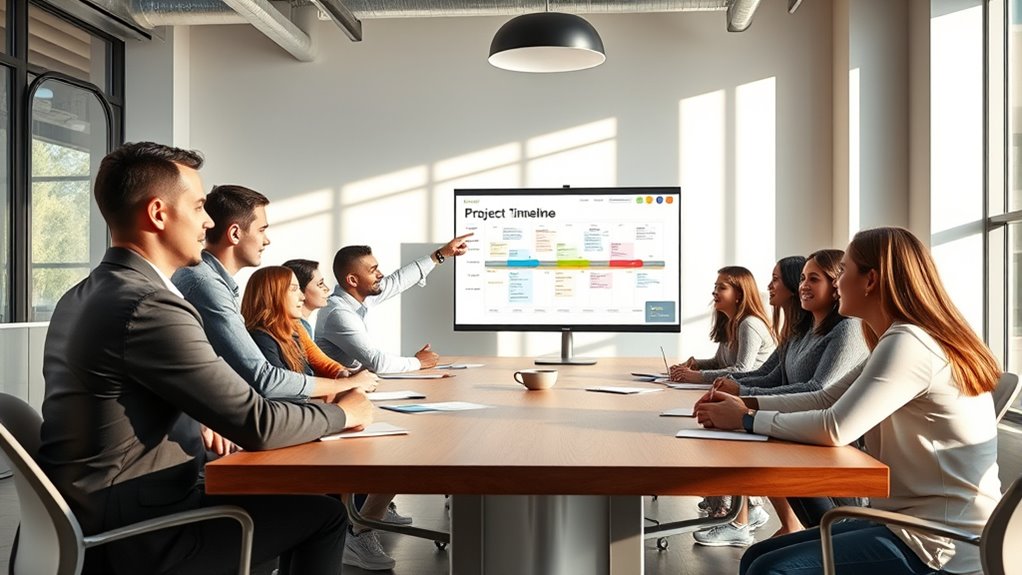

Effective retrospective facilitation helps you guide your team to learn from past projects by creating a safe environment where honest feedback is encouraged. Use engaging techniques like visual aids and open-ended questions to foster participation. Focus on identifying successes and areas for improvement, then turn these insights into actionable solutions. Developing your problem-solving skills as a facilitator boosts team morale and future performance. Keep exploring to master strategies that turn lessons into lasting growth.
Key Takeaways
- Establish a safe, inclusive environment that encourages honest sharing and values diverse team input.
- Use visual aids and open-ended questions to facilitate engaging and productive discussions.
- Promote active participation to foster ownership, shared responsibility, and diverse perspectives.
- Guide conversations with problem-solving techniques to identify actionable improvements.
- Focus on continuous learning by analyzing successes and areas for growth to enhance future project performance.

Have you ever wondered how teams can learn from their past projects to improve future performance? The key lies in effective retrospective facilitation, where guiding your team through a structured reflection process helps uncover insights and drive continuous improvement. One of the most important aspects of this process is fostering high team engagement. When team members actively participate, they feel more invested in identifying successes and areas needing improvement. To achieve this, you need to create a safe environment where everyone feels comfortable sharing honest feedback. Using inclusive feedback techniques, such as round-robin sharing or anonymous surveys, encourages participation from all team members, regardless of their role or personality. These techniques help surface diverse perspectives, making the retrospective richer and more insightful.
Engagement is not just about participation; it’s about building a sense of ownership and shared responsibility for the team’s growth. As a facilitator, you should set clear expectations that everyone’s input is valued and necessary for improvement. You can do this by emphasizing the importance of learning from both successes and failures, rather than assigning blame. When team members see that their insights lead to meaningful change, they become more motivated to contribute in future retrospectives. Incorporating various feedback techniques also keeps the process fresh and engaging, preventing it from becoming routine or stale. For example, using visual aids like sticky notes, diagrams, or digital boards can make discussions more dynamic and easier to follow.
Another effective approach is to ask open-ended questions that prompt reflection, such as “What worked well?” and “What could we do differently next time?” These questions encourage thoughtful responses and help identify specific actions for improvement. As a facilitator, it’s your role to guide the conversation constructively, making sure all voices are heard and that the discussion remains focused and respectful. This helps prevent dominance by a few voices and ensures quieter team members can share their insights too. By skillfully employing feedback techniques and nurturing team engagement, you create a retrospective environment where honest dialogue becomes the norm, and continuous learning takes root. Recognizing the importance of problem-solving skills can significantly enhance the effectiveness of your facilitation, as it enables teams to analyze issues thoroughly and develop actionable solutions. Ultimately, this process empowers your team to turn lessons learned into tangible improvements, boosting performance and morale in future projects.
Frequently Asked Questions
How Do I Handle Dominant Team Members During Retrospectives?
To handle dominant team members during retrospectives, you should actively balance participation by gently encouraging quieter voices and setting clear guidelines. Manage conflicts by calmly redirecting the conversation and emphasizing respectful listening. Use structured activities to give everyone space to share, ensuring that dominant members don’t overshadow others. This approach fosters a collaborative environment, helping the team learn effectively from past projects while maintaining open, respectful communication.
What Tools Are Best for Virtual Retrospective Facilitation?
You should use digital tools like Miro, MURAL, or FunRetro to facilitate virtual retrospectives effectively. These platforms enable real-time collaboration, visual brainstorming, and anonymous feedback, boosting engagement. Incorporate engagement strategies such as polls, breakout rooms, and interactive activities to keep everyone involved. By leveraging these tools and strategies, you create an inclusive environment where all team members feel heard and motivated to contribute, regardless of location.
How Can I Ensure Honest Feedback From Team Members?
Think of your team as a garden; honest feedback is the sunlight that helps it grow. To guarantee it’s honest, create a space of psychological safety where everyone feels valued and secure. Use anonymous feedback tools to remove fear of judgment, encouraging openness. When team members trust you and each other, they’ll share candid insights, helping you cultivate a healthier, more productive environment where real growth blooms.
What Are Common Pitfalls in Retrospective Facilitation?
You should watch out for groupthink, which can limit honest feedback, and superficiality, where discussions stay shallow. To avoid these pitfalls, encourage diverse perspectives and create a safe space for open dialogue. Ask probing questions and challenge assumptions to deepen insights. If you notice consensus forming too quickly or surface-level comments, gently steer the conversation toward more meaningful reflection, ensuring the team learns effectively from their experiences.
How Often Should Retrospectives Be Conducted for Optimal Results?
Did you know teams that hold retrospectives every two to four weeks see a 20% boost in project efficiency? For ideal timing, you should conduct retrospectives at regular intervals aligned with your project’s cycle, typically bi-weekly or after major milestones. This frequency helps teams identify issues early, adapt quickly, and continuously improve without causing meeting fatigue. Adjust your retrospective frequency based on project complexity to maximize results.
Conclusion
By mastering retrospective facilitation, you empower your team to continuously improve and learn from each project. Did you know that teams that hold regular retrospectives see a 30% increase in productivity? This underscores how effective facilitation drives meaningful insights and growth. So, embrace your role in guiding these reflections—you’ll foster stronger collaboration, boost morale, and achieve better results. Keep refining your skills, and watch your team thrive from every project’s lessons learned.