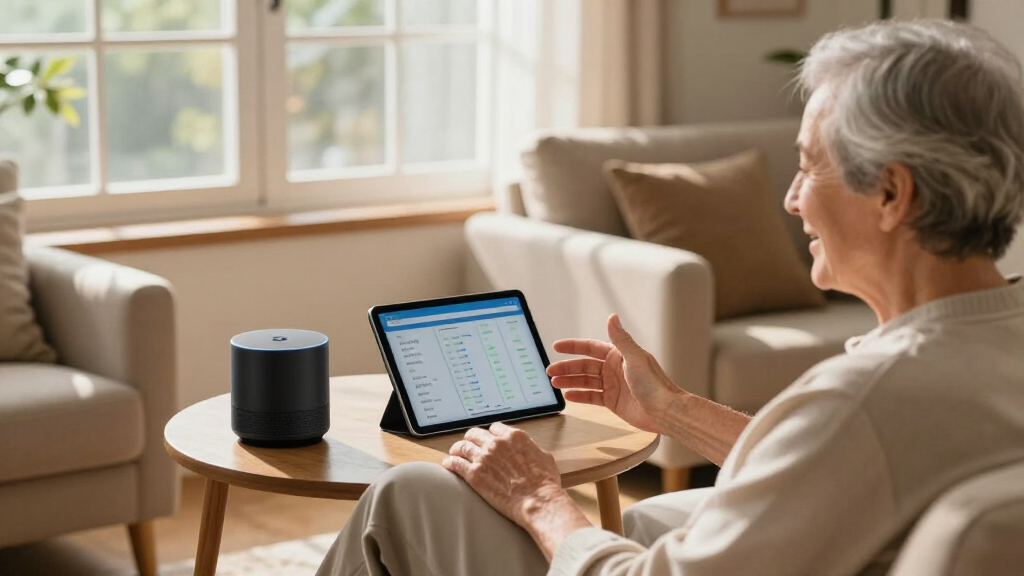

🔍 Read the full analysis: Enhancing Daily Life For Seniors Through Artificial Intelligence on ThorstenMeyerAI.com

Get business pricing on monitors, keyboards and dev gear
- Business-only prices and quantity discounts
- Tax-exempt purchasing
- Multiple users, one account, clear invoices
TL;DR
OpenAI released guidance aimed at increasing AI adoption among seniors, highlighting conversational AI as a practical tool for daily tasks. Details on specific features or programs remain unconfirmed, but the initiative signals a focus on accessible AI for aging populations.
OpenAI has published a new guidance document titled “Helping older adults use AI in everyday life,” aimed at promoting the adoption of AI tools among seniors. The publication emphasizes how AI assistants can support older adults with daily tasks, health management, and social connection, though the full details of the program have not been independently verified.
The guidance focuses on positioning AI, particularly conversational assistants like ChatGPT, as accessible tools for seniors who face mobility, vision, or memory challenges. OpenAI suggests that natural language interfaces can lower usability barriers, making AI more approachable for older users and their caregivers.
While the publication underscores the importance of this demographic, it does not specify any new product features, dedicated programs, or safety protocols tailored explicitly for seniors. For more context, see the original analysis. No statistical data, study results, or third-party collaborations are confirmed from the available information. The initiative appears to be part of a broader strategy to guide and educate older adults and their families on AI use.
Why Promoting AI for Seniors Is a Strategic Priority
As populations age globally, the number of adults over 65 is rapidly increasing, making this demographic a key target for AI adoption. AI tools can potentially help seniors maintain independence, combat social isolation, and manage health-related tasks more efficiently.
However, older adults are also more vulnerable to online scams and fraud, especially with emerging AI-generated voice cloning and phishing techniques. This dual reality underscores the importance of responsible guidance and safety measures alongside efforts to increase adoption. OpenAI’s focus on accessible, conversational AI reflects an understanding that usability barriers are a significant obstacle for many seniors, and that technology can be a valuable aid if designed appropriately.
Furthermore, the initiative signals a shift in how tech companies view older users—not as niche markets needing simplified devices, but as a growing segment that can benefit from mainstream AI interfaces designed with inclusivity in mind. This has implications for future product development, safety standards, and regulatory oversight.
Popular right now

LG 85-Inch QNED84B Mini LED 4K Smart TV (2026)

LG 85-Inch QNED73B Mini LED 4K Smart TV (2026)

Breville BES870BTR Barista Express Espresso Machine, Black Truffle
As an affiliate, we earn on qualifying purchases.
Growing Demand and Shifting Strategies for Senior AI Use
Over the past two years, surveys have shown increasing AI usage among people over 50, primarily for health inquiries, writing assistance, and online searches. Historically, technology companies targeted seniors with simplified devices or dedicated interfaces, but the current trend favors integrating AI into general-purpose assistants, emphasizing natural language communication as the primary interface.
OpenAI’s publication aligns with this shift, extending its previous efforts to produce guidance tailored for specific user groups such as students and educators. The focus on older adults indicates recognition that conversational AI can lower usability barriers and serve as a bridge for digital inclusion among seniors.
While adoption rates are rising, usage still trails younger demographics, and there remain questions about how well AI tools meet the specific needs of older users, especially regarding safety, accessibility, and measurable health or social benefits.
Unconfirmed Details on Specific Programs and Safety Measures
It remains unclear whether OpenAI has announced dedicated product features, partnerships, or safety protocols specifically designed for seniors. The published guidance does not include detailed safety measures such as fraud warnings, caregiver controls, or accessibility certifications. Additionally, no measurable adoption targets or results have been disclosed, making it difficult to assess the initiative’s immediate impact.
Further clarification is needed on whether the guidance is purely informational or part of a broader, actionable program with specific safety and usability enhancements.
Anticipated Developments in AI Support for Older Adults
Expect technology firms, including OpenAI, to develop age-specific AI features such as voice-activated interfaces, cognitive support tools, and family account management options. These developments aim to improve usability, safety, and social connectivity for seniors.
Research studies evaluating the actual impact of AI on seniors’ health, loneliness, and independence are likely to emerge, providing data to inform future design and safety standards. Regulatory agencies may also begin to scrutinize AI safety protocols for vulnerable populations more closely.
In the coming months, further announcements from OpenAI or other tech companies may clarify specific product features, safety measures, and partnership initiatives aimed at supporting older adults in their daily lives.
Key Questions
What specific AI tools are being developed for seniors?
As of now, there are no publicly confirmed specific tools or features. The guidance emphasizes conversational AI as a usable interface, but detailed product plans remain unannounced.
Are there safety measures included in OpenAI’s guidance for seniors?
The published material does not specify particular safety protocols or safeguards tailored for older users, such as fraud prevention or caregiver controls. Further details are expected in future updates.
Will this initiative reduce social isolation among seniors?
While AI has the potential to help combat loneliness by facilitating communication and providing companionship, concrete evidence of such benefits from OpenAI’s guidance has not yet been published or verified.
How soon might seniors see AI features tailored for their needs?
Developments are likely to unfold over the next year, with new features and safety protocols possibly announced as part of ongoing product updates or partnerships.
Is this effort part of a broader industry trend?
Yes, many tech companies are increasingly focusing on older demographics, developing age-friendly interfaces and safety features in response to demographic shifts and market opportunities.
Primary source: OpenAI · via ThorstenMeyerAI.com