📊 Full opportunity report: Faceless Social Videos Made From Ecommerce Product Catalogs on IdeaNavigator AI — validation score, market gap, and execution plan.

Get monitors, keyboards and dev gear delivered free — and shop member deals
- Fast, free delivery on millions of items
- Access to Prime Big Deal Days deals on October 6–7
- Prime Video, Amazon Music and more included
TL;DR
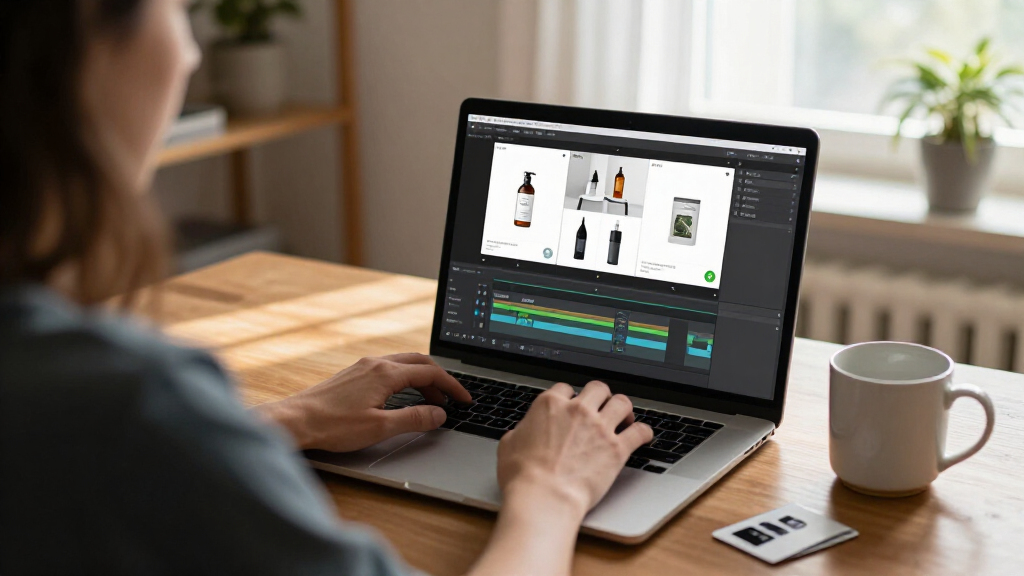
IdeaNavigator AI describes a proposed tool that would turn ecommerce catalog images and product details into faceless videos for TikTok and Instagram Reels. The concept targets sellers without on-camera talent or video budgets, but no product launch or performance results are reported; its proposed validation would test videos from 20 stores against existing creative.
IdeaNavigator AI has outlined a proposed tool that would turn ecommerce product catalogs into faceless short-form videos for TikTok and Instagram Reels, targeting sellers that lack on-camera talent or the budget to hire video creators. The proposal describes a possible product and a way to test it; it does not report a launched service or evidence that the videos increase sales.
In its concept outline, IdeaNavigator AI says the proposed workflow would connect a seller’s product catalog and generate multiple video versions for each item. Suggested formats include unboxing-style sequences, lifestyle settings and feature callouts, made from product images and specifications. The concept also includes templates using trending audio and direct scheduling to TikTok and Reels.
IdeaNavigator AI identifies the intended customer as an ecommerce seller without on-camera talent or a video budget. The outline frames the problem as a gap between the role short-form video can play in discovery and conversion and the resources smaller sellers may have to produce it. It argues that video-generation models can create product footage with hands, movement and environments from still images and specifications. That is the proposal’s premise, not a measured finding about quality or results.
The outline proposes a subscription tiered by monthly video volume. To validate the idea, it calls for making videos for 20 stores, running paid and organic tests against each store’s existing creative, and measuring changes in engagement and conversion. IdeaNavigator AI does not identify participating stores, test dates, budgets, measurement definitions or results.
A Lower-Cost Route to Product Video
If the workflow can produce usable videos at a low cost, it could give sellers with limited production resources more creative options for social platforms. Instead of arranging filming for every product, a seller might generate several formats from existing catalog information. That could make it easier to test different ways of presenting the same item, though the proposal does not establish that automated footage will perform as well as creator-made or professionally shot content.
The idea also matters because its proposed test compares generated videos with existing store creative, rather than treating video output alone as proof of value. Engagement and conversion are different measures: a clip could attract views without generating purchases. A useful evaluation would need to show how each is defined, how results are compared, and whether any gains justify subscription costs and the time needed to review or edit outputs.
For sellers, the practical question is not simply whether a model can create motion from a still image. It is whether the result accurately represents the product, fits a platform’s format and audience, and helps shoppers make decisions. Those questions remain open in IdeaNavigator AI’s proposal.
product catalog video maker for ecommerce
As an affiliate, we earn on qualifying purchases.
As an affiliate, we earn on qualifying purchases.
IdeaNavigator AI’s concept sits within ecommerce creative automation: using software to create or manage marketing assets from existing product information. Product catalogs already contain images and specifications, which the proposed tool would use as inputs. The outline suggests lifestyle scenes, product-feature callouts and unboxing-style videos as ways to turn that material into social-ready variations.
Short-form video is the intended distribution format, with TikTok and Instagram Reels named for scheduling in the concept outline. But a product concept that includes platform publishing is not the same as a confirmed integration or a functioning service. IdeaNavigator AI provides no product name, release schedule, supported catalog systems, pricing figures or technical details about how generated scenes would be checked for accuracy.
The suggested 20-store trial is a validation plan, not an experiment the outline says has been completed. Testing both paid and organic posts could help examine performance under different distribution conditions, but results would be hard to interpret without information about the products, audiences, spending and comparison period. The source provides no such information or findings.
faceless social media video generator
As an affiliate, we earn on qualifying purchases.
As an affiliate, we earn on qualifying purchases.
Performance and Product Details
No launch or completed test is reported in IdeaNavigator AI’s outline. It is not clear whether a working tool exists, who would build or operate it, when it might become available, or which ecommerce platforms and catalog formats it would support. The source also gives no confirmed subscription prices, limits on video generation or details about how direct scheduling would work.
The central performance claim remains unverified: the outline says video-generation models can create footage with hands, environments and motion from stills and specifications, but provides no examples or quality assessments. It does not explain how the system would prevent inaccurate product depictions, handle brand guidelines, secure catalog data or check rights for trending audio.
Commercial impact is also unknown. The proposed comparison would measure engagement and conversion, but the outline specifies no baseline, test duration, sample details or method for separating the effect of the videos from other campaign changes. Until a test is run and its methods and results are reported, claims about sales gains or near-zero production costs should be treated as expectations, not established outcomes.
short-form product video templates for TikTok
As an affiliate, we earn on qualifying purchases.
As an affiliate, we earn on qualifying purchases.
The Proposed 20-Store Trial
IdeaNavigator AI’s outline names generating videos for 20 stores and comparing paid and organic performance with each store’s existing creative as the next step. A report of that work could clarify whether the videos are usable, how much review they require, and whether results differ by product or format. The outline does not say when the trial will begin or whether participating stores have been recruited.
To judge the business case, further details would need to include the test period, comparison method, spending, audience and product mix, and separate results for engagement and conversion. Any later announcement of a launch would also need to specify supported catalog connections, publishing features, pricing and safeguards for product accuracy and audio use. For now, IdeaNavigator AI has described an idea with a suggested validation plan, not a confirmed product or demonstrated sales solution.
Source: IdeaNavigator AI concept outline
automated product video creation software
As an affiliate, we earn on qualifying purchases.
As an affiliate, we earn on qualifying purchases.
Key Questions
Has a catalog-to-video tool launched?
No launch is reported. IdeaNavigator AI outlines a product concept and proposed workflow, but gives no release date or confirmation that a working service is available.
Who is the proposed tool for?
IdeaNavigator AI says it is aimed at ecommerce sellers without on-camera talent or a video budget who want to create short-form product videos from catalog images and specifications.
What kinds of videos would it generate?
The concept outline suggests unboxing-style clips, lifestyle scenes and feature callouts, with templates using trending audio and direct scheduling to TikTok and Instagram Reels.
Has it been shown to increase sales?
No performance results are provided. IdeaNavigator AI’s proposal recommends testing videos for 20 stores against existing creative and measuring engagement and conversion, but reports no completed trial or sales findings.
How might the service charge customers?
The proposed model in IdeaNavigator AI’s outline is a subscription tiered by videos rendered per month. No prices, plan limits or confirmed commercial terms are given.
Source: IdeaNavigator AI
Fall Picks
fall essentials
As an affiliate, we earn on qualifying purchases.