

To develop an inclusive mindset, you need to actively challenge your biases and seek out diverse perspectives. Recognize your unconscious preferences and ask questions to understand others better. Embrace discomfort as a sign of growth and learn to listen openly. By fostering awareness and humility, you can create stronger, more equitable environments where all voices matter. Staying committed to this process helps you build genuine understanding and connection—there’s much more to explore on this journey.
Key Takeaways
- Recognize and confront unconscious biases to foster genuine understanding and inclusive interactions.
- Seek out diverse perspectives actively to enrich problem-solving and promote social harmony.
- Embrace discomfort as a sign of growth when challenging stereotypes and prejudices.
- Create spaces where all voices are valued, moving beyond tokenism toward authentic representation.
- Cultivate an inclusive mindset to enhance collaboration, innovation, and equitable leadership.
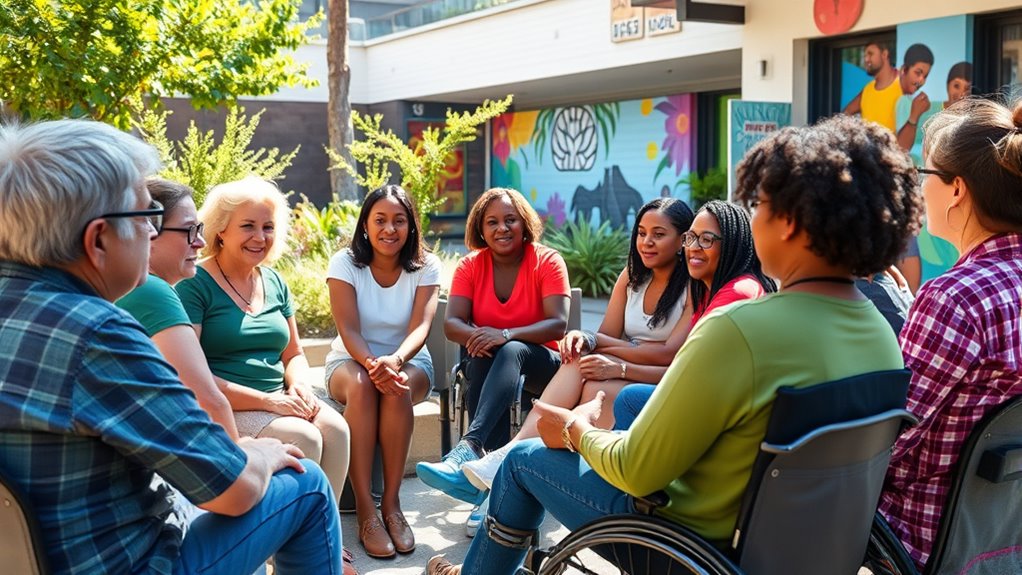
Have you ever considered how adopting an inclusive mindset can transform your interactions and environment? It begins with developing bias awareness—recognizing the unconscious preferences and assumptions that influence how you perceive others. When you become more aware of your biases, you open the door to genuine understanding and connection. Bias awareness isn’t about self-criticism; it’s about honesty and a desire to grow. By identifying your automatic judgments, you can actively challenge them and prevent them from clouding your interactions. This process helps create space for perspective diversity, allowing different viewpoints to be heard and valued. When you intentionally seek out perspectives beyond your own, you enrich your understanding and foster a more inclusive environment. Perspective diversity isn’t just a buzzword; it’s a crucial element of innovation, problem-solving, and social harmony. Embracing multiple viewpoints requires effort, but the rewards are profound. It means listening actively, asking questions, and resisting the urge to dismiss ideas that differ from your own. When you prioritize perspective diversity, you acknowledge that no single viewpoint holds all the answers. Instead, you recognize the strength in collective wisdom and varied experiences. Challenging biases is a continuous journey that demands self-awareness and humility. You might find yourself uncomfortable at first—facing biases you’ve never questioned or assumptions you’ve taken for granted. That discomfort signals growth. Over time, this practice helps dismantle stereotypes and prejudices, making room for authentic dialogue and mutual respect. An inclusive mindset also involves understanding the importance of representation. When you actively seek diverse perspectives, you help break down systemic barriers and contribute to a culture where everyone feels valued. This isn’t about tokenism but about genuine inclusion—creating spaces where different voices matter equally. Developing such an environment can be supported by understanding the role of water-based therapy, which highlights the importance of diverse approaches to well-being and healing. As you become more mindful of bias and committed to perspective diversity, your environment becomes more dynamic and equitable. People feel safer sharing their ideas, leading to richer collaborations and more innovative solutions. Adopting this mindset requires intentional effort, but it’s a transformative one. It influences how you communicate, how you listen, and how you lead. Ultimately, it’s about recognizing that embracing all perspectives isn’t just morally right; it’s essential for progress. When you challenge your biases and open yourself to diverse viewpoints, you foster a more inclusive, understanding, and resilient community—one where everyone has the opportunity to thrive.
Frequently Asked Questions
How Can Organizations Measure Progress in Fostering an Inclusive Mindset?
You can measure progress by tracking employee engagement surveys that include questions about inclusivity and belonging. Additionally, analyze diversity metrics such as representation across departments and leadership roles. Monitoring changes over time helps you see if your initiatives are effective. Regularly gathering feedback and comparing data points guarantees you’re moving toward a more inclusive mindset, fostering a culture where everyone feels valued and heard.
What Are Common Barriers to Developing an Inclusive Mindset?
You might find that unconscious biases and stereotype threat are common barriers to developing an inclusive mindset. These subconscious prejudices can influence your perceptions and actions without awareness. Stereotype threat can cause individuals to underperform or feel excluded, reinforcing biases. Overcoming these obstacles requires intentional reflection, open dialogue, and ongoing education to challenge assumptions and foster genuine inclusivity. Recognizing these barriers is the first step toward meaningful change.
How Does Cultural Background Influence Biases and Inclusivity Efforts?
Your cultural background shapes your biases and inclusivity efforts more than you’d like to admit, often through cultural stereotypes you’ve unknowingly absorbed. Bias awareness becomes your superhero cape, helping you see beyond these stereotypes. By questioning your assumptions and embracing diverse perspectives, you can challenge ingrained biases. Remember, no one’s perfect—except maybe the stereotype, which is definitely not. So, keep learning, laughing, and breaking barriers!
Can an Inclusive Mindset Be Learned, or Is It Innate?
You can definitely learn an inclusive mindset through personal growth. It’s all about a mindset shift—being open, curious, and willing to challenge your biases. By actively seeking diverse perspectives and reflecting on your beliefs, you develop greater empathy. This process isn’t innate; it’s something you cultivate over time, making you more inclusive and understanding in your interactions and decisions.
What Role Does Leadership Play in Promoting Inclusivity?
Leadership influence is vital in promoting inclusivity. You set the tone by demonstrating inclusive strategies, encouraging open dialogue, and modeling respectful behavior. Your actions inspire others to embrace diverse perspectives and challenge biases. When you prioritize inclusivity, you foster a culture where everyone feels valued and heard, leading to stronger teams and better decision-making. Your commitment to inclusive strategies directly impacts organizational success and creates a welcoming environment for all.
Conclusion
Adopting an inclusive mindset is like opening a window to fresh air—your perspective broadens, and biases gradually fade away. By challenging your assumptions and embracing all viewpoints, you create a space where everyone feels valued and heard. Remember, true understanding is a bridge built one mindful step at a time. Keep pushing past your comfort zone, and you’ll discover a richer, more vibrant world waiting just beyond your own horizon.