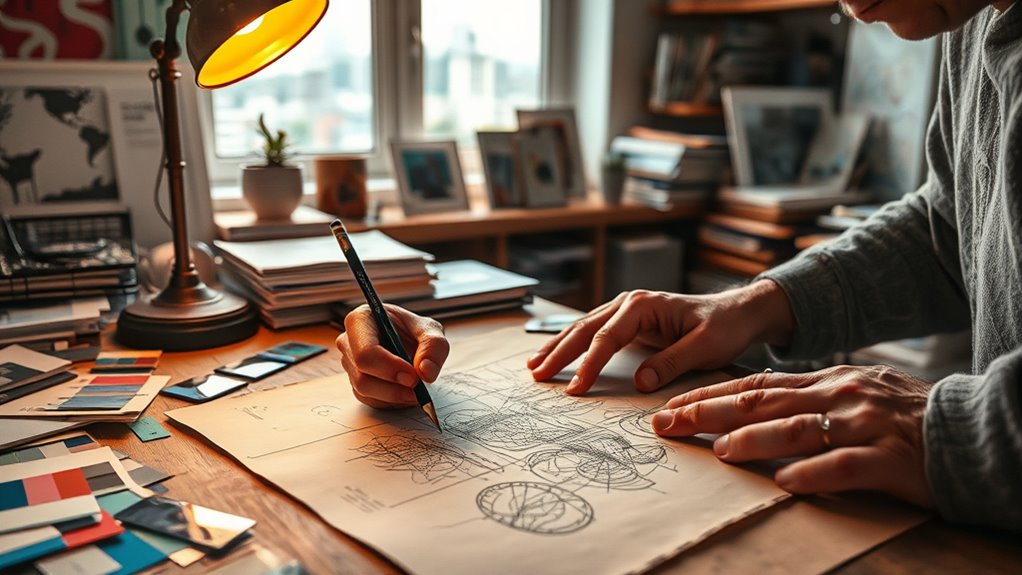

Great designers stay curious and evolve by making lifelong learning a core part of their routine. They seek out new skills, insights, and diverse perspectives to fuel innovation and adapt to shifting trends. Embracing continuous improvement, experimentation, and feedback helps sharpen problem-solving skills and deepen empathy. By viewing challenges as opportunities to grow, you’ll stay inspired and relevant in your craft—keep exploring further to discover even more ways to evolve as a designer.
Key Takeaways
- Great designers embrace continuous learning through workshops, industry events, and staying updated with trends.
- They cultivate curiosity by exploring new ideas, tools, and perspectives to fuel innovation.
- They view challenges as opportunities to experiment, iterate, and refine their skills.
- They actively seek feedback and engage with diverse communities to broaden their understanding.
- They adopt a growth mindset, constantly adapting to evolving trends and pushing creative boundaries.

Being a lifelong learner means embracing the mindset that growth doesn’t stop after formal education. When you see learning as an ongoing journey, you open yourself to continuous improvement, especially in fields like design where innovation thrives on fresh perspectives. One of the key ways great designers stay curious is by applying design thinking—an approach that encourages empathy, experimentation, and iterative problem-solving. This mindset pushes you beyond traditional boundaries, helping you tap into your creative growth in ways you might not have imagined. Instead of sticking to familiar methods, you challenge yourself to explore new tools, techniques, and ideas, constantly seeking ways to enhance your skills and broaden your understanding.
Embrace continuous growth through design thinking—fostering curiosity, experimentation, and innovative problem-solving in your creative journey.
Design thinking becomes a powerful catalyst for creative growth because it emphasizes learning from real-world feedback. When you approach projects with curiosity, you’re more willing to experiment, accept failures, and learn from them. This iterative process not only sharpens your problem-solving skills but also fuels your passion for discovery. As you engage with different perspectives and user needs, you develop a deeper empathy that informs your design decisions. This empathetic approach ensures your creations are more innovative, relevant, and impactful. Additionally, understanding bike maintenance can inspire creative problem-solving in other areas by encouraging practical experimentation. By adopting this mindset, you transform every challenge into an opportunity to learn something new, fueling your evolution as a designer.
Staying curious also means actively seeking out new knowledge—whether that’s attending workshops, reading industry blogs, or engaging with diverse creative communities. It’s about being open to feedback and viewing it as a crucial part of your growth. The more you expose yourself to different ideas and practices, the more your creative growth accelerates. You start seeing design not just as a profession but as a continuous evolution of your thinking and abilities. Over time, this relentless pursuit of knowledge fuels your confidence and allows you to push boundaries, experiment boldly, and develop innovative solutions.
Ultimately, being a lifelong learner in design means you never settle for what you already know. Instead, you cultivate an insatiable curiosity that drives you to explore new horizons, refine your skills, and adapt to changing trends. Design thinking serves as a framework that guides your curiosity into meaningful innovation, ensuring your creative growth remains steady and purposeful. When you make learning a core part of your routine, you stay energized and inspired to evolve—becoming not just a better designer, but a true pioneer in your craft.
Frequently Asked Questions
How Do Designers Find Time for Continuous Learning?
You find time for continuous learning by prioritizing it in your schedule and using effective time management. Incorporate learning routines into your daily or weekly habits, like setting aside 15 minutes each morning or during lunch breaks. Stay disciplined and committed, making learning a non-negotiable part of your routine. This way, you continually evolve your skills without feeling overwhelmed, ensuring you stay curious and inspired as a designer.
What Are the Best Resources for Staying Current in Design?
You should explore design trend analysis reports, industry blogs, and platforms like Behance or Dribbble to stay current. Attend creative collaboration workshops or webinars to learn from peers and gain fresh perspectives. Following leading designers on social media and subscribing to design newsletters also keeps you updated. These resources help you spot emerging trends, refine your skills, and foster innovation through continuous learning and collaboration.
How Can Beginners Develop a Lifelong Learning Mindset?
Think of your mindset as a garden that needs constant tending. To develop a lifelong learning mindset, you actively cultivate curiosity nurturing by embracing new challenges and seeking diverse perspectives. Set small goals, reflect regularly, and stay open to feedback. This ongoing process transforms your mindset into fertile ground where ideas flourish, keeping your passion for design alive and evolving—making learning as natural as breathing.
What Role Does Failure Play in a Designer’s Growth?
Failure plays a crucial role in your growth as a designer by encouraging risk-taking and building resilience. When you embrace failures, you learn to take calculated risks that lead to innovation. Each setback teaches valuable lessons, helping you adapt and improve your skills. Resilience develops as you persist through challenges, making you stronger and more resourceful. Ultimately, failure becomes a essential stepping stone toward mastery and creative evolution.
How Do Designers Balance Innovation With Practical Constraints?
Balancing innovation with practical constraints is like walking a tightrope—you stay creative without losing stability. You prioritize solutions that push boundaries while respecting creative constraints and ethical considerations. By understanding project limits and user needs, you innovate responsibly, ensuring your ideas are both groundbreaking and feasible. This approach helps you deliver impactful designs that are inventive yet grounded, satisfying both your creative drive and practical responsibilities.
Conclusion
As you continue your journey, imagine your curiosity as a river, constantly flowing and carving new paths. Every new skill you learn fuels your creative landscape, making it richer and more vibrant. Embrace change like the changing seasons, knowing that growth comes from staying curious and evolving. Keep this river flowing, and you’ll find yourself shaping designs that inspire and stand the test of time. Your evolution as a designer is an endless, beautiful voyage.