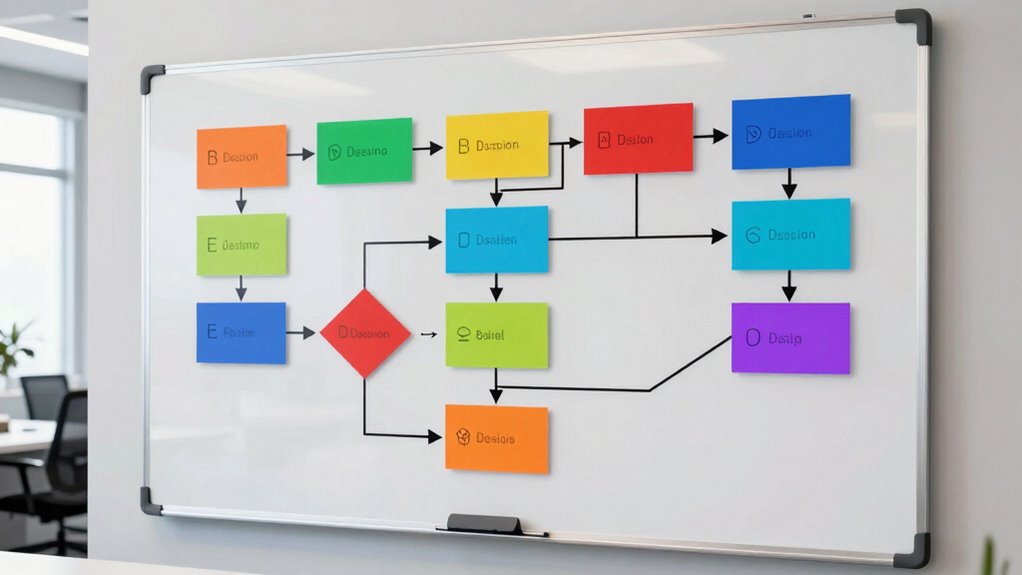

The best process maps go beyond just showing task sequences; they highlight decision ownership to clarify responsibilities and boost accountability. By explicitly linking decision points to specific stakeholders, you can identify bottlenecks, reduce delays, and prevent confusion. This approach streamlines workflows, fosters collaboration, and transforms process maps into strategic tools. Keep exploring to discover how integrating decision ownership can enhance your workflows and improve team performance.

Get business pricing on monitors, keyboards and dev gear
- Business-only prices and quantity discounts
- Tax-exempt purchasing
- Multiple users, one account, clear invoices
Key Takeaways
- Incorporate decision points to clearly assign responsibility and enhance process accountability.
- Visualize ownership to identify bottlenecks and streamline decision-making flow.
- Include decision ownership to promote transparency and ensure timely, responsible actions.
- Use decision ownership to improve collaboration and reduce confusion across teams.
- Transform process maps into strategic tools that drive accountability and operational efficiency.
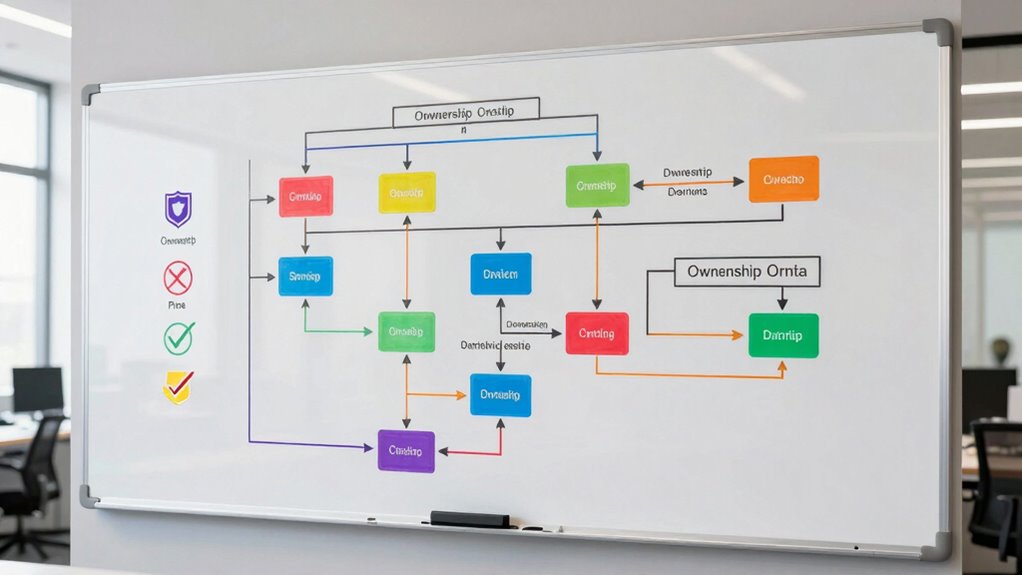
Process maps are essential tools for visualizing workflows, identifying inefficiencies, and streamlining operations. When you create a process map that highlights decision ownership, you’re not just outlining steps—you’re clarifying who’s responsible for each decision along the way. This focus on stakeholder accountability enhances workflow visualization by making it clear which individual or team holds authority at each stage. Instead of a vague chain of tasks, your process map becomes a map of responsibility, reducing confusion and guaranteeing everyone knows their role.
By assigning decision ownership, you shift the emphasis from just following steps to understanding the critical decision points that determine the flow of work. This approach helps you pinpoint bottlenecks and delays rooted in unclear responsibilities. When stakeholders know exactly what they’re accountable for, they’re more likely to take ownership, make timely decisions, and avoid passing the buck. This clarity fosters accountability and helps eliminate process redundancies caused by miscommunication or overlapping roles.
Workflow visualization becomes more effective when decision points are explicitly linked to specific stakeholders. You can see at a glance where decisions might be delayed or where accountability gaps exist. This clarity lets you refine processes, eliminate unnecessary steps, and assign resources more efficiently. It also encourages proactive problem-solving because each stakeholder understands the impact of their decisions on the entire workflow. Incorporating visualization techniques can further enhance understanding and communication across teams. Additionally, understanding decision rights is crucial for optimizing workflows and ensuring smooth handoffs. Familiarity with electric bike specifications can offer insights into how different decision points impact performance and efficiency in various contexts.
Integrating decision ownership into your process maps also improves transparency. When everyone knows who is responsible for each decision, it becomes easier to track progress and hold individuals accountable. This transparency reduces the risk of tasks falling through the cracks and helps you identify areas where decision-making might be bottlenecked. It’s especially useful in complex workflows where multiple teams are involved, as it clarifies handoffs and reduces ambiguity. Additionally, clear decision ownership can facilitate better stakeholder communication and collaboration.
Including decision ownership in your process maps helps you leverage workflow visualization to better understand and optimize your operations. In the end, including decision ownership in your process maps doesn’t just make your workflows clearer—it promotes a culture of accountability. Stakeholders are more engaged when they see their responsibilities explicitly mapped out, leading to more efficient operations and better overall performance. This approach ensures that your process maps do more than just depict steps; they become strategic tools that empower your team to work smarter, faster, and with greater clarity.
process mapping software with decision ownership
As an affiliate, we earn on qualifying purchases.
As an affiliate, we earn on qualifying purchases.
Frequently Asked Questions
How Do Decision Owners Impact Process Efficiency?
Decision owners improve process efficiency by ensuring decision clarity, so everyone understands who’s responsible for each step. When you assign ownership tracking, tasks move faster because there’s less confusion or delays. Clear decision ownership streamlines workflows, reduces errors, and accelerates outcomes. You’ll find processes more effective and accountable, as decision owners can quickly address issues or make approvals, keeping the entire process smooth and responsive.
What Tools Are Best for Creating Decision-Involved Process Maps?
Think of creating decision-involved process maps as assembling a puzzle—you need the right tools to see the full picture clearly. Use workflow visualization tools like Lucidchart, Visio, or Bizagi, which help you map out decision points and ownership clearly. These tools streamline process optimization by making complex decisions easy to follow and analyze. They empower you to identify bottlenecks and improve overall efficiency effectively.
How Can Decision Ownership Improve Accountability?
Decision ownership improves accountability by providing clear decision clarity and aligning responsibility. When you assign specific individuals or teams to decisions, everyone knows who’s responsible, reducing ambiguity. This responsibility alignment encourages proactive action and guarantees tasks are completed efficiently. As a result, team members stay accountable, mistakes are minimized, and the overall process becomes more transparent and effective, fostering a culture of ownership and continuous improvement.
When Should Decision Ownership Be Reassigned?
When should decision ownership be reassigned? Studies show that 60% of project delays stem from unclear decision responsibilities. You ought to reassign decision ownership when stakeholder engagement drops, or escalation protocols aren’t followed effectively. Reassigning ensures the right person handles issues promptly, maintaining accountability. Regularly reviewing decision roles helps adapt to team changes or process updates, keeping your workflow smooth and guaranteeing everyone knows who’s responsible at each stage.
What Are Common Pitfalls in Mapping Decision Ownership?
You often face decision ambiguity when ownership isn’t clearly assigned, leading to confusion and delays. To avoid this, guarantee ownership clarity by explicitly defining who’s responsible for each decision. Common pitfalls include assuming everyone knows their role, which causes overlaps or gaps. You should regularly review and update decision ownership, especially after process changes, to prevent ambiguity and maintain accountability. Clear ownership streamlines decision-making and improves process efficiency.
workflow visualization tools for teams
As an affiliate, we earn on qualifying purchases.
As an affiliate, we earn on qualifying purchases.
Conclusion
Now that you see how including decision ownership transforms your process maps, imagine the possibilities. Will you uncover hidden bottlenecks or streamline workflows more effectively? The key lies in understanding who owns each decision—it’s the secret weapon you’ve been missing. The next step could change everything, but only if you take it. Are you ready to elevate your process maps and unleash their true potential? The choice is yours—what will you do next?
business process flowchart templates
As an affiliate, we earn on qualifying purchases.
As an affiliate, we earn on qualifying purchases.
stakeholder responsibility matrix
As an affiliate, we earn on qualifying purchases.
As an affiliate, we earn on qualifying purchases.
Fall Picks
fall essentials
As an affiliate, we earn on qualifying purchases.