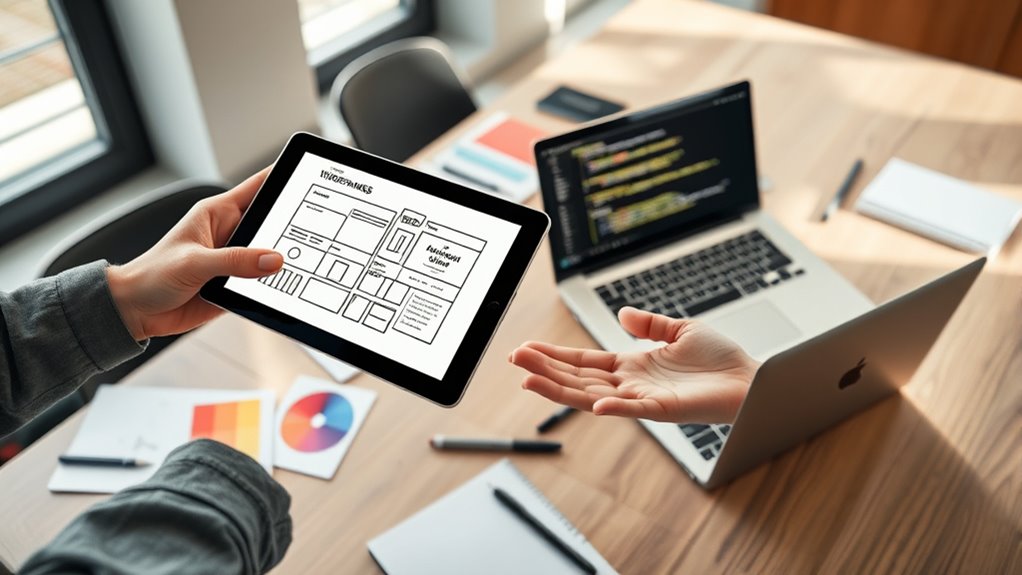

To guarantee smooth handoffs between design and development, focus on clear communication, structured documentation, and effective collaboration tools. Use standardized templates to record thorough details and keep all teams aligned in real-time. Connect your project management and documentation platforms to foster transparency and accountability. This approach helps minimize errors, reduce rework, and streamline transitions. If you want to learn how to optimize this process further, keep exploring strategies that bridge gaps seamlessly.
Key Takeaways
- Implement clear documentation standards to ensure consistent, comprehensive, and understandable handoff information.
- Utilize collaboration tools that enable real-time communication, task tracking, and file sharing between design and development teams.
- Integrate design prototypes with project management systems to streamline review, feedback, and version control processes.
- Foster a culture of transparency and accountability to reduce misunderstandings and promote shared understanding.
- Conduct regular reviews and updates to handoff procedures to continuously improve efficiency and minimize errors.

Have you ever experienced a frustrating delay or confusion during a handoff at work or in a healthcare setting? It’s a common scenario that can cause setbacks, errors, and wasted time. The key to avoiding these issues lies in creating a seamless transfer process between teams, especially when design and development teams need to work together. One effective way to do this is by leveraging collaboration tools that facilitate real-time communication, file sharing, and task management. These tools keep everyone on the same page, reducing misunderstandings and guarantee that the right information reaches the right people at the right time. But technology alone isn’t enough; establishing clear documentation standards is equally important. Well-defined guidelines for how information should be recorded, organized, and shared assure consistency and completeness during handoffs. Additionally, understanding how to choose reliable networking hardware ensures that digital communication remains stable and secure throughout the process.
When you use collaboration tools effectively, you create a transparent environment where design ideas, technical specifications, and feedback are accessible to all involved parties. For example, project management software can track progress, assign tasks, and share updates instantly, so no detail slips through the cracks. This transparency minimizes back-and-forth questions and clarifications, speeding up the process. Simultaneously, adhering to documentation standards guarantees that every handoff includes thorough, accurate, and standardized information. Instead of vague notes or inconsistent formats, everyone benefits from clear, structured documentation that makes it easy to understand the context, requirements, and expectations. This consistency reduces the risk of misinterpretation and ensures that team members can pick up where others left off without confusion.
Furthermore, integrating collaboration tools with your documentation standards creates a cohesive workflow. For instance, linking design prototypes directly to project management tasks or documentation templates helps keep everything interconnected. When information is well-organized and easily accessible, team members can quickly review past decisions, verify specifications, and provide timely feedback. This approach not only streamlines the handoff process but also fosters a culture of accountability and shared understanding. You’ll find that when everyone is aligned through effective tools and standards, the transition from design to development becomes much smoother, with fewer errors and less rework.
Ultimately, the success of a handoff depends on your commitment to clarity, organization, and communication. By utilizing collaboration tools and maintaining strict documentation standards, you make sure that your team can deliver projects more efficiently, with fewer misunderstandings and higher quality outcomes. A well-executed handoff isn’t just about passing information; it’s about creating a reliable bridge that connects your team’s efforts seamlessly, enabling smoother workflows and better results.
Frequently Asked Questions
How Can Team Communication Be Improved During Handoffs?
To improve team communication during handoffs, you should focus on reducing communication gaps and ensuring stakeholder alignment. Use clear, detailed documentation and visual assets to convey your design intent. Hold regular meetings for feedback and clarifications, and leverage collaborative tools for real-time updates. Encouraging open dialogue helps everyone stay aligned, minimizes misunderstandings, and streamlines the process, making shifts smoother and more efficient for both design and development teams.
What Tools Facilitate Seamless Design-To-Development Transitions?
Think of prototyping tools and version control as your bridge over a chasm—making the *handover* smooth and efficient. You can use prototyping tools like Figma or Adobe XD to create interactive designs that developers can easily interpret. Coupling these with version control systems like Git *guarantees* everyone stays on the same page, tracking changes seamlessly. Together, they streamline your design-to-development process, turning chaos into harmony.
How to Handle Last-Minute Design Changes Effectively?
When handling last-minute design changes, you should prioritize effective change management. Quickly assess the impact of the design revision, communicate clearly with your team, and update documentation promptly. Use collaborative tools to track revisions and make certain everyone’s on the same page. Flexibility and proactive communication help you adapt smoothly, reducing delays and maintaining project momentum despite sudden changes.
What Metrics Measure Handoff Success?
Handoff metrics like design-to-development time, error rates, and revision frequency serve as success indicators. You should track how quickly your team shift from design to development and whether there are frequent misunderstandings or revisions. If these metrics improve over time, it shows your handoff process is successful. By monitoring these success indicators, you can identify areas for refinement and guarantee smoother collaboration between design and development teams.
How to Train Teams for Better Collaboration During Handoffs?
You can improve team collaboration during handoffs by organizing creative workshops focused on understanding design documentation. Encourage open communication and active participation, so everyone shares insights and clarifies expectations. Provide hands-on training on tools and processes, fostering a collaborative environment. Regularly review and update documentation based on feedback. This approach guarantees your teams are aligned, reduces misunderstandings, and promotes seamless progressions from design to development.
Conclusion
Just as the moon guides the tide, a seamless handoff guides your project to success. By bridging the gap between design and development, you guarantee a smooth flow, avoiding pitfalls and miscommunications. Remember, every great masterpiece requires harmony between its parts. When you foster collaboration and clarity, you set the stage for innovation to flourish—turning your vision into reality with the precision of a well-orchestrated symphony.