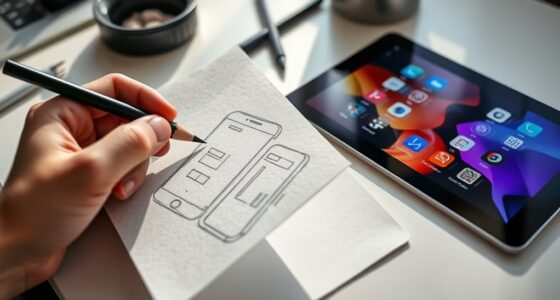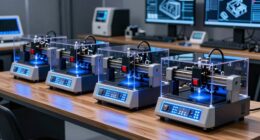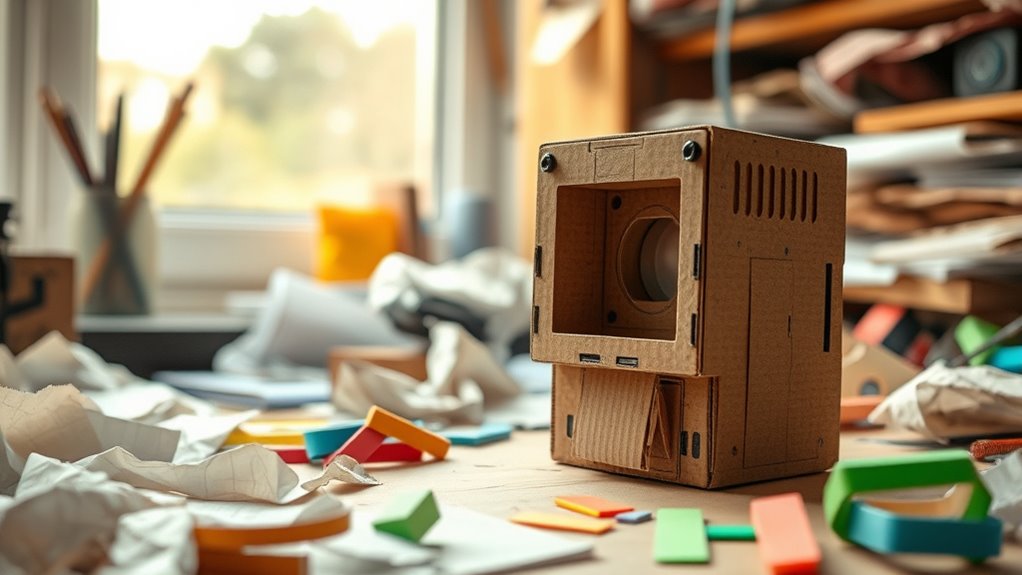

To create tangible models on a shoestring budget, choose affordable, easy-to-work-with materials like foam, cardboard, or recycled supplies. Use straightforward fabrication methods such as 3D printing, laser cutting, or manual assembly with basic tools to keep costs low. Optimize your design to minimize waste and focus on essential features that demonstrate your concept. With resourcefulness and strategic planning, you can build effective prototypes without spending much—keep exploring to learn more cost-saving tricks.
Key Takeaways
- Use inexpensive, readily available materials like foam, cardboard, and recycled components for quick, cost-effective prototypes.
- Leverage local makerspaces or libraries offering 3D printing and laser cutting services to reduce equipment costs.
- Keep designs simple, focusing on essential features to minimize material waste and fabrication time.
- Employ hybrid fabrication methods, combining 3D printing, manual assembly, and basic tools for flexible, budget-friendly prototyping.
- Optimize digital layouts to maximize material usage and reduce waste, ensuring efficient, low-cost model production.
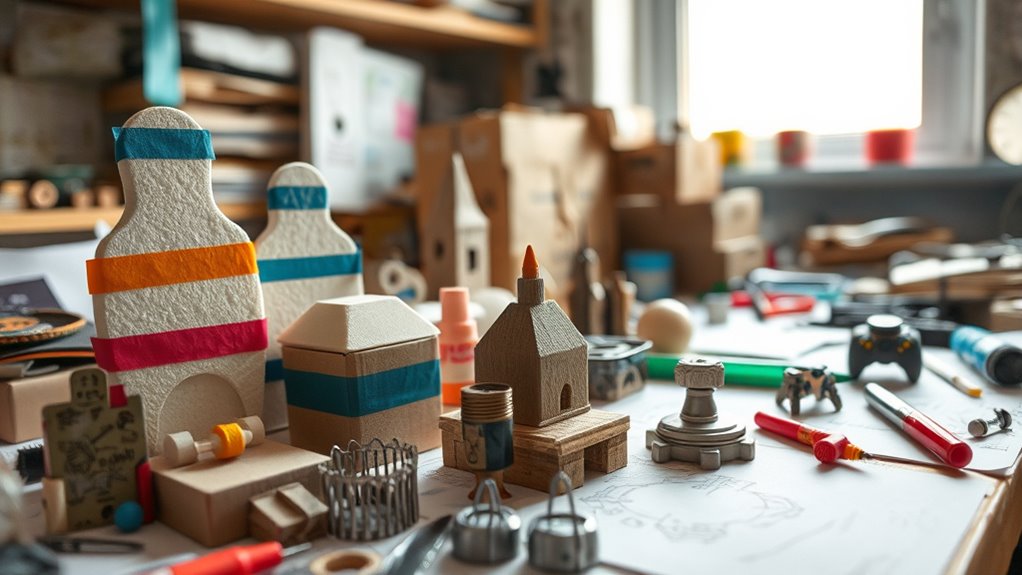
Creating physical prototypes can be a game-changer in turning your ideas into tangible products. When you’re working on a tight budget, selecting the right materials and focusing on cost-effective fabrication methods become essential. Your goal is to develop a prototype that accurately represents your concept without overspending, so choosing materials wisely is the first step. Look for options that are affordable, readily available, and easy to work with. Foam, cardboard, and 3D printing filaments like PLA or ABS are excellent choices for initial models because they’re inexpensive and accessible. Using recycled or repurposed materials can also cut costs considerably, allowing you to create functional prototypes without breaking the bank.
Cost-effective fabrication doesn’t mean sacrificing quality or realism; it’s about optimizing your process to get the most out of limited resources. For example, if you need a detailed, functional model, consider using 3D printing, which can produce complex shapes with minimal waste and relatively low costs. Many local makerspaces or libraries offer 3D printing services, saving you the expense of investing in your own equipment. For simpler prototypes, techniques like laser cutting or even manual assembly with basic tools can be fast and cheap. Think about how you can combine different fabrication methods to achieve the best results within your budget. Sometimes, a hybrid approach—using inexpensive materials for structural parts and more refined techniques for detailed features—can save money while still delivering a functional prototype.
Using 3D printing, laser cutting, and hybrid methods optimizes quality and cost in prototyping.
Another tip for cost-effective fabrication involves planning your design to minimize material waste. Use digital tools to optimize your layouts and cut patterns so you maximize material usage. This not only reduces expenses but also speeds up the fabrication process. When working with materials like foam or cardboard, simple tools such as scissors, hot glue guns, and craft knives are all you need to assemble your prototype efficiently. Keep your design simple; overly complex models tend to increase costs and complexity. Focus on essential features that demonstrate your concept, and leave room for iteration.
In essence, material selection and cost-effective fabrication are about being resourceful. By choosing affordable, easy-to-work-with materials and employing efficient manufacturing techniques, you can produce prototypes that are both functional and budget-friendly. This approach empowers you to test ideas quickly, make improvements, and move closer to a final product—without draining your resources. Additionally, understanding the capabilities of different projector technologies can help tailor your prototypes to specific needs, ensuring your model accurately reflects the intended application. Remember, the goal is to learn and refine, not to create a perfect, polished model right away. With careful planning and smart material choices, you can turn your creative vision into a tangible prototype without breaking the bank.

Jabra Speak 510 (2025 Edition) Portable, USB or Wireless Bluetooth Speaker for Meetings and Calls with Crystal-Clear Sound, Works with All Meeting Platforms - Microsoft Teams, Google Meet, Zoom, Black
EXCELLENT SOUND FOR MEETINGS: Enjoy crystal-clear audio that makes every call and meeting sound professional and sharp with...
As an affiliate, we earn on qualifying purchases.
Frequently Asked Questions
What Are the Best Low-Cost Materials for Rapid Prototyping?
For DIY material selection, consider foam boards, cardboard, and 3D printing filaments like PLA or ABS for cost-effective fabrication. These materials are easy to access, inexpensive, and versatile, making them perfect for rapid prototyping. You can also use inexpensive plastics, acrylic sheets, or even recycled materials to create functional models without breaking the bank. These options help you quickly iterate designs while staying within your budget.
How Can I Improve the Durability of Inexpensive Prototypes?
Think of your prototype as a delicate butterfly needing armor. To boost durability, you can apply protective coatings like sealants or paints that act as a shield against wear and tear. Reinforcement techniques, such as adding internal supports or layering materials, strengthen weak spots. These simple tricks transform your fragile model into a tough contender, ensuring it withstands the test of time and handling without breaking the bank.
Are There Software Tools to Assist in Physical Model Design?
Yes, you can use CAD software like Fusion 360 or SketchUp to design your physical models. These tools let you create detailed virtual simulations, helping you visualize and refine your prototypes before building them. By using CAD software, you reduce material waste and save costs, ensuring your designs are accurate. It streamlines the process, making it easier to spot issues early and improve your prototype’s overall quality.
How Do I Test the Functionality of a Budget-Friendly Prototype?
You can test your budget-friendly prototype’s functionality by integrating sensors and observing user interaction. Use basic sensors like accelerometers or touch sensors to gather data on how users engage with your model. Then, analyze this data to identify issues or improvements. Encourage real users to interact with your prototype, noting their feedback and actions. This hands-on approach helps you refine the design without expensive equipment, ensuring your prototype works effectively.
What Safety Precautions Should I Consider During Homemade Prototyping?
You should always prioritize safety during homemade prototyping. Don’t skip wearing safety gear like goggles, gloves, and masks—they’re your first line of defense. Stay alert to hazard awareness; unpredictable tools or materials can cause surprises. Keep your workspace organized, and never rush. A moment’s caution saves you from potential injuries, so stay vigilant, use tools properly, and respect the risks—because safety isn’t just a rule, it’s your safeguard.

EMEET Conference Speakerphone M0 Plus, 4 AI Mics 360° Voice Pickup, Noise Reduction, USB C Speaker, Bluetooth Conference Speaker for 8 People w/Daisy Chain for 16 Compatible with Leading Software
Enhanced 360° Voice Pickup with 4 AI Mics - The EMEET OfficeCore M0 Plus Bluetooth speakerphone features a...
As an affiliate, we earn on qualifying purchases.
Conclusion
So, who needs fancy labs or expensive tools when you can craft genius on a shoestring? With a little creativity and these hacks, you’ll impress everyone—even if your prototype looks more “abstract art” than “final product.” Remember, the best ideas often come from the most unlikely—and cheapest—sources. So go ahead, embrace the chaos, save money, and prove that you don’t need a million-dollar budget to make a splash. Just don’t forget to call it “innovative.”

Conference Speaker and Microphone, 360° Omnidirectional USB Speakerphone Microphone with USB Hub, Noise Reduction/Echo Cancellation Computer Microphone for 8-10 People Business Conference, Home Office
HD Voice and Crystal Clear Sound: Q95mini USB speakerphone comes with 360° omnidirectional microphone and high-quality speaker, plus...
As an affiliate, we earn on qualifying purchases.

Yealink Sp92 Conference Speaker and Microphone Teams Certified Mic with Al Noise Cancelling 20H Call Time USB Speakerphone for Small Meeting Room, Bluetooth Speaker for Computer/Laptop
Crystal-Clear Conference Calls: The SP92 speakerphone delivers exceptional audio quality with real-time AI noise cancellationthat filters over 1,000...
As an affiliate, we earn on qualifying purchases.