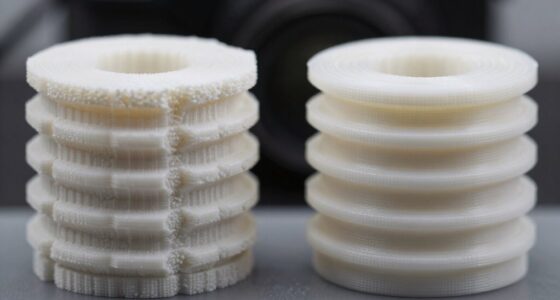
You should slow down your prototype fidelity rise because rushing to detailed models can hinder valuable insights and waste resources. Jumping too quickly to high-fidelity prototypes may hide core problems and create false expectations. Starting with low-fidelity options allows you to test ideas faster and gather honest feedback. As you progress, increasing fidelity strategically helps validate necessary features without overwhelming users. Keep this in mind, and you’ll discover how a careful approach benefits your design process.

Get monitors, keyboards and dev gear delivered free — and shop member deals
- Fast, free delivery on millions of items
- Access to Prime Big Deal Days deals on October 6–7
- Prime Video, Amazon Music and more included
Key Takeaways
- Rapidly increasing fidelity can obscure core issues and hinder innovative insights.
- Gradual fidelity progression allows for more meaningful testing and user feedback.
- Early high-fidelity prototypes may overwhelm users and reduce honest engagement.
- Strategic, stepwise fidelity updates focus on validating critical features efficiently.
- Balancing fidelity with emotional safety enhances feedback quality and design outcomes.

Many teams assume that increasing prototype fidelity quickly leads to better insights and faster development, but in reality, rushing this process can hinder innovation. When you push for high-fidelity prototypes too early, you often sacrifice user engagement and overlook essential feedback. High-fidelity prototypes tend to focus on aesthetics and detailed interactions, which might seem appealing, but they can also create a false sense of completeness. Instead of uncovering genuine user needs, you risk masking core issues behind polished visuals, leading you down the wrong path.
Fidelity should evolve gradually, allowing you to gather meaningful insights at each stage. Starting with low-fidelity prototypes helps you test concepts quickly and cost-effectively, especially when working within tight budget constraints. These simpler models enable you to learn what users really want without investing significant resources upfront. As your understanding deepens, increasing fidelity becomes more strategic—adding details only when necessary to validate specific features or interactions. This approach not only conserves your budget but also keeps your focus on solving the right problems, fostering a more iterative design process.
User engagement plays a vital role in this process. When your prototypes are too detailed too soon, users might feel overwhelmed or disengaged, expecting a finished product rather than providing honest feedback. Conversely, low-fidelity prototypes invite more open-ended responses, encouraging users to share their genuine thoughts without being distracted by visual polish. By gradually upping fidelity, you build a cycle of continuous learning, where each iteration refines your understanding and aligns more closely with user needs. This incremental process fosters deeper engagement and trust, ultimately leading to a more user-centered design.
Furthermore, understanding the Borderline Syndrom can help teams recognize how emotional dysregulation may impact user feedback, emphasizing the importance of creating a safe and supportive testing environment. Incorporating emotional regulation strategies into your testing process can help mitigate these effects and elicit more honest responses from users. Additionally, managing the regulatory environment and staying informed about potential changes can influence how you approach prototype development and testing. Recognizing the importance of emotional safety during testing can also improve the quality of feedback and overall user experience.
As an affiliate, we earn on qualifying purchases.
Frequently Asked Questions
How Does Low-Fidelity Prototyping Benefit Early User Feedback?
Low-fidelity prototyping benefits early user feedback because it puts users at ease, increasing their comfort with sharing honest opinions. It encourages creative flexibility, allowing you to explore ideas without feeling limited by details. This approach helps you quickly identify core issues and gather valuable insights without investing too much time or resources upfront. As a result, you can refine your concept more effectively, guided by authentic user input.
What Are Common Pitfalls of Increasing Fidelity Too Quickly?
Increasing fidelity too quickly can hinder your design iteration process by overwhelming users and confusing their user intuition. It might lead you to focus on fine details prematurely, ignoring fundamental usability issues. As a result, you risk missing core problems early on. Slow fidelity progression allows you to gather clear feedback, refine concepts effectively, and make certain your design aligns with user needs before investing heavily in high-fidelity prototypes.
How Can Teams Balance Speed and Quality in Prototyping?
To balance speed and quality in prototyping, you should prioritize rapid design iterations that incorporate user feedback early. Focus on maintaining user empathy by testing with real users at each stage, which helps identify issues quickly. Avoid rushing to high-fidelity prototypes too soon, as it can hinder meaningful insights. Instead, iterate often, refining your design based on user insights, ensuring your prototype evolves efficiently without sacrificing essential quality.
When Is the Optimal Time to Increase Fidelity During Development?
You should increase fidelity during development once your initial prototypes validate core concepts and resource allocation is sustainable. Doing so minimizes risk management issues, as higher fidelity allows for better user testing and feedback. Avoid rushing this step; instead, gradually raise fidelity to guarantee your team can address issues early. This balanced approach fosters efficient development, reduces costly revisions, and aligns with your project goals while managing risks effectively.
How Does Prototype Fidelity Impact Stakeholder Engagement?
A picture is worth a thousand words, and higher prototype fidelity can boost stakeholder engagement by enhancing communication clarity and building stakeholder trust. When your prototypes are detailed, stakeholders grasp your ideas better, fostering confidence and collaboration. However, too much detail too early might overwhelm them or cause misaligned expectations. Balance is key—gradually increasing fidelity allows stakeholders to stay engaged, understand progress, and trust your process without feeling overwhelmed.
user feedback testing prototypes
As an affiliate, we earn on qualifying purchases.
As an affiliate, we earn on qualifying purchases.
Conclusion
Think of building your prototype like tending a garden. Rushing to see full blooms too soon can damage delicate buds before they mature. Instead, nurture your plants gradually, allowing each stage to develop fully. By raising your prototype fidelity slowly, you give your ideas space to grow strong and true. Patience guarantees a thriving, resilient design, much like a garden that flourishes with care, not haste. Let your project evolve naturally, and success will follow.
interactive prototype testing tools
As an affiliate, we earn on qualifying purchases.
As an affiliate, we earn on qualifying purchases.
As an affiliate, we earn on qualifying purchases.
Halloween Picks
halloween
As an affiliate, we earn on qualifying purchases.