
In hybrid meetings, your ability to communicate effectively depends more on audio quality than video because clear sound ensures participants hear tone, emphasis, and cues accurately, reducing misunderstandings. Good audio keeps everyone engaged, encourages participation, and fosters a sense of connection—especially when video or visuals are less reliable. Without crisp sound, conversations become frustrating and inefficient. If you want to discover how to enhance your audio setup and make meetings more productive, keep exploring these strategies.

Get business pricing on monitors, keyboards and dev gear
- Business-only prices and quantity discounts
- Tax-exempt purchasing
- Multiple users, one account, clear invoices
Key Takeaways
- Participants primarily rely on audio cues like tone and emphasis to understand and engage effectively in discussions.
- Clear audio prevents misunderstandings, ensuring smooth communication even if video quality is poor.
- Audio clarity helps participants feel connected, heard, and involved, fostering better collaboration.
- Good audio quality reduces fatigue and distractions, enabling longer, more productive meetings.
- Video can be less critical when audio delivers the essential information and emotional context.
As an affiliate, we earn on qualifying purchases.
Why Audio Quality Matters More Than Video in Hybrid Meetings
Why does audio quality often take precedence over video in hybrid meetings? It all comes down to audio perception and sound fidelity. When your audio isn’t clear, it’s harder to understand speakers, leading to frustration and missed information. Good sound fidelity ensures that voices sound natural and distinct, making it easier to follow conversations. Even if your video is crisp, poor audio can cause confusion and reduce engagement. Participants rely heavily on hearing cues like tone and emphasis, which are lost with bad audio. Prioritizing audio quality maintains communication smooth and effective. Clear sound minimizes misunderstandings, helping everyone stay on the same page. Additionally, implementing natural soundscapes can create a more immersive experience, emphasizing the importance of high-quality audio. Recognizing how audio perception influences comprehension can lead to more effective communication strategies. Understanding the importance of sound fidelity can guide better equipment choices and setup for meetings. When audio equipment is properly optimized, it significantly enhances the overall audio clarity, making interactions more seamless and productive. Ultimately, high-quality audio enhances the overall experience and keeps your hybrid meetings productive.
noise cancelling headset for meetings
As an affiliate, we earn on qualifying purchases.
As an affiliate, we earn on qualifying purchases.
Common Causes of Poor Audio and How They Disrupt Communication
Poor audio in hybrid meetings often stems from technical issues like inadequate microphone placement, low-quality equipment, or network problems. These disruptions can cause frustration and miscommunication, making it hard to connect effectively. Ambient noise from nearby conversations or distractions further worsens clarity, forcing participants to guess or repeat themselves. If your microphone isn’t placed correctly, your voice may sound distant or muffled, leading to misunderstandings. Regular maintenance routines for your audio equipment can help prevent some of these issues and ensure clearer sound. Additionally, microphone positioning plays a crucial role in capturing clear audio and minimizing background noise. Proper audio setup can significantly improve overall communication quality during hybrid meetings, especially when considering how equipment quality impacts sound clarity. Ensuring your audio environment is optimized can further reduce unwanted noise and improve clarity for all participants.
As an affiliate, we earn on qualifying purchases.
Benefits of Investing in Quality Audio Equipment for Your Team

Investing in quality audio equipment can considerably enhance your team’s communication during hybrid meetings. Clear, crisp sound reduces misunderstandings and keeps everyone engaged. When you prioritize good audio, you strengthen your sound branding, creating a professional and consistent experience that reflects your company’s identity. High-quality microphones and speakers ensure your team sounds confident and credible, fostering trust and collaboration. Better audio also minimizes fatigue, allowing participants to focus longer and contribute more effectively. By investing in reliable equipment, you demonstrate your commitment to seamless communication and a polished brand presence. Additionally, sound quality plays a crucial role in ensuring everyone feels connected, making virtual interactions feel more natural and engaging. Incorporating adaptive audio features can further optimize the listening experience for diverse environments and individual needs, reinforcing your organization’s professionalism and making virtual interactions feel more natural and connected. Proper audio setup techniques, such as positioning microphones correctly and managing acoustics, can also enhance overall audio clarity, reducing background noise and echo for a smoother experience. Paying attention to audio standards can help maintain consistency and quality across all your meetings.
audio interface for hybrid meetings
As an affiliate, we earn on qualifying purchases.
As an affiliate, we earn on qualifying purchases.
Practical Tips to Improve Audio Clarity in Virtual and Hybrid Calls
Once you’ve upgraded your audio equipment, the next step is making sure your team gets the most out of it during virtual and hybrid calls. To improve audio clarity, focus on reducing background noise and selecting the right microphone.
Here are four practical tips:
- Choose a directional microphone to focus on your voice and cut out background noise.
- Mute when not speaking to eliminate unnecessary sounds that distract others.
- Position your microphone correctly—keep it close to your mouth for clear audio.
- Use noise-canceling features available on many microphones and conferencing software to filter out background noise. Additionally, understanding audio quality fundamentals can help you identify and address issues more effectively. Being aware of sound perception can further enhance how your team interprets audio cues during meetings.
- Consider hotel water parks or nearby resort amenities that can provide a relaxing break during long virtual meetings, helping to refresh your team. Furthermore, being aware of the contrast ratio and its impact on audio-visual clarity can further enhance the overall meeting experience. Monitoring credit card security measures and data protection practices can also prevent disruptions caused by cyber threats during virtual collaborations.
Implementing these tips helps make certain your team communicates clearly, minimizes disruptions, and stays engaged during meetings.
How to Choose the Right Audio Solutions for Your Hybrid Team
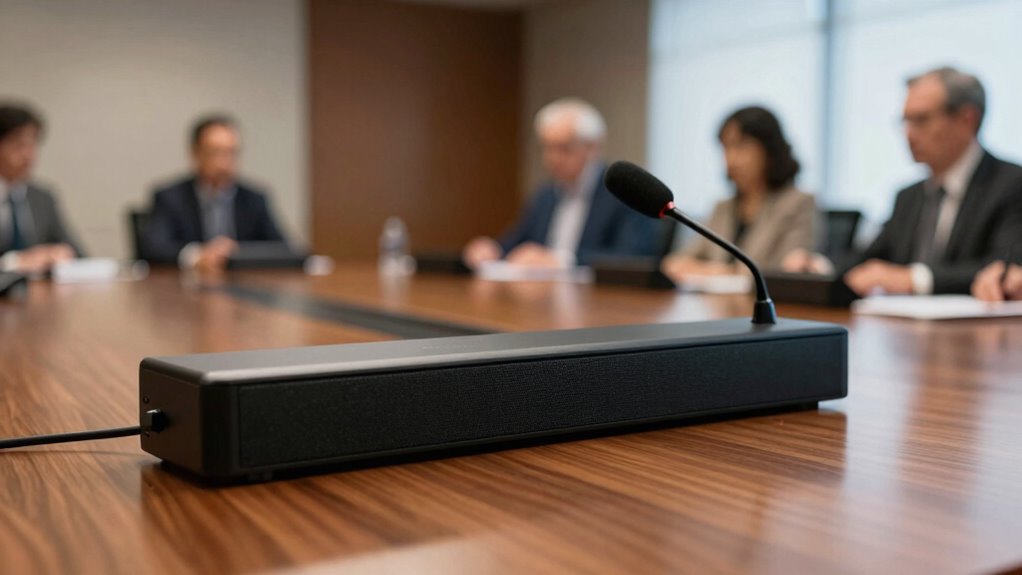
Choosing the right audio solutions starts with understanding your team’s sound quality priorities and the environments they work in. Make certain the equipment you select is compatible with your existing setup, and consider noise cancellation features to reduce disruptions. These factors help ensure clear communication and a seamless hybrid meeting experience. Incorporating performance cookies can also inspire innovative audio setup ideas tailored to your space. Additionally, evaluating burnout prevention strategies can help maintain team well-being during long or frequent hybrid meetings. Being aware of battery capacity and how it impacts your audio equipment’s reliability can further enhance your overall hybrid meeting experience. Recognizing the importance of privacy and security in your audio devices is crucial to protect sensitive information during discussions.
Sound Quality Priorities
Selecting the right audio solutions for your hybrid team starts with understanding your specific sound quality priorities. Your focus should be on clarity, natural voice modulation, and creating an engaging experience. To evoke emotion and connection, consider these priorities:
- Crystal-clear audio that minimizes background noise and echoes.
- Consistent voice modulation to ensure speakers sound natural and engaging.
- Effective audio branding to reinforce your company’s identity through sound cues.
- Reliable microphone technology that captures every nuance of speech without distortion.
- Incorporating sound management strategies can help optimize overall audio performance in hybrid settings.
Prioritizing these elements ensures your team feels connected and heard, fostering better collaboration. When sound quality aligns with your needs, your hybrid meetings become more engaging, professional, and impactful—making audio truly matter more than ever.
Equipment Compatibility Tips
Ensuring your audio equipment is compatible with your hybrid setup is essential for seamless communication. Start by evaluating your existing audio gear to identify compatibility issues, such as mismatched connectors or outdated technology. Choose devices that support your conferencing platform and have compatible input/output options. Opt for universal connectors like USB or audio jack when possible, as they simplify integration. Check the specifications of microphones, speakers, and mixers to guarantee they work well together and with your computer or conferencing system. Avoid mixing incompatible equipment, which can cause audio delays or quality problems. Prioritize devices with flexible compatibility features, like auto-sensing or multiple input options, to future-proof your setup. Good compatibility minimizes troubleshooting and ensures your team experiences clear, reliable sound.
Noise Cancellation Benefits
After confirming your audio equipment works well together, the next step is to focus on reducing background noise that can disrupt communication. Noise cancellation benefits are vital for clear, engaging hybrid meetings. Proper solutions address ambient noise, preventing distractions and frustration. Look for audio tools with strong echo cancellation to eliminate reverberations that impair understanding.
Consider these key factors:
- Effective ambient noise reduction to keep conversations focused and professional.
- Advanced echo cancellation that ensures voices sound natural and clear.
- Automatic adjustments that adapt to changing noise levels.
- User-friendly controls so your team can easily optimize audio quality.
Choosing the right audio solutions ensures your team stays connected and productive, no matter the environment.
Ensuring Inclusive and Productive Hybrid Meetings With Better Audio
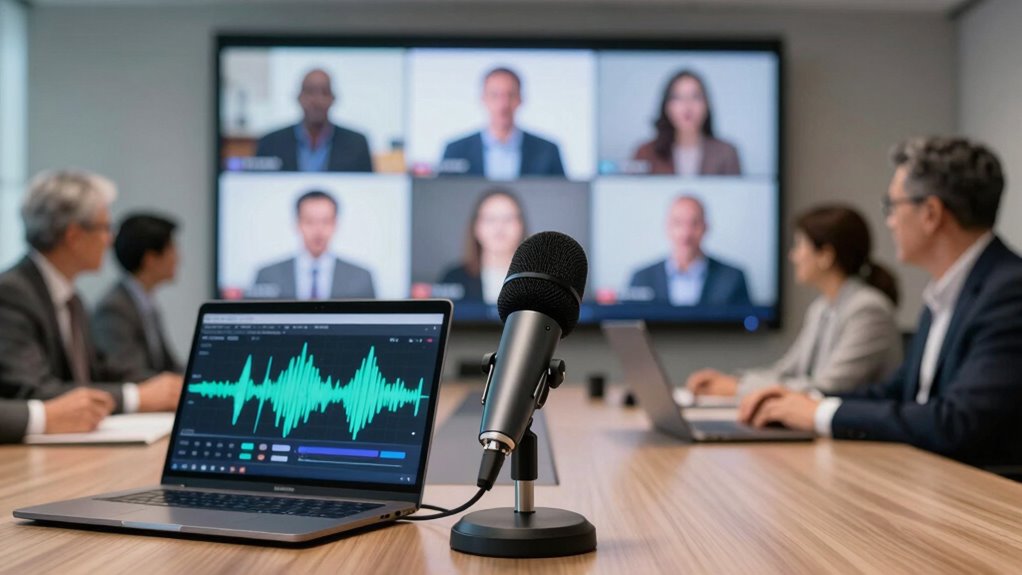
When your audio is clear, everyone can participate fully and contribute their ideas. Inclusive sound guarantees all voices are heard, fostering better collaboration. Investing in quality audio makes meetings more productive and equitable for every team member.
Clear Audio Enhances Participation
Clear audio is essential for active participation in hybrid meetings, as it allows everyone to hear and be heard without frustration or misunderstanding. Poor sound quality, background noise, or improper microphone placement can hinder communication and leave participants feeling disconnected. When audio is crisp and clear, engagement increases, and collaboration flows more naturally.
Consider these key points:
- Eliminating background noise creates a focused environment where ideas thrive.
- Proper microphone placement ensures your voice is captured clearly, reducing misunderstandings.
- Clear audio encourages shy participants to contribute without hesitation.
- When everyone hears each other perfectly, the sense of inclusion and teamwork strengthens.
Good audio quality isn’t just a convenience—it’s the foundation for meaningful, productive hybrid meetings.
Inclusive Sound Fosters Collaboration
Inclusive sound is essential for fostering genuine collaboration in hybrid meetings, as it guarantees every participant feels heard and valued. When audio quality supports clear voice recognition, everyone can contribute without frustration or misunderstandings. This is especially important during musical collaboration or brainstorming sessions where tone and nuance matter. High-quality audio ensures all voices are captured accurately, enabling real-time interaction and seamless dialogue. By prioritizing inclusive sound, you create an environment where diverse perspectives thrive, and team members feel genuinely connected. Good audio removes barriers, encouraging active participation and reducing miscommunication. Ultimately, inclusive sound transforms hybrid meetings into more productive, engaging spaces where collaboration flows naturally, and every voice counts.
Frequently Asked Questions
How Does Poor Audio Affect Team Collaboration and Morale?
Poor audio hampers your team communication, making it difficult to understand each other clearly. When team members struggle to hear or speak up, frustration grows, and collaboration stalls. This can lower morale, as everyone feels disconnected or ignored. Good audio quality boosts morale by fostering smoother conversations, encouraging participation, and creating a more engaging environment. Ultimately, clear audio helps your team work better together, strengthening relationships and enhancing overall productivity.
Can Background Noise Significantly Impact Meeting Productivity?
Background noise can be like a thunderstorm in a quiet room, disrupting your focus and productivity. It causes sound distraction and noise interference, making it harder to hear important points. When your team members’ voices compete with background chatter or household sounds, communication breaks down. This interruptions slow decision-making and create frustration, ultimately diminishing meeting effectiveness. Maintaining noise levels down helps everyone stay engaged and guarantees your meetings run smoothly.
What Are the Cost Implications of Upgrading Audio Equipment?
Upgrading your audio equipment involves a cost analysis to determine the investment’s worth. While initial expenses can be high, better audio quality enhances meeting productivity and reduces misunderstandings. Consider the equipment investment as a way to improve overall communication efficiency. Over time, the improved clarity can lower costs associated with miscommunication or repeated meetings, making the upgrade a smart financial decision for your hybrid meetings.
How Does Audio Quality Influence Participant Engagement During Meetings?
Think of audio quality as the heartbeat of your meeting—when voice clarity falters, participant engagement wavers. You keep listener focus sharp when sound is crisp and clear, like a lighthouse guiding ships safely. Poor audio causes confusion and frustration, making attendees tune out or miss key points. Ensuring high-quality audio maintains momentum, encourages active participation, and keeps everyone on the same page, making your meetings more productive and impactful.
Are There Specific Industries That Benefit More From High-Quality Audio?
You’ll find high-quality audio especially beneficial in industries like healthcare, legal, and education, where industry-specific communication is vital. Clear audio guarantees precise understanding and reduces errors. These sectors often rely on specialized technology compatibility, making quality audio indispensable for seamless interactions. When audio is crisp, your team can focus on content without distractions, leading to more effective meetings and better outcomes across these industries.
Conclusion
Remember, prioritizing good audio is like tuning a fine instrument—you’ll get a clearer, richer sound that keeps everyone in sync. When your team focuses on quality audio, communication flows smoothly, misunderstandings fade, and collaboration thrives. Don’t let poor audio be the static that muffles your message. Invest in the right equipment and tips, and watch your hybrid meetings become more productive and inclusive, just like a perfectly played symphony.
Fall Picks
fall essentials
As an affiliate, we earn on qualifying purchases.