

To adapt your offerings for a global audience, you need to understand and respect diverse cultural norms, communication styles, and sensitivities. Focus on customizing service elements based on local preferences, language nuances, and interaction expectations. Use cultural intelligence to anticipate potential misunderstandings and guarantee your service feels inclusive and appropriate. Embracing these strategies helps build trust and loyalty across cultures. Keep exploring how to effectively navigate these differences to create truly resonant experiences for every customer.
Key Takeaways
- Understand and respect cultural differences to tailor service offerings effectively for diverse audiences.
- Use professional localization with native speakers to ensure authentic and culturally appropriate communication.
- Adapt service interaction styles and norms to align with local preferences for directness, politeness, and pace.
- Employ flexible, modular service components to enable targeted customization without extensive overhaul.
- Utilize cultural intelligence to anticipate sensitivities, build trust, and create inclusive, engaging experiences globally.
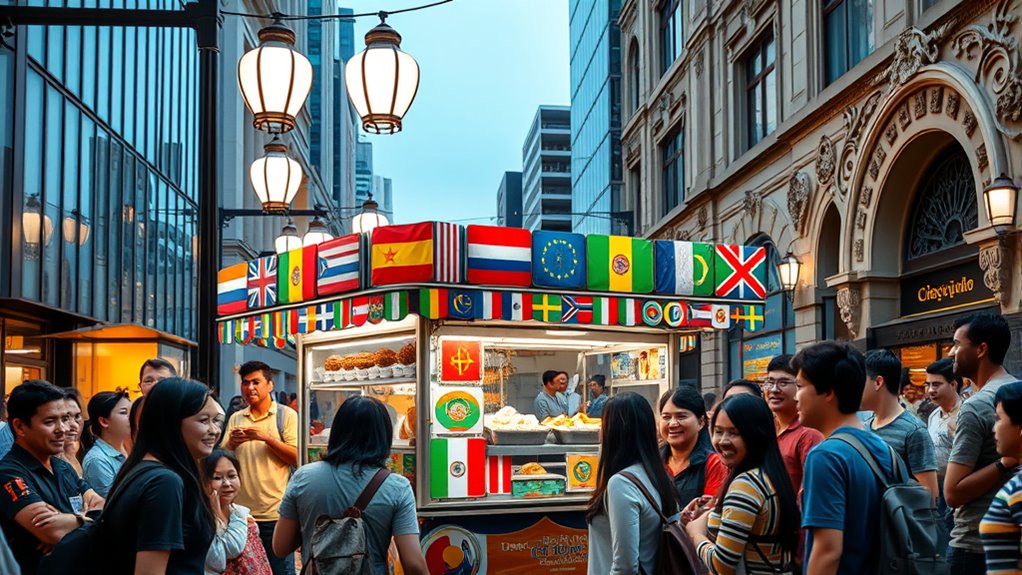
Designing services across cultures can be complex, but understanding cultural differences is essential for creating meaningful experiences. When you’re tailoring offerings for a global audience, being aware of cultural sensitivities is crucial. What feels appropriate or respectful in one culture might be offensive or confusing in another. For instance, gestures, colors, or symbols can carry different meanings, so it’s vital to research and adapt your service elements accordingly. Ignoring these nuances can lead to misunderstandings or even alienate your customers, undermining trust and loyalty.
Understanding cultural differences is key to creating meaningful, respectful global service experiences.
Language barriers are another significant challenge in cross-cultural service design. It’s not just about translating words; it’s about ensuring the message resonates culturally and contextually. You need to consider idioms, colloquialisms, and tone to make sure your communication feels natural and respectful. When customers encounter language that’s awkward or incorrect, it can diminish their confidence in your brand. To overcome this, you should invest in professional localization rather than simple translation. This means working with native speakers who understand local dialects, idiomatic expressions, and cultural expectations, allowing your messaging to feel authentic and approachable.
Adapting your service delivery to different cultural contexts also involves understanding local norms around customer interactions. For example, some cultures value directness, while others prefer more indirect communication. Recognizing these preferences helps you design touchpoints that feel comfortable and respectful. Similarly, consider the pace and style of service—what’s seen as efficient or polite in one country might differ elsewhere. Paying attention to these details enhances the user experience and demonstrates your genuine respect for cultural diversity.
Implementing flexible design strategies is key to managing these variations. You can develop modular service components that can be customized for different markets, allowing for local adaptations without overhauling your entire system. Conducting user research and gathering feedback from diverse cultural groups will help you identify specific sensitivities and preferences. This proactive approach ensures your services remain relevant and respectful across different cultural landscapes.
Additionally, understanding Cultural Intelligence as a strategic tool enables your organization to better navigate and anticipate cultural differences, leading to more effective service customization. Ultimately, successful cross-cultural service design requires you to embrace cultural sensitivities and navigate language barriers thoughtfully. By doing so, you create more inclusive, engaging, and trustworthy experiences for your global customers. Recognizing and respecting these differences isn’t just good practice—it’s a strategic advantage that fosters loyalty and positions your brand as culturally aware and customer-centric.
Frequently Asked Questions
How Do Cultural Differences Impact Service Delivery Methods?
Cultural differences considerably impact your service delivery methods by shaping communication styles and cultural nuances. You need to adapt your approach to respect local customs, language preferences, and social norms. By understanding these differences, you can tailor your interactions, ensuring clearer communication and stronger relationships. Recognizing cultural nuances helps you avoid misunderstandings, making your service more effective and welcoming for diverse global audiences.
What Are Common Pitfalls When Adapting Services Cross-Culturally?
Did you know 85% of consumers say cultural assumptions influence their purchasing decisions? When adapting services cross-culturally, common pitfalls include neglecting localization challenges and relying on stereotypes. You might overlook subtle cultural nuances or misinterpret traditions, leading to alienation rather than engagement. To prevent these mistakes, immerse yourself in local contexts, respect cultural differences, and tailor your offerings thoughtfully. Doing so ensures your service resonates authentically across diverse audiences.
How Can Companies Measure Success in Cross-Cultural Service Design?
You can measure success in cross-cultural service design by collecting customer feedback to gauge satisfaction and identify areas for improvement. Compare your performance against cultural benchmarks to make sure your offerings resonate locally. Regularly analyze feedback and benchmark data, then adjust your services accordingly. This proactive approach helps you understand how well your adaptations meet diverse needs, ultimately leading to more effective and culturally sensitive service delivery.
What Role Does Language Play in Service Adaptation?
Think of language as a bridge that connects your service to diverse cultures. It’s essential because linguistic nuances shape understanding, and translation accuracy guarantees your message isn’t lost or misunderstood. If you neglect language, you risk miscommunication, like a bridge weakened under pressure. By paying close attention to language, you create a sturdy pathway that respects cultural differences and fosters genuine engagement with your global audience.
How to Ensure Cultural Sensitivity Without Stereotypes?
You guarantee cultural sensitivity by fostering cultural awareness and actively avoiding stereotypes. Engage with local communities, listen to their perspectives, and research customs genuinely. Avoid making assumptions based on stereotypes; instead, focus on individual experiences and cultural nuances. Regularly update your understanding through ongoing learning and feedback, demonstrating respect and adaptability. This approach helps create authentic, respectful services that resonate with diverse audiences without perpetuating harmful stereotypes.
Conclusion
As you adapt your services across cultures, remember that “the proof of the pudding is in the eating.” Embrace local nuances, listen to your diverse audiences, and stay flexible in your approach. By doing so, you’ll build trust and create meaningful experiences that resonate globally. Ultimately, understanding and respecting cultural differences isn’t just good practice — it’s the key to successful, cross-cultural service design.