

When you prioritize repairability early in product design, you make repairs easier, faster, and less costly. It helps extend the device’s lifespan, saving you money and reducing waste. Choosing modular and accessible parts also boosts customer satisfaction and trust. Your early decisions influence component choices, ensuring the product is more sustainable and easier to fix. Keep exploring to discover how thoughtful design can make a real difference over the product’s entire lifecycle.

Get business pricing on monitors, keyboards and dev gear
- Business-only prices and quantity discounts
- Tax-exempt purchasing
- Multiple users, one account, clear invoices
Key Takeaways
- Early focus on repairability simplifies component choices and system design, reducing complexity and future repair challenges.
- Incorporating repairability from the start promotes modularity, making repairs quicker and less costly.
- Initial design decisions impact product longevity, environmental sustainability, and compliance with repair standards.
- Designing for repairability early enhances user trust, satisfaction, and independence in maintenance.
- Proactive repairability considerations lead to cost savings, waste reduction, and better lifecycle management.
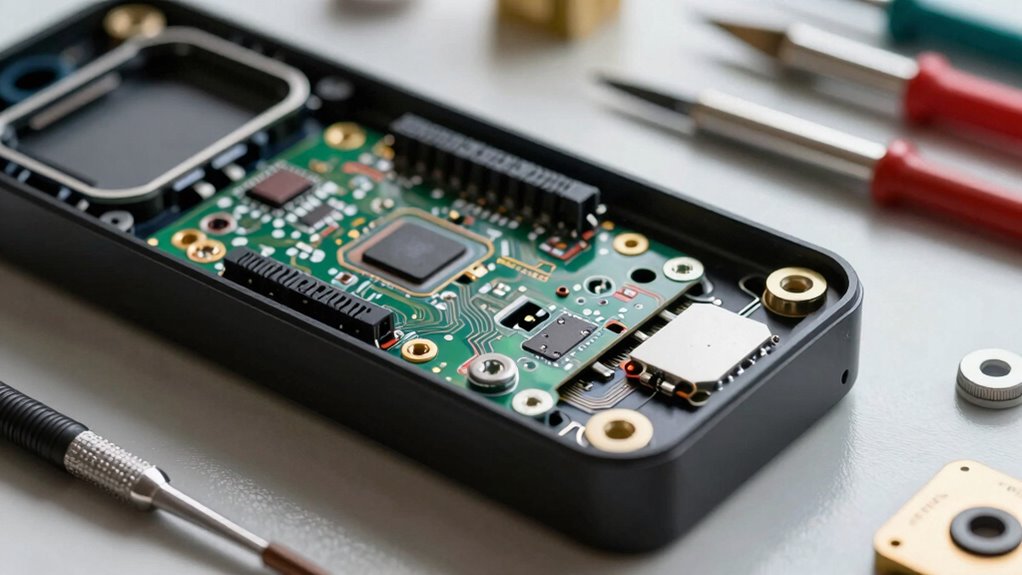
When designing a new product, considering repairability from the start can save you time, money, and frustration later on. Early decisions about how components are integrated play an essential role in making your product easier to repair. Thoughtful component integration means designing parts that are accessible, modular, and straightforward to replace. Instead of creating a tightly packed, complex assembly, you can opt for a design that allows users or technicians to identify issues quickly and swap out faulty parts without dismantling the entire product. This approach not only reduces repair time but also extends the lifespan of your device, providing long-term value to your customers. For example, selecting components with high contrast ratios can improve the visibility of error indicators, facilitating quicker repairs. Additionally, designing for serviceability ensures that repairs can be performed efficiently, further supporting your repairability goals. Incorporating standards for interoperability can also streamline repairs by allowing common parts and tools to be used across different models or devices. Moreover, considering modular design early on can greatly simplify the repair process, making it more accessible to both professionals and end-users. Research in product lifecycle management emphasizes that early planning for repairability can significantly reduce environmental impact and waste.
Focusing on repairability from the beginning also empowers users, giving them confidence and control over their products. When you design with repairability in mind, you enable users to perform simple fixes themselves, which fosters a sense of ownership and trust. This empowerment can lead to higher customer satisfaction, as they see that your product isn’t a throwaway item but something they can maintain and extend. Additionally, user empowerment through repair-friendly design can diminish the reliance on costly service visits or replacing the entire product, saving your customers money and reducing electronic waste.
Integrating repairability considerations early influences your choice of components and how they fit into the overall system. For example, selecting standardized parts or designing modular components makes repairs more accessible and less complicated. It also means you’re more likely to meet increasing demands for sustainability and circular economy principles, where products are designed with reusability and recyclability in mind. When repairability is a core aspect of your product’s design, you avoid creating a complex, proprietary assembly that’s difficult to fix, which can lead to frustration and higher costs for both you and your customers.
As an affiliate, we earn on qualifying purchases.
Frequently Asked Questions
How Can Repairability Impact Product Lifecycle Costs?
Repairability can substantially lower your product lifecycle costs by simplifying maintenance and reducing downtime. With a focus on cost analysis, you’ll identify components that are expensive or difficult to repair, guiding design improvements. Implementing effective maintenance strategies becomes easier, extending product lifespan and decreasing replacement costs. Overall, prioritizing repairability helps you save money over the product’s life, making your offerings more sustainable and appealing to cost-conscious customers.
What Are Common Challenges in Designing for Repairability?
You face challenges like designing for disassembly ease and creating modular components that are easy to repair or replace. Balancing robustness with accessibility can be tricky, as tight tolerances may hinder disassembly. Additionally, choosing materials that facilitate repair without compromising durability requires careful planning. Ensuring that your product remains user-friendly while encouraging repairability involves thoughtful design, testing, and often, trade-offs between complexity and serviceability.
How Do Repairability Standards Vary Across Industries?
You’ll find that industry-specific repair protocols and regulatory compliance shape repairability standards differently across sectors. For instance, electronics might follow strict guidelines for component reuse, while automotive industries prioritize safety and durability standards. Understanding these variations helps you design products that meet legal requirements and facilitate easier repairs. Adjusting to these industry-specific repairability standards ensures your product remains compliant, sustainable, and easier to service over its lifespan.
What Role Do Consumers Play in Promoting Repair-Friendly Products?
Think of yourself as a gardener, nurturing demand for repair-friendly products. Your advocacy plants the seeds of change, encouraging manufacturers to prioritize repairability. By staying informed about repair awareness and voicing your preferences, you steer the market toward sustainable choices. Consumer advocacy directly influences companies to design for longevity, making repairability a key factor. Your voice helps cultivate a future where products are easier to fix, reducing waste and preserving resources.
How Does Repairability Influence Brand Reputation?
Repairability directly impacts your brand trust and customer loyalty. When your products are easy to repair, customers see you as responsible and eco-conscious, boosting your reputation. They’re more likely to recommend you and stay loyal because they value sustainability and quality. Conversely, difficult-to-repair products can damage your brand image and erode trust. Prioritizing repairability in your designs demonstrates commitment to customer needs and long-term relationships.
As an affiliate, we earn on qualifying purchases.
Conclusion
By prioritizing repairability early on, you’re not just making a smart choice—you’re defending your product’s future from the relentless march of obsolescence. Think of repairability as the secret weapon that can turn a fleeting trend into a timeless classic. Don’t let your innovation be swallowed by the quicksand of disposability—build it to last. Remember, a repairable product isn’t just a good idea; it’s the superhero of sustainable design, ready to save the day!
easy-to-repair electronic device parts
As an affiliate, we earn on qualifying purchases.
As an affiliate, we earn on qualifying purchases.
As an affiliate, we earn on qualifying purchases.
Fall Picks
fall essentials
As an affiliate, we earn on qualifying purchases.