📊 Full opportunity report: A Smarter Front Office: AI Call Answering For Trades on IdeaNavigator AI — validation score, market gap, and execution plan.

Get business pricing on monitors, keyboards and dev gear
- Business-only prices and quantity discounts
- Tax-exempt purchasing
- Multiple users, one account, clear invoices
TL;DR
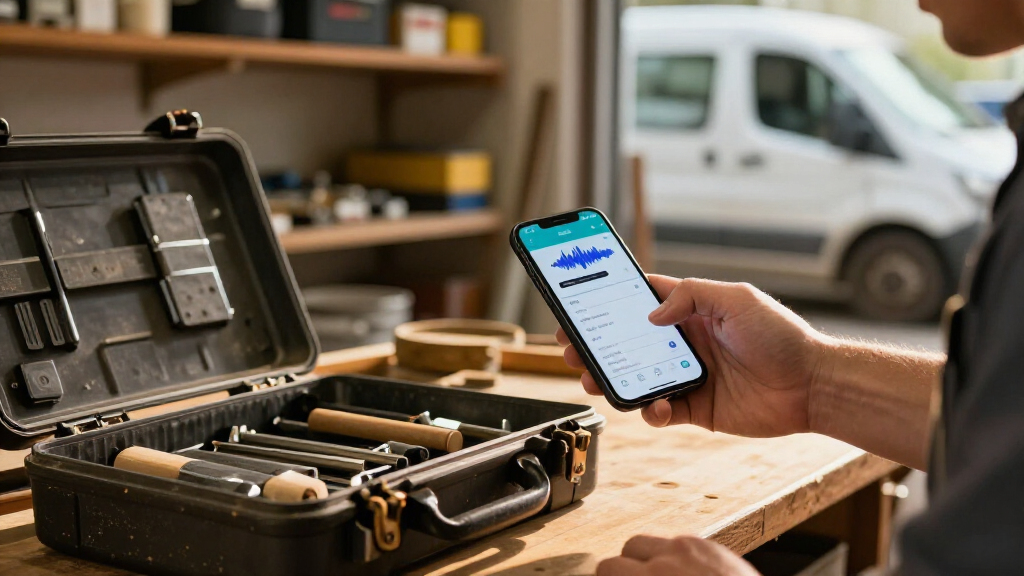
A proposal from IdeaNavigator AI describes an AI phone-answering service for plumbing, HVAC and electrical businesses, with job intake, scheduling, owner notifications and emergency escalation. The proposal recommends testing after-hours calls with five shops for a month; it does not report that the test has happened or provide performance results.
IdeaNavigator AI has proposed a phone-answering workflow for plumbing, HVAC and electrical businesses that would use voice AI to qualify calls, schedule jobs and alert owners while they are working. The proposal frames the service as an early-stage opportunity, not a launched product, and recommends testing it with five shops over one month before judging whether it can recover enough missed work to justify its cost.
The suggested service would answer calls on a business phone number using a natural-sounding voice, ask for the job issue, service address and urgency, then book the work into the shop’s calendar or software such as ServiceTitan or Jobber. It would also send the owner a text summary and pass emergencies to a person live. Those functions are a proposed minimum viable product; no operating system, customer deployments or measured booking results are identified.
The target customer is an owner-operator who may miss inbound calls while on a job, such as under a sink or on a roof. IdeaNavigator AI argues that callers who cannot reach one contractor may contact another business. That is the proposal’s rationale for testing call capture, rather than a quantified finding about how many calls trade businesses miss or how often missed calls turn into lost jobs.
The proposed pricing combines a flat monthly fee per phone line with a charge for each booked job. To validate demand, the plan is to forward after-hours calls for five shops for a month, then count jobs the owners say they would otherwise have missed and compare the value with each shop’s average ticket. No prices, test participants, results or evidence of willingness to pay are supplied.
A Smarter Front Office AI Call Answering for Trades
IdeaNavigator AI proposes an AI phone-answering workflow for plumbing, HVAC and electrical shops. It remains a proposal, with no reported customer deployments or results.
What the service would do
The proposed workflow covers call intake, routine booking and urgent handoff.
Ask about the issue, service address and urgency.
Schedule through a shop calendar or software such as ServiceTitan or Jobber, then text the owner a summary.
Pass urgent calls to a person live.
The business case
Owners may miss calls while working on jobs; the proposal argues that capturing those calls could help shops respond after hours.
- Answer calls while owners are on the job.
- Capture details and schedule routine appointments.
- Whether bookings are accurate and valuable.
- Whether fees compare favorably with other answering options.
How the pilot would work
The suggested test forwards after-hours calls, then compares potentially recovered work with each shop’s average ticket and service fees.
Track the call path
Count calls answered, job details collected, appointments booked and emergencies escalated.
Check booking quality
Ask owners which jobs they believe they would otherwise have missed.
Weigh value and cost
Compare booked work with the shop’s average ticket and proposed fees.
Testing Whether Calls Become Jobs
The proposal addresses a practical staffing problem for small trade businesses: owners may be unable to answer while doing paid work, yet hiring a person to cover every call can add cost. If an automated system can reliably collect details, schedule routine appointments and route urgent calls, it could help shops respond outside normal working hours without requiring the owner to stop work.
The business case, however, depends on more than answering the phone. The service would need to capture accurate information, avoid inappropriate bookings and handle urgent situations in line with each shop’s rules. The proposed month-long trial could offer an initial measure of booked work, but five shops would not establish broad market demand or prove that the service is more cost-effective than existing answering arrangements.
Popular right now

Ninja CREAMi 7-in-1 Ice Cream Maker, NC299AMZ

Dyson Airwrap Co-anda2x Multi-Styler and Dryer for Curly and Coily Hair, Ceramic Pink/Rose Gold (2025)

Vitamix 62827 Vita-Prep Blender, Black, 32 oz
As an affiliate, we earn on qualifying purchases.
From Voice AI to Trade Intake
IdeaNavigator AI says voice AI crossed a reliability threshold for structured intake calls in 2025–2026, and argues that this makes round-the-clock answering economically viable at a lower cost than a human answering service. The material does not cite reliability studies, cost comparisons or a particular system, so these points should be read as the proposal’s assessment rather than independently documented results.
The suggested product is deliberately narrow: answer the call, collect a few job details, schedule or notify the owner, and escalate emergencies. That focus matters because an intake-and-booking workflow is easier to test than a broad promise to automate a trade business’s front office. The proposal names integration with existing calendars or ServiceTitan and Jobber, but does not establish that those integrations have been built or tested.
Pilot Results and Reliability
No pilot results are reported. The proposal does not identify participating businesses, the number or types of calls expected, the definition of a successfully booked job, or how the trial would verify that a job was truly one the owner would otherwise have lost. It also gives no pricing figures or cost comparison with a human answering service.
It remains unclear which voice AI system would be used, how well it handles noisy calls or callers with incomplete information, and what safeguards would govern emergency escalation. The claims about reliability and affordability in 2025–2026 are not accompanied by cited benchmarks or independent evidence. Until a trial is described, the effect on bookings, customer experience and shop revenue is unknown.
A Five-Shop After-Hours Trial
The next step in the proposed plan is to recruit five plumbing, HVAC or electrical shops and forward their after-hours calls to the service for one month. The test would track calls answered, job details collected, appointments booked and emergencies escalated, then compare booked work with each shop’s average ticket and the service’s proposed fees.
IdeaNavigator AI does not provide a start date, confirm that shops have agreed to participate or say when results will be available. Any account of the next stage should distinguish a planned trial from one that is underway, and report how the businesses define missed opportunities and assess booking quality. Until those details and results emerge, the idea remains a proposed workflow for testing rather than a demonstrated business outcome.
Source: IdeaNavigator AI
Key Questions
Is this an AI phone-answering product that has launched?
The material describes a proposed product and test plan. It does not confirm a launch, name a provider or report that the service is operating for customers.
What would the AI do on a call?
It would collect the job issue, address and urgency, book an appointment through a shop calendar or software such as ServiceTitan or Jobber, text the owner a summary and escalate emergencies live. These are proposed features, not verified capabilities of a deployed system.
How would the idea be tested?
The suggested trial would forward after-hours calls for five shops over one month and count bookings owners believe they otherwise would have missed. No trial results or participating shops are reported.
How would the service charge businesses?
The proposed model combines a monthly fee per phone line with pricing for each booked job. The proposal does not state actual rates or show whether businesses would accept them.
Source: IdeaNavigator AI