

As a designer in the AI-assisted era, you need to develop skills that blend technical understanding, ethical awareness, and effective communication. Learning how to collaborate with AI tools allows you to analyze data, generate ideas, and optimize solutions quickly. Prioritizing responsible design guarantees you respect privacy, avoid bias, and promote transparency. Staying updated on AI vulnerabilities and ethical considerations keeps your work trustworthy. Embracing these new skills will help you innovate responsibly and remain relevant in this rapidly evolving landscape.
Key Takeaways
- Master AI integration to analyze data, generate ideas, and optimize design solutions effectively.
- Prioritize ethical design by respecting user privacy, ensuring transparency, and avoiding bias in AI-driven processes.
- Develop awareness of AI vulnerabilities to protect designs from safety risks and build trustworthy, responsible products.
- Enhance communication skills to explain AI’s role to stakeholders and stay updated on new tools and ethical standards.
- Embrace a future-oriented mindset focusing on responsible innovation, aligning designs with societal values and fostering continuous learning.
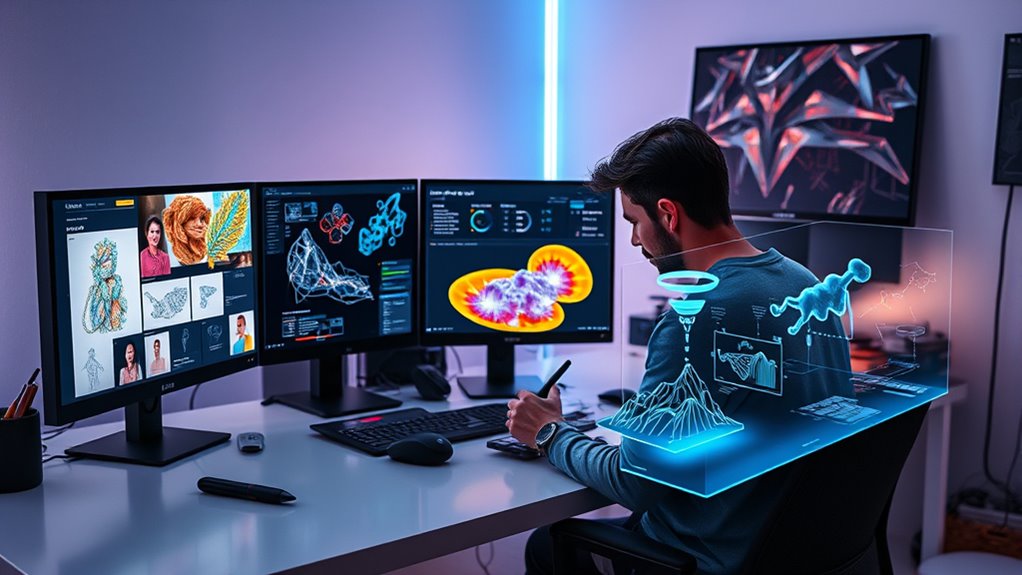
As artificial intelligence transforms the way products and experiences are designed, it’s essential for designers to develop new skills that keep them ahead of the curve. The AI-assisted era demands a shift in your approach, emphasizing collaboration with AI tools and a strong focus on ethical design. You’re no longer just a creator; you’re a partner working alongside intelligent systems that can analyze data, generate ideas, and optimize solutions faster than ever before. To excel, you need to learn how to leverage AI collaboration effectively, integrating these tools seamlessly into your workflow. This means understanding how AI algorithms function, knowing how to interpret their outputs, and using them to enhance your creative process. When you collaborate with AI, you access new possibilities, turning raw data into actionable insights and innovative designs. But, as you embrace this partnership, you also face the responsibility of maintaining ethical standards. Ethical design becomes essential in guaranteeing that AI is used responsibly, respecting user privacy, avoiding bias, and promoting transparency. You must be vigilant about how AI influences user experiences and make conscious choices that prioritize fairness and inclusivity. Developing skills in ethical design means questioning the implications of your work, understanding the societal impacts, and advocating for user rights throughout the design process. Moreover, understanding AI vulnerabilities helps you anticipate potential risks and ensure your designs adapt to emerging safety challenges. It’s not just about making beautiful or functional products anymore; it’s about creating responsible solutions that align with values of integrity and social good. As you hone these skills, you’ll also find that your ability to communicate complex AI concepts becomes imperative. Explaining how AI influences design decisions to stakeholders, clients, or users builds trust and demonstrates your mastery of the technology. Furthermore, cultivating a mindset of continuous learning is essential, as AI evolves rapidly. Staying updated on latest tools, understanding emerging ethical considerations, and participating in discussions around responsible AI use will keep you ahead. You’ll discover that mastering AI collaboration and ethical design not only enhances your craft but also positions you as a forward-thinking professional committed to shaping a better, more inclusive digital environment. Ultimately, embracing these skills allows you to push boundaries creatively while assuring your work upholds societal values. The future of design in the AI era isn’t just about innovation; it’s about responsible innovation, where your expertise guides the development of intelligent, ethical, and impactful products. By doing so, you guarantee your role remains crucial and relevant in a landscape that’s constantly transforming.
Frequently Asked Questions
How Can Designers Stay Creative With AI Tools?
You can stay creative with AI tools by embracing creative collaboration, blending your ideas with AI-generated options to spark innovation. Focus on skill adaptation, learning new techniques to leverage AI’s capabilities effectively. Experiment regularly, challenge assumptions, and view AI as a partner rather than a replacement. This approach keeps your creativity fresh, helps you develop unique designs, and guarantees you’re evolving alongside technological advancements in the design field.
What Ethical Considerations Arise With AI in Design?
You need to take into account ethical issues like algorithm bias and user privacy when using AI in design. Algorithm bias can cause unfair or unintended outcomes, so you should evaluate your tools for fairness. Protect user privacy by being transparent about data collection and usage. By staying aware of these concerns, you ensure your designs are responsible, respectful, and trustworthy, fostering positive user relationships and upholding ethical standards.
How Do AI Tools Impact Traditional Design Roles?
AI tools impact traditional design roles like a river carving new paths through a landscape. You find yourself embracing AI collaboration and design automation, which streamlines repetitive tasks and sparks creativity. While these tools shift your focus from manual work to strategic thinking, they also require you to develop new skills. Ultimately, AI enhances your role, making you a more innovative and versatile designer in this evolving landscape.
Will AI Replace Human Designers Entirely?
No, AI won’t replace human designers entirely. AI creativity enhances your work by handling repetitive tasks through design automation, freeing you to focus on originality and strategic thinking. You’ll collaborate with AI tools to generate ideas faster and refine concepts more efficiently. Instead of replacement, AI becomes a powerful partner, helping you elevate your skills and produce more innovative, personalized designs that resonate with clients and audiences alike.
How Should Designers Learn New Skills Quickly?
You should focus on mastering design thinking and embracing skill adaptation to learn new skills quickly. Immerse yourself in hands-on projects, seek out online courses, and stay curious about emerging tools. Practice regularly, reflect on your progress, and be open to feedback. By actively applying what you learn and staying adaptable, you’ll rapidly develop the expertise needed to thrive in the AI-assisted design landscape.
Conclusion
As you navigate this AI-assisted landscape, think of yourself as a skilled captain steering through a dynamic sea. Embrace new skills like a trusty compass, guiding your creativity through uncharted waters. With adaptability as your sail and curiosity as your wind, you’ll turn challenges into opportunities. Remember, you’re not just riding the waves of change—you’re shaping the currents. So, set your sights on innovation, and let your evolving talents lead you to new horizons.