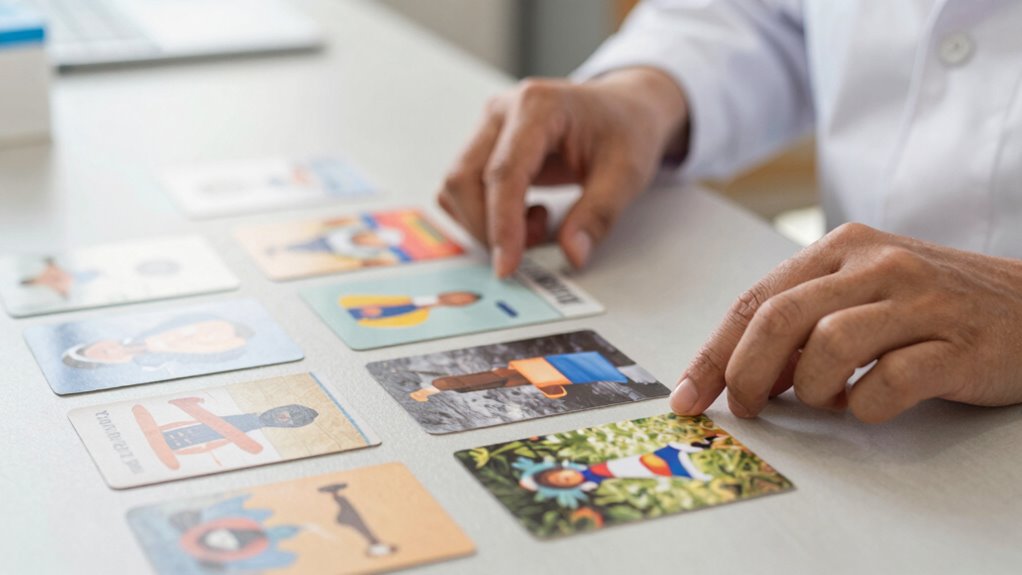

To use stimulus materials without leading participants, select content that is neutral and unbiased, avoiding language or images that suggest a preferred answer. Craft open-ended prompts that encourage genuine exploration and multiple perspectives. Tailor materials to your audience’s interests and backgrounds to make them more relatable. Guarantee a non-manipulative environment by moderating carefully and promoting independent thinking. Want to discover more on creating authentic, engaging learning experiences? Keep exploring the essential strategies to foster unbiased participation.

Get business pricing on monitors, keyboards and dev gear
- Business-only prices and quantity discounts
- Tax-exempt purchasing
- Multiple users, one account, clear invoices
Key Takeaways
- Use open-ended questions and scenarios that invite multiple interpretations, avoiding suggestive language or cues.
- Ensure materials are neutral and unbiased, preventing influence on participants’ responses.
- Customize stimuli to resonate with participants’ backgrounds, fostering genuine engagement without steering answers.
- Incorporate diverse perspectives and avoid leading prompts that suggest a specific conclusion.
- Facilitate discussions with follow-up questions that promote exploration rather than directing responses.

Stimulus materials are powerful tools that can enhance learning by engaging students and encouraging active participation. When used thoughtfully, they create an environment where learners are motivated to explore and contribute without feeling directed or led. To achieve this, you need to focus on fostering genuine participant engagement. This means designing or selecting stimulus materials that spark curiosity and invite multiple perspectives. Instead of providing ready-made answers or overly structured prompts, aim for open-ended materials that require learners to think critically and express their own ideas. When participants are genuinely engaged, they’re more likely to internalize the content and participate authentically, rather than just responding to cues.
Stimulus materials should spark curiosity and encourage critical thinking for authentic, engaged learning experiences.
Material customization is key to avoiding the pitfalls of leading participants. When you tailor stimulus materials to your audience’s interests, backgrounds, and skill levels, you create a more inclusive and stimulating environment. Customization helps guarantee that learners see relevance in what they’re working with, which naturally encourages active participation. Instead of using generic prompts, modify or adapt materials to reflect real-world contexts or specific learner experiences. This approach gives participants ownership over their learning journey and reduces the tendency to follow direction passively. It also allows you to steer clear of unintentionally guiding responses, as customized materials can be designed to elicit diverse viewpoints. Additionally, understanding the importance of neutrality and bias in content helps ensure that stimulus materials do not influence responses toward particular outcomes or viewpoints. Recognizing cognitive bias in your materials can further help prevent unintentional influence, fostering more independent thinking.
Another way to prevent leading participants is to craft stimulus materials that are neutral and unbiased. Avoid language or images that hint at preferred answers or specific viewpoints. Instead, focus on creating open-ended scenarios or questions that prompt exploration and debate. When the materials are neutral, participants don’t feel influenced toward a particular response, which fosters independent thinking. Incorporating knowledge from natural pools can help you design more engaging and relevant stimuli by understanding how natural environments inspire curiosity and exploration. Additionally, you should facilitate discussions in a way that encourages multiple contributions, rather than steering the conversation toward a predetermined conclusion. Ask follow-up questions that invite elaboration, rather than those that suggest a “correct” answer, to keep the dialogue organic and participant-driven.
Finally, remember that the goal isn’t to control responses but to stimulate thoughtful engagement. By carefully selecting, customizing, and moderating stimulus materials, you create an environment where learners feel free to express their ideas without feeling manipulated. This cultivates a space of active, authentic participation, enriching the learning experience for everyone involved. When done correctly, stimulus materials serve as catalysts for genuine exploration, rather than tools for leading or guiding participants toward specific outcomes.
neutral stimulus materials for classroom
As an affiliate, we earn on qualifying purchases.
As an affiliate, we earn on qualifying purchases.
Frequently Asked Questions
How Do I Choose Neutral Stimulus Materials?
You choose neutral stimulus materials by focusing on neutral design and unbiased language, ensuring they don’t influence participants’ responses. Select images or words that avoid emotional, cultural, or social connotations, and keep the design simple and objective. Test your materials beforehand to spot any unintended bias. This approach helps maintain objectivity, allowing participants to express genuine reactions without being led or influenced by the stimulus content.
What Are Signs of Leading Participants Unintentionally?
You can spot unintentional leading through subtle non-verbal cues like facial expressions, gestures, or body language that suggest bias. Environmental factors, such as the arrangement of stimulus materials or the setting, might also influence participants’ responses unknowingly. If you notice participants mirroring your non-verbal cues or reacting differently based on environmental cues, it signals potential unintentional leading. Staying aware of these signs helps maintain neutrality during your sessions.
Can Stimulus Materials Influence Participant Bias?
Stimulus materials can influence participant bias by shaping their perception and triggering cognitive biases. When designed improperly, these materials may lead participants to interpret information in a way that confirms existing beliefs or expectations. You should carefully craft your stimuli to avoid suggestive cues, ensuring they don’t unintentionally steer responses. This helps maintain objectivity and reduces the risk of bias, resulting in more accurate and reliable data collection.
How to Test if Materials Are Leading?
You can test if your materials are leading by analyzing visual cues and language framing. Observe whether specific images or wording subtly direct participants toward certain responses. Conduct pilot studies with varied versions of your stimuli, changing visual cues and phrasing, then compare results for bias. This way, you identify whether your materials unintentionally influence participants, ensuring your research remains unbiased and valid.
Are There Ethical Concerns With Stimulus Materials?
Isn’t it true that ethical concerns are the foundation of responsible research? Yes, using stimulus materials raises ethical issues, especially around informed consent and participant debriefing. You must guarantee participants understand the study’s purpose and aren’t misled. Proper debriefing helps clarify any deception and preserves trust. By prioritizing transparency and respecting autonomy, you uphold ethical standards, protecting participants’ rights while maintaining the integrity of your research.
open-ended discussion prompts for education
As an affiliate, we earn on qualifying purchases.
As an affiliate, we earn on qualifying purchases.
Conclusion
By carefully selecting and presenting your stimulus materials, you gently guide participants without overshadowing their genuine responses. Remember, subtlety often opens doors to authentic insights, allowing natural expressions to flourish. When you approach your tasks with a mindful touch, you create an environment where participants feel free to share their true thoughts. Ultimately, it’s about fostering trust and openness, so your results reflect genuine perspectives—hidden treasures waiting to be uncovered with a delicate approach.
bias-free learning activity kits
As an affiliate, we earn on qualifying purchases.
As an affiliate, we earn on qualifying purchases.
customizable educational stimulus cards
As an affiliate, we earn on qualifying purchases.
As an affiliate, we earn on qualifying purchases.
Halloween Picks
halloween
As an affiliate, we earn on qualifying purchases.