

Developer productivity in 2026 is dominated by one question: how much of your workflow should you hand to AI, and how much should stay in your own hands? The Developer’s Playbook for Large Language Model Security takes the best overall spot because it tackles the riskiest, highest-leverage area — building AI applications securely — while Visual Studio Code AI Mastery and VS Code Power User stand out for developers who want immediate, day-to-day workflow gains inside their editor. The main tradeoff across this category is depth versus speed: AI-focused titles promise fast output but often skip fundamentals, while foundational guides on Git, PyCharm, and knowledge management pay off slowly but compound for years. Pricing is low across the board since these are books rather than subscriptions, so the real cost is your reading time and which skills you choose to invest in. Keep reading for the full breakdown, including who each pick is for and who should skip it.

Get business pricing on monitors, keyboards and dev gear
- Business-only prices and quantity discounts
- Tax-exempt purchasing
- Multiple users, one account, clear invoices
Key Takeaways
- AI-assisted coding dominates this year’s lineup — seven of the eleven picks center on Copilot, ChatGPT, or AI agents — but the best AI titles treat AI as a workflow layer, not a replacement for fundamentals.
- Editor-specific guides (VS Code Power User, PyCharm Coding Excellence) deliver the fastest measurable time savings, while AI and security titles deliver the largest long-term career payoff.
- Three books cover GitHub Copilot with heavy overlap; Visual Studio Code AI Mastery won that internal comparison because it bundles agents, workflows, and prompt engineering instead of Copilot alone.
- Knowledge management (The Developer‘s Second Brain) was the most divisive pick — high value for senior and self-directed developers, low value for anyone still struggling with core tooling.
- Every pick here is a one-time purchase with no subscription, so the deciding factor isn’t price but which gap in your workflow costs you the most time right now.
| The Developer’s Playbook for Large Language Model Security: Building Secure AI Applications |  | Best for Security-Focused AI Teams | Format: Kindle eBook | Primary Topic: LLM and AI application security | Audience Level: Intermediate to advanced developers | VIEW LATEST PRICE | See Our Full Breakdown |
| Git and GitHub: The Developer’s Practical Guide |  | Best for Beginners | Format: Kindle eBook | Primary Topic: Git version control and GitHub collaboration | Audience Level: Beginner to intermediate | VIEW LATEST PRICE | See Our Full Breakdown |
| OpenCode Crash Course: A Practical Guide to AI-Assisted Coding with Agents, Skills, MCP Servers, and Free AI Models |  | Best Value Pick | Format: Kindle eBook | Primary Topic: Open-source AI-assisted coding | Key Concepts: Agents, skills, MCP servers, free AI models | VIEW LATEST PRICE | See Our Full Breakdown |
| Visual Studio Code AI Mastery: Build Full-Stack Applications with GitHub Copilot, AI Agents, Prompt Engineering, Automated Workflows, and AI-Powered Software Development |  | Best Overall | Format: Kindle eBook | Primary Topic: AI-powered full-stack development in VS Code | Tools Covered: GitHub Copilot, AI agents, automated workflows | VIEW LATEST PRICE | See Our Full Breakdown |
| Developer Experience Engineering: Building Tools and Platforms That Empower Modern Software Teams |  | Best for Team Leads and Platform Builders | Format: Kindle eBook | Primary Topic: Developer experience and internal platform engineering | Audience Level: Senior engineers, leads, and managers | VIEW LATEST PRICE | See Our Full Breakdown |
| VS Code Power User: The Ultimate Productivity Guide |  | Best for Editor Mastery | Format: Digital guide (e-book) | Primary Tool: Visual Studio Code | Focus Areas: Shortcuts, extensions, advanced settings, workflow optimization | VIEW LATEST PRICE | See Our Full Breakdown |
| GitHub Copilot for Modern Developers: Boosting Productivity with AI-Assisted Coding, Testing, Documentation, and DevOps |  | Best Deep Dive on Copilot | Format: Digital guide (e-book) | Primary Tool: GitHub Copilot | Focus Areas: AI-assisted coding, testing, documentation, DevOps | VIEW LATEST PRICE | See Our Full Breakdown |
| The Developer’s Second Brain: Obsidian & Zettelkasten Guide |  | Best for Knowledge Management | Format: Digital guide (e-book) | Primary Tools: Obsidian, Markdown | Methodology: Zettelkasten knowledge management | VIEW LATEST PRICE | See Our Full Breakdown |
| P-AI-R Programming: How AI Tools Like GitHub Copilot and ChatGPT Can Transform Your Development Workflow |  | Best AI Workflow Overview | Format: Digital guide (e-book) | Primary Tools: GitHub Copilot, ChatGPT | Focus Areas: AI-assisted development workflow, pair programming with AI | VIEW LATEST PRICE | See Our Full Breakdown |
| PyCharm Coding Excellence: A Step-by-Step Guide to Writing, Debugging, and Managing Python Projects |  | Best for Python Beginners | Format: Digital guide (e-book) | Primary Tool: PyCharm | Language: Python | VIEW LATEST PRICE | See Our Full Breakdown |
| AI-Powered Developer: Build Great Software with ChatGPT and Copilot | 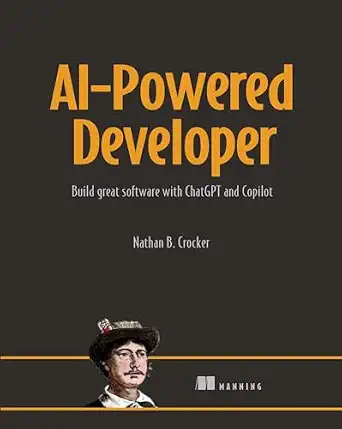 | Best Foundation Pick for AI-Assisted Development | Format: Print / ebook technical book | Primary Tools Covered: ChatGPT, GitHub Copilot | Topic Focus: AI-assisted software development workflows | VIEW LATEST PRICE | See Our Full Breakdown |
| developer productivity tool | Format | Audience Level | Focus Areas |
|---|---|---|---|
| The Developer’s Playbook for L | Kindle eBook | Intermediate to advanced developers | Prompt injection, LLM safety, secure AI architecture |
| Git and GitHub: The Developer’ | Kindle eBook | Beginner to intermediate | — |
| OpenCode Crash Course: A Pract | Kindle eBook | — | — |
| Visual Studio Code AI Mastery: | Kindle eBook | Intermediate to advanced | — |
| Developer Experience Engineeri | Kindle eBook | Senior engineers, leads, and managers | — |
| VS Code Power User: The Ultima | Digital guide (e-book) | Intermediate to advanced | Shortcuts, extensions, advanced settings, workflow optimization |
| GitHub Copilot for Modern Deve | Digital guide (e-book) | Intermediate to advanced | AI-assisted coding, testing, documentation, DevOps |
| The Developer’s Second Brain: | Digital guide (e-book) | Intermediate; methodology assumes some maturity | Documentation organization, personal knowledge base, developer workflows |
| P-AI-R Programming: How AI Too | Digital guide (e-book) | Beginner to intermediate with AI tools | AI-assisted development workflow, pair programming with AI |
| PyCharm Coding Excellence: A S | Digital guide (e-book) | Beginner | Writing code, debugging, project management, best practices |
| AI-Powered Developer: Build Gr | Print / ebook technical book | — | — |
More Details on Our Top Picks
The Developer’s Playbook for Large Language Model Security: Building Secure AI Applications
Among the AI books in this roundup, this one fills a gap the others skip entirely: what happens after the AI works. While OpenCode Crash Course and VS Code AI Mastery focus on speed and output, this pick centers on prompt injection, data leakage, and safe deployment — concerns that become expensive to retrofit. The playbook format makes it suited to teams shipping production AI features, where security review is part of the workflow rather than an afterthought. Compared with P-A-I-R Programming, which treats AI tools as productivity boosts, this book treats them as attack surfaces. The tradeoff is that it stays at the strategy level; readers wanting copy-paste threat-model code will need supplementary references, and newcomers to LLMs may find the threat landscape assumes prior context.
Pros:- Covers a topic most AI productivity books ignore entirely
- Strategy-level guidance suited to team-wide adoption and security reviews
- Focused specifically on LLM risks rather than generic app security
- Practical playbook structure that maps to real release checklists
Cons:- Lacks detailed technical implementation examples
- Too advanced for developers new to AI applications
Best for: Mid-level and senior engineers shipping LLM features into production who need a security framework before deployment
Not ideal for: Beginners still learning Git or basic AI tooling — the security concepts assume you already build with LLMs
- Format:Kindle eBook
- Primary Topic:LLM and AI application security
- Audience Level:Intermediate to advanced developers
- Focus Areas:Prompt injection, LLM safety, secure AI architecture
- Approach:Playbook of strategies and best practices
- Code Examples:Limited; strategy-oriented rather than implementation-heavy
Our verdict“Buy this if your team is already building with LLMs and needs to lock things down — skip it if you are still learning the basics of AI-assisted coding.”
Git and GitHub: The Developer’s Practical Guide
Every other entry in this roundup assumes you already know version control. This one teaches it, and that is its whole value proposition. Where VS Code AI Mastery jumps straight into Copilot agents and automated workflows, this guide starts with the commands and collaborative habits that underpin everything else. The clear explanations of branching, merging, and pull requests translate directly into fewer botched rebases and cleaner team handoffs. Compared with GitHub Copilot for Modern Developers, which layers AI on top of GitHub workflows, this book builds the foundation those workflows depend on. The tradeoff: once you are comfortable rebasing and resolving conflicts, the book has little left to offer, and the absence of online exercises or companion repositories means you will need to invent your own practice material.
Pros:- Clear, plain-language explanations of Git fundamentals
- Covers collaborative GitHub workflows, not just local commands
- Practical examples that mirror real team development
- Serves as the foundation for every AI-tooling book in this roundup
Cons:- Thin coverage of advanced Git topics
- No accompanying online resources or exercises
Best for: New developers, bootcamp graduates, and self-taught coders who want version control to stop being a source of anxiety
Not ideal for: Experienced engineers — the advanced topics like refactoring history, monorepo strategies, and internals are absent
- Format:Kindle eBook
- Primary Topic:Git version control and GitHub collaboration
- Audience Level:Beginner to intermediate
- Coverage:Core commands, branching, pull requests, team workflows
- Exercises:None included
- Advanced Topics:Not covered
Our verdict“This is the right first purchase if Git still confuses you — move on to an AI-coding guide like VS Code AI Mastery once the basics click.”
OpenCode Crash Course: A Practical Guide to AI-Assisted Coding with Agents, Skills, MCP Servers, and Free AI Models
This is the budget-conscious entry point into AI-assisted development, and its focus on free AI models is the differentiator that earns it a spot. Where VS Code AI Mastery ties you to the Copilot ecosystem and its subscription, this crash course shows what is possible with agents, skills, and MCP servers at zero tooling cost. For hobbyists, students, or developers evaluating AI coding before committing to a paid subscription, that makes it a smarter first buy than AI-Powered Developer, which leans on ChatGPT and Copilot workflows. The MCP coverage is genuinely current — few books in this roundup even mention the protocol. The tradeoffs are real: the technical examples are thin, and with no customer ratings yet, you are buying on promise rather than proven reception. Treat it as a survey course, not a workshop.
Pros:- Centered on free AI models, avoiding subscription lock-in
- One of the few books covering MCP servers and modern agent concepts
- Broad survey of the AI-assisted coding landscape in one place
- Low-cost entry point relative to ecosystem-specific guides
Cons:- Lacks detailed technical examples
- No customer ratings or reviews to verify quality
Best for: Students, hobbyists, and cost-conscious developers who want to experiment with AI coding tools without a Copilot subscription
Not ideal for: Developers wanting deep, worked examples — and cautious buyers who prefer books with an established review history
- Format:Kindle eBook
- Primary Topic:Open-source AI-assisted coding
- Key Concepts:Agents, skills, MCP servers, free AI models
- Cost of Tooling Covered:Free / open-source models
- Code Examples:Limited depth
- Market Maturity:New release; no ratings yet
Our verdict“A reasonable low-risk bet for trying AI-assisted coding on a budget, though experienced developers should wait for it to build a track record.”
Visual Studio Code AI Mastery: Build Full-Stack Applications with GitHub Copilot, AI Agents, Prompt Engineering, Automated Workflows, and AI-Powered Software Development
This earns the top slot because it connects AI tooling to a complete development environment and a real outcome: shipping full-stack applications. Other AI books in this roundup stop at pair-programming tips — P-A-I-R Programming and AI-Powered Developer focus on generating code — while this one wires Copilot, AI agents, and automated workflows into an end-to-end process from editor to deployment. The prompt engineering chapters translate directly into fewer wasted iterations, which is where most AI-assisted developers actually lose time. Compared with OpenCode Crash Course, the ecosystem commitment is the tradeoff: this book assumes you will run Microsoft’s stack, Copilot subscription included, and it is priced as a premium title. Beginners should also note the pace — if Git merges still intimidate you, start with Git and GitHub: The Developer’s Practical Guide first.
Pros:- End-to-end scope: full-stack projects, not just code snippets
- Practical GitHub Copilot and AI agent examples you can follow immediately
- Prompt engineering guidance that reduces iteration waste
- Covers automated workflows, extending value beyond writing code
Cons:- Premium price point compared with other books in this roundup
- Too advanced for developers new to coding fundamentals
Best for: Working developers already in the VS Code ecosystem who want AI woven through their entire build-test-ship workflow
Not ideal for: Beginners to coding itself, and developers committed to non-Microsoft editors or free tooling
- Format:Kindle eBook
- Primary Topic:AI-powered full-stack development in VS Code
- Tools Covered:GitHub Copilot, AI agents, automated workflows
- Key Skills:Prompt engineering, AI-assisted app building
- Ecosystem:Microsoft / VS Code / GitHub
- Audience Level:Intermediate to advanced
Our verdict“The strongest single purchase for a working developer who lives in VS Code and wants AI to accelerate real projects, provided the Copilot ecosystem fits your budget.”
Developer Experience Engineering: Building Tools and Platforms That Empower Modern Software Teams
Every other book here helps an individual developer move faster. This one asks a different question: how do you make an entire team faster? That shift from personal productivity to developer experience (DevEx) engineering gives it a distinct role — it is the pick for staff engineers, platform leads, and managers deciding which internal tools to build. Where VS Code Power User optimizes one person’s editor, this book covers the platforms, golden paths, and tooling decisions that determine whether a fifty-person org ships quickly or drowns in friction. The honest tradeoff is orientation: it leans conceptual and strategic, so readers expecting the worked examples found in Git and GitHub: The Developer’s Practical Guide will find little to type along with. Pair it with a hands-on title rather than expecting it to serve as both.
Pros:- Unique team-level perspective no other book in this roundup offers
- Practical framing for deciding which internal tools to invest in
- Addresses developer experience as an engineering discipline
- Useful for justifying platform investments to leadership
Cons:- Lacks detailed technical examples
- More theoretical than hands-on
Best for: Staff engineers, platform team leads, and engineering managers responsible for internal tooling and team productivity
Not ideal for: Individual contributors seeking hands-on tutorials — this is strategy, not step-by-step practice
- Format:Kindle eBook
- Primary Topic:Developer experience and internal platform engineering
- Audience Level:Senior engineers, leads, and managers
- Approach:Strategic and conceptual rather than tutorial-based
- Scope:Team and organizational productivity
- Code Examples:Minimal
Our verdict“The right buy if your job is building tooling for other developers rather than coding faster yourself; everyone else should pick a hands-on guide instead.”
VS Code Power User: The Ultimate Productivity Guide
Most developer productivity books push you toward AI tools, but this one takes the opposite bet: that mastering your editor delivers bigger daily gains than any assistant. This pick makes the most sense for developers who already live inside VS Code and suspect they’re using a fraction of its capability. Where GitHub Copilot for Modern Developers teaches you to lean on AI, this guide teaches you to move faster on your own — shortcuts, extensions, and settings tuning that compound over every session. Compared with Visual Studio Code AI Mastery, which stays focused on AI workflows, this covers the editor’s full surface area. The tradeoff: it assumes comfort with VS Code basics, so newcomers will feel lost, and it won’t help if your productivity bottleneck is architecture rather than keystrokes.
Pros:- Focused on a single widely-used editor, so advice is immediately actionable
- Teaches transferable habits: shortcuts, extension curation, settings optimization
- Improves daily workflow without recurring subscription costs
- Deeper editor coverage than AI-centric VS Code titles
Cons:- Assumes existing VS Code familiarity — steeper on-ramp for novices
- Nothing on AI-assisted coding, which many teams now consider baseline tooling
Best for: Intermediate VS Code users who want to sharpen speed and workflow without adding AI dependency
Not ideal for: Beginners still learning fundamentals, and developers on other editors like JetBrains IDEs
- Format:Digital guide (e-book)
- Primary Tool:Visual Studio Code
- Focus Areas:Shortcuts, extensions, advanced settings, workflow optimization
- Audience Level:Intermediate to advanced
- AI Coverage:Minimal — editor-first approach
- Best Paired With:An AI coding title if you want full-spectrum coverage
Our verdict“If you want to get faster at the editor you already use rather than add another AI tool to the stack, this is the guide to get.”
GitHub Copilot for Modern Developers: Boosting Productivity with AI-Assisted Coding, Testing, Documentation, and DevOps
This option stands out for breadth within a single tool ecosystem. Rather than skimming across AI assistants the way P-AI-R Programming does, it goes long on Copilot across the full development lifecycle — coding, testing, documentation, and DevOps. That makes it the stronger pick for teams that have standardized on GitHub and want to squeeze value from every Copilot surface, not just autocomplete. Compared with AI-Powered Developer, which splits attention between ChatGPT and Copilot, this one stays committed and goes deeper as a result. The tradeoff is real, though: it’s technical, assumes existing DevOps familiarity, and won’t help much if your stack doesn’t touch GitHub. Readers wanting a lighter, tool-agnostic AI introduction should start elsewhere.
Pros:- Covers the entire lifecycle: code, tests, docs, and DevOps
- Focused on the most widely adopted AI coding assistant
- Practical, workflow-oriented rather than theoretical
- More depth on Copilot than multi-tool AI titles
Cons:- Technical enough to overwhelm Copilot beginners
- Locked to the GitHub ecosystem — little value outside it
Best for: GitHub-centric professional developers and DevOps engineers embedding Copilot across their pipeline
Not ideal for: Non-GitHub shops and developers new to AI tooling who need gentler introductory material
- Format:Digital guide (e-book)
- Primary Tool:GitHub Copilot
- Focus Areas:AI-assisted coding, testing, documentation, DevOps
- Audience Level:Intermediate to advanced
- Ecosystem:GitHub-centric
- Scope:Single tool, full development lifecycle
Our verdict“Teams all-in on GitHub who want Copilot working across testing, docs, and DevOps — not just autocomplete — will get the most from this.”
The Developer’s Second Brain: Obsidian & Zettelkasten Guide
Every other entry in this roundup optimizes how you write code; this one optimizes how you retain and retrieve what you learn. That’s a genuinely different productivity lever. This pick makes the most sense for developers drowning in scattered notes, bookmarked docs, and half-remembered solutions. By teaching Obsidian, Markdown, and the Zettelkasten method together, it builds a durable personal knowledge base rather than another tool you abandon in a month. Compared with VS Code Power User, which sharpens in-editor speed, this addresses the time lost context-switching and re-learning. The tradeoff: it’s a systems-thinking book, not a coding book. Beginners may find the methodology abstract, and if your problem is tooling speed rather than information overload, skip it.
Pros:- Addresses an under-served productivity problem: information retention
- Teaches a durable method (Zettelkasten) plus a free, popular tool (Obsidian)
- Markdown-based workflow fits naturally into developer habits
- Unique angle — no overlap with other titles in this roundup
Cons:- Methodology-heavy; requires sustained effort before payoff
- No direct coding instruction — benefits are indirect
Best for: Self-taught developers and career-long learners who accumulate knowledge faster than they can organize it
Not ideal for: Developers seeking immediate coding-speed gains or those unwilling to maintain a note-taking system
- Format:Digital guide (e-book)
- Primary Tools:Obsidian, Markdown
- Methodology:Zettelkasten knowledge management
- Focus Areas:Documentation organization, personal knowledge base, developer workflows
- Audience Level:Intermediate; methodology assumes some maturity
- Category:Knowledge management, not coding instruction
Our verdict“If forgotten solutions and scattered notes cost you more time than slow typing does, this is the productivity investment to make.”
P-AI-R Programming: How AI Tools Like GitHub Copilot and ChatGPT Can Transform Your Development Workflow
Where GitHub Copilot for Modern Developers goes deep on one assistant, this book goes wide across the AI pair-programming landscape. It frames Copilot and ChatGPT as collaborators in your workflow, which makes it the right first read for a developer or team lead deciding whether and where AI tools fit — before committing to a tool-specific deep dive. Compared with AI-Powered Developer, which targets builders ready to ship with AI, this one leans conceptual and strategic, covering workflow transformation rather than hands-on implementation. That breadth is also its weakness: readers report little concrete code or technical detail, so experienced AI users will outgrow it quickly. Treat it as an orientation layer, not a reference.
Pros:- Broad perspective across both Copilot and ChatGPT
- Strategy-level framing useful for team adoption decisions
- Accessible entry point before committing to a single tool
- Workflow-focused rather than feature-tour style
Cons:- Light on concrete code examples and technical specifics
- AI tool landscape moves fast, so specifics age quickly
Best for: Developers and engineering managers evaluating how AI tools should reshape their team’s workflow
Not ideal for: Hands-on developers wanting code examples and step-by-step implementation guidance
- Format:Digital guide (e-book)
- Primary Tools:GitHub Copilot, ChatGPT
- Focus Areas:AI-assisted development workflow, pair programming with AI
- Audience Level:Beginner to intermediate with AI tools
- Approach:Conceptual and strategic, not code-heavy
- Scope:Multi-tool overview
Our verdict“Read this to decide where AI belongs in your workflow — then pick a deeper, tool-specific title to actually implement.”
PyCharm Coding Excellence: A Step-by-Step Guide to Writing, Debugging, and Managing Python Projects
This is the most beginner-friendly entry in the batch. While VS Code Power User assumes you already know your editor, this guide builds PyCharm competence from the ground up — writing, debugging, and managing projects step by step. That structure matters for newcomers: productivity for a beginner isn’t about shaving seconds off keystrokes, it’s about not fighting your IDE while learning to code. It’s also the only Python-specific title here, which makes it the natural pick for data-science students and new Python developers who chose PyCharm over VS Code. The tradeoff is narrowness — Python and PyCharm only, nothing on AI tooling or knowledge management. It’s also an unproven release with little review history, so expect a good-but-rough guide rather than a polished standard.
Pros:- Step-by-step structure genuinely suited to beginners
- Covers the full beginner triangle: writing, debugging, project management
- Only Python-and-PyCharm-specific guide in this lineup
- Teaches best practices alongside tooling
Cons:- Narrow scope — Python and PyCharm only
- New release with few reviews to validate quality
Best for: New Python developers and data-science students setting up PyCharm for the first time
Not ideal for: Experienced Pythonists and anyone using VS Code or other editors
- Format:Digital guide (e-book)
- Primary Tool:PyCharm
- Language:Python
- Focus Areas:Writing code, debugging, project management, best practices
- Audience Level:Beginner
- Structure:Step-by-step tutorial format
- AI Coverage:None — traditional IDE workflows
Our verdict“If you’re learning Python on PyCharm and want productivity gains from day one instead of hunting forum answers, start here.”
AI-Powered Developer: Build Great Software with ChatGPT and Copilot
Among a lineup crowded with AI coding titles, this book earns its place as the grounding entry point for developers who want a broad, tool-agnostic introduction rather than a deep specialty manual. Where OpenCode Crash Course jumps straight into agents, MCP servers, and cutting-edge workflows, this title steps back and covers ChatGPT and Copilot together, which matters for teams that haven’t yet committed to one ecosystem.
The focus on practical workflow integration — folding AI into daily coding, review, and planning habits — translates into faster onboarding than tool-specific guides provide. Compared with GitHub Copilot for Modern Developers, the scope is wider but shallower; readers who already live inside VS Code will likely outgrow it. The tradeoff is freshness: AI tooling moves fast, so some material will age quicker than timeless references like Git and GitHub: The Developer’s Practical Guide.
Pros:- Covers both ChatGPT and Copilot in one volume, avoiding single-tool tunnel vision
- Practical workflow framing helps integrate AI into real coding habits rather than gimmicks
- Accessible to developers across languages and stacks, not tied to one IDE
- Good shared-vocabulary resource for teams standardizing their AI usage policies
Cons:- Broad dual-tool scope means less depth than dedicated Copilot or agent-focused titles
- AI tooling evolves quickly, so specific features and screenshots may feel dated within a year
- Sparse review data and minimal public specs make it harder to gauge depth before buying
Best for: Mid-career developers and team leads adopting AI tools for the first time who want one balanced primer covering both ChatGPT and Copilot before specializing
Not ideal for: Developers already fluent with Copilot or agent-based workflows — OpenCode Crash Course or Visual Studio Code AI Mastery will cover more advanced territory
- Format:Print / ebook technical book
- Primary Tools Covered:ChatGPT, GitHub Copilot
- Topic Focus:AI-assisted software development workflows
- Skill Level:Intermediate developers new to AI tooling
- Language/Stack Dependency:Tool-agnostic, not tied to a specific IDE
- Depth vs. Breadth:Broad overview of two major AI tools
- Best Use Case:Team adoption and workflow integration
Our verdict“Buy this if you want one balanced starting point on ChatGPT and Copilot workflows; skip it if you’ve already committed to a single AI toolchain and need advanced depth.”

How We Picked
Since every product in this roundup is a book, I evaluated them on practical applicability (can a working developer apply the material this week, not someday), depth versus breadth, currency with 2026 tooling (AI agents, MCP servers, modern CI practices), and audience fit. A guide that promises everything for everyone ranked lower than one that serves a specific developer type well. I also weighed durability: books on evergreen skills like Git, debugging, and knowledge management age slowly, while AI-focused titles carry obsolescence risk that must be justified by immediate payoff.
The ranking logic follows a simple premise: the best productivity investment is the one that removes your biggest current bottleneck. Security for AI applications ranked first because it addresses the newest and most expensive gap in most developers’ skill sets. From there, picks are ordered by how quickly and broadly they pay off for a typical working developer, with specialist picks (PyCharm, Obsidian) placed lower because they only apply if they match your stack or working style.
| developer productivity tool | Format | Focus Areas |
|---|---|---|
| The Developer’s Playbook for L | Kindle eBook | Prompt injection, LLM safety, secure AI architecture |
| Git and GitHub: The Developer’ | Kindle eBook | — |
| OpenCode Crash Course: A Pract | Kindle eBook | — |
| Visual Studio Code AI Mastery: | Kindle eBook | — |
| Developer Experience Engineeri | Kindle eBook | — |
| VS Code Power User: The Ultima | Digital guide (e-book) | Shortcuts, extensions, advanced settings, workflow optimization |
| GitHub Copilot for Modern Deve | Digital guide (e-book) | AI-assisted coding, testing, documentation, DevOps |
| The Developer’s Second Brain: | Digital guide (e-book) | Documentation organization, personal knowledge base, developer workflows |
| P-AI-R Programming: How AI Too | Digital guide (e-book) | AI-assisted development workflow, pair programming with AI |
| PyCharm Coding Excellence: A S | Digital guide (e-book) | Writing code, debugging, project management, best practices |
| AI-Powered Developer: Build Gr | Print / ebook technical book | — |
Factors to Consider When Choosing Developer Productivity Tools
Choosing among developer productivity resources is less about finding the ‘best’ one and more about matching the material to where your time actually leaks. Before picking, it helps to understand the patterns that separate a book you’ll finish from one that sits half-read.Match the Resource to Your Actual Bottleneck
The most common mistake developers make is buying productivity material for the skills they want rather than the ones that slow them down. If you lose hours to merge conflicts and broken rebases, a Git guide will outperform any AI title. If you already write clean code slowly, AI-assisted coding books will show a bigger gain. Be honest for a week about where your time goes — debugging, context switching, searching for notes, rewriting boilerplate — and buy against that list. A book that fixes a real bottleneck gets read; a book bought out of curiosity usually does not.
AI Skills Versus Fundamentals: The Core Tradeoff
AI-focused titles promise the fastest productivity jump, but they rest on fundamentals you may or may not have. Prompting an AI agent through a Git disaster without understanding Git makes the disaster worse, not better. The strongest 2026 workflows layer AI on top of solid editor, version control, and debugging skills — which is why this roundup places value on both kinds of books. A reasonable rule: if you have under three years of experience, spend your reading budget on fundamentals first and AI second. Senior developers can often invert that order, since AI multiplies skills you already have.
Currency and Obsolescence Risk
Books about fast-moving tools age in months, not years. Before buying any AI-assisted coding title, check its publication date and whether it covers agents and MCP-style integrations rather than autocomplete alone. Older Copilot and ChatGPT books from 2023–2024 describe a tooling era that has already been superseded, and their workflows can actively mislead. By contrast, books on Git internals, debugging methodology, and knowledge management barely age at all. If you buy a fast-moving title, plan to extract its value quickly rather than treating it as a reference you’ll keep for years.
Tool-Specific Versus Tool-Agnostic Material
Tool-specific guides (VS Code, PyCharm, GitHub) teach faster because every page maps to a keystroke you can try immediately — but they lose most of their value if you switch tools or employers. Tool-agnostic material on workflow design, security thinking, and knowledge systems travels with you across jobs and stacks. The practical move is to own one or two tool-specific books for the environment you live in daily, and to bias everything else toward tool-agnostic titles. If your team is likely to migrate editors or languages within a year, weight portability even more heavily.
Time Investment Is the Real Price
These books all cost roughly the same in dollars, but they differ enormously in hours required — and your hours are the expensive part. A focused editor guide might pay for itself in a single weekend; a security or platform-engineering book demands weeks of study before returns appear. Estimate your realistic weekly reading time and buy accordingly: one book you actually finish beats four you abandon. For time-starved developers, shorter practical guides with exercises beat longer definitive treatments, even when the longer book covers more ground.
Frequently Asked Questions
Do I need an AI-focused book if I already use GitHub Copilot daily?
Probably not a beginner-level one. If you’re already comfortable accepting and rejecting suggestions, a basic Copilot introduction will repeat what you know. Where AI books still add value at that stage is in the advanced layer: agentic workflows, MCP servers, automated testing and documentation, and — most importantly — the security implications of shipping AI-assisted code. That’s why the security playbook and the workflow-heavy titles like P-A-I-R Programming rank higher for experienced Copilot users than the introductory guides. Skim a book’s table of contents before buying; if the first three chapters describe features you use daily, skip it.
Which single book gives the fastest productivity boost for a working developer?
For most developers, VS Code Power User delivers the quickest measurable return, because editor inefficiency is nearly universal and the fixes apply the same day you read them. Shortcuts, snippets, debugging configurations, and workspace settings are boring but compound across every hour you spend coding. The caveat is tool fit: if you live in PyCharm, the equivalent PyCharm guide is your fastest option instead. AI titles can produce bigger gains, but only after you’ve absorbed enough workflow context to direct the AI well — which makes the editor guide the better first purchase for most people.
Is a knowledge management book worth it if I already use notes and bookmarks?
It depends on whether your current system survives contact with real work — can you find that architecture decision from eight months ago in under a minute? If yes, The Developer’s Second Brain will mostly formalize habits you already have. If your notes are scattered across chat threads, stale docs, and browser tabs, the Zettelkasten approach can genuinely change how fast you ramp up on old projects and how well you retain what you learn. The honest downside: building the habit takes weeks of discipline, and many buyers abandon it. Buy it only if you’re prepared to actually maintain the system, not just read about it.
Three books in this roundup cover Copilot — how do I choose between them?
The three overlap far less than their titles suggest. GitHub Copilot for Modern Developers is the most focused reference on Copilot itself, best if you want a straight guide to the tool’s features across coding, testing, and DevOps. Visual Studio Code AI Mastery is broader, wrapping Copilot into a full editor workflow with agents and automation — better if you use VS Code and want one integrated system. P-A-I-R Programming is the most conceptual, about how AI changes collaboration and workflow design rather than any single tool. Pick the one that matches your ambition: learn the tool, build the workflow, or rethink the workflow.
Should a junior developer start with an AI book or a fundamentals book?
Fundamentals first, almost without exception. AI tools amplify the skills you bring to them — a junior who understands Git, debugging, and code review gets real leverage from Copilot, while one who doesn’t can ship confident-looking bugs at impressive speed. That’s why Git and GitHub: The Developer’s Practical Guide ranks as the better early purchase despite being less glamorous. A reasonable sequence is version control, then editor mastery, then AI-assisted workflows, then security for AI applications once you’re building with AI in production. The exception is a junior on a team that heavily uses AI agents, where a workflow book helps you match team conventions faster.
Conclusion
The right pick here depends entirely on where your time goes. For best overall, the Developer’s Playbook for Large Language Model Security addresses the highest-stakes gap in modern development and stays relevant as AI becomes standard infrastructure. For best value, Git and GitHub: The Developer’s Practical Guide covers the single most-used tool in software development at a modest price with years of shelf life. For fastest payoff, VS Code Power User turns reading time into immediate workflow gains — swap in PyCharm Coding Excellence if Python is your home. For beginners, pair the Git guide with GitHub Copilot for Modern Developers to build fundamentals and modern AI habits together. For specific needs: The Developer’s Second Brain for senior developers drowning in context, Developer Experience Engineering for platform and tooling leads, and P-A-I-R Programming or AI-Powered Developer for teams rethinking their workflow around AI. Whatever you choose, buy against your real bottleneck — that’s the one purchase that always pays off.
Fall Picks
fall essentials
As an affiliate, we earn on qualifying purchases.