
Shopping for ergonomic wireless mice usually comes down to one big tradeoff: the more aggressively a mouse rotates your hand into a handshake position, the longer the adjustment period and the steeper the learning curve. After comparing 14 popular models across grip design, connectivity, battery strategy, and price, the Logitech Lift stands out as the best overall pick because it hits a moderate 57-degree vertical angle that most hands adapt to quickly, with premium build quality and quiet clicks. Two other options earned special mention: the ProtoArc EM11 NL delivers a near-premium vertical experience at a mid-range price, and the TECKNET 4800 DPI vertical proves that solid ergonomics can cost under $25. This roundup splits between vertical mice, one trackball, and a few conventional shapes, and the rankings reflect which designs actually reduce strain versus which just use the word “ergonomic” in the listing. Read on for the full breakdown, including who each model is for and who should skip it.

Get business pricing on monitors, keyboards and dev gear
- Business-only prices and quantity discounts
- Tax-exempt purchasing
- Multiple users, one account, clear invoices
Key Takeaways
- Vertical mice dominated the top rankings, but grip angle matters more than the vertical label: the Logitech Lift’s moderate 57-degree angle was more adaptable than steeper 90-degree designs like the SUNGI and Uineer for first-time switchers.
- Price predicted ergonomics poorly. The $20-ish TECKNET vertical outperformed several pricier conventional mice on comfort, while the $70+ Keychron M7 — the most technically capable mouse here — ranks low for this category because its flat, lightweight esports shape offers little ergonomic benefit.
- Battery strategy was the biggest hidden cost difference: rechargeable models like the ProtoArc EM11 NL and AOC eliminate AA purchases but die permanently in 2-4 years, while replaceable-battery models like the Logitech Lift and M510 last longer overall.
- Trackballs split opinion harder than any other design. The Logitech Ergo M575S was either a top-three pick or a skip depending on whether the buyer does precision-heavy work that benefits from thumb-driven cursor control.
- Multi-device switching (ProtoArc, TECKNET 3-device, Uineer) quietly became a deciding factor for people who work across a laptop and desktop — a feature most single-channel options in this lineup can’t match.
| ProtoArc EM11 NL Wireless Ergonomic Vertical Mouse, Rechargeable, Black |  | Best Overall | Connectivity: 2.4G USB-A receiver, Bluetooth | Buttons: 7 | Max DPI: 2400 | VIEW LATEST PRICE | See Our Full Breakdown |
| TECKNET Wireless Mouse, 2.4G Ergonomic Computer Mouse, 2600 DPI, Black |  | Best Value | Connectivity: 2.4GHz USB | Buttons: 6 | Max DPI: 2600 | VIEW LATEST PRICE | See Our Full Breakdown |
| TECKNET Ergonomic Wireless Vertical Mouse, 4800 DPI, Bluetooth & 2.4GHz, Silent, Right-Handed |  | Best Silent Vertical Pick | DPI Levels: 800/1200/1600/2400/3200/4800 | Connectivity: Bluetooth 5.0/3.0, 2.4GHz USB receiver | Battery: 2 x AAA (not included) | VIEW LATEST PRICE | See Our Full Breakdown |
| TECKNET Wireless Mouse, Side Scroll Bluetooth Rechargeable, 3-Device |  | Best for Multitaskers | Connectivity: Bluetooth, USB-A, wireless | Buttons: 7 | Max DPI: 4800 | VIEW LATEST PRICE | See Our Full Breakdown |
| Anker 2.4G Wireless Ergonomic Vertical Mouse with USB Receiver |  | Best Beginner Vertical Mouse | Connectivity: 2.4 GHz USB receiver | DPI Resolution: 800/1200/1600 | Battery: 2 x AAA (not included) | VIEW LATEST PRICE | See Our Full Breakdown |
| Keychron M7 Wireless Mouse, 26K DPI, 2.4 GHz/Bluetooth/Wired, 63g, White |  | Best Lightweight Pick | Connectivity: Bluetooth 5.1 / 2.4 GHz / Wired | Sensor: PixArt 3395, up to 26,000 DPI | Polling Rate: 1000 Hz | VIEW LATEST PRICE | See Our Full Breakdown |
| Uineer Vertical Ergonomic Wireless Bluetooth Mouse for 3 Devices |  | Best Budget Multi-Device Option | Connectivity: Bluetooth / 2.4 GHz USB | DPI: Up to 2400, adjustable | Buttons: 6 | VIEW LATEST PRICE | See Our Full Breakdown |
| Logitech M510 Full Size Ambidextrous Wireless Mouse |  | Best for Classic-Shape Comfort | Connectivity: 2.4 GHz wireless (Unifying receiver) | Battery Life: Up to 2 years | Buttons: Standard plus programmable Back/Forward | VIEW LATEST PRICE | See Our Full Breakdown |
| Logitech Lift Vertical Ergonomic Wireless Mouse – Graphite |  | Best Premium Vertical Mouse | Connectivity: Bluetooth Low Energy / Logi Bolt USB | Design: 57-degree vertical ergonomic grip | Battery Life: Up to 2 years | VIEW LATEST PRICE | See Our Full Breakdown |
| J-Tech Digital Ergonomic Wireless Mouse with Removable Palm Rest and Adjustable DPI |  | Best Adjustable Ergonomics | Connectivity: 2.4 GHz wireless | DPI Settings: 800 / 1200 / 1600 / 3200 | Battery: Rechargeable lithium | VIEW LATEST PRICE | See Our Full Breakdown |
| AOC Ergonomic Wireless Vertical Mouse with Rechargeable Battery |  | Best Battery Life | Design: Vertical ergonomic, 52° angle | Connectivity: Bluetooth 5.4, 2.4GHz wireless, USB wired | DPI: 1000/1600/2400/3200/4800 | VIEW LATEST PRICE | See Our Full Breakdown |
| Logitech Ergo M575S Wireless Bluetooth Trackball Mouse – Graphite Blue Ball | 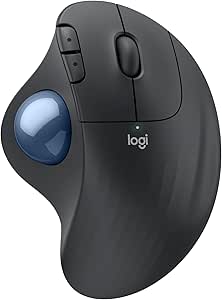 | Best for Desk-Free Precision | Type: Ergonomic thumb trackball | Connectivity: Bluetooth and Logi Bolt USB receiver | Battery Life: Up to 18 months | VIEW LATEST PRICE | See Our Full Breakdown |
| SUNGI Ergonomic Wireless Vertical Optical Mouse for Right Hand, Black |  | Best Budget Pick | Design: Vertical ergonomic, right-handed | Connectivity: 2.4GHz wireless with USB receiver | DPI: 800/1200/1600 | VIEW LATEST PRICE | See Our Full Breakdown |
| INPHIC X9 Pro Ergonomic Wireless Mouse 12800DPI Rechargeable Vertical Mouse |  | Best for Work-and-Gaming Flexibility | Design: Vertical ergonomic, handshake position | DPI Levels: 800/1600/2400/3200/4800/12800 | Weight: 3.6 ounces | VIEW LATEST PRICE | See Our Full Breakdown |
| ergonomic wireless mice | Connectivity | Buttons | Compatibility | Battery |
|---|---|---|---|---|
| ProtoArc EM11 NL Wireless Ergo | 2.4G USB-A receiver, Bluetooth | 7 | — | Rechargeable lithium-ion, ~1 month per charge |
| TECKNET Wireless Mouse | 2.4GHz USB | 6 | — | — |
| TECKNET Ergonomic Wireless Ver | Bluetooth 5.0/3.0, 2.4GHz USB receiver | — | Windows, Mac, Chrome, Linux | 2 x AAA (not included) |
| TECKNET Wireless Mouse | Bluetooth, USB-A, wireless | 7 | Windows, Mac, Chromebook, Linux | Rechargeable lithium-ion, ~3 months |
| Anker 2.4G Wireless Ergonomic | 2.4 GHz USB receiver | — | — | 2 x AAA (not included) |
| Keychron M7 Wireless Mouse | Bluetooth 5.1 / 2.4 GHz / Wired | 4 | macOS, Windows, Linux | 1 AA battery (included), up to 70 hours |
| Uineer Vertical Ergonomic Wire | Bluetooth / 2.4 GHz USB | 6 | Windows, macOS, Linux, Android, iOS 13+ | 1 C battery (included) |
| Logitech M510 Full Size Ambide | 2.4 GHz wireless (Unifying receiver) | Standard plus programmable Back/Forward | Windows, Mac OS X | — |
| Logitech Lift Vertical Ergonom | Bluetooth Low Energy / Logi Bolt USB | Customizable, quiet-click | Windows, macOS, Linux | — |
| J-Tech Digital Ergonomic Wirel | 2.4 GHz wireless | — | Windows 7/8/10, XP, Vista, Linux, Mac OS | Rechargeable lithium |
| AOC Ergonomic Wireless Vertica | Bluetooth 5.4, 2.4GHz wireless, USB wired | Programmable, silent left/right clicks | — | 800mAh rechargeable, up to 200 hours |
| Logitech Ergo M575S Wireless B | Bluetooth and Logi Bolt USB receiver | 3 customizable buttons | — | — |
| SUNGI Ergonomic Wireless Verti | 2.4GHz wireless with USB receiver | — | Windows 7/10/XP/Vista/2000, Android, Linux | — |
| INPHIC X9 Pro Ergonomic Wirele | 2.4G wireless, Bluetooth, USB-C wired | — | Windows, macOS (software Windows-only) | — |
More Details on Our Top Picks
ProtoArc EM11 NL Wireless Ergonomic Vertical Mouse, Rechargeable, Black
Among the budget-friendly vertical mice in this roundup, the ProtoArc EM11 NL stands out for balancing multi-device connectivity with a genuine handshake grip. Compared with the Anker 2.4G Vertical, it pairs the same wrist-friendly orientation with Bluetooth support for up to three devices — a real advantage if you juggle a laptop, tablet, and desktop. The rechargeable battery also eliminates the AAA-replacement cycle that the Anker and the TECKNET vertical both impose. The tradeoff: at roughly one month per charge, you’ll be plugging in far more often than the 24-month AA-powered TECKNET standard mouse, and a 57-degree vertical shape demands an adjustment period of a week or two. Sizing favors small-to-medium hands, so larger-handed buyers may find the EM11 NL cramped where the J-Tech Digital with its removable palm rest would fit better.
Pros:- True vertical grip that meaningfully reduces wrist pronation
- Bluetooth and USB-A connectivity across three devices
- Rechargeable battery with no disposable cells to replace
- Quiet main clicks suit shared offices
Cons:- One-month battery life means frequent recharging
- Not all buttons are programmable and scroll wheel clicks aren’t silent
- Steep learning curve for first-time vertical mouse users
Best for: Small-to-medium-handed office workers who switch between multiple devices and want wrist relief without managing disposable batteries
Not ideal for: Large-handed users or anyone needing fully programmable buttons for macro-heavy workflows
- Connectivity:2.4G USB-A receiver, Bluetooth
- Buttons:7
- Max DPI:2400
- Battery:Rechargeable lithium-ion, ~1 month per charge
- Hand Orientation:Right
- Weight:250 g
- Dimensions:5.43″ L x 2.72″ W
Our verdict“The most complete package for multi-device users seeking an affordable entry into vertical ergonomics.”
TECKNET Wireless Mouse, 2.4G Ergonomic Computer Mouse, 2600 DPI, Black
Not everyone ready to try ergonomic comfort wants to relearn how to hold a mouse, and that’s where this TECKNET standard-shape model earns its spot as the value pick. It keeps the familiar horizontal grip with rubber side grips instead of forcing the vertical handshake angle of the ProtoArc EM11 NL or the Anker vertical. The headline spec is up to 24 months of battery life — vastly longer than any rechargeable option here — though batteries aren’t included, so factor that into the price. Its compact footprint makes it a better travel companion than the larger vertical models, but the ergonomics are gentler rather than transformative: this is comfort through contouring, not repositioning. Side buttons also won’t work on Mac, and it won’t track on glass, which matters if your desk is a glass tabletop.
Pros:- Exceptional battery life of up to 24 months
- Rubber side grips improve comfort during long sessions
- Compact size travels well
- Plug-and-play 2.4G receiver with 33-foot range
Cons:- Batteries not included
- Side buttons incompatible with Mac
- Won’t track on glass surfaces
Best for: Budget-minded students and travelers who want a comfortable traditional mouse with minimal upkeep
Not ideal for: Buyers with existing wrist pain — the standard shape offers less corrective benefit than a vertical or trackball option
- Connectivity:2.4GHz USB
- Buttons:6
- Max DPI:2600
- Battery Life:Up to 24 months (AA, not included)
- Range:10 m / 33 ft
- Dimensions:2.68″ L x 1.52″ W
Our verdict“The cheapest way to get all-day comfort without committing to a vertical grip.”
TECKNET Ergonomic Wireless Vertical Mouse, 4800 DPI, Bluetooth & 2.4GHz, Silent, Right-Handed
This TECKNET vertical splits the difference between the ProtoArc EM11 NL and the Anker vertical in a smart way: it matches the EM11 NL’s three-device switching via Bluetooth and 2.4GHz while nearly doubling its tracking ceiling at 4800 DPI. That headroom matters for high-resolution or multi-monitor setups where the EM11 NL’s 2400 DPI ceiling can feel slow. Silent left and right clicks make it a stronger fit for libraries and open offices than the Anker, whose clicks are conspicuously audible — though note the silence doesn’t extend to the side buttons here either. Unlike the rechargeable ProtoArc, this one runs on two AAA batteries you must supply yourself. Compared with the Logitech Lift further up the market, it delivers a similar vertical philosophy at a fraction of the price, at the cost of coarser build quality and macOS-limited side buttons.
Pros:- Silent main clicks for noise-sensitive spaces
- 4800 DPI ceiling handles high-resolution displays
- Switches between three devices
- Vertical design genuinely reduces wrist pressure
Cons:- Requires 2 AAA batteries that aren’t included
- Side buttons don’t work on macOS
- Right-handed design only
Best for: Right-handed multi-monitor users in quiet environments who want high-DPI vertical ergonomics cheaply
Not ideal for: Left-handed users and Mac owners who rely on side-button navigation
- DPI Levels:800/1200/1600/2400/3200/4800
- Connectivity:Bluetooth 5.0/3.0, 2.4GHz USB receiver
- Battery:2 x AAA (not included)
- Silent Operation:Left and right click only
- Compatibility:Windows, Mac, Chrome, Linux
- Design:Right-handed vertical
Our verdict“The quiet vertical mouse to buy when you need more DPI than the ProtoArc EM11 NL offers.”
TECKNET Wireless Mouse, Side Scroll Bluetooth Rechargeable, 3-Device
What separates this TECKNET from its siblings is the metal side scroll wheel for horizontal navigation — a feature none of the other four picks offer, and one that pays off daily for anyone working in wide spreadsheets, timelines, or code editors. Paired with three-device switching and a rechargeable battery lasting about three months, it’s the most practical choice for productivity-focused buyers who find the ProtoArc EM11 NL’s one-month charge cycle annoying but don’t want to return to disposable batteries like the TECKNET 24-month model requires. At 4800 DPI and 173 g, it tracks fast and moves light. The tradeoffs are familiar: zero programmable buttons limits power users who’d remap the seven controls, and macOS users lose the side buttons entirely — the same gap the other TECKNET models share.
Pros:- Horizontal side scroll wheel is rare at this price
- Three-month rechargeable battery outlasts the ProtoArc EM11 NL
- Quiet operation for shared spaces
- Light 173 g weight reduces drag during long sessions
Cons:- All buttons are non-programmable
- Side buttons unsupported on macOS
Best for: Spreadsheet-heavy professionals and multi-device multitaskers who scroll horizontally all day
Not ideal for: Users who want to remap buttons for shortcuts or macros — nothing here is programmable
- Connectivity:Bluetooth, USB-A, wireless
- Buttons:7
- Max DPI:4800
- Battery:Rechargeable lithium-ion, ~3 months
- Range:33 ft
- Weight:173 g
- Compatibility:Windows, Mac, Chromebook, Linux
Our verdict“The productivity specialist here — buy it for the side scroll wheel, skip it if you need button customization.”
Anker 2.4G Wireless Ergonomic Vertical Mouse with USB Receiver
The Anker vertical remains the classic gateway into ergonomic mice, and its strongest argument is simplicity: plug in the receiver and go, with no Bluetooth pairing, no recharging, and no companion software to learn. Its three DPI steps (800/1200/1600) cover everyday desktop work, though buyers with large multi-monitor setups will notice the shortfall against the TECKNET vertical’s 4800 DPI ceiling. Where the ProtoArc EM11 NL justifies its higher price with multi-device switching and a rechargeable cell, the Anker counters with a rock-bottom entry cost and a proven handshake grip that has converted skeptical users for years. The click noise is the weakest point — noticeably louder than the silent TECKNET models — and the AAA batteries are on you. It’s the cheapest credible way to find out whether vertical ergonomics works for your wrist.
Pros:- Lowest-cost entry into true vertical ergonomics
- Plug-and-play USB receiver with zero setup
- Handshake grip with proven wrist-relief design
- Energy-efficient sleep mode extends battery life
Cons:- Audible clicks that can’t be silenced
- Requires 2 AAA batteries not included
- 1600 DPI ceiling trails higher-resolution rivals
Best for: First-time vertical mouse buyers who want to test the format with minimal investment and setup fuss
Not ideal for: Multi-device users or quiet-office workers — no Bluetooth, and the clicks are loud
- Connectivity:2.4 GHz USB receiver
- DPI Resolution:800/1200/1600
- Battery:2 x AAA (not included)
- Hand Orientation:Right
- Weight:3.4 oz (96 g)
- Dimensions:120 x 62.8 x 74.8 mm
Our verdict“The lowest-risk way to try a vertical mouse before spending more on feature-rich models.”
Keychron M7 Wireless Mouse, 26K DPI, 2.4 GHz/Bluetooth/Wired, 63g, White
At 63 grams, the M7 is the featherweight of this lineup, and that changes the ergonomics conversation entirely. Where the Logitech Lift attacks wrist strain through its vertical angle, the M7 does it by demanding almost no effort to move — a different philosophy that suits people whose discomfort comes from dragging a heavy mouse across a desk all day. The PixArt 3395 sensor at 26,000 DPI and 1000 Hz polling rate are enthusiast-grade specs that no other mouse in this roundup matches, and tri-mode connectivity means it works with a Mac at work and a Linux tower at home.
The tradeoff is power: a single AA battery instead of a rechargeable cell, which feels dated next to options like the AOC vertical mouse with built-in charging. And like most sculpted designs here, it’s right-handed only.
Pros:- Ultra-light 63g body reduces the physical effort of all-day mousing
- Flagship-grade PixArt 3395 sensor with 26,000 DPI and 1000 Hz polling
- Tri-mode connectivity covers Bluetooth, 2.4 GHz, and wired use
- Cross-platform support for macOS, Windows, and Linux
Cons:- Runs on a disposable AA battery rather than rechargeable power
- Sculpted ergonomic shape excludes left-handed users
Best for: Productivity users and gamers who want precision tracking without wrist fatigue from mouse weight
Not ideal for: Left-handed buyers, or anyone who wants USB-C recharging instead of swapping disposable AA batteries
- Connectivity:Bluetooth 5.1 / 2.4 GHz / Wired
- Sensor:PixArt 3395, up to 26,000 DPI
- Polling Rate:1000 Hz
- Weight:63 g
- Battery:1 AA battery (included), up to 70 hours
- Buttons:4
- Compatibility:macOS, Windows, Linux
Our verdict“This is the pick for buyers who want ergonomic relief through low weight and cutting-edge sensor tech rather than a vertical grip.”
Uineer Vertical Ergonomic Wireless Bluetooth Mouse for 3 Devices
The Uineer’s pitch is simple: a handshake-style vertical grip and three-device switching at a price well below the Logitech Lift. If you juggle a work laptop, a personal desktop, and a tablet, the ability to hop between all three over Bluetooth and 2.4 GHz is genuinely useful, and the 33-foot wireless range beats most competitors here for couch or presentation use.
But the compromises show where the money was saved. A C-cell battery is an odd choice — bulky and awkward to replace — and the side buttons don’t work on macOS, which undercuts the multi-platform story. Compared with the J-Tech Digital, which offers a rechargeable cell and removable palm rest at a similar price, the Uineer leans on its device-switching as its one clear advantage. It’s also sized for small-to-medium hands, so larger palms should look elsewhere.
Pros:- Vertical handshake grip reduces wrist pronation
- Switches between three devices over dual Bluetooth and 2.4 GHz
- Adjustable DPI up to 2400 for varied tasks
- Long 33-foot wireless range
Cons:- Side buttons are non-functional on macOS
- Requires a bulky C battery rather than rechargeable power
- Handedness and sizing favor small to medium hands only
Best for: Multi-device users on a budget who switch between two or three computers daily
Not ideal for: Mac users who need working side buttons, or buyers with large hands
- Connectivity:Bluetooth / 2.4 GHz USB
- DPI:Up to 2400, adjustable
- Buttons:6
- Hand Orientation:Right
- Battery:1 C battery (included)
- Weight:120 g
- Compatibility:Windows, macOS, Linux, Android, iOS 13+
Our verdict“Buy it for cheap three-device switching; skip it if you’re on a Mac or have large hands.”
Logitech M510 Full Size Ambidextrous Wireless Mouse
Not everyone wants to learn a new grip. The M510 keeps a traditional contoured shape with soft rubber grips while still addressing comfort, making it the natural choice for buyers who find vertical mice like the Logitech Lift or Uineer too radical a change. Its standout spec is battery life rated at two years — effectively eliminating charging anxiety, and backed by Logitech’s mature software for programming the back/forward buttons.
The compromises are structural. There’s no Bluetooth, so you’re tied to the Unifying receiver, which is a problem for laptops with limited ports or tablets. And despite the ‘ambidextrous’ labeling, the button layout and sculpting lean right-handed, so true lefties get a compromised experience. Its sensor and DPI also lag far behind the Keychron M7 for precision work. Still, for everyday office use, nothing here is easier to live with.
Pros:- Up to two years of battery life on a single set of batteries
- Familiar contoured shape with soft rubber grips
- Programmable back/forward buttons via Logitech software
- Compact Unifying receiver supports multiple Logitech devices
Cons:- 2.4 GHz only — no Bluetooth connectivity
- Ergonomics fall short of true vertical or angled designs
- Button layout and sculpting favor right-handed users
Best for: Office workers who want familiar-shape comfort and zero maintenance for years
Not ideal for: Buyers with wrist pain who need a true ergonomic angle, or anyone without a free USB port
- Connectivity:2.4 GHz wireless (Unifying receiver)
- Battery Life:Up to 2 years
- Buttons:Standard plus programmable Back/Forward
- Scrolling:Horizontal and vertical
- Compatibility:Windows, Mac OS X
Our verdict“The safest pick in this lineup for people who want comfort without relearning how to hold a mouse.”
Logitech Lift Vertical Ergonomic Wireless Mouse – Graphite
The Lift is what happens when a major manufacturer takes the vertical mouse seriously. Its 57-degree upright angle promotes a neutral wrist position, the size is tuned for smaller-to-medium hands (a rarity — most vertical mice here, like the Uineer and J-Tech, assume larger grips), and Logitech’s Logi Bolt and Bluetooth connectivity plus two-year battery life make it dependable across Windows, macOS, and Linux. Quiet clicks and remappable buttons round out a genuinely polished experience.
What holds it back is value and adaptability. It costs considerably more than the Anker vertical mouse or SUNGI, which offer a similar grip angle for a fraction of the price. And like every vertical mouse, there’s an adjustment period — precision tasks like photo editing feel clumsy for the first week. The recycled-plastic shell also picks up fingerprints easily.
Pros:- Refined 57-degree vertical grip from the category leader
- Sized specifically for small-to-medium hands
- Two-year battery life with Logi Bolt and Bluetooth connectivity
- Quiet clicks and customizable buttons across Windows, macOS, and Linux
Cons:- Priced well above similar vertical mice from Anker and SUNGI
- Vertical grip requires a learning curve for precision work
- Recycled-plastic finish shows fingerprints
Best for: Professionals with smaller or medium hands who want the most refined vertical experience available
Not ideal for: Left-handed users and budget shoppers who can get a similar angle from cheaper rivals
- Connectivity:Bluetooth Low Energy / Logi Bolt USB
- Design:57-degree vertical ergonomic grip
- Battery Life:Up to 2 years
- Buttons:Customizable, quiet-click
- Material:70% certified post-consumer recycled plastic
- Color:Graphite
- Compatibility:Windows, macOS, Linux
Our verdict“If budget allows and your hands fit the sizing, this is the vertical mouse the rest of this roundup is measured against.”
J-Tech Digital Ergonomic Wireless Mouse with Removable Palm Rest and Adjustable DPI
The J-Tech’s removable palm rest is a feature no other mouse in this roundup offers, and it changes the fit of the mouse rather than just its feel. Users who need full palm support during long sessions can attach it; those who prefer a lighter, more maneuverable grip for detail work can pop it off. Combined with four DPI steps up to 3200 and a rechargeable battery, it addresses the Uineer’s biggest weaknesses — disposable power and fixed comfort.
Where it falls behind the Logitech Lift is polish: button reprogramming requires third-party software rather than an official tool, and battery life fluctuates with the power-saving modes rather than delivering a confident two-year rating. The handshake design carries the usual vertical-mouse learning curve too. But for buyers who want to tune their ergonomics rather than accept a fixed shape, it’s the most flexible option at its price.
Pros:- Removable palm rest lets you switch between supported and nimble grips
- Rechargeable lithium battery eliminates disposable cells
- Four adjustable DPI settings up to 3200 for precision work
- Broad compatibility with Windows, macOS, and Linux
Cons:- Button reprogramming depends on third-party software
- Battery life varies depending on power-saving settings and usage
- Vertical design takes time to adjust to
Best for: All-day desk workers who want to customize their hand support and prefer rechargeable power
Not ideal for: Users who want polished first-party software or a plug-and-play traditional mouse
- Connectivity:2.4 GHz wireless
- DPI Settings:800 / 1200 / 1600 / 3200
- Battery:Rechargeable lithium
- Special Features:Removable palm rest, thumb buttons, optical tracking
- Hand Orientation:Right
- Compatibility:Windows 7/8/10, XP, Vista, Linux, Mac OS
Our verdict“The most customizable ergonomic option here — ideal for buyers who want to fine-tune palm support rather than accept a one-size shape.”
AOC Ergonomic Wireless Vertical Mouse with Rechargeable Battery
Battery anxiety is real with vertical mice, and this AOC model tackles it head-on with up to 200 hours per charge plus use-while-charging over Type-C. Compared with the INPHIC X9 Pro, which doesn’t even publish battery specs, this option gives buyers a concrete number to plan around. The 52° vertical angle sits steeper than most handshake designs, which translates to a more aggressive posture correction for wrists already showing strain. Tri-mode connectivity (Bluetooth 5.4, 2.4GHz, wired USB) matches the X9 Pro’s flexibility, and silent main clicks make it viable for shared offices. The catch: it’s shaped for small to medium hands only, so larger-handed buyers should look at the INPHIC or J-Tech Digital instead. RGB customization requires an app, an odd extra step for a productivity peripheral.
Pros:- Up to 200 hours of battery life with use-while-charging over Type-C
- Tri-mode connectivity covers Bluetooth, 2.4GHz, and wired use
- Steep 52° angle strongly encourages a neutral wrist position
- Silent left and right clicks suit quiet shared workspaces
Cons:- Only fits small to medium hands comfortably
- RGB customization requires a separate app
- Auxiliary buttons still produce normal click noise
Best for: Small-to-medium-handed office workers who want long battery life and multi-device switching between laptop, tablet, and desktop
Not ideal for: Large-handed users — the shell is explicitly sized against them, and forcing a grip defeats the ergonomic purpose
- Design:Vertical ergonomic, 52° angle
- Connectivity:Bluetooth 5.4, 2.4GHz wireless, USB wired
- DPI:1000/1600/2400/3200/4800
- Battery:800mAh rechargeable, up to 200 hours
- Charging:Type-C, use-while-charging
- Buttons:Programmable, silent left/right clicks
- Hand Size:Small to medium
Our verdict“This pick makes the most sense for average-sized hands that prioritize battery endurance over a universal fit.”
Logitech Ergo M575S Wireless Bluetooth Trackball Mouse – Graphite Blue Ball
The M575S takes a fundamentally different approach from every vertical mouse in this lineup: instead of repositioning your wrist, it eliminates arm movement entirely with a thumb-controlled trackball. Your hand stays planted, which matters if your desk is cramped or your shoulder tires from pushing a mouse around all day. Where the AOC and SUNGI models need a few inches of mousepad real estate, the M575S works on any surface, including a couch armrest. Logitech’s reputation shows in the details — up to 18 months on a single AA battery dwarfs the AOC’s 200 hours, and build quality feels more premium than budget verticals like the SUNGI. The tradeoff is the learning curve: trackballs demand weeks of practice before cursor control feels natural, and the ball needs occasional cleaning that vertical mice never require.
Pros:- Trackball design removes arm and shoulder movement entirely
- Up to 18 months of battery life on a single charge cycle
- Works on any surface, no mousepad needed
- Quiet clicks and customizable buttons via Logi Options+
Cons:- Steep learning curve compared to standard mouse movement
- Trackball requires periodic cleaning
- Full customization depends on installing Logi Options+
Best for: Desk workers with limited space or shoulder fatigue who want precision without moving their arm
Not ideal for: Anyone who needs instant point-and-click familiarity — trackball control takes weeks to master
- Type:Ergonomic thumb trackball
- Connectivity:Bluetooth and Logi Bolt USB receiver
- Battery Life:Up to 18 months
- Buttons:3 customizable buttons
- Color:Graphite
- Recycled Plastic:52% (Graphite)
- Software:Logi Options+ app
Our verdict“This model is better suited to patient buyers who value zero-arm-movement control over the familiar feel of a traditional mouse.”
SUNGI Ergonomic Wireless Vertical Optical Mouse for Right Hand, Black
For buyers testing whether a vertical grip actually relieves their wrist pain, the SUNGI is the lowest-risk entry point in this roundup. Plug the USB receiver in and it works — no apps, no drivers, no account creation, unlike the Logitech M575S which leans on Logi Options+ for its best features. The adjustable DPI (800/1200/1600) covers everyday office work, and the 10-meter range beats most competitors comfortably. That said, the corners cut are visible: no Mac support rules out a large slice of buyers, the battery type is unspecified (expect replaceable AAs), and the 1600 DPI ceiling limits fine, fast tracking compared to the AOC’s 4800. Compared with the Anker 2.4G vertical, the SUNGI trades brand polish for a lower price, which is a reasonable swap for a first ergonomic experiment.
Pros:- Genuinely affordable entry into vertical ergonomics
- True plug-and-play setup with no software required
- 10-meter wireless range for flexible desk setups
- Works across Windows versions, Android, and Linux
Cons:- Not compatible with macOS
- Battery type and life not specified
- DPI tops out at 1600, limiting precision work
Best for: Budget-conscious Windows users who want to try a vertical mouse before committing to a premium model
Not ideal for: Mac users and gamers — no macOS support and a 1600 DPI ceiling rule out both
- Design:Vertical ergonomic, right-handed
- Connectivity:2.4GHz wireless with USB receiver
- DPI:800/1200/1600
- Range:Up to 10 meters
- Compatibility:Windows 7/10/XP/Vista/2000, Android, Linux
- Surface:Rubber oil coating
- Warranty:12 months
Our verdict“A sensible trial purchase for right-handed Windows users who want ergonomic relief without spending much.”
INPHIC X9 Pro Ergonomic Wireless Mouse 12800DPI Rechargeable Vertical Mouse
Most vertical mice stop at productivity, but the X9 Pro pushes into gaming territory with a 12,800 DPI ceiling — more than double the AOC’s maximum and leagues beyond the SUNGI’s 1600. At just 3.6 ounces, it’s also the lightest vertical here, which reduces the lifting fatigue that heavier handshake designs like the J-Tech Digital (with its palm rest) can cause during long sessions. Tri-mode connectivity mirrors the AOC’s versatility, letting a buyer pair a work laptop over Bluetooth, game on 2.4GHz, and fall back to wired USB-C. The compromises: DPI fine-tuning software is Windows-only, so Mac users lose the headline feature and are better served by the Logitech Lift. Battery details are also mysteriously absent, a trust gap next to AOC’s clearly stated 200 hours. Expect a break-in period while your hand adapts to the vertical angle.
Pros:- 12,800 DPI sensor handles both precision work and fast gaming
- Featherlight 3.6-ounce body reduces fatigue
- Tri-mode connectivity pairs with multiple devices
- Silent clicks keep late-night sessions quiet
Cons:- Fine-tuning driver software is Windows-only
- No published battery capacity or runtime details
- Vertical grip requires an adjustment period for newcomers
Best for: Windows users who split time between office work and gaming and want one mouse for both
Not ideal for: Mac owners — the DPI customization software that justifies the price doesn’t run on macOS
- Design:Vertical ergonomic, handshake position
- DPI Levels:800/1600/2400/3200/4800/12800
- Weight:3.6 ounces
- Connectivity:2.4G wireless, Bluetooth, USB-C wired
- Clicks:Silent
- Compatibility:Windows, macOS (software Windows-only)
Our verdict“This option stands out for Windows-based hybrid users who refuse to choose between ergonomics and high-DPI performance.”

How We Picked
I evaluated each mouse through one lens: does it reduce strain for its intended hand size and grip style? Grip geometry came first — the angle of rotation, palm support, and button placement determine whether a mouse prevents wrist pronation or just relocates the discomfort. Connectivity came second, because a mouse that drops its 2.4GHz connection or forces you to choose between Bluetooth and a dongle creates daily friction. Battery approach, button count, sensor range, and warranty support filled out the scoring, weighted by how much each factor affects long-term ownership rather than day-one impressions.
The ranking logic favors adaptability and proven ergonomics over raw specs. That’s why the Logitech Lift sits above cheaper verticals with higher DPI numbers, and why the Keychron M7 — the most technically impressive sensor package in the lineup — lands mid-table for this specific category. Budget models ranked highly only when their comfort held up against the premium picks, and every product was required to have a meaningful drawback documented, because a roundup where everything sounds great helps nobody choose.
Factors to Consider When Choosing Ergonomic Wireless Mice
The reviews above tell you which specific mice rose to the top, but choosing well requires understanding the category itself. These are the factors that most often decide whether an ergonomic mouse helps or ends up in a drawer.
Grip Angle: How Vertical Is Too Vertical?
The most common mistake first-time buyers make is assuming the most extreme vertical design must be the most ergonomic. A true 90-degree mouse puts your hand in a full handshake position, which minimizes forearm pronation — but it also demands a complete retraining of your muscle memory, and many people abandon the switch during the two-to-three week adjustment period. Moderate angles in the 55-60 degree range, like the Logitech Lift, capture most of the ergonomic benefit while feeling familiar enough that productivity barely dips during transition. If you have diagnosed wrist pain or carpal tunnel symptoms, the steeper designs can be worth the learning curve; if you’re buying preventively, start moderate. Also match the mouse to your hand size: a large vertical mouse forces small hands to splay their fingers, which creates a new strain problem while solving the old one.
Trackball vs. Vertical: Two Different Philosophies
Buyers often conflate these two categories, but they solve strain in opposite ways. A vertical mouse still moves across the desk — it just rotates your wrist into a neutral position first. A trackball like the Ergo M575S keeps your hand completely stationary and moves the cursor with your thumb, eliminating arm movement entirely. Trackballs excel for people with limited desk space, precision work like video editing, and shoulder or elbow issues, but they concentrate all the workload on your thumb, which can cause its own overuse discomfort with heavy daily use. Vertical mice feel more natural to anyone coming from a standard mouse and work better for gaming or fast cursor movements. If you’re unsure, the trackball learning curve is roughly a week — shorter than a steep vertical mouse — but the adaptation feels more frustrating because your cursor precision drops before it improves.
Battery Strategy: The Hidden Long-Term Cost
Rechargeable mice look like the modern choice, but the tradeoff deserves honest examination. Built-in lithium batteries typically hold a solid charge for 300-500 cycles, meaning a heavily used rechargeable mouse often needs replacement within three to four years — the battery is the component that dies, and it’s rarely replaceable. Mice running on AA batteries, like several Logitech models in this roundup, add recurring battery costs but can last five to ten years, and you can swap in a fresh cell in ten seconds instead of waiting for a charge. The middle path is rechargeable AAs, which combines convenience with replaceability. Frequent travelers should also weigh charging ports: USB-C has become standard on newer models, but some budget options still ship with micro-USB, which matters if you’re standardizing your travel cables.
Connectivity: Channels and Switching Matter More Than Range
Almost every wireless mouse in this price range handles basic connectivity fine, so the real differentiator is multi-device support. If you alternate between a work laptop and personal desktop, a mouse with Bluetooth plus a 2.4GHz dongle — and the ability to pair with three devices — eliminates the daily pairing dance. Dedicated dongles generally deliver lower latency and more reliable connections in wireless-cluttered offices, while Bluetooth preserves a USB port and is the only option on devices with locked-down ports. One caution from the budget segment: silent-click models sometimes pair their noise reduction with mushy, unresponsive buttons, so read reviews specifically about switch feel, not just connection stability. And if you use a KVM switch or dock, confirm the mouse handles USB hub passthrough cleanly — a small number of budget models don’t.
DPI and Sensors: Ignore the Marketing Numbers
DPI (dots per inch) has become a spec-war number that barely matters for ergonomic use. Anything above 1600 DPI is functionally unnecessary for productivity work, and higher DPI settings on a vertical mouse can actually hurt the ergonomic benefit, because a twitchy sensor forces micro-corrections that reintroduce wrist strain. What matters more is a DPI switch button, letting you drop sensitivity for precise tasks like photo editing and raise it for multi-monitor setups. Adjustable DPI ranges like those on the TECKNET vertical or INPHIC X9 Pro are useful — but for the range’s low and middle settings, not its maximum. Gamers are the exception, though anyone buying primarily for gaming should reconsider this category entirely, since ergonomic shapes trade speed and low weight for comfort.
The Trial Period Problem and Return Policies
Here is the uncomfortable truth about ergonomic mice: no amount of research substitutes for a week of actual use, because comfort depends on your hand size, grip style, desk height, and existing strain patterns. A mouse that reviewers universally praise may cause immediate discomfort for your anatomy. This makes return policy the single most underrated purchasing factor — buy from retailers with a 30-day no-questions return window and plan to test seriously for at least two weeks before committing. During that trial, watch for specific warning signs: finger splaying, pinky drag on the desk, or a grip that forces your thumb upward against the buttons. Also commit to the adjustment period honestly — day two of a vertical mouse always feels worse than day one, and many people wrongly conclude the mouse failed when the real issue was quitting before adaptation.
Frequently Asked Questions
How long does it take to adjust to a vertical ergonomic mouse?
Most people need one to three weeks of consistent use to feel fully comfortable with a vertical mouse, and comfort levels actually dip during the first few days as your forearm muscles unlearn pronation. Moderate-angle designs like the Logitech Lift tend to adapt faster — often within a week — while full 90-degree models can take the full three weeks before cursor precision returns to normal. The biggest mistake is alternating between your old mouse and the new one during this period, because it resets the adaptation clock each time. Commit fully, expect some forearm soreness early on (which is different from wrist pain and usually fades), and keep the mouse sensitivity slightly lower than usual while your fine motor control recalibrates. If you still have genuine pain after three weeks of exclusive use, the shape doesn’t fit your hand and it’s time to try a different angle or a trackball instead.
Is a vertical mouse or a trackball better for existing wrist pain?
It depends on where the pain originates. Vertical mice address forearm pronation and wrist twisting, making them the better first choice for classic carpal tunnel-style discomfort and general desk strain. Trackballs like the Ergo M575S eliminate arm movement entirely, which helps more if your pain extends into the elbow or shoulder, but they shift the workload to your thumb — a problem if you already have thumb or tendon issues. Many people with diagnosed conditions ultimately end up owning both and alternating between them throughout the day, since varying your hand position is itself an ergonomic strategy. If you can only buy one, start with a moderate-angle vertical mouse because the learning curve is gentler and the motion pattern stays closer to what your muscles already know. And talk to a physical therapist if pain is persistent — a mouse change reduces strain but doesn’t treat an existing injury.
Are cheap ergonomic mice under $25 actually worth buying?
For basic vertical ergonomics, yes — the TECKNET and Anker budget models genuinely rotate your hand into a neutral position, which is the core health benefit, and they do it at a quarter of premium pricing. What you give up is refinement: button clicks are often louder, the scroll wheels can feel loose, sensors occasionally stutter on glossy surfaces, and warranties run 12-18 months instead of two or three years. Build longevity is the real gamble, since budget models more often develop double-click issues or scroll failures within 18-24 months. The sensible play is treating a budget vertical mouse as a low-risk way to test whether the vertical form factor works for you at all. If it does and you use a mouse eight hours a day, upgrading to something like the Lift or ProtoArc pays for itself in durability; if it doesn’t, you’ve lost $20 instead of $70.
Do I need multi-device connectivity, or is it a gimmick?
For anyone working across two or more computers daily, multi-device support is the feature you’ll use most and never want to give up. A mouse like the ProtoArc EM11 NL or TECKNET 3-device model lets you switch between a work laptop and home desktop with one button press instead of re-pairing through Bluetooth menus — that saved time compounds across a workweek. It’s also quietly useful for people who use a tablet as a secondary screen, since most modern tablets support mouse input. If you use a single computer, the feature is dead weight and shouldn’t influence your choice at all. One caveat: on some budget multi-device models, the switching button is placed where you’ll hit it accidentally, which is genuinely annoying. Check button placement on any multi-device model before buying, and prefer designs that require a deliberate press rather than a glancing one.
Can an ergonomic wireless mouse work for gaming?
Honestly, most ergonomic mice are a poor fit for fast-paced gaming, and it’s better to know that before buying. Vertical shapes slow down rapid lateral movements because your grip has less horizontal control, and their heavier builds conflict with the low-weight preference of most players. The Keychron M7 is the one model in this lineup built for gaming — 26K DPI, 63-gram weight, and a 1000Hz polling rate — but its conventional flat shape offers minimal ergonomic benefit, which is why it ranks mid-table despite being the best pure gaming option here. A more practical approach for gamers with wrist concerns is a moderate-angle ergonomic mouse for daily productivity plus a separate lightweight gaming mouse for sessions, or the Keychron as a compromise if you can only own one. Casual gamers who play turn-based strategy or slower titles will be fine with almost any pick in this roundup, since the ergonomic drawbacks only bite in fast, twitchy play.
Conclusion
After comparing all 14 models, the choice comes down to matching the design philosophy to your situation. Best overall goes to the Logitech Lift — its moderate vertical angle, refined build, and quiet operation make it the safest upgrade for the largest number of people, and left-handed and small-handed versions exist if the graphite model reviewed here doesn’t fit. Best value is the TECKNET Ergonomic Wireless Vertical Mouse, which delivers the core health benefit of vertical design for under $25, making it the smart low-risk entry point even if the buttons and finish don’t match premium rivals. Best premium pick is the Logitech Ergo M575S trackball, which offers the most distinctive strain reduction in the lineup for precision workers and anyone with shoulder or elbow involvement — as long as you accept the thumb-driven learning curve.
For beginners testing the ergonomic waters, start with the Anker or SUNGI budget verticals before committing more money. Multi-device users should choose the ProtoArc EM11 NL or the TECKNET 3-device model, where the switching capability matters more than any comfort difference between them. If you need one mouse for both work and gaming, the Keychron M7 is the honest answer despite its weaker ergonomics — better an imperfect ergonomic choice you’ll actually use than a perfect one you’ll abandon. Whatever you pick, buy with a return window, give it two honest weeks, and trust how your own hand responds over any ranking, including this one.
Halloween Picks
halloween
As an affiliate, we earn on qualifying purchases.