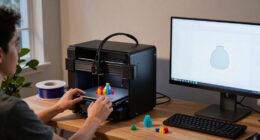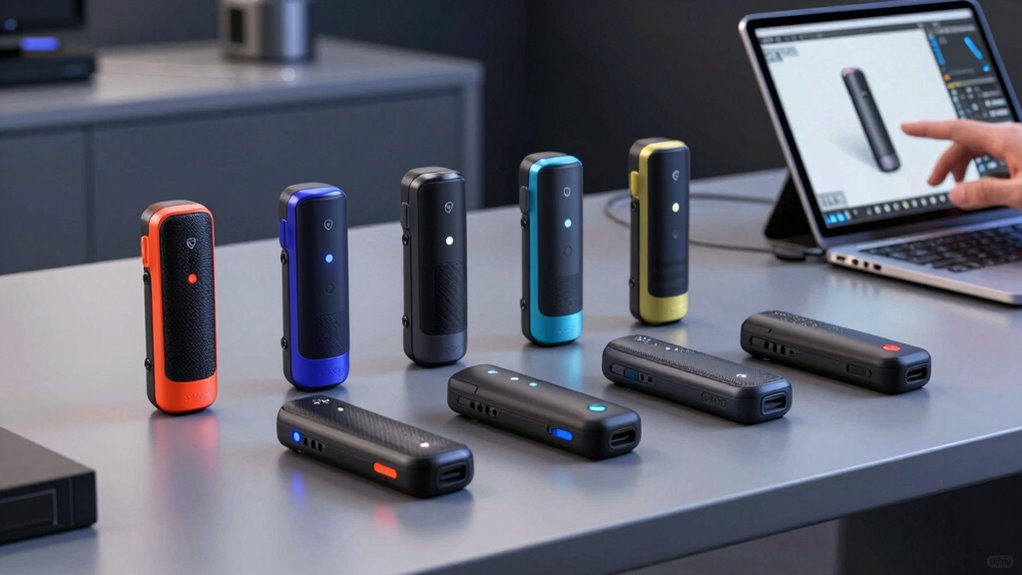

When selecting a portable 3D scanner for field capture, the key considerations include ease of use, scanning range, accuracy, and portability. The 3DMakerpro Fox stands out as the best overall choice for its balance of affordability and performance. The Raven LiDAR Scanner is ideal for those needing long-range, high-precision scans, while the Einstar Rockit offers a lightweight, wireless option perfect for on-the-go use. Buyers often face tradeoffs between accuracy, ease of use, and cost—knowing which aspect to prioritize depends on your specific field application. Continue reading for a detailed breakdown of each option to help you find the best portable 3D scanner for your field projects.

Get business pricing on monitors, keyboards and dev gear
- Business-only prices and quantity discounts
- Tax-exempt purchasing
- Multiple users, one account, clear invoices
Key Takeaways
- The top scanners balance portability with sufficient accuracy for real-world field applications.
- Laser-based scanners tend to offer higher precision and longer range compared to structured light options.
- Ease of use and software integration are critical for quick deployment in dynamic field environments.
- Higher-range scanners like the Raven LiDAR provide more detailed data but often come with increased size and cost.
- Budget-friendly options like the 3DMakerpro Fox deliver solid performance for entry-level or less demanding tasks.


| portable 3d scanners for field capture | Accuracy | Resolution |
|---|---|---|
| 3DMakerpro Fox Entry-Level Med | 0.07mm | 0.10mm |
| Revopoint MetroY Pro 3D Scanne | — | 0.05mm |
| Raven LiDAR Scanner | 2cm | — |
| 3DMakerpro LiDAR Spatial Scann | — | — |
| Einstar Rockit Handheld Wirele | — | — |
| Creality 3D Scanner CR-Scan Fe | 0.1mm | 0.1 millimeters |
More Details on Our Top Picks
3DMakerpro Fox Entry-Level Medium-Format 3D Scanner
The 3DMakerpro Fox stands out for offering high accuracy and resolution in an accessible package, making it ideal for newcomers exploring 3D scanning. Its markerless AI tracking simplifies the process, reducing the learning curve compared with more complex devices like the Revopoint MetroY Pro. While it excels in detailed medium-format scans, it lacks advanced features such as multi-spectral imaging or ultra-fast capture modes, limiting its use in demanding professional contexts. Its performance heavily depends on user handling and environmental conditions, which can affect scan quality. Compared to high-end options, it sacrifices some speed and versatility but provides a reliable entry point for casual or educational use.
Pros:- High accuracy (0.07mm) and resolution (0.10mm) for detailed scans
- Markerless AI tracking simplifies setup and use
- Integrated software for editing and optimization
Cons:- Limited advanced features compared to professional scanners
- Performance depends on user skill and environment
Best for: Beginners, hobbyists, and educators seeking a straightforward, accurate 3D scanner for small projects and learning.
Not ideal for: Professionals requiring advanced features, ultra-fast scanning, or integration with high-end workflows, as it may lack the necessary capabilities.
- Accuracy:0.07mm
- Resolution:0.10mm
- Software:JMStudio
Our verdict“This scanner makes the most sense for beginners and educational users prioritizing ease of use over ultra-high-end features.”
Revopoint MetroY Pro 3D Scanner, Blue Laser, 5 Modes for 3D Printing
The Revopoint MetroY Pro distinguishes itself through its exceptional precision, reaching up to 0.01mm accuracy, making it suitable for tasks like reverse engineering and detailed metrology. Its five scanning modes enhance versatility, allowing users to adapt to different materials and project needs—something the 3DMakerpro Fox doesn’t match. Wireless connectivity via Wi-Fi 6 facilitates quick data transfer and real-time control, but this also requires high-performance hardware and compatible software, which can be a barrier. Unlike more straightforward scanners, its advanced features come with a steeper learning curve and a higher cost, making it less suitable for casual users.
Pros:- Extremely high precision (0.01mm accuracy)
- Multiple scanning modes for versatile applications
- Wireless streaming and real-time control via Wi-Fi 6
Cons:- Requires powerful hardware and high-performance systems
- Paid software for advanced features
- Limited platform support (Windows and macOS only)
Best for: Engineers, professionals, and advanced hobbyists needing precise, versatile scans with fast processing in a mobile setup.
Not ideal for: Entry-level users or those without access to high-end hardware, as the device’s demanding specs and software requirements can be prohibitive.
- Resolution:0.05mm
- Connection Type:USB, Wi-Fi 6
- Weight:450g
Our verdict“This pick makes the most sense for professionals and enthusiasts demanding the highest precision in a portable format.”
Raven LiDAR Scanner (Standard / 1 Camera), 3D Laser Scanner with 50m Range and 2cm Accuracy
The Raven LiDAR Scanner offers a substantial 50-meter range and 2cm accuracy, making it suitable for large-scale outdoor and construction projects. Its long-range capability surpasses the 3DMakerpro Fox and Revopoint MetroY Pro, which are more focused on detailed or small-area scans. The device’s lightweight design at just over a kilogram supports mobility in the field, though its high price and professional-grade features may be out of reach for casual users. The software, RayStudio, provides comprehensive processing but requires familiarity with professional tools, adding to the learning curve. It’s ideal for capturing expansive environments where detail at longer distances is essential.
Pros:- Long-range scanning up to 50 meters
- High-precision 2cm accuracy
- Supports external cameras for enhanced imaging
Cons:- High-end professional price point
- Requires compatible, professional software
- Limited battery life for extended fieldwork
Best for: Architects, construction surveyors, and landscape professionals needing accurate, long-range environmental scans.
Not ideal for: Casual hobbyists or indoor modelers who don’t require extensive range or professional-grade equipment, as the cost and complexity can be overkill.
- Range:50 meters
- Accuracy:2cm
- Cameras:Single 12MP fisheye
Our verdict“This scanner is best suited for professionals managing large outdoor or construction projects needing accurate long-distance data.”
3DMakerpro LiDAR Spatial Scanner Raven, Handheld 3D LiDAR Scanner with 12MP Camera, 100m Range & 4K Imaging
The 3DMakerpro Raven combines a 100-meter range with 4K color imaging, making it highly capable for outdoor mapping, large-scale architecture, and indoor detailed modeling. Its standalone design with a built-in touchscreen and swappable batteries offers flexibility during extended field sessions, surpassing the Raven LiDAR Scanner in terms of range and imaging quality. While its high price and weight reflect its professional-grade capabilities, the device’s ease of use and comprehensive onboard controls support efficient fieldwork. The need for professional software for full data processing remains a consideration, but its long-range and high-resolution imaging set it apart for demanding outdoor projects.
Pros:- Extensive 100-meter scanning range
- High-resolution 4K color imaging
- Standalone device with a touchscreen interface
Cons:- Relatively heavy and bulky for casual use
- High cost may be prohibitive for some users
- Requires professional software for detailed processing
Best for: Outdoor surveyors, large-scale architects, and environmental professionals needing extensive range and high-quality imaging.
Not ideal for: Casual users or indoor-only projects, as the device’s size, weight, and price are geared toward professional outdoor applications.
- Range:100 meters
- Camera:12MP
- Imaging:4K
Our verdict“This device is best for professionals demanding long-range outdoor mapping combined with high-res imaging in a portable form.”
Einstar Rockit Handheld Wireless 3D Scanner with Software, Portable 38 Laser Lines & IR Structured Light
The Einstar Rockit offers a combination of 38 laser lines and IR structured light, enabling rapid and detailed scans of complex surfaces like automotive parts and industrial components. Its 90 fps speed and built-in 5MP color camera support efficient, marker-free scans with vivid textures. Compared with the 3DMakerpro Fox, it emphasizes speed and detailed surface capture over moderate-range outdoor mapping. Its wireless connectivity and long battery life make it well-suited for dynamic environments, though the device’s complexity and reliance on Wi-Fi can introduce interference issues. This scanner benefits users focused on quick, precise scans of detailed objects, especially when color and surface detail matter most.
Pros:- Fast scanning speed (up to 90 fps)
- Supports marker-free, real-time scanning
- Captures vivid textures with built-in color camera
Cons:- Performance can be affected by Wi-Fi interference
- Features may present a learning curve for new users
- Relies heavily on Wi-Fi connectivity
Best for: Industrial designers, reverse engineers, and AR/VR professionals needing fast, detailed surface scans of small to medium objects.
Not ideal for: Casual hobbyists or outdoor large-area scanning, as its focus is on high-speed surface detail rather than long-range environment capture.
- Laser Lines:38
- Scanning Speed:Up to 90 fps
- Battery Life:Up to 3 hours
Our verdict“This scanner is ideal for professionals who need rapid, detailed surface scans of industrial parts and objects in a portable setup.”
Creality 3D Scanner CR-Scan Ferret Pro for 3D Printing
The Creality CR-Scan Ferret Pro stands out for its user-friendly design and portability, making it an excellent choice for those new to field scanning or professionals who need quick, reliable results in various locations. Compared with the Revopoint MetroY Pro, which offers multiple scanning modes and slightly higher flexibility for detailed models, the Ferret Pro emphasizes simplicity and quick setup, though it sacrifices some advanced options. Its lightweight build at just 105 grams and wireless Wi-Fi 6 connectivity enable effortless mobility and fast data transfer, ideal for on-site scans without cumbersome cables. The high-precision 0.1mm accuracy and full-color output make it suitable for capturing medium-sized objects with vibrant details, but its performance drops on very small or highly reflective surfaces, unlike more specialized scanners. This pick makes the most sense for field operators who prioritize ease of use, portability, and decent color fidelity over ultra-fine detail capture.
Pros:- Lightweight and portable, weighing only 105 grams for easy field use
- Wireless Wi-Fi 6 connection ensures fast, stable data transfer without cables
- High-precision 0.1mm accuracy suitable for most medium-sized objects
- Full-color scans with 24-bit color depth enhance visual realism
Cons:- Less effective on very small or reflective objects compared to specialized scanners
- Requires controlled lighting and surface conditions for optimal results
Best for: Beginners, DIY creators, and professionals needing quick, portable scans in diverse environments
Not ideal for: Jewelry makers or highly detailed miniature artists who require ultra-fine resolution and surface precision
- Scanner Type:3D handheld
- Connection Type:Wi-Fi
- Resolution:0.1 millimeters
- Color Depth:24 bits per pixel
- Weight:105g
- Supported OS:Windows 10/11, macOS 11.7.7+, Android 10+, iOS 15+
- Compatibility:iPhone 11+, Android devices, Windows PC, Mac
- Accuracy:0.1mm
Our verdict“This scanner is best suited for users who need straightforward, portable 3D capture with decent color and accuracy without complexity.”

How We Picked
These products were evaluated based on performance metrics such as scanning range, accuracy, and ease of use, especially in outdoor or rugged field conditions. Build quality and portability were essential, since these scanners need to be lightweight and durable for fieldwork. We also considered software usability, compatibility, and data processing speed, as these impact overall workflow. To ensure relevance, only devices that are explicitly portable and suitable for field capture environments made the cut. The ranking reflects a balance between high-end capabilities and practical usability, helping different user profiles find a suitable option based on their specific needs.Factors to Consider When Choosing Portable 3d Scanners For Field Capture
Choosing the right portable 3D scanner for field capture involves weighing several important factors. First, consider the scanning range; longer ranges are essential for large outdoor environments but might come at the expense of portability. Next, accuracy determines the detail level of your scans—important for precise field measurements or quality control. Ease of use and software compatibility influence how quickly you can deploy the device in field conditions, especially if training or quick turnarounds are needed. Battery life and durability are also critical, as fieldwork often involves extended periods away from power sources and exposure to elements. Finally, assess your budget against your project requirements, ensuring you select a device that offers the best value for your specific application.Range and Accuracy
In field capture, the scanning range directly impacts how much area you can cover without repositioning the device. Longer-range scanners like the Raven LiDAR excel in outdoor environments, but may be bulkier. Accuracy is equally important; higher precision is necessary for detailed modeling or measurements, but it often comes with increased cost and complexity. Balancing these two factors depends on your project size and required detail. Keep in mind that higher accuracy may reduce scanning speed or increase post-processing time, so prioritize based on your project’s critical needs.Portability and Durability
A portable scanner should be lightweight and compact enough to carry easily across rugged terrain, yet durable enough to withstand environmental challenges like dust, moisture, and impacts. Consider scanners with ruggedized cases or IP ratings for outdoor use. A device that’s too bulky or fragile can hinder workflow and lead to costly delays. Battery life also plays into portability—longer battery life minimizes downtime during fieldwork, especially in remote locations. Weigh these factors carefully to ensure your scanner can keep pace with your field demands without compromising on performance or durability.Ease of Use and Software Support
In the field, intuitive operation and quick data processing are game-changers. Look for scanners with user-friendly interfaces and straightforward calibration processes. Compatibility with common software platforms simplifies data management and integration into workflows. Some models offer real-time previewing or automated registration, saving time and reducing errors. Remember, complex software can slow down field operations if it requires extensive training or troubleshooting, so prioritize devices that balance powerful features with usability for your team.Power and Connectivity
Long battery life is essential for extended field sessions, especially in remote areas where charging options are limited. Many scanners support fast charging or hot-swappable batteries—features worth considering. Connectivity options, such as Wi-Fi, Bluetooth, or USB, influence how seamlessly the device integrates with your existing tools. Wireless connectivity enables quick data transfer and remote operation, but may be less reliable in challenging environments. Think about your typical field conditions and choose a scanner that aligns with your operational logistics.Cost and Value
Budget constraints are always part of decision-making, but it’s vital to evaluate value over price alone. Higher-priced models often deliver better accuracy, longer range, and more robust build quality, but may be unnecessary for simpler tasks. Entry-level options like the 3DMakerpro Fox can be perfect for basic surveys or education, but they might fall short in demanding environments. Consider your project scope and future needs—sometimes investing more upfront results in lower total cost of ownership and better results over time.Frequently Asked Questions
Can these portable 3D scanners be used outdoors in direct sunlight?
Most portable 3D scanners, especially those based on structured light, can struggle with direct sunlight due to interference with their projection patterns. Laser-based scanners generally perform better outdoors, as they are less affected by ambient light. When working in bright conditions, look for models with higher laser power or those specifically designed for outdoor use. It’s also helpful to consider the use of shading or protective covers to improve scan quality in sunlight.
How accurate are portable 3D scanners for detailed field measurements?
The accuracy of portable 3D scanners varies widely, from around 2mm to sub-millimeter precision, depending on the model and technology used. For precise measurements, especially in engineering or quality control, laser and LiDAR-based devices tend to deliver higher accuracy compared to structured light options. However, higher accuracy often comes with increased cost and complexity. Assess your project’s specific measurement needs carefully, as some tasks may not require the highest precision, allowing for more affordable options.
What is the typical battery life for portable 3D scanners used in fieldwork?
Battery life ranges from around 1 to 8 hours, depending on the device and usage intensity. For most field projects, devices with at least 3-4 hours of continuous operation provide sufficient flexibility, especially when combined with spare batteries or portable chargers. Longer battery life reduces the need for frequent recharging, which can be challenging in remote locations. When planning your workflow, consider the average duration of your field sessions and choose a scanner with appropriate power capacity.
Are handheld scanners suitable for large outdoor environments?
Handheld scanners can be effective for large outdoor scans, especially those equipped with long-range sensors like LiDAR. Their portability allows for quick coverage of complex or uneven terrain. However, they may require more time to complete extensive projects compared to stationary or tripod-mounted systems. Stability and operator skill also influence scan quality. For very large or complex outdoor environments, pairing handheld scanners with drone-mounted solutions or stationary setups might be more efficient, depending on your project scope.
How do I choose between laser-based and structured light scanners for field use?
Laser-based scanners generally offer longer range and better performance outdoors, making them suitable for larger, open environments. Structured light scanners tend to provide higher resolution and detail but are more sensitive to ambient light and are typically better suited for indoor or controlled conditions. Your choice should depend on the typical environment of your fieldwork, the required scan detail, and your budget. Keep in mind that laser scanners are often heavier and more expensive, but they can handle the rigors of outdoor use more reliably.
Conclusion
For most users seeking a comprehensive balance of portability, accuracy, and ease of use, the 3DMakerpro Fox offers the best overall value for diverse field capture tasks. Those prioritizing long-range, high-precision data collection should consider the Raven LiDAR Scanner despite its larger size and higher cost. Beginners or casual users will find the Einstar Rockit a lightweight, intuitive option, while professionals needing maximum detail and long-range capabilities might lean toward more advanced, premium solutions. Carefully match your specific project demands with these strengths to choose the most suitable device.